Practical approach to Infrastructure as Code - how
to effectively program your cloud
Tomasz Cholewa

Public Cloud User Group #009
# whoami
Automation freak
DevOps Enthusiast
Cloud Infrastructure Architect (AWS)
Infrastructure as Code practitioner
Certificate collector
Expectations
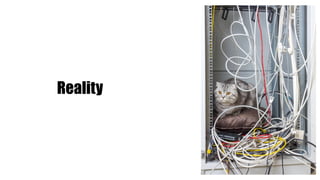
Reality
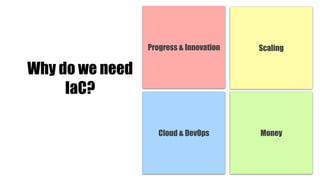
Why do we need
IaC?
Scaling
Cloud & DevOps Money
Progress & Innovation
Definition
Infrastructure as code (IaC) is the
process of managing and provisioning
computer data centers through
machine-readable definition files,
rather than physical hardware
configuration or interactive
configuration tools.
CloudFormation = IaC
CloudFormation < IaC
Rule 1
IaC is not about tools, but a
process
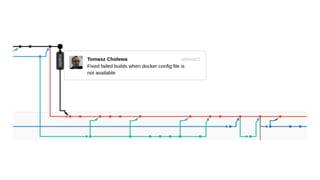
Change control
VERSION
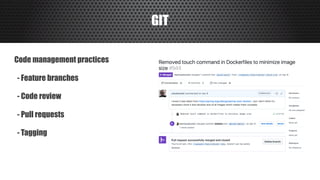
GIT
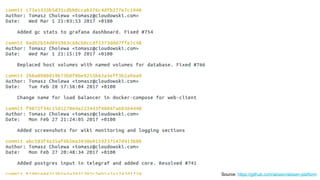
Code management practices
- Feature branches
- Code review
- Pull requests
- Tagging
Source: https://github.com/abixen/abixen-platform
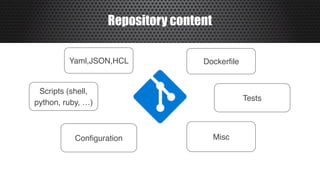
Repository content
Yaml,JSON,HCL
Scripts (shell,
python, ruby, …)
Misc
Dockerfile
Tests
Configuration
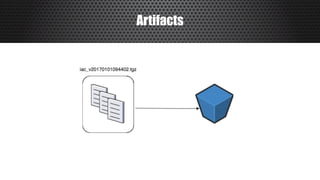
Artifacts
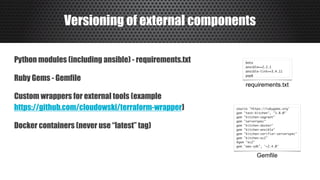
Versioning of external components
Python modules (including ansible) - requirements.txt
Ruby Gems - Gemfile
Custom wrappers for external tools (example

https://github.com/cloudowski/terraform-wrapper)
Docker containers (never use “latest” tag)
requirements.txt
Gemfile
Rule 2
You can’t do IaC without
versioning
Consistency
It works for me 

= 

it works on my environment
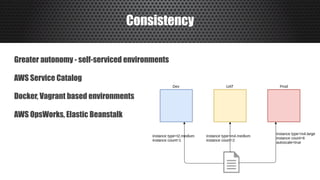
Consistency
Greater autonomy - self-serviced environments
AWS Service Catalog
Docker, Vagrant based environments
AWS OpsWorks, Elastic Beanstalk
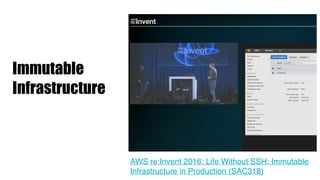
Immutable
Infrastructure
AWS re:Invent 2016: Life Without SSH: Immutable
Infrastructure in Production (SAC318)
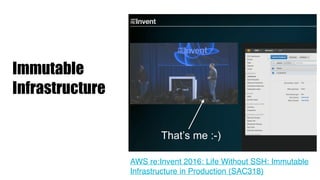
Immutable
Infrastructure
That’s me :-)
AWS re:Invent 2016: Life Without SSH: Immutable
Infrastructure in Production (SAC318)
Configuration management
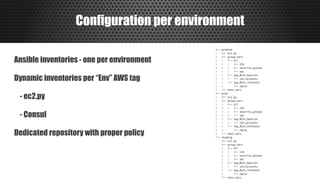
Configuration per environment
Ansible inventories - one per environment
Dynamic inventories per “Env” AWS tag
- ec2.py
- Consul
Dedicated repository with proper policy
Secret and sensible data management
Ansible Vault
HashiCorp Vault
NEVER, EVER in plaintext in repo!
No credentials
- IAM Instance Profiles
- IAM Roles for ECS Task
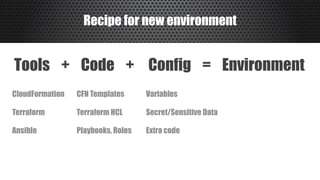
Recipe for new environment
Tools   +    Code  +   Config    =   Environment
CloudFormation
Terraform
Ansible
CFN Templates
Terraform HCL
Playbooks, Roles
Variables
Secret/Sensitive Data
Extra code
Rule 3
You can’t name it IaC if you
can’t create new env quickly
Antifragile Infrastructure
Apparently S3 is not Antifragile (yet?)
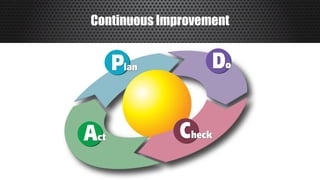
Continuous Improvement
Multicloud requires IaC
Rule 4
You can’t do IaC without
continuous improvement of
the process
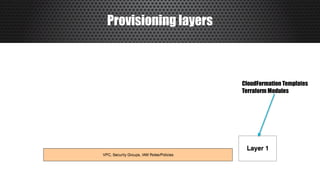
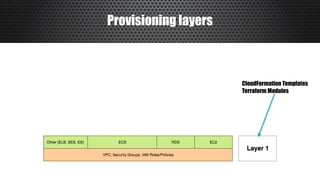
Provisioning
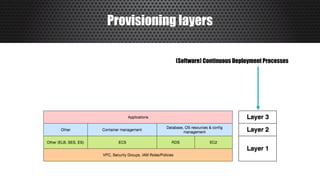
Provisioning layers
CloudFormation Templates
Terraform Modules
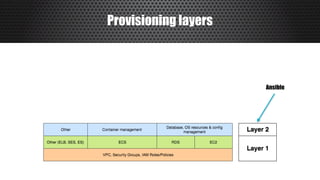
Provisioning layers
CloudFormation Templates
Terraform Modules
Provisioning layers
Ansible
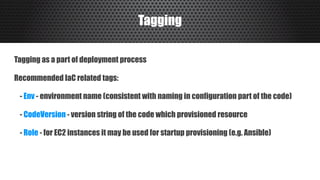
Tagging
Tagging as a part of deployment process
Recommended IaC related tags:
- Env - environment name (consistent with naming in configuration part of the code)
- CodeVersion - version string of the code which provisioned resource
- Role - for EC2 instances it may be used for startup provisioning (e.g. Ansible)
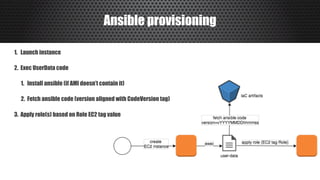
Ansible provisioning
1. Launch instance
2. Exec UserData code
1. Install ansible (if AMI doesn’t contain it)
2. Fetch ansible code (version aligned with CodeVersion tag)
3. Apply role(s) based on Role EC2 tag value
Provisioning layers
(Software) Continuous Deployment Processes
Testing
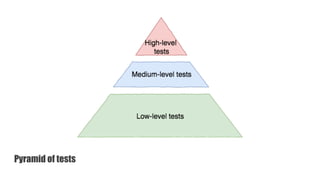
Pyramid of tests
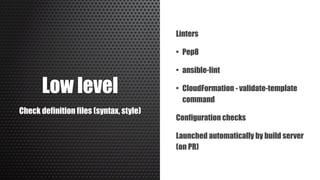
Low level
Check definition files (syntax, style)
Linters
• Pep8
• ansible-lint
• CloudFormation - validate-template
command
Configuration checks
Launched automatically by build server
(on PR)
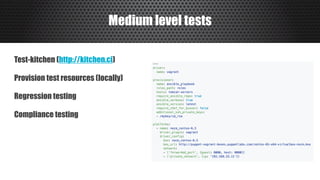
Medium level tests
Test-kitchen (http://kitchen.ci)
Provision test resources (locally)
Regression testing
Compliance testing
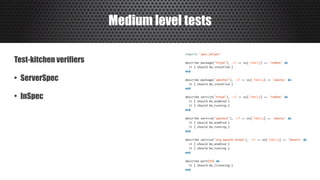
Medium level tests
Test-kitchen verifiers
• ServerSpec
• InSpec
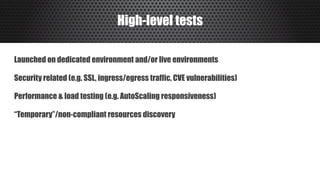
High-level tests
Launched on dedicated environment and/or live environments
Security related (e.g. SSL, ingress/egress traffic, CVE vulnerabilities)
Performance & load testing (e.g. AutoScaling responsiveness)
“Temporary”/non-compliant resources discovery
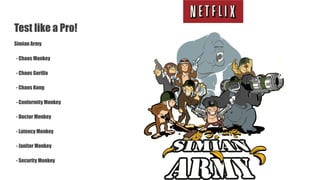
Test like a Pro!
Simian Army
- Chaos Monkey
- Chaos Gorilla
- Chaos Kong
- Conformity Monkey
- Doctor Monkey
- Latency Monkey
- Janitor Monkey
- Security Monkey
Rule 5
You can’t do IaC without
proper testing
Continuous Deployment
Pipeline
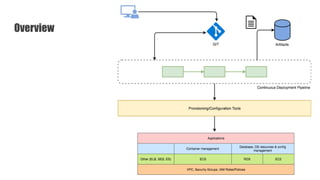
Overview
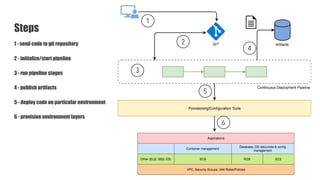
Steps
1 - send code to git repository
2 - initialize/start pipeline
3 - run pipeline stages
4 - publish artifacts
5 - deploy code on particular environment
6 - provision environment layers
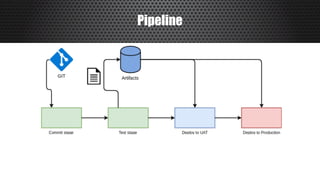
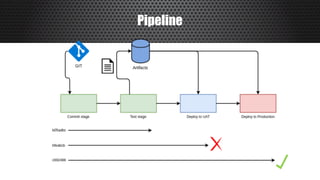
Pipeline
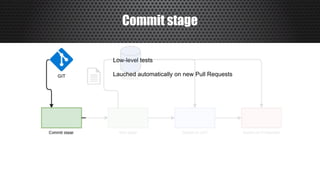
Commit stage
Low-level tests
Lauched automatically on new Pull Requests
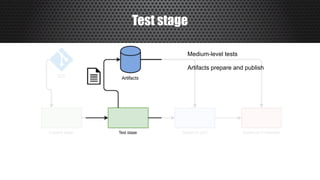
Test stage
Medium-level tests
Artifacts prepare and publish
Deployment
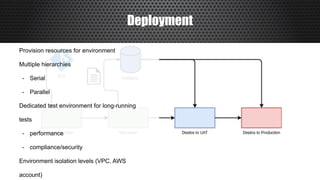
Provision resources for environment
Multiple hierarchies
- Serial
- Parallel
Dedicated test environment for long-running
tests
- performance
- compliance/security
Environment isolation levels (VPC, AWS
account)
Pipeline
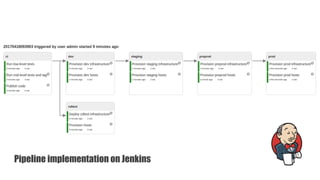
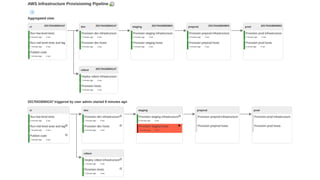
Pipeline implementation on Jenkins
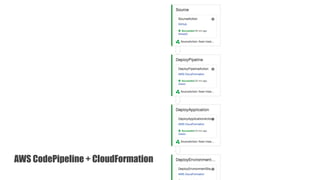
AWS CodePipeline + CloudFormation
Implementation tips
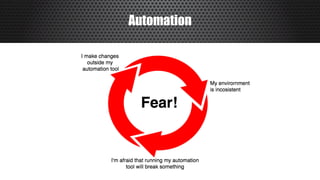
Automation
Automation
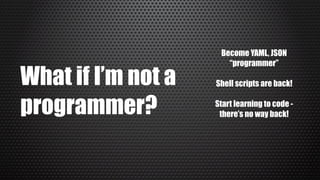
What if I’m not a
programmer?
Become YAML, JSON
“programmer”
Shell scripts are back!
Start learning to code -
there’s no way back!
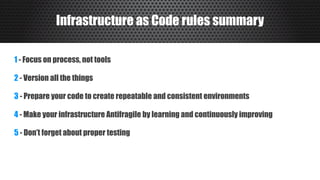
Infrastructure as Code rules summary
1 - Focus on process, not tools
2 - Version all the things
3 - Prepare your code to create repeatable and consistent environments
4 - Make your infrastructure Antifragile by learning and continuously improving
5 - Don’t forget about proper testing
Thank You!
Contact me:
Email: librevo@librevo.pl
LinkedIn: https://www.linkedin.com/in/tomaszcholewa
Blog: http://cloudowski.com

Cloud infrastructure as code