Downloaded 11 times
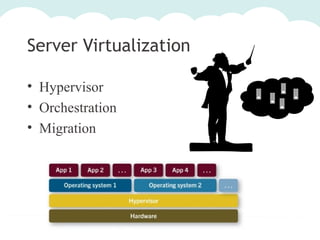
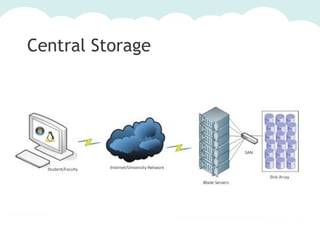
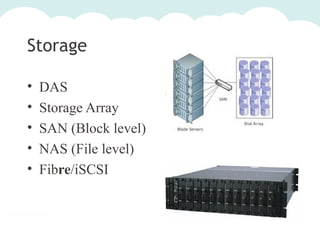
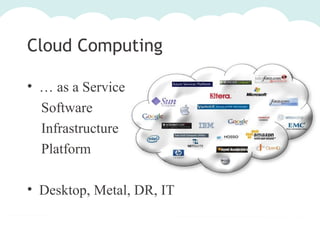
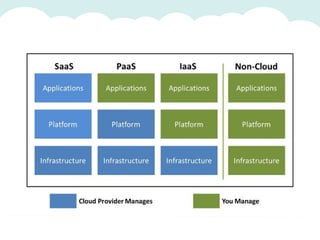
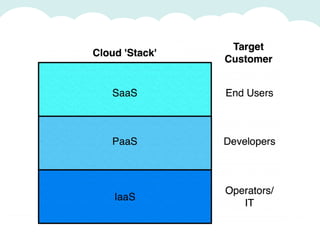
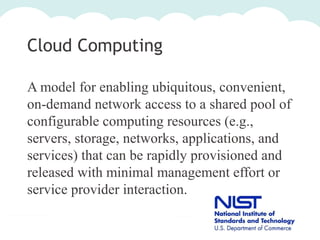
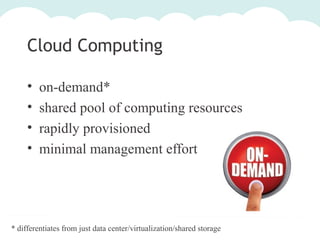
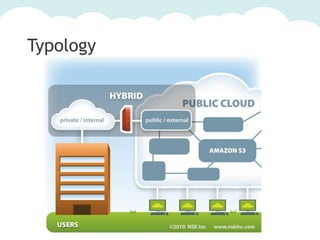



The document discusses cloud computing, which is defined as a model that enables on-demand network access to a shared pool of configurable computing resources like servers, storage, networks, and applications that can be rapidly provisioned with minimal management effort. It notes that cloud computing differentiates itself from traditional data centers and virtualization through its on-demand and elastic nature. The document then explores drivers of cloud computing like renting vs owning resources, elasticity, leveraging expertise, and using compute, storage, and network infrastructure. It also discusses implications of cloud computing around security, legal agreements, deployment policies, bring your own device trends, and shifts in the IT workforce.


