
Shivam Saxena 
B.Tech C.S.E, 3rd year
OUTLINEs : 
• WHAT IS CLOUD COMPUTING?? 
• HISTORY 
• WHY CLOUD COMPUTING??? 
• PROPERTIES OF CLOUD COMPUTING 
• TYPES OF CLOUD COMPUTING…. 
• SERVICES PROVIDED BY CLOUD 
COMPUTING 
• CLOUD COMPUTING IN NASA
CLOUD COMPUTING 
According to Wikipedia : 
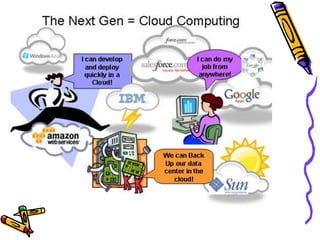
“Cloud computing is Internet-based 
computing, whereby shared resource, 
software, and information are provided to 
computers and other devices on demand, like 
the electricity grid” 
It puts customers information and or 
applications in a virtual “cloud” that can be 
accessed through the web.
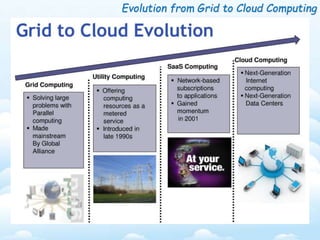
Evolution from Grid to Cloud Computing
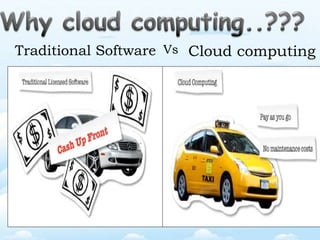
Traditional Software Vs Cloud computing
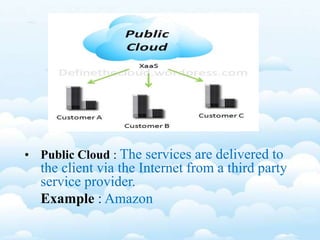
• Public Cloud : The services are delivered to 
the client via the Internet from a third party 
service provider. 
Example : Amazon
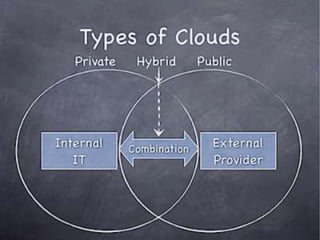
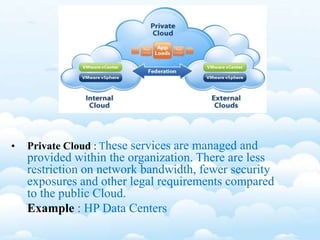
• Private Cloud : These services are managed and 
provided within the organization. There are less 
restriction on network bandwidth, fewer security 
exposures and other legal requirements compared 
to the public Cloud. 
Example : HP Data Centers
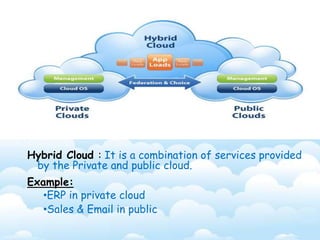
Hybrid Cloud : It is a combination of services provided 
by the Private and public cloud. 
Example: 
•ERP in private cloud 
•Sales & Email in public
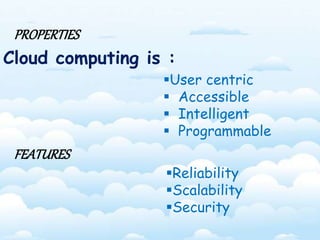
Cloud computing is : 
User centric 
 Accessible 
 Intelligent 
 Programmable 
PROPERTIES 
FEATURES 
Reliability 
Scalability 
Security
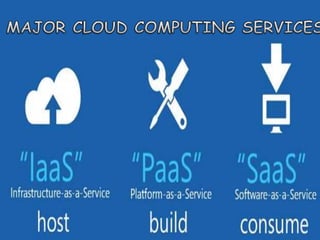
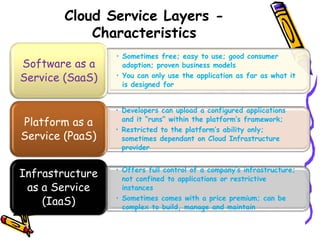
Cloud Service Layers - 
Characteristics 
• Sometimes free; easy to use; good consumer 
adoption; proven business models 
• You can only use the application as far as what it 
is designed for 
Software as a 
Service (SaaS) 
• Developers can upload a configured applications 
and it “runs” within the platform’s framework; 
• Restricted to the platform’s ability only; 
sometimes dependant on Cloud Infrastructure 
provider 
Platform as a 
Service (PaaS) 
• Offers full control of a company’s infrastructure; 
not confined to applications or restrictive 
instances 
• Sometimes comes with a price premium; can be 
complex to build, manage and maintain 
Infrastructure 
as a Service 
(IaaS)
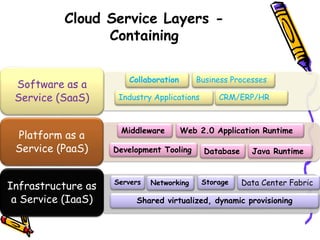
Cloud Service Layers - 
Containing 
Software as a 
Service (SaaS) 
Platform as a 
Service (PaaS) 
Infrastructure as 
a Service (IaaS) 
Collaboration Business Processes 
Industry Applications CRM/ERP/HR 
Middleware 
Web 2.0 Application Runtime 
Development Tooling Database 
Java Runtime 
Servers Networking Storage Data Center Fabric 
Shared virtualized, dynamic provisioning
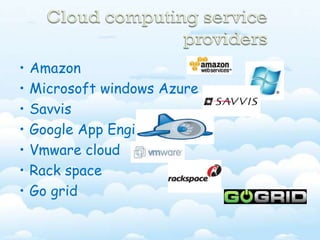
• Amazon 
• Microsoft windows Azure 
• Savvis 
• Google App Engine 
• Vmware cloud 
• Rack space 
• Go grid
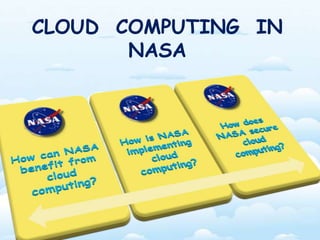
CLOUD COMPUTING IN 
NASA
How can NASA benefit from cloud 
computing?? 
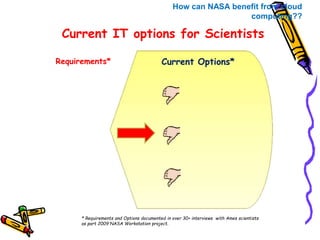
Current IT options for Scientists 
Requirements* Current Options* 
* Requirements and Options documented in over 30+ interviews with Ames scientists 
as part 2009 NASA Workstation project.
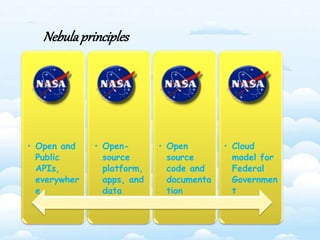
• Open and 
Public 
APIs, 
everywher 
e 
• Open-source 
platform, 
apps, and 
data 
• Open 
source 
code and 
documenta 
tion 
releases 
• Cloud 
model for 
Federal 
Governmen 
t 
Nebula principles
How can NASA benefit from cloud 
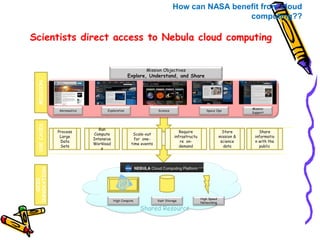
Scientists direct access to Nebula cloud computing 
Mission Objectives 
Explore, Understand, and Share 
Aeronautics Exploration Science Space Ops 
High Compute Vast Storage 
High Speed 
Networking 
Process 
Large 
Data 
Sets 
Scale-out 
for one-time 
events 
Require 
infrastructu 
re on-demand 
Store 
mission & 
science 
data 
USE CASES 
computing?? 
Share 
informatio 
n with the 
public 
Run 
Compute 
Intensive 
Workload 
s 
MISSION 
OCIO 
INNOVATION 
Shared Resource 
Mission 
Support
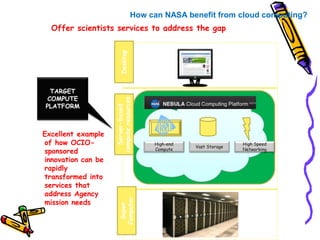
High-end 
Compute 
Vast Storage 
High Speed 
Networking 
TARGET 
COMPUTE 
PLATFORM 
Desktop 
Server-based 
compute resources 
Super 
Computer 
Excellent example 
of how OCIO-sponsored 
innovation can be 
rapidly 
transformed into 
services that 
address Agency 
mission needs 
How can NASA benefit from cloud computing? 
Offer scientists services to address the gap
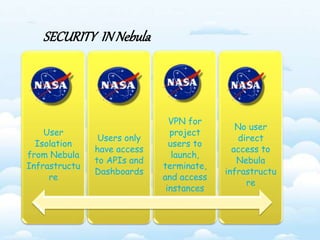
User 
Isolation 
from Nebula 
Infrastructu 
re 
Users only 
have access 
to APIs and 
Dashboards 
VPN for 
project 
users to 
launch, 
terminate, 
and access 
instances 
No user 
direct 
access to 
Nebula 
infrastructu 
re 
SECURITY IN Nebula
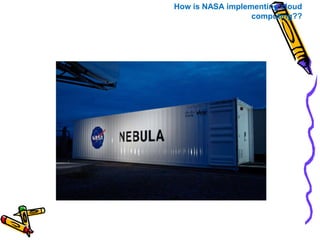
How is NASA implementing cloud 
computing??
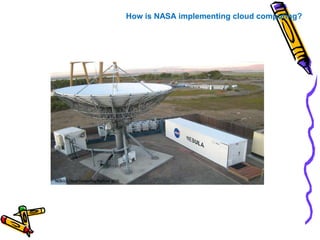
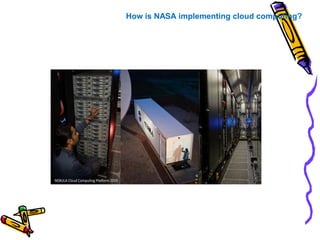
How is NASA implementing cloud computing?
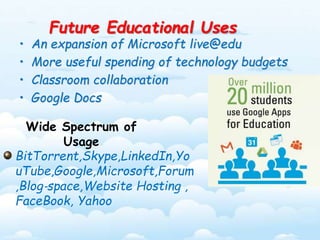
Future Educational Uses 
• An expansion of Microsoft live@edu 
• More useful spending of technology budgets 
• Classroom collaboration 
• Google Docs 
Wide Spectrum of 
Usage 
BitTorrent,Skype,LinkedIn,Yo 
uTube,Google,Microsoft,Forum 
,Blog‐space,Website Hosting , 
FaceBook, Yahoo
“Cloud computing Is a simple idea , but 
it can have huge impact on our business”
Cloud computing in nasa

Cloud computing in nasa

  • 1.
    Shivam Saxena B.TechC.S.E, 3rd year
  • 2.
    OUTLINEs : •WHAT IS CLOUD COMPUTING?? • HISTORY • WHY CLOUD COMPUTING??? • PROPERTIES OF CLOUD COMPUTING • TYPES OF CLOUD COMPUTING…. • SERVICES PROVIDED BY CLOUD COMPUTING • CLOUD COMPUTING IN NASA
  • 4.
    CLOUD COMPUTING Accordingto Wikipedia : “Cloud computing is Internet-based computing, whereby shared resource, software, and information are provided to computers and other devices on demand, like the electricity grid” It puts customers information and or applications in a virtual “cloud” that can be accessed through the web.
  • 5.
    Evolution from Gridto Cloud Computing
  • 6.
    Traditional Software VsCloud computing
  • 8.
    • Public Cloud: The services are delivered to the client via the Internet from a third party service provider. Example : Amazon
  • 9.
    • Private Cloud: These services are managed and provided within the organization. There are less restriction on network bandwidth, fewer security exposures and other legal requirements compared to the public Cloud. Example : HP Data Centers
  • 10.
    Hybrid Cloud :It is a combination of services provided by the Private and public cloud. Example: •ERP in private cloud •Sales & Email in public
  • 11.
    Cloud computing is: User centric  Accessible  Intelligent  Programmable PROPERTIES FEATURES Reliability Scalability Security
  • 13.
    Cloud Service Layers- Characteristics • Sometimes free; easy to use; good consumer adoption; proven business models • You can only use the application as far as what it is designed for Software as a Service (SaaS) • Developers can upload a configured applications and it “runs” within the platform’s framework; • Restricted to the platform’s ability only; sometimes dependant on Cloud Infrastructure provider Platform as a Service (PaaS) • Offers full control of a company’s infrastructure; not confined to applications or restrictive instances • Sometimes comes with a price premium; can be complex to build, manage and maintain Infrastructure as a Service (IaaS)
  • 14.
    Cloud Service Layers- Containing Software as a Service (SaaS) Platform as a Service (PaaS) Infrastructure as a Service (IaaS) Collaboration Business Processes Industry Applications CRM/ERP/HR Middleware Web 2.0 Application Runtime Development Tooling Database Java Runtime Servers Networking Storage Data Center Fabric Shared virtualized, dynamic provisioning
  • 15.
    • Amazon •Microsoft windows Azure • Savvis • Google App Engine • Vmware cloud • Rack space • Go grid
  • 16.
  • 17.
    How can NASAbenefit from cloud computing?? Current IT options for Scientists Requirements* Current Options* * Requirements and Options documented in over 30+ interviews with Ames scientists as part 2009 NASA Workstation project.
  • 18.
    • Open and Public APIs, everywher e • Open-source platform, apps, and data • Open source code and documenta tion releases • Cloud model for Federal Governmen t Nebula principles
  • 19.
    How can NASAbenefit from cloud Scientists direct access to Nebula cloud computing Mission Objectives Explore, Understand, and Share Aeronautics Exploration Science Space Ops High Compute Vast Storage High Speed Networking Process Large Data Sets Scale-out for one-time events Require infrastructu re on-demand Store mission & science data USE CASES computing?? Share informatio n with the public Run Compute Intensive Workload s MISSION OCIO INNOVATION Shared Resource Mission Support
  • 20.
    High-end Compute VastStorage High Speed Networking TARGET COMPUTE PLATFORM Desktop Server-based compute resources Super Computer Excellent example of how OCIO-sponsored innovation can be rapidly transformed into services that address Agency mission needs How can NASA benefit from cloud computing? Offer scientists services to address the gap
  • 21.
    User Isolation fromNebula Infrastructu re Users only have access to APIs and Dashboards VPN for project users to launch, terminate, and access instances No user direct access to Nebula infrastructu re SECURITY IN Nebula
  • 22.
    How is NASAimplementing cloud computing??
  • 23.
    How is NASAimplementing cloud computing?
  • 24.
    How is NASAimplementing cloud computing?
  • 25.
    Future Educational Uses • An expansion of Microsoft live@edu • More useful spending of technology budgets • Classroom collaboration • Google Docs Wide Spectrum of Usage BitTorrent,Skype,LinkedIn,Yo uTube,Google,Microsoft,Forum ,Blog‐space,Website Hosting , FaceBook, Yahoo
  • 27.
    “Cloud computing Isa simple idea , but it can have huge impact on our business”