NATIONAL CONFERENCE
                                              ON
                                  ADVANCEMENT AND CHALLENGES
                             IN TECHNOLOGY AND MANAGEMENT - 2011
                                         (NCACTM 2011)


          Cloud Computing:
          Establishing an Efficient Cloud

                                            By:
Abhishek Soni                                                             Ashwin Singh Tomar

Department of Computer Science,                          Department of Information Technology

Jagadguru Dattatray College of Technology             Jagadguru Dattatray College of Technology
Agenda

                    Introduction


             Cloud Deployment Models


          Cloud Computing Maturity Model


           Ways to Establish Cloud Control


         Reasons To Consider Adapting Cloud
                     Computing

         Reasons To Consider Avoiding Cloud
                     Computing


                     Conclusion
Introduction
        Description

    Gartner’s Definition

       Acc. To NIST
Description

Computing paradigm.


A large pool of systems are connected in private or public networks.


Provide dynamically scalable platform.


Practical approach to experience direct cost benefits.

Potential to transform a data center from a capital – intensive set up
to a variable priced environment.

Based on a very fundamental principal of „reusability of IT
capabilities‟.
Gartner’s Definition

    “A style of computing where massively
    scalable IT – enabled capabilities are
    delivered „as a service‟ to external
    customers using the Internet technologies.”
According To NIST
 National Institute of Standards and Technology


     Cloud computing is a model for enabling
     convenient, on – demand network access to a
     shared pool of configuring resources that can be
     rapidly provisioned and released with minimal
     management effort or service provider interaction.


 Characteristics of Cloud Computing:


          Grid Computing

          Virtualization

          Utility computing

          Autonomic Computing
Grid Computing


A network of computers that are utilized to gain large
supercomputing type computing resources


Using this network of computers large and complex
computing operations can be performed.


In grid computing these networks of computers may
be present in different locations.
Virtualization


     Virtualization is a framework or methodology of dividing the
     resources of a computer into multiple execution environments.


We may use hardware or software partitioning, time sharing, partial or complete machine
simulation, emulation, quality of service and many others concepts and technologies.


Forms the foundation of cloud computing.


Accessing resources in abstract from.


Reduces server utilization in data center upto 10%.
Utility Computing


Pay-per-use Model


Similar to utility services like electricity grid.


Billing changes according to requirements of the organization.


Helps in reducing initial investment.
Autonomic Computing


An initiative started by IBM in 2001. Autonomic means “self-managing”
computers.

Computers can correct themselves automatically.


Analogous to human biological system.

Goal is for computing infrastructure to self-correct itself in unforeseen
situations.
How Cloud Computing Works?


To get cloud computing to work, you need three things: thin clients, grid
computing, and utility computing.


Grid computing links disparate computers to form one large infrastructure,
harnessing unused resources.

Utility computing is paying for what you use on shared servers like you pay
for a public utility.
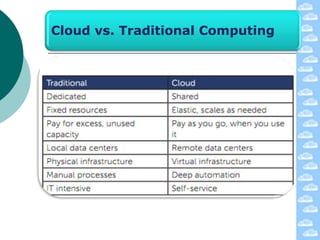
Cloud vs. Traditional Computing
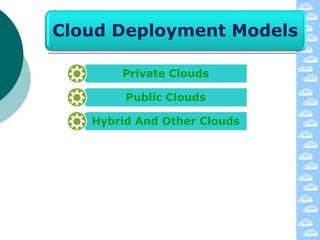
Cloud Deployment Models

       Private Clouds

        Public Clouds

   Hybrid And Other Clouds
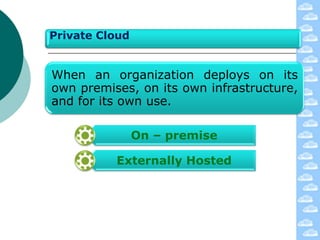
Private Cloud


When an organization deploys on its
own premises, on its own infrastructure,
and for its own use.

                On – premise

          Externally Hosted
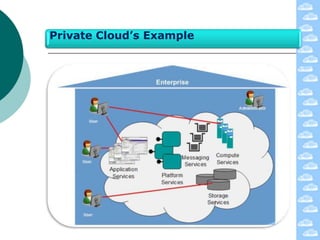
Private Cloud’s Example
Public Cloud


services are made available to the general
public or a large industry group and are owned
by an organization selling cloud services.


Cloud offerings

        Infrastructure as a Service (IaaS)

        Platform as a Service (PaaS)

        Software as a Service (SaaS)
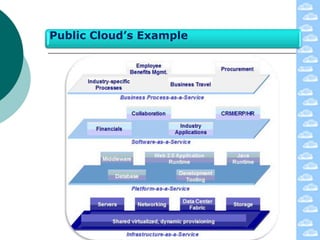
Public Cloud’s Example
Hybrid And Other Cloud Models


       Hybrid Model

       Cloud Bursting

       Community Clouds

       Hybrid Cloud Offerings
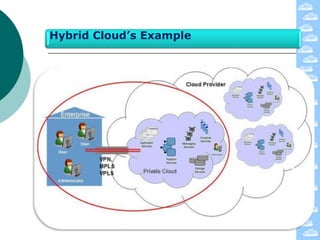
Hybrid Cloud’s Example
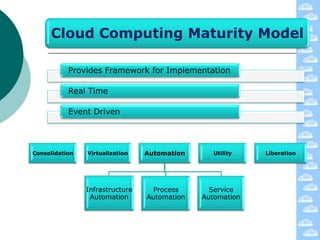
Cloud Computing Maturity Model

           Provides Framework for Implementation

           Real Time

           Event Driven


Consolidation   Virtualization   Automation      Utility   Liberation


                Infrastructure     Process      Service
                 Automation      Automation   Automation
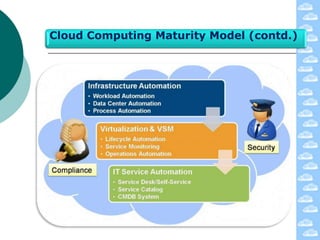
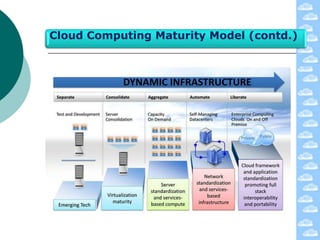
Cloud Computing Maturity Model (contd.)
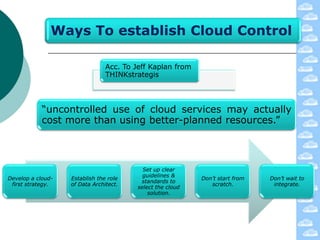
Ways To establish Cloud Control

                                Acc. To Jeff Kaplan from
                                THINKstrategis


            “uncontrolled use of cloud services may actually
            cost more than using better-planned resources.”


                                           Set up clear
                                           guidelines &
Develop a cloud-   Establish the role                       Don’t start from   Don’t wait to
                                          standards to
 first strategy.   of Data Architect.                          scratch.         integrate.
                                         select the cloud
                                             solution.
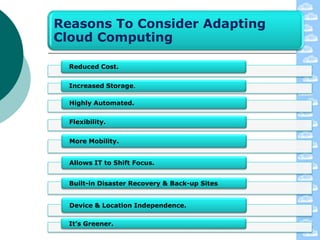
Reasons To Consider Adapting
Cloud Computing

  Reduced Cost.


  Increased Storage.

  Highly Automated.


  Flexibility.


  More Mobility.


  Allows IT to Shift Focus.


  Built-in Disaster Recovery & Back-up Sites.


  Device & Location Independence.

  It’s Greener.
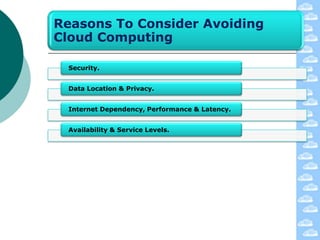
Reasons To Consider Avoiding
Cloud Computing

 Security.


 Data Location & Privacy.


 Internet Dependency, Performance & Latency.


 Availability & Service Levels.
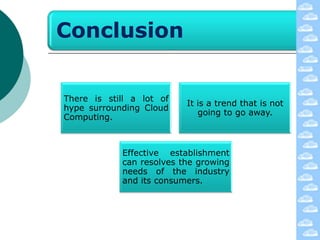
Conclusion


There is still a lot of
                          It is a trend that is not
hype surrounding Cloud
                             going to go away.
Computing.


            Effective establishment
            can resolves the growing
            needs of the industry
            and its consumers.
References
gtsi® White Paper: Cloud Computing
Building a Framework for Successful Transition


ThinkGrid White Paper: Introduction to cloud computing


http://en.wikipedia.org/wiki/Cloud%Computing
Queries

Cloud computing

  • 1.
    NATIONAL CONFERENCE ON ADVANCEMENT AND CHALLENGES IN TECHNOLOGY AND MANAGEMENT - 2011 (NCACTM 2011) Cloud Computing: Establishing an Efficient Cloud By: Abhishek Soni Ashwin Singh Tomar Department of Computer Science, Department of Information Technology Jagadguru Dattatray College of Technology Jagadguru Dattatray College of Technology
  • 2.
    Agenda Introduction Cloud Deployment Models Cloud Computing Maturity Model Ways to Establish Cloud Control Reasons To Consider Adapting Cloud Computing Reasons To Consider Avoiding Cloud Computing Conclusion
  • 3.
    Introduction Description Gartner’s Definition Acc. To NIST
  • 4.
    Description Computing paradigm. A largepool of systems are connected in private or public networks. Provide dynamically scalable platform. Practical approach to experience direct cost benefits. Potential to transform a data center from a capital – intensive set up to a variable priced environment. Based on a very fundamental principal of „reusability of IT capabilities‟.
  • 5.
    Gartner’s Definition “A style of computing where massively scalable IT – enabled capabilities are delivered „as a service‟ to external customers using the Internet technologies.”
  • 6.
    According To NIST National Institute of Standards and Technology Cloud computing is a model for enabling convenient, on – demand network access to a shared pool of configuring resources that can be rapidly provisioned and released with minimal management effort or service provider interaction. Characteristics of Cloud Computing: Grid Computing Virtualization Utility computing Autonomic Computing
  • 7.
    Grid Computing A networkof computers that are utilized to gain large supercomputing type computing resources Using this network of computers large and complex computing operations can be performed. In grid computing these networks of computers may be present in different locations.
  • 8.
    Virtualization Virtualization is a framework or methodology of dividing the resources of a computer into multiple execution environments. We may use hardware or software partitioning, time sharing, partial or complete machine simulation, emulation, quality of service and many others concepts and technologies. Forms the foundation of cloud computing. Accessing resources in abstract from. Reduces server utilization in data center upto 10%.
  • 9.
    Utility Computing Pay-per-use Model Similarto utility services like electricity grid. Billing changes according to requirements of the organization. Helps in reducing initial investment.
  • 10.
    Autonomic Computing An initiativestarted by IBM in 2001. Autonomic means “self-managing” computers. Computers can correct themselves automatically. Analogous to human biological system. Goal is for computing infrastructure to self-correct itself in unforeseen situations.
  • 11.
    How Cloud ComputingWorks? To get cloud computing to work, you need three things: thin clients, grid computing, and utility computing. Grid computing links disparate computers to form one large infrastructure, harnessing unused resources. Utility computing is paying for what you use on shared servers like you pay for a public utility.
  • 12.
  • 13.
    Cloud Deployment Models Private Clouds Public Clouds Hybrid And Other Clouds
  • 14.
    Private Cloud When anorganization deploys on its own premises, on its own infrastructure, and for its own use. On – premise Externally Hosted
  • 15.
  • 16.
    Public Cloud services aremade available to the general public or a large industry group and are owned by an organization selling cloud services. Cloud offerings Infrastructure as a Service (IaaS) Platform as a Service (PaaS) Software as a Service (SaaS)
  • 17.
  • 18.
    Hybrid And OtherCloud Models Hybrid Model Cloud Bursting Community Clouds Hybrid Cloud Offerings
  • 19.
  • 20.
    Cloud Computing MaturityModel Provides Framework for Implementation Real Time Event Driven Consolidation Virtualization Automation Utility Liberation Infrastructure Process Service Automation Automation Automation
  • 21.
  • 22.
  • 23.
    Ways To establishCloud Control Acc. To Jeff Kaplan from THINKstrategis “uncontrolled use of cloud services may actually cost more than using better-planned resources.” Set up clear guidelines & Develop a cloud- Establish the role Don’t start from Don’t wait to standards to first strategy. of Data Architect. scratch. integrate. select the cloud solution.
  • 24.
    Reasons To ConsiderAdapting Cloud Computing Reduced Cost. Increased Storage. Highly Automated. Flexibility. More Mobility. Allows IT to Shift Focus. Built-in Disaster Recovery & Back-up Sites. Device & Location Independence. It’s Greener.
  • 25.
    Reasons To ConsiderAvoiding Cloud Computing Security. Data Location & Privacy. Internet Dependency, Performance & Latency. Availability & Service Levels.
  • 26.
    Conclusion There is stilla lot of It is a trend that is not hype surrounding Cloud going to go away. Computing. Effective establishment can resolves the growing needs of the industry and its consumers.
  • 27.
    References gtsi® White Paper:Cloud Computing Building a Framework for Successful Transition ThinkGrid White Paper: Introduction to cloud computing http://en.wikipedia.org/wiki/Cloud%Computing
  • 28.