Pillar 6 of CG
Clinical Effectiveness
”The degree to which the organization is ensuring that best
practice, based on evidence of effectiveness where such evidence
exists, is used.”
(Department of Health, 1996)
Clinical effectiveness
Main elements of clinical effectiveness
1. Cost effectiveness
2. Critical appraisal
3. Clinical guidelines
4. Evidence based practice
5. Integrated care pathways
6. Good practice ideas & Innovations
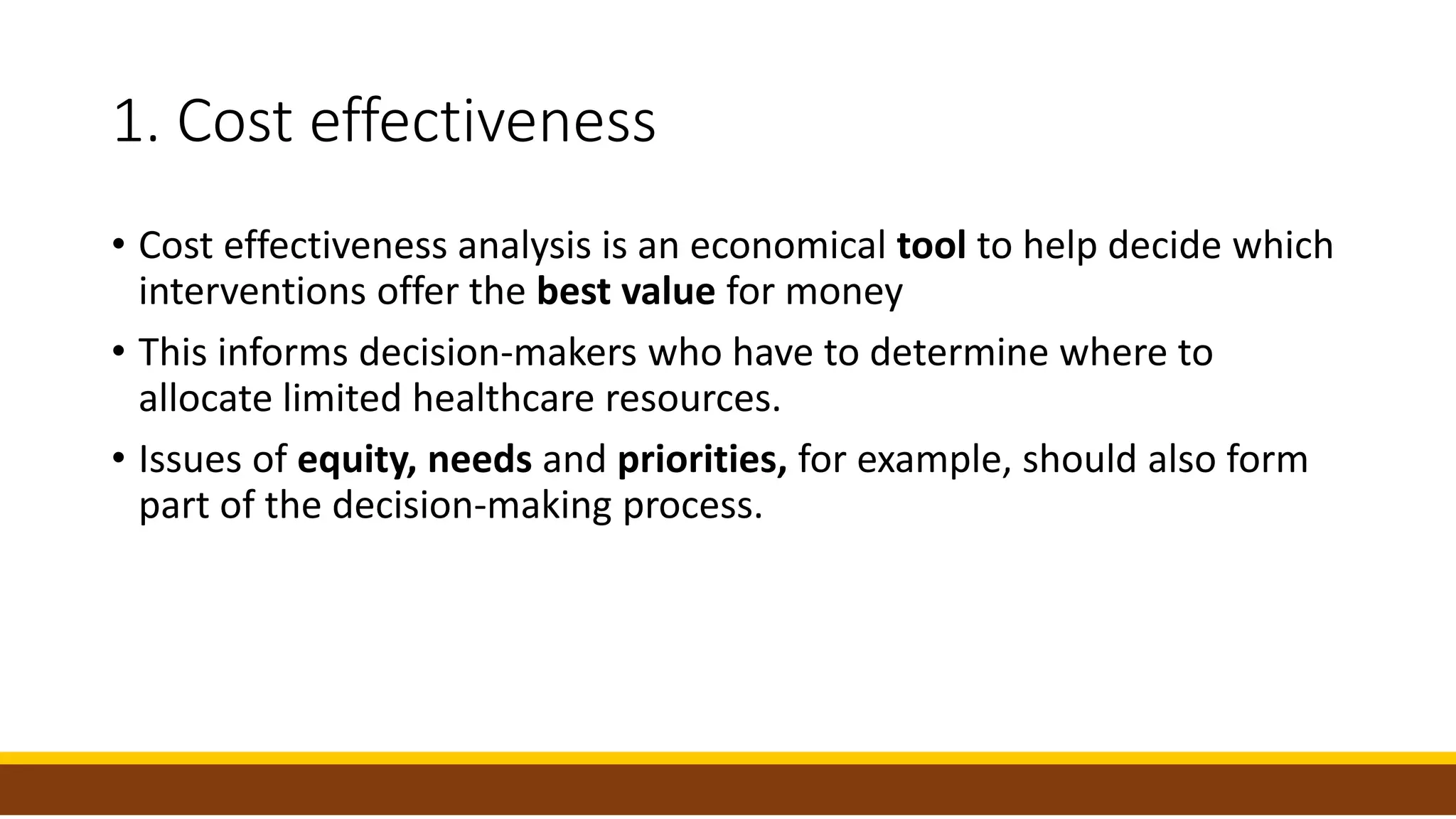
1. Cost effectiveness
• Cost effectiveness analysis is an economical tool to help decide which
interventions offer the best value for money
• This informs decision-makers who have to determine where to
allocate limited healthcare resources.
• Issues of equity, needs and priorities, for example, should also form
part of the decision-making process.
2. Critical appraisal
• The process of systematically examining research evidence to asses
its validity, results and relevance before using to inform decision.
• An essential part of the delivery of evidence based clinical practice
effectively.
• It includes the process of systematically finding, appraising and
acting on evidence of effectiveness
• It closes the gap between research and practice
3. Clinical guidelines
• “A systematically developed statements to assist practitioner and patient
decisions about appropriate HC for specific clinical circumstances”
• The clinical staff are well informed about the benefit of clinical guidelines
and they should be involved in the development of local clinical guidelines
to get the ownership.
• HC organizations are expected to ensure that the clinical teams have
access to available evidence on which to base their practice
• Clinical guidelines provide an important route to promote evidence based
practice and the basis for systematic audit.
Does not limit good
Professional judgement
Motivate
continuity of usage
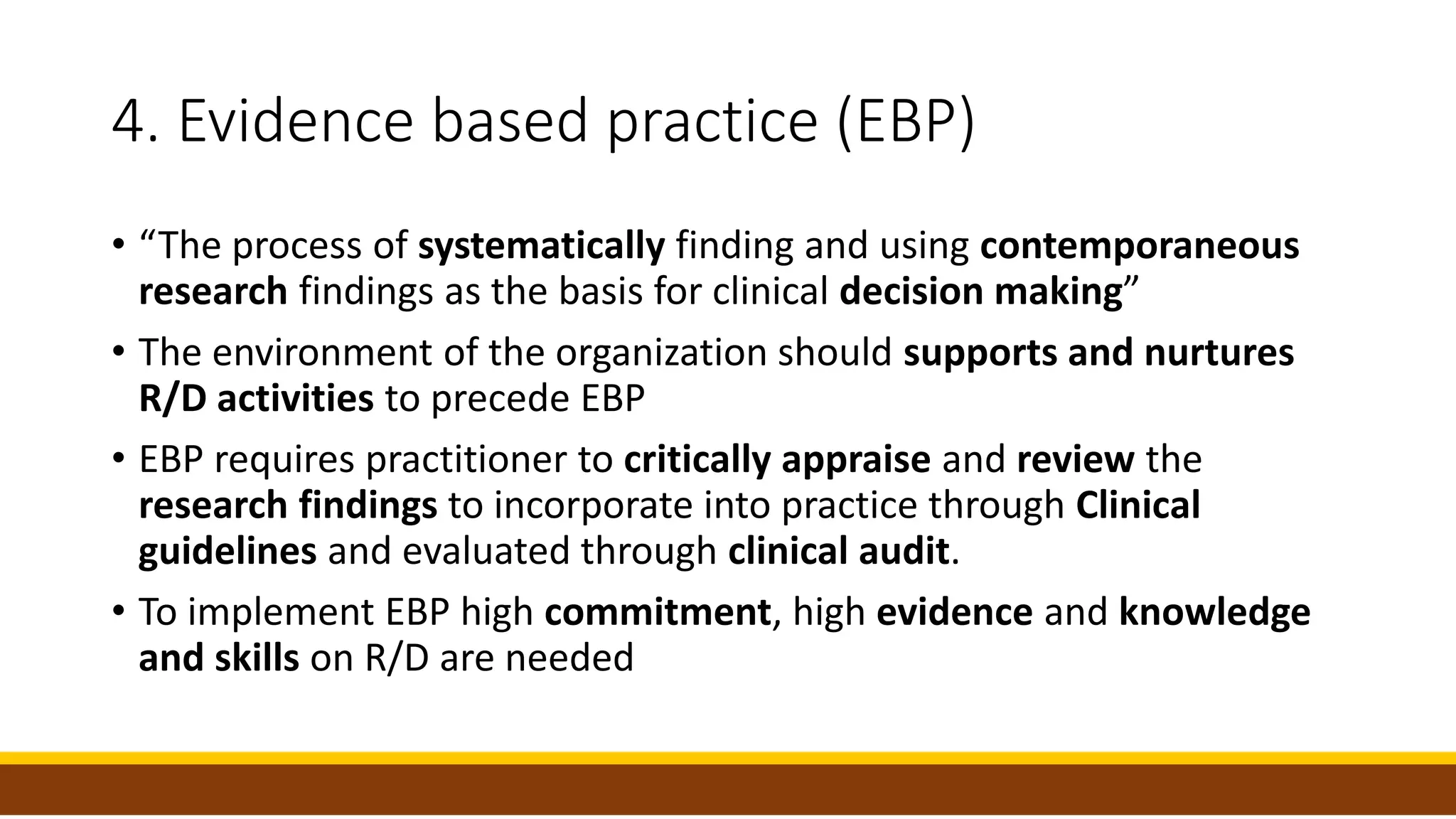
4. Evidence based practice (EBP)
• “The process of systematically finding and using contemporaneous
research findings as the basis for clinical decision making”
• The environment of the organization should supports and nurtures
R/D activities to precede EBP
• EBP requires practitioner to critically appraise and review the
research findings to incorporate into practice through Clinical
guidelines and evaluated through clinical audit.
• To implement EBP high commitment, high evidence and knowledge
and skills on R/D are needed
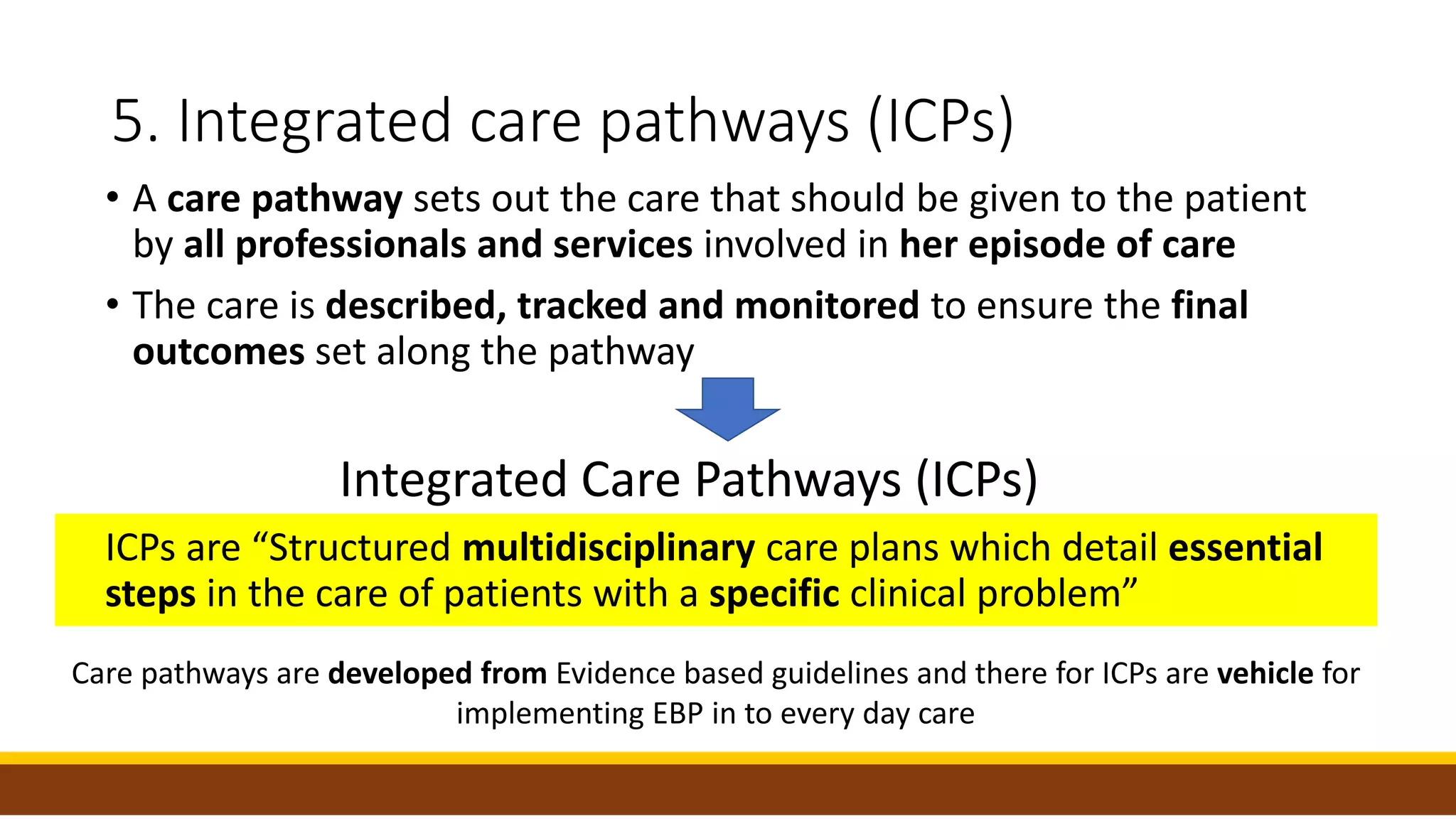
5. Integrated care pathways (ICPs)
• A care pathway sets out the care that should be given to the patient
by all professionals and services involved in her episode of care
• The care is described, tracked and monitored to ensure the final
outcomes set along the pathway
Integrated Care Pathways (ICPs)
ICPs are “Structured multidisciplinary care plans which detail essential
steps in the care of patients with a specific clinical problem”
Care pathways are developed from Evidence based guidelines and there for ICPs are vehicle for
implementing EBP in to every day care
Variance in ICPs
• If at any point the pathway is not followed the reason for the
deviation for the pathway should be analyzed
• Analyzing variance provides a system for monitoring quality of care
and pathway
• ICPs are key to reducing the variation in healthcare, which can lead to
cost savings and lower waiting times.
Variance
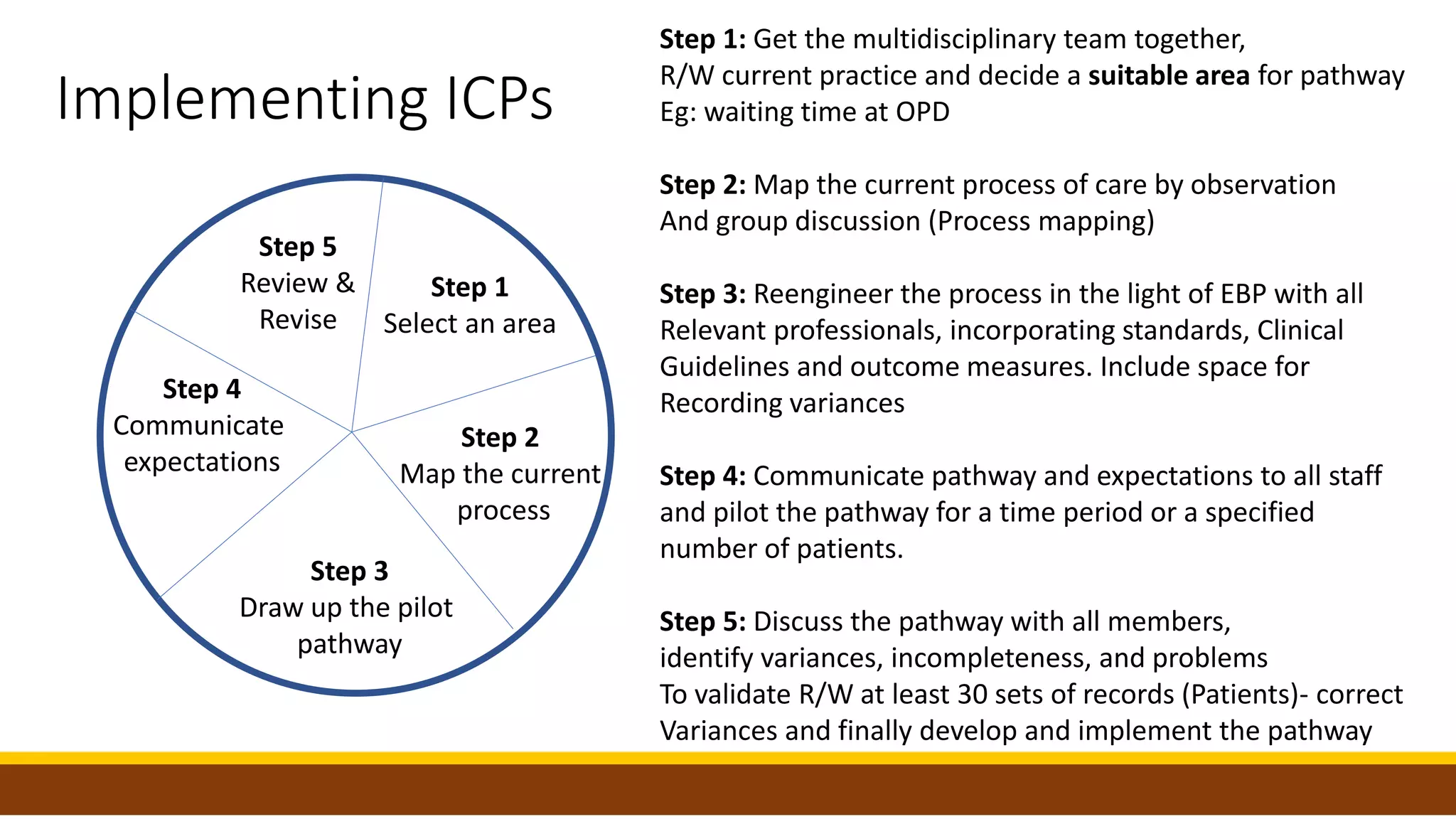
Implementing ICPs
Step 5
Review &
Revise
Step 4
Communicate
expectations
Step 3
Draw up the pilot
pathway
Step 2
Map the current
process
Step 1
Select an area
Step 1: Get the multidisciplinary team together,
R/W current practice and decide a suitable area for pathway
Eg: waiting time at OPD
Step 2: Map the current process of care by observation
And group discussion (Process mapping)
Step 3: Reengineer the process in the light of EBP with all
Relevant professionals, incorporating standards, Clinical
Guidelines and outcome measures. Include space for
Recording variances
Step 4: Communicate pathway and expectations to all staff
and pilot the pathway for a time period or a specified
number of patients.
Step 5: Discuss the pathway with all members,
identify variances, incompleteness, and problems
To validate R/W at least 30 sets of records (Patients)- correct
Variances and finally develop and implement the pathway
6. Good practice, Ideas & Innovations
• The organization must encourage and support good practice, new
ideas and innovations through
• Working groups
• Regular team meetings
• Appraisal
• Clinical supervision etc.
• Ideas and innovations rigorously evaluated and then if the results are
positive disseminated across the organization.
Conclusion
• Pillar 6 of CG is about ensuring that the care is delivered to patients is
evidence based and will result in positive outcomes.
• Patients, service users, carers and partners are involved in the
development of the clinical effectiveness strategy
• Effective clinical practice can be implemented through integrated care
pathways

Clinical effectiveness

  • 1.
    Pillar 6 ofCG Clinical Effectiveness
  • 2.
    ”The degree towhich the organization is ensuring that best practice, based on evidence of effectiveness where such evidence exists, is used.” (Department of Health, 1996) Clinical effectiveness
  • 3.
    Main elements ofclinical effectiveness 1. Cost effectiveness 2. Critical appraisal 3. Clinical guidelines 4. Evidence based practice 5. Integrated care pathways 6. Good practice ideas & Innovations
  • 4.
    1. Cost effectiveness •Cost effectiveness analysis is an economical tool to help decide which interventions offer the best value for money • This informs decision-makers who have to determine where to allocate limited healthcare resources. • Issues of equity, needs and priorities, for example, should also form part of the decision-making process.
  • 5.
    2. Critical appraisal •The process of systematically examining research evidence to asses its validity, results and relevance before using to inform decision. • An essential part of the delivery of evidence based clinical practice effectively. • It includes the process of systematically finding, appraising and acting on evidence of effectiveness • It closes the gap between research and practice
  • 6.
    3. Clinical guidelines •“A systematically developed statements to assist practitioner and patient decisions about appropriate HC for specific clinical circumstances” • The clinical staff are well informed about the benefit of clinical guidelines and they should be involved in the development of local clinical guidelines to get the ownership. • HC organizations are expected to ensure that the clinical teams have access to available evidence on which to base their practice • Clinical guidelines provide an important route to promote evidence based practice and the basis for systematic audit. Does not limit good Professional judgement Motivate continuity of usage
  • 7.
    4. Evidence basedpractice (EBP) • “The process of systematically finding and using contemporaneous research findings as the basis for clinical decision making” • The environment of the organization should supports and nurtures R/D activities to precede EBP • EBP requires practitioner to critically appraise and review the research findings to incorporate into practice through Clinical guidelines and evaluated through clinical audit. • To implement EBP high commitment, high evidence and knowledge and skills on R/D are needed
  • 8.
    5. Integrated carepathways (ICPs) • A care pathway sets out the care that should be given to the patient by all professionals and services involved in her episode of care • The care is described, tracked and monitored to ensure the final outcomes set along the pathway Integrated Care Pathways (ICPs) ICPs are “Structured multidisciplinary care plans which detail essential steps in the care of patients with a specific clinical problem” Care pathways are developed from Evidence based guidelines and there for ICPs are vehicle for implementing EBP in to every day care
  • 9.
    Variance in ICPs •If at any point the pathway is not followed the reason for the deviation for the pathway should be analyzed • Analyzing variance provides a system for monitoring quality of care and pathway • ICPs are key to reducing the variation in healthcare, which can lead to cost savings and lower waiting times. Variance
  • 10.
    Implementing ICPs Step 5 Review& Revise Step 4 Communicate expectations Step 3 Draw up the pilot pathway Step 2 Map the current process Step 1 Select an area Step 1: Get the multidisciplinary team together, R/W current practice and decide a suitable area for pathway Eg: waiting time at OPD Step 2: Map the current process of care by observation And group discussion (Process mapping) Step 3: Reengineer the process in the light of EBP with all Relevant professionals, incorporating standards, Clinical Guidelines and outcome measures. Include space for Recording variances Step 4: Communicate pathway and expectations to all staff and pilot the pathway for a time period or a specified number of patients. Step 5: Discuss the pathway with all members, identify variances, incompleteness, and problems To validate R/W at least 30 sets of records (Patients)- correct Variances and finally develop and implement the pathway
  • 11.
    6. Good practice,Ideas & Innovations • The organization must encourage and support good practice, new ideas and innovations through • Working groups • Regular team meetings • Appraisal • Clinical supervision etc. • Ideas and innovations rigorously evaluated and then if the results are positive disseminated across the organization.
  • 12.
    Conclusion • Pillar 6of CG is about ensuring that the care is delivered to patients is evidence based and will result in positive outcomes. • Patients, service users, carers and partners are involved in the development of the clinical effectiveness strategy • Effective clinical practice can be implemented through integrated care pathways

Editor's Notes

  • #9 So, ICPs are vehicle for turning the concept of CG in to reality and incorporate many of the elements of CG
  • #11 Process Mapping is a method for defining: The sequence of steps and activities to be performed along the Integrated Care Pathway