Fahad Ali (28)
Climate Change Impacts on Ecosystem:
Rising Sea Level:
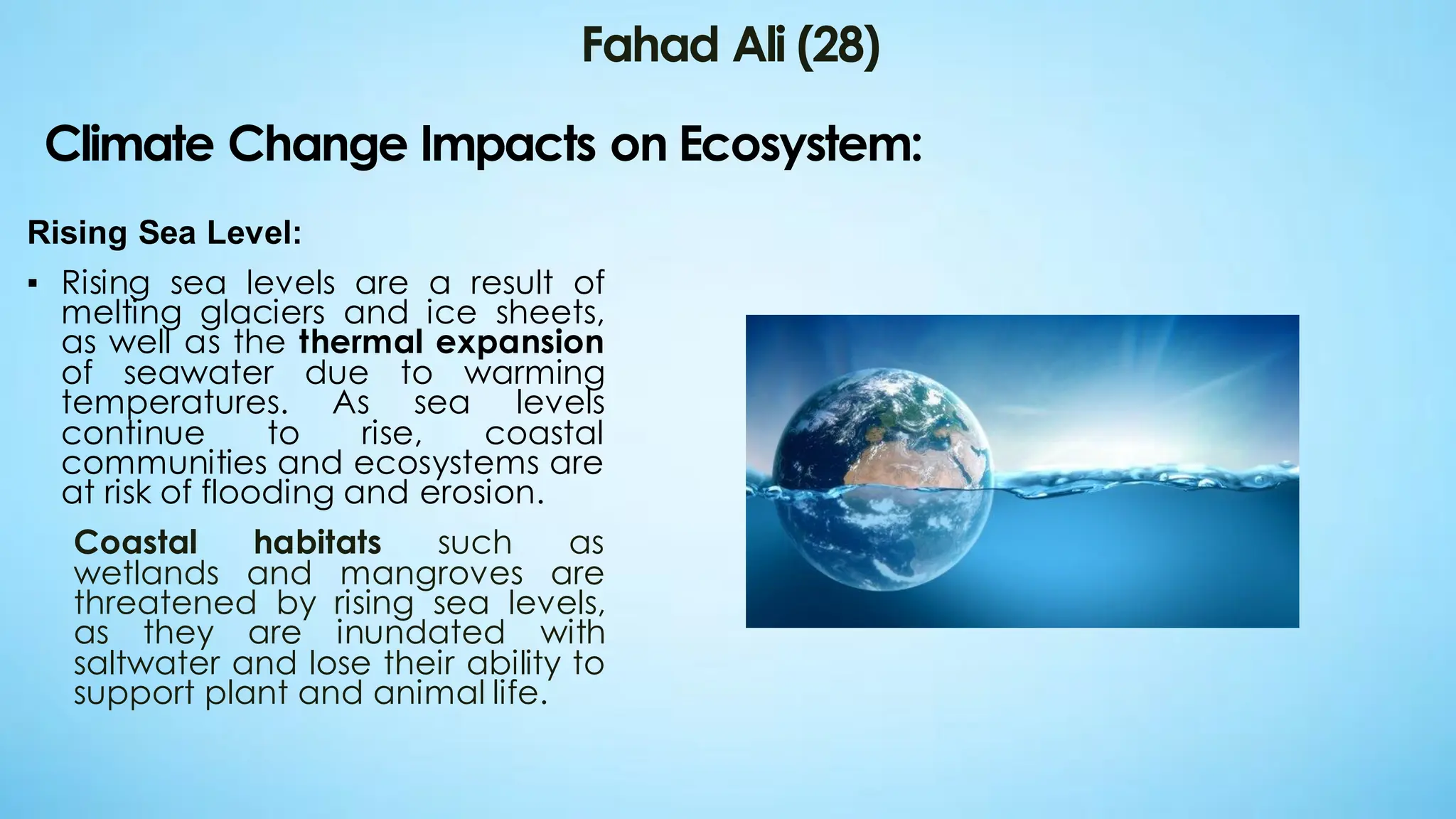
▪ Rising sea levels are a result of
melting glaciers and ice sheets,
as well as the thermal expansion
of seawater due to warming
temperatures. As sea levels
continue to rise, coastal
communities and ecosystems are
at risk of flooding and erosion.
Coastal habitats such as
wetlands and mangroves are
threatened by rising sea levels,
as they are inundated with
saltwater and lose their ability to
support plant and animal life.
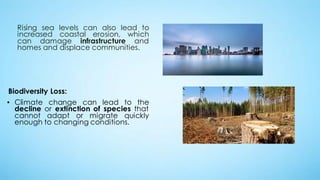
Rising sea levels can also lead to
increased coastal erosion, which
can damage infrastructure and
homes and displace communities.
Biodiversity Loss:
▪ Climate change can lead to the
decline or extinction of species that
cannot adapt or migrate quickly
enough to changing conditions.
Ocean Acidification:
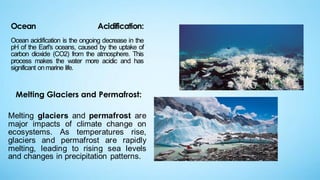
Ocean acidification is the ongoing decrease in the
pH of the Earl's oceans, caused by the uptake of
carbon dioxide (CO2) from the atmosphere. This
process makes the water more acidic and has
significant onmarine life.
Melting Glaciers and Permafrost:
Melting glaciers and permafrost are
major impacts of climate change on
ecosystems. As temperatures rise,
glaciers and permafrost are rapidly
melting, leading to rising sea levels
and changes in precipitation patterns.
Extreme weather events:
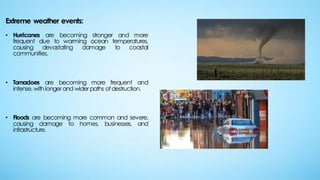
• Hurricanes are becoming stronger and more
frequent due to warming ocean temperatures,
causing devastating damage to coastal
communities.
• Tornadoes are becoming more frequent and
intense,withlonger and wider paths ofdestruction.
• Floods are becoming more common and severe,
causing damage to homes, businesses, and
infrastructure.
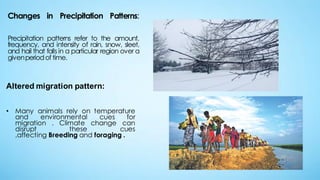
Changes in Precipitation Patterns:
Precipitation patterns refer to the amount,
frequency, and intensity of rain, snow, sleet,
and hail that falls in a particular region over a
givenperiodof time.
Altered migration pattern:
• Many animals rely on temperature
and environmental cues for
migration . Climate change can
disrupt these cues
,affecting Breeding and foraging .
Climate change impacts on ecosystem

Climate change impacts on ecosystem

  • 1.
    Fahad Ali (28) ClimateChange Impacts on Ecosystem: Rising Sea Level: ▪ Rising sea levels are a result of melting glaciers and ice sheets, as well as the thermal expansion of seawater due to warming temperatures. As sea levels continue to rise, coastal communities and ecosystems are at risk of flooding and erosion. Coastal habitats such as wetlands and mangroves are threatened by rising sea levels, as they are inundated with saltwater and lose their ability to support plant and animal life.
  • 2.
    Rising sea levelscan also lead to increased coastal erosion, which can damage infrastructure and homes and displace communities. Biodiversity Loss: ▪ Climate change can lead to the decline or extinction of species that cannot adapt or migrate quickly enough to changing conditions.
  • 3.
    Ocean Acidification: Ocean acidificationis the ongoing decrease in the pH of the Earl's oceans, caused by the uptake of carbon dioxide (CO2) from the atmosphere. This process makes the water more acidic and has significant onmarine life. Melting Glaciers and Permafrost: Melting glaciers and permafrost are major impacts of climate change on ecosystems. As temperatures rise, glaciers and permafrost are rapidly melting, leading to rising sea levels and changes in precipitation patterns.
  • 4.
    Extreme weather events: •Hurricanes are becoming stronger and more frequent due to warming ocean temperatures, causing devastating damage to coastal communities. • Tornadoes are becoming more frequent and intense,withlonger and wider paths ofdestruction. • Floods are becoming more common and severe, causing damage to homes, businesses, and infrastructure.
  • 5.
    Changes in PrecipitationPatterns: Precipitation patterns refer to the amount, frequency, and intensity of rain, snow, sleet, and hail that falls in a particular region over a givenperiodof time. Altered migration pattern: • Many animals rely on temperature and environmental cues for migration . Climate change can disrupt these cues ,affecting Breeding and foraging .