CH 4
CLIMATE
Climate is the most important element of
environment on the earth after formation of
land or solid outer surface of the earth.
1. Elements of climate and weather
a) Temperature( root element)
b) Air pressure
c) Winds
d) Humidity
e) Cloudiness
f) Precipitation/rainfall(fruit element)
2. CLIMATE
It refers to the sum total of weather
conditions over a large area for a longer
period of time.(more than 30 years)
3. WEATHER
It refers to the state of atmosphere over an
area /place at any point of time. It is
temporary picture of atmosphere in terms of
elements of weather.
 Chain of elements
make the climate
and weather
conditions.
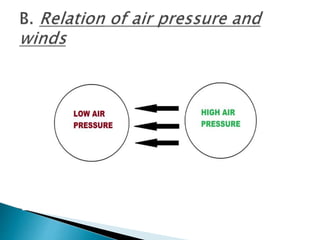
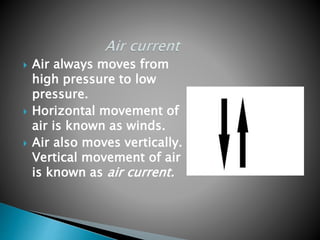
 Air always moves from
high pressure to low
pressure.
 Horizontal movement of
air is known as winds.
 Air also moves vertically.
Vertical movement of air
is known as air current.
 Dry air
 No water vapour or
very low water
vapour.
 Poor air humidity in
air.
 High amount of
water vapour raises
the humidity level
of air.
 Cooling of humid air results into
condensation and formation of clouds.
 Greater the amount of humidity, higher will
be the clouds formation.
 Thickness and intensity of cloud formation
shall lead to precipitation(rainfall).
 Forms of precipitation- rainfall(most common
and important), drizzle, snowfall, sleet, hail
stones.
 For rainfall only moisture or humidity is not
enough, the moist air is needed to rise up
and cooling and to condense.
 There are mainly 3 ways to make the moist
air to rise up and hence the three types of
precipitation-
a) Relief/orographic/mountainous precipitation
b) Convectional precipitation
c) Cyclonic/frontal precipitation
 Monsoon type of climate
 Monsoon refers to the reversal change in the
wind direction during a year.
 India’s climate is refered as monsoon type of
climate.
 Two main factors to control the climate of
India-
a) Location in relation to equator
b) Location in related to water bodies
c) Relief/ mountain/ himalyas
Climate
Climate

Climate

  • 1.
  • 2.
    Climate is themost important element of environment on the earth after formation of land or solid outer surface of the earth. 1. Elements of climate and weather a) Temperature( root element) b) Air pressure c) Winds d) Humidity e) Cloudiness f) Precipitation/rainfall(fruit element)
  • 3.
    2. CLIMATE It refersto the sum total of weather conditions over a large area for a longer period of time.(more than 30 years) 3. WEATHER It refers to the state of atmosphere over an area /place at any point of time. It is temporary picture of atmosphere in terms of elements of weather.
  • 4.
     Chain ofelements make the climate and weather conditions.
  • 8.
     Air alwaysmoves from high pressure to low pressure.  Horizontal movement of air is known as winds.  Air also moves vertically. Vertical movement of air is known as air current.
  • 9.
     Dry air No water vapour or very low water vapour.  Poor air humidity in air.
  • 10.
     High amountof water vapour raises the humidity level of air.
  • 11.
     Cooling ofhumid air results into condensation and formation of clouds.  Greater the amount of humidity, higher will be the clouds formation.  Thickness and intensity of cloud formation shall lead to precipitation(rainfall).  Forms of precipitation- rainfall(most common and important), drizzle, snowfall, sleet, hail stones.
  • 12.
     For rainfallonly moisture or humidity is not enough, the moist air is needed to rise up and cooling and to condense.  There are mainly 3 ways to make the moist air to rise up and hence the three types of precipitation- a) Relief/orographic/mountainous precipitation b) Convectional precipitation c) Cyclonic/frontal precipitation
  • 13.
     Monsoon typeof climate  Monsoon refers to the reversal change in the wind direction during a year.  India’s climate is refered as monsoon type of climate.  Two main factors to control the climate of India- a) Location in relation to equator b) Location in related to water bodies c) Relief/ mountain/ himalyas