Downloaded 23 times
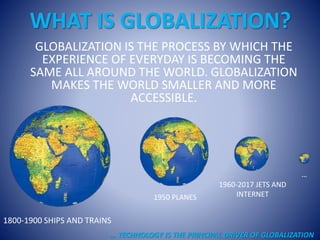

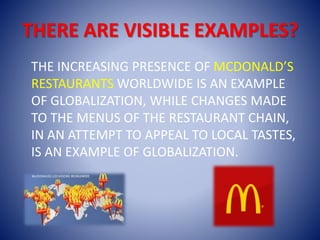
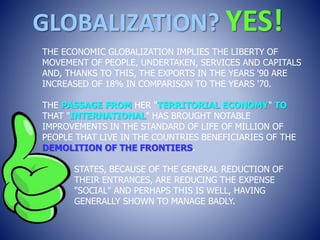
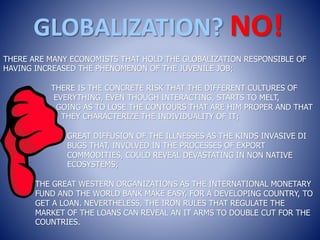

Globalization is defined as the process by which the daily experiences of people around the world are becoming increasingly similar. Technological advances like ships, trains, planes, and the internet have driven globalization by making the world smaller and more accessible. Since World War II, governments have negotiated reductions in trade barriers and established agreements like the WTO to promote world trade. Examples of globalization include the widespread presence of multinational companies adapting to local tastes, like McDonald's adjusting menus internationally. Globalization is important to the modern economy by allowing companies to communicate, buy materials cheaply, sell goods worldwide, and improve products through new technologies. However, some argue it can increase youth unemployment, risks cultural homogenization, and exposes developing countries


