Client/Server Network
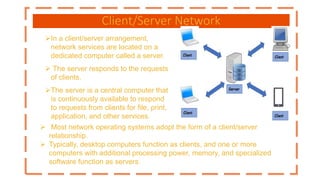
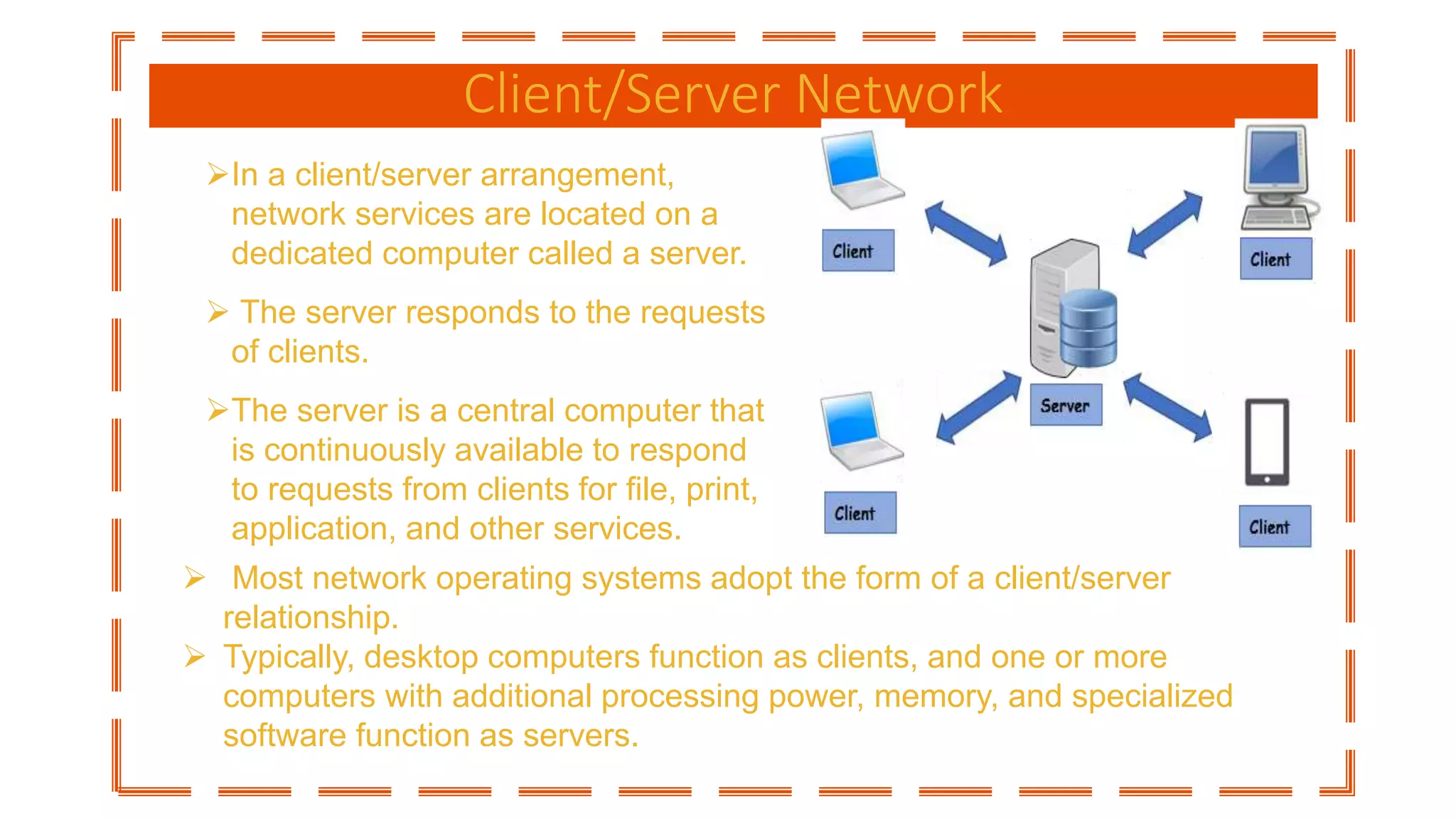
In a client/server arrangement,
network services are located on a
dedicated computer called a server.
 The server responds to the requests
of clients.
The server is a central computer that
is continuously available to respond
to requests from clients for file, print,
application, and other services.
 Most network operating systems adopt the form of a client/server
relationship.
 Typically, desktop computers function as clients, and one or more
computers with additional processing power, memory, and specialized
software function as servers.
Peer to Peer Network
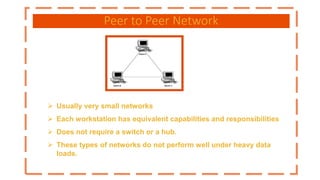
 Usually very small networks
 Each workstation has equivalent capabilities and responsibilities
 Does not require a switch or a hub.
 These types of networks do not perform well under heavy data
loads.

Client Server model.pptx

  • 1.
    Client/Server Network In aclient/server arrangement, network services are located on a dedicated computer called a server.  The server responds to the requests of clients. The server is a central computer that is continuously available to respond to requests from clients for file, print, application, and other services.  Most network operating systems adopt the form of a client/server relationship.  Typically, desktop computers function as clients, and one or more computers with additional processing power, memory, and specialized software function as servers.
  • 2.
    Peer to PeerNetwork  Usually very small networks  Each workstation has equivalent capabilities and responsibilities  Does not require a switch or a hub.  These types of networks do not perform well under heavy data loads.