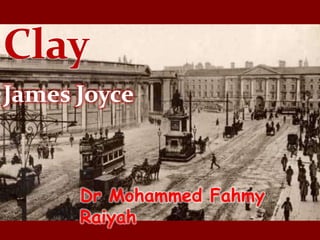
Clay
James Joyce


      Dr Mohammed Fahmy
      Raiyah
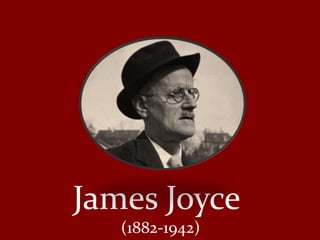
James Joyce
   (1882-1942)
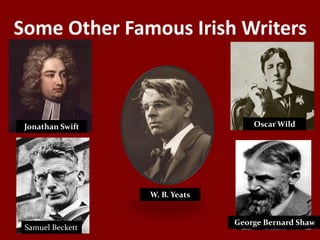
Some Other Famous Irish Writers


 Jonathan Swift                     Oscar Wild


                  W. B. Yeats


                                George Bernard Shaw
 Samuel Beckett
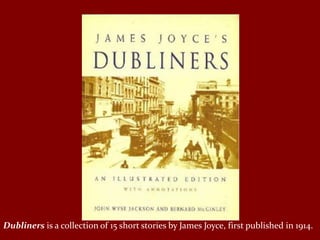
Dubliners is a collection of 15 short stories by James Joyce, first published in 1914.
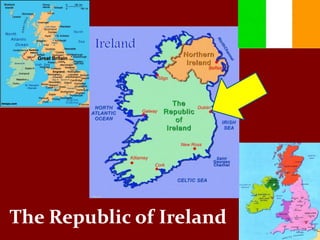
The Republic of Ireland
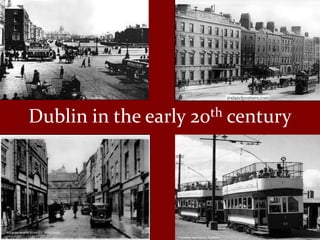
Dublin in the early 20th century
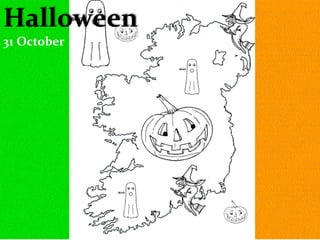
Halloween
31 October
Halloween              Turnip lanterns


      Trick or treat


Barmbracks             Bumpkin lanterns
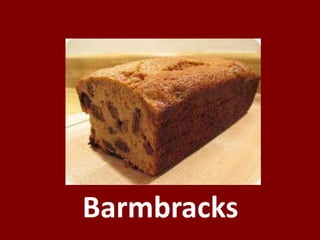
Barmbracks
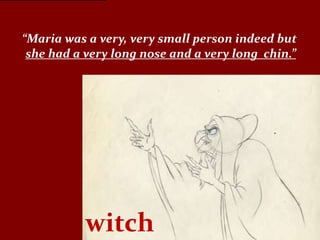
“Maria was a very, very small person indeed but
 she had a very long nose and a very long chin.”


           witch
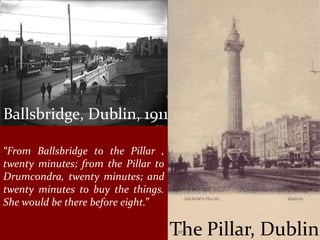
Ballsbridge, Dublin, 1911

“From Ballsbridge to the Pillar ,
twenty minutes; from the Pillar to
Drumcondra, twenty minutes; and
twenty minutes to buy the things.
She would be there before eight.”

                                     The Pillar, Dublin
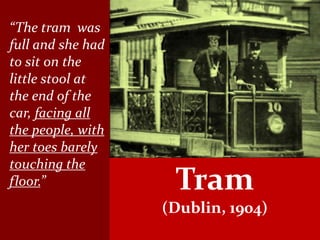
“The tram was
full and she had
to sit on the
little stool at
the end of the
car, facing all
the people, with
her toes barely
touching the
floor.”             Tram
                   (Dublin, 1904)
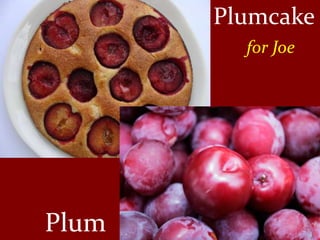
Plumcake
         for Joe


Plum
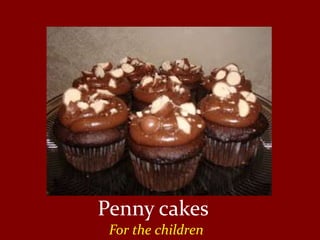
Penny cakes
 For the children
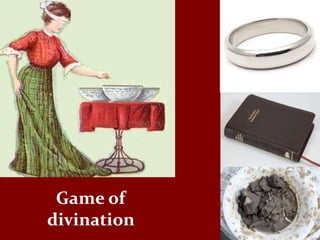
Game of
divination
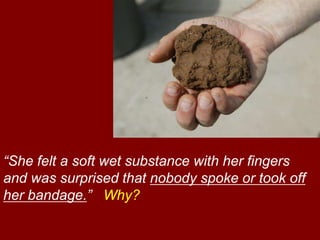
“She felt a soft wet substance with her fingers
and was surprised that nobody spoke or took off
her bandage.” Why?
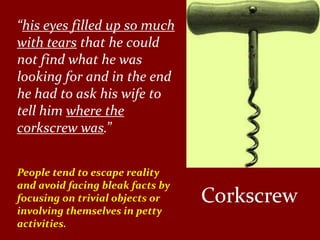
“his eyes filled up so much
with tears that he could
not find what he was
looking for and in the end
he had to ask his wife to
tell him where the
corkscrew was.”


People tend to escape reality
and avoid facing bleak facts by
focusing on trivial objects or    Corkscrew
involving themselves in petty
activities.
ANALYSIS
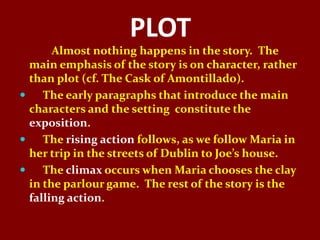
PLOT
       Almost nothing happens in the story. The
  main emphasis of the story is on character, rather
  than plot (cf. The Cask of Amontillado).
    The early paragraphs that introduce the main
  characters and the setting constitute the
  exposition.
    The rising action follows, as we follow Maria in
  her trip in the streets of Dublin to Joe’s house.
    The climax occurs when Maria chooses the clay
  in the parlour game. The rest of the story is the
  falling action.
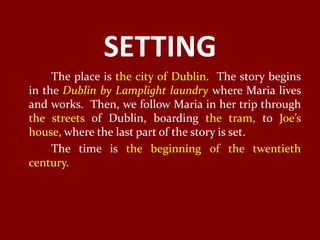
SETTING
     The place is the city of Dublin. The story begins
in the Dublin by Lamplight laundry where Maria lives
and works. Then, we follow Maria in her trip through
the streets of Dublin, boarding the tram, to Joe’s
house, where the last part of the story is set.
     The time is the beginning of the twentieth
century.
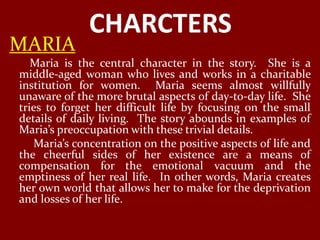
CHARCTERS
MARIA
   Maria is the central character in the story. She is a
middle-aged woman who lives and works in a charitable
institution for women. Maria seems almost willfully
unaware of the more brutal aspects of day-to-day life. She
tries to forget her difficult life by focusing on the small
details of daily living. The story abounds in examples of
Maria’s preoccupation with these trivial details.
   Maria’s concentration on the positive aspects of life and
the cheerful sides of her existence are a means of
compensation for the emotional vacuum and the
emptiness of her real life. In other words, Maria creates
her own world that allows her to make for the deprivation
and losses of her life.
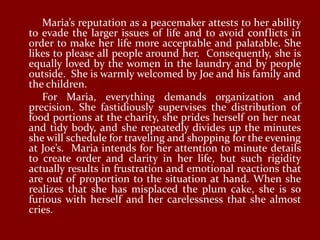
Maria’s reputation as a peacemaker attests to her ability
to evade the larger issues of life and to avoid conflicts in
order to make her life more acceptable and palatable. She
likes to please all people around her. Consequently, she is
equally loved by the women in the laundry and by people
outside. She is warmly welcomed by Joe and his family and
the children.
   For Maria, everything demands organization and
precision. She fastidiously supervises the distribution of
food portions at the charity, she prides herself on her neat
and tidy body, and she repeatedly divides up the minutes
she will schedule for traveling and shopping for the evening
at Joe’s. Maria intends for her attention to minute details
to create order and clarity in her life, but such rigidity
actually results in frustration and emotional reactions that
are out of proportion to the situation at hand. When she
realizes that she has misplaced the plum cake, she is so
furious with herself and her carelessness that she almost
cries.
Mari’s choice of clay during the game signifies, not
her impending death, but her emotional death. On
the other hand, her choice of the prayer book, which
stands for her entering a nunnery, symbolizes her
further retreat from real life.
POINT OF VIEW
     limited third-person point-of-view. The narrator
lets us see the world through the eyes and thinking of
Maria. The reader is permitted to go inside the mind
of Maria and no other character.
THEMES
Death-in-life:
      The story shows how people can live an incomplete life in which
 their concentration on the small trivial details prevents them from
 seeing the bleak reality of their existence and makes them seem dead.
 Consequently, they live in a state between life and death.
Death:
       Death is a prominent theme in the story. The title word of the
 story is a symbol of death. Maria picks the saucer that contains clay, a
 portent of imminent death. Joe, aware of Maria’s old age, is moved to
 tears.
SYMBOLISM
 Clay:
      Clay in the traditional game of divination is a
 symbol of death. On the other hand, clay is also a symbol
 of Maria’s death-in-life state. Maria’s life that is focused
 on small details, avoiding facing the reality of life, is a
 kind of metaphorical death.
Corkscrew:
      The corkscrew that Joe looks for when he is full
 of tears upon hearing Maria’s song is a symbol of the
 way people avoid facing painful reality by focusing on
 small trivial objects.

Clay by James Joyce, Analysis

  • 1.
    Clay James Joyce Dr Mohammed Fahmy Raiyah
  • 2.
    James Joyce (1882-1942)
  • 3.
    Some Other FamousIrish Writers Jonathan Swift Oscar Wild W. B. Yeats George Bernard Shaw Samuel Beckett
  • 4.
    Dubliners is acollection of 15 short stories by James Joyce, first published in 1914.
  • 5.
  • 6.
    Dublin in theearly 20th century
  • 7.
  • 8.
    Halloween Turnip lanterns Trick or treat Barmbracks Bumpkin lanterns
  • 9.
  • 10.
    “Maria was avery, very small person indeed but she had a very long nose and a very long chin.” witch
  • 11.
    Ballsbridge, Dublin, 1911 “FromBallsbridge to the Pillar , twenty minutes; from the Pillar to Drumcondra, twenty minutes; and twenty minutes to buy the things. She would be there before eight.” The Pillar, Dublin
  • 12.
    “The tram was fulland she had to sit on the little stool at the end of the car, facing all the people, with her toes barely touching the floor.” Tram (Dublin, 1904)
  • 13.
    Plumcake for Joe Plum
  • 14.
    Penny cakes Forthe children
  • 15.
  • 16.
    “She felt asoft wet substance with her fingers and was surprised that nobody spoke or took off her bandage.” Why?
  • 17.
    “his eyes filledup so much with tears that he could not find what he was looking for and in the end he had to ask his wife to tell him where the corkscrew was.” People tend to escape reality and avoid facing bleak facts by focusing on trivial objects or Corkscrew involving themselves in petty activities.
  • 18.
  • 19.
    PLOT Almost nothing happens in the story. The main emphasis of the story is on character, rather than plot (cf. The Cask of Amontillado).  The early paragraphs that introduce the main characters and the setting constitute the exposition.  The rising action follows, as we follow Maria in her trip in the streets of Dublin to Joe’s house.  The climax occurs when Maria chooses the clay in the parlour game. The rest of the story is the falling action.
  • 20.
    SETTING The place is the city of Dublin. The story begins in the Dublin by Lamplight laundry where Maria lives and works. Then, we follow Maria in her trip through the streets of Dublin, boarding the tram, to Joe’s house, where the last part of the story is set. The time is the beginning of the twentieth century.
  • 21.
    CHARCTERS MARIA Maria is the central character in the story. She is a middle-aged woman who lives and works in a charitable institution for women. Maria seems almost willfully unaware of the more brutal aspects of day-to-day life. She tries to forget her difficult life by focusing on the small details of daily living. The story abounds in examples of Maria’s preoccupation with these trivial details. Maria’s concentration on the positive aspects of life and the cheerful sides of her existence are a means of compensation for the emotional vacuum and the emptiness of her real life. In other words, Maria creates her own world that allows her to make for the deprivation and losses of her life.
  • 22.
    Maria’s reputation asa peacemaker attests to her ability to evade the larger issues of life and to avoid conflicts in order to make her life more acceptable and palatable. She likes to please all people around her. Consequently, she is equally loved by the women in the laundry and by people outside. She is warmly welcomed by Joe and his family and the children. For Maria, everything demands organization and precision. She fastidiously supervises the distribution of food portions at the charity, she prides herself on her neat and tidy body, and she repeatedly divides up the minutes she will schedule for traveling and shopping for the evening at Joe’s. Maria intends for her attention to minute details to create order and clarity in her life, but such rigidity actually results in frustration and emotional reactions that are out of proportion to the situation at hand. When she realizes that she has misplaced the plum cake, she is so furious with herself and her carelessness that she almost cries.
  • 23.
    Mari’s choice ofclay during the game signifies, not her impending death, but her emotional death. On the other hand, her choice of the prayer book, which stands for her entering a nunnery, symbolizes her further retreat from real life.
  • 24.
    POINT OF VIEW limited third-person point-of-view. The narrator lets us see the world through the eyes and thinking of Maria. The reader is permitted to go inside the mind of Maria and no other character.
  • 25.
    THEMES Death-in-life: The story shows how people can live an incomplete life in which their concentration on the small trivial details prevents them from seeing the bleak reality of their existence and makes them seem dead. Consequently, they live in a state between life and death. Death: Death is a prominent theme in the story. The title word of the story is a symbol of death. Maria picks the saucer that contains clay, a portent of imminent death. Joe, aware of Maria’s old age, is moved to tears.
  • 26.
    SYMBOLISM Clay: Clay in the traditional game of divination is a symbol of death. On the other hand, clay is also a symbol of Maria’s death-in-life state. Maria’s life that is focused on small details, avoiding facing the reality of life, is a kind of metaphorical death. Corkscrew: The corkscrew that Joe looks for when he is full of tears upon hearing Maria’s song is a symbol of the way people avoid facing painful reality by focusing on small trivial objects.