CLAUSE
iSLCollective.com
A clause is a group of words that has both a subject and a
predicate [or a verb].
Examples:
Lavanya sings a song.
In the above example, Lavanya is the Subject. Sings is
the verb. The sentence tells about Lavanya who sings a
song. So the sentence has one clause.
CLAUSE
iSLCollective.com
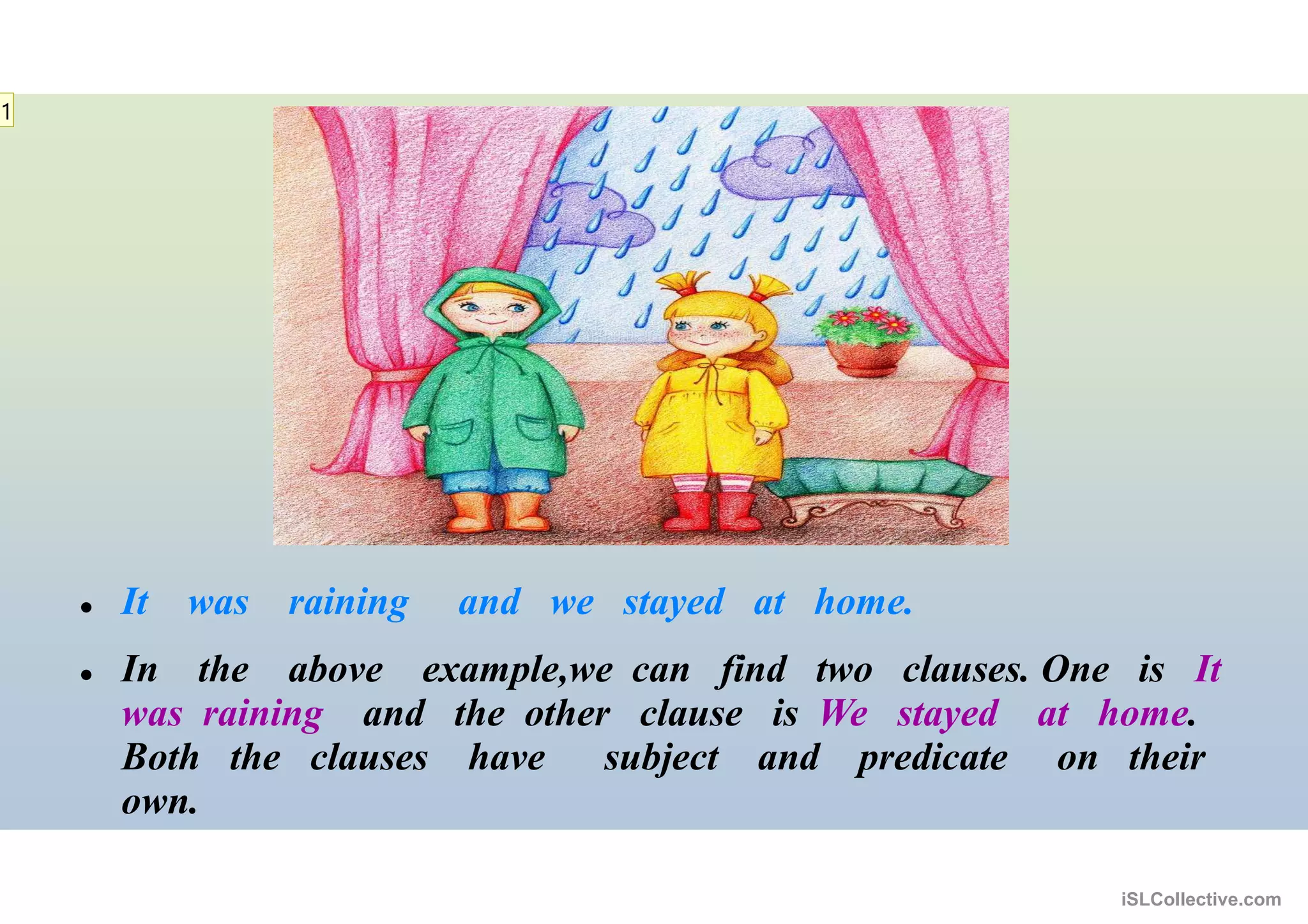
 It was raining and we stayed at home.
 In the above example,we can find two clauses. One is It
was raining and the other clause is We stayed at home.
Both the clauses have subject and predicate on their
own.
1
iSLCollective.com
Slide 3
1 , 4/16/2020
iSLCollective.com
There are two types of clause.
 Independent clause [Main clause]
 Dependent clause [Subordinate clause]
 Independent clause [Main clause] contains a subject
and a predicate which can stand alone and expresses
a complete thought.
EXAMPLE: He went to library .
 Dependent clause [Subordinate clause] contains a
subject and a predicate but they cannot stand alone
and does not express a complete thought. It has to
depend on the main clause to give a complete
meaning.
EXAMPLE: As Hari is fond of reading books.
iSLCollective.com
As Hari is fond of reading, he went to library.
Now the dependent clause is attached to the main clause
to give a complete meaningful sentence.
iSLCollective.com
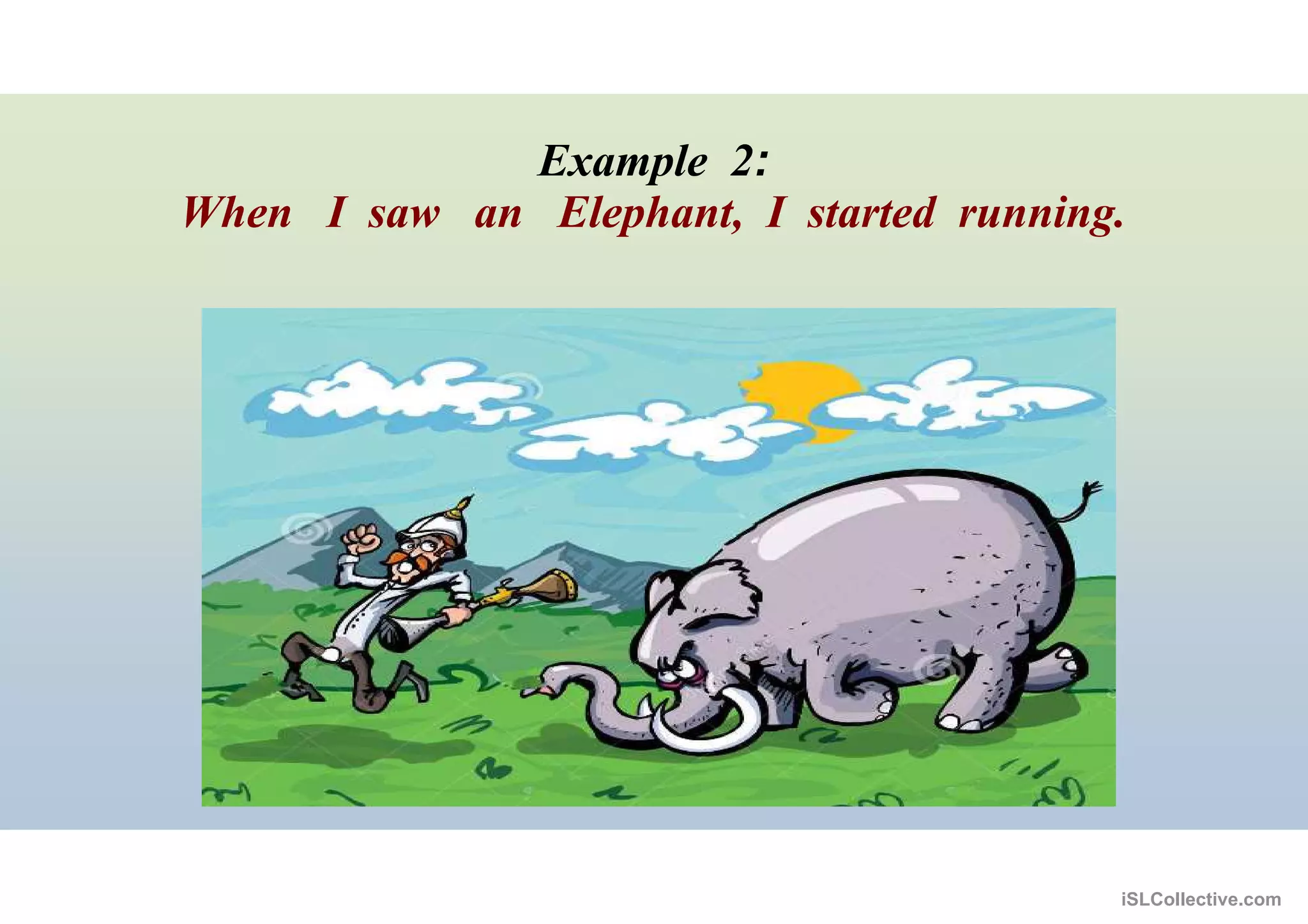
Example 2:
When I saw an Elephant, I started running.
iSLCollective.com
In the example, I started running is the independent
clause which has a subject and a predicate and can
stand alone and expresses a complete thought.
When I saw an Elephant is the Dependent clause
which has a subject and a predicate but cannot stand
alone and do not express a complete thought. It has to
depend on the Independent clause to give a complete,
meaningful sentence.
iSLCollective.com
 Dependent or sub-ordinate clause are of three
types:
 1. Noun Clause.
 2. Adjective Clause.
 3. Adverb Clause.
iSLCollective.com
NOUN CLAUSE
A Noun clause contains a subject and a verb.
The noun clause plays the role of a noun in a
sentence.
They cannot stand on their own because they are not
a complete thought and must be paired with the main
clause.
A noun clause begins with a subordinator that
iSLCollective.com
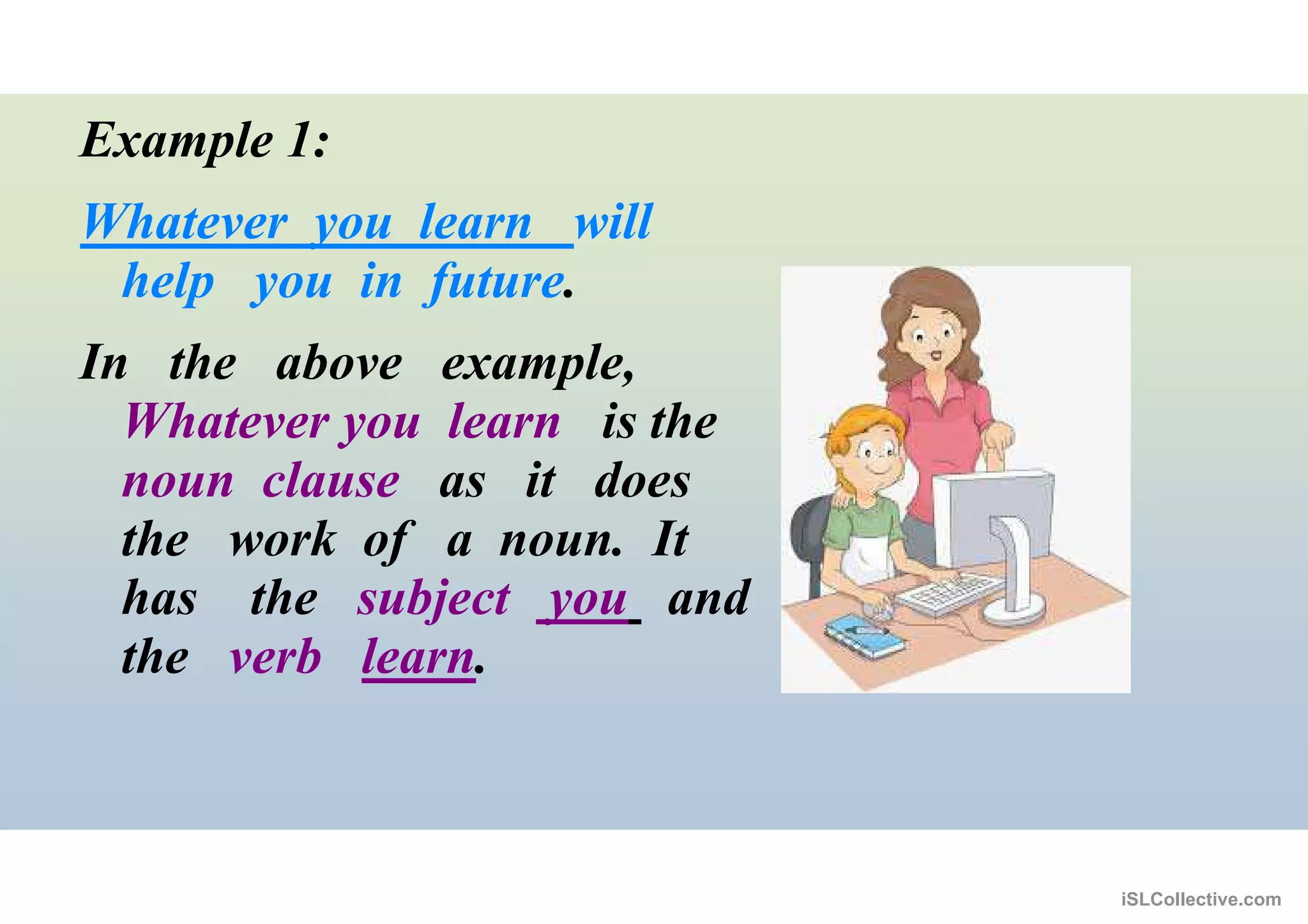
Example 1:
Whatever you learn will
help you in future.
In the above example,
Whatever you learn is the
noun clause as it does
the work of a noun. It
has the subject you and
the verb learn.
iSLCollective.com
. Example 2:
Our teacher knows that
Sherin will pass the test.
That Sherin will pass the
test acts as a noun in the
sentence. It has the
subject [ Sherin] and the
verb [will pass].
So that he will pass the
test is a noun clause.
iSLCollective.com
ADJECTIVE CLAUSE
 A dependent clause that functions as an adjective in
a sentence is called an Adjective clause.
 An adjective clause works like an adjective in a
sentence. The function of an adjective is to describe a
noun or a pronoun.
 An Adjective clause describes or gives information
about a noun- tells us which one, what kind, or how
many.
 It will begin with a relative pronoun [who, whom,
whose, that, or which] or a relative adverb [when, where,
or why].
iSLCollective.com
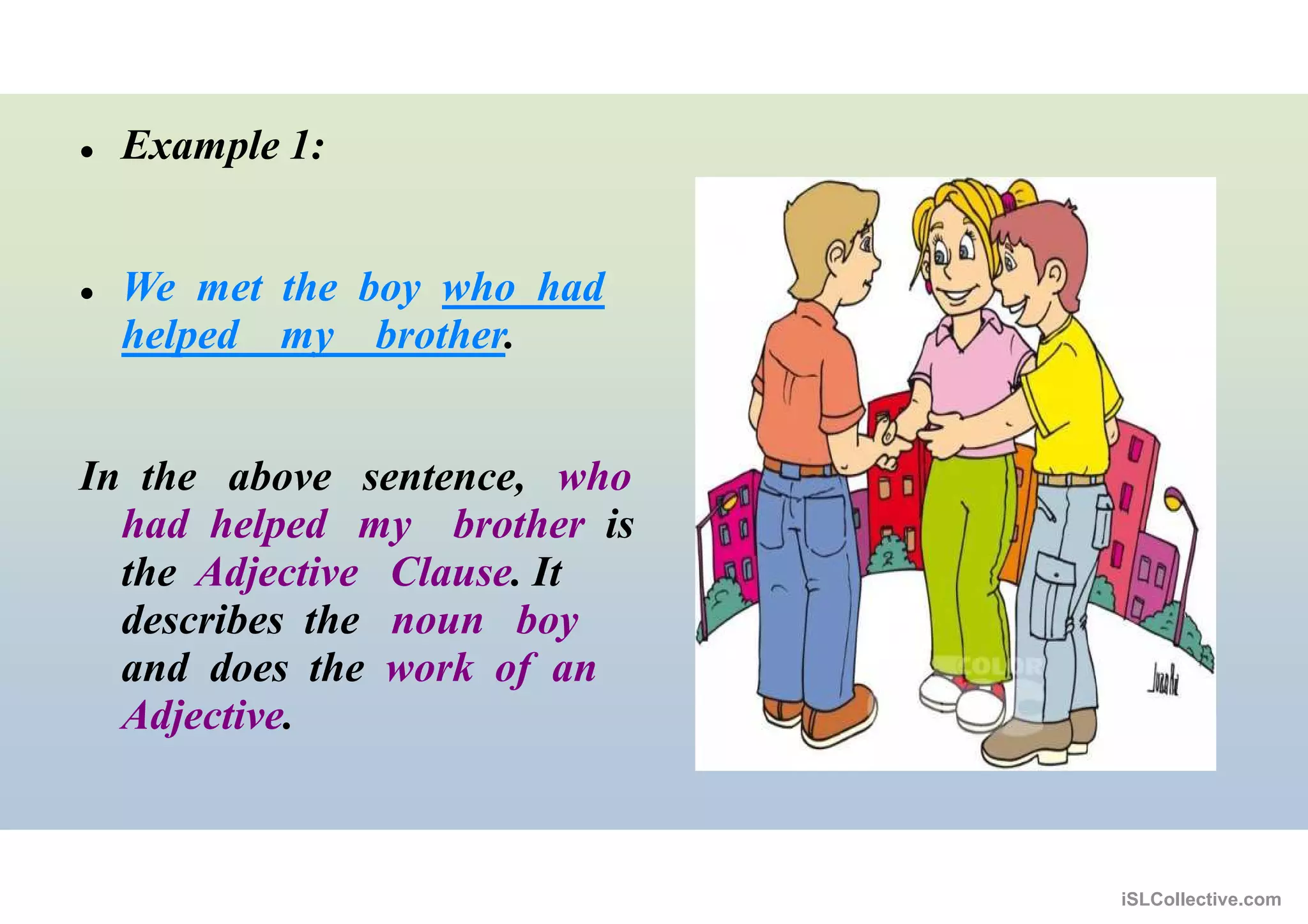
 Example 1:
 We met the boy who had
helped my brother.
In the above sentence, who
had helped my brother is
the Adjective Clause. It
describes the noun boy
and does the work of an
Adjective.
iSLCollective.com
 Example 2:
 The apple which is
plucked by Riya tastes
good.
 Which is plucked by
Riya is the clause that
describes about the noun
Apple. Therefore Which
is plucked by Diya is
the Adjective Clause.
iSLCollective.com
ADVERB CLAUSE
 A dependent clause that functions as an adverb in a
sentence is called adverb clause.
 An adverb clause like an adverb modifies a verb, adjective
clause or other adverb clause in a sentence.
 It modifies (describes) the situation in main clause in
terms of “time, frequency (how often), cause and effect,
contrast, condition, intensity (to what extent).”
 The subordinating conjunctions used for adverb clauses are as
follows:
Time - when, whenever, since, until, before,
after, while, as,
by the time, as soon as
iSLCollective.com
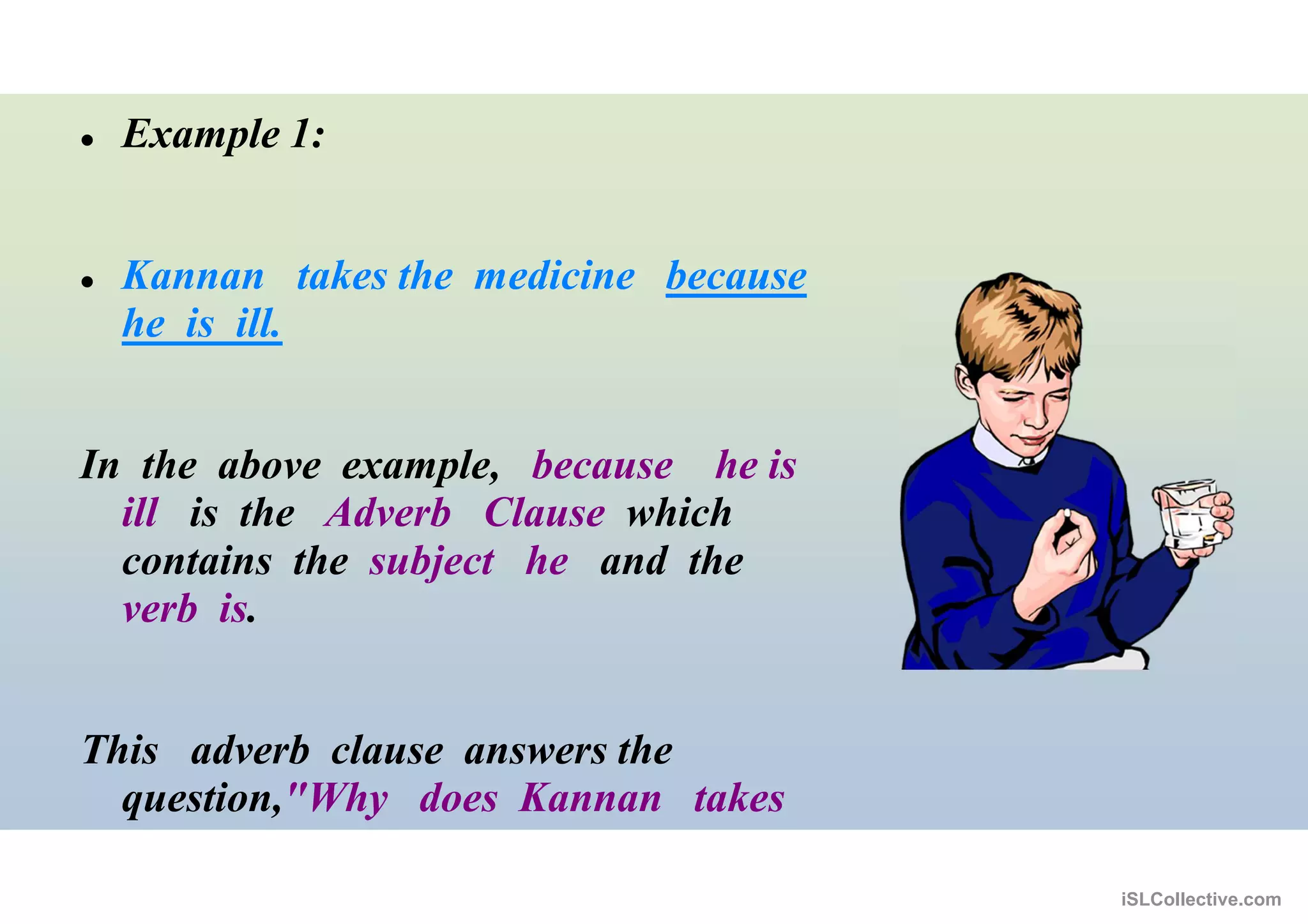
 Example 1:
 Kannan takes the medicine because
he is ill.
In the above example, because he is
ill is the Adverb Clause which
contains the subject he and the
verb is.
This adverb clause answers the
question,"Why does Kannan takes
the medicine?"
iSLCollective.com
 Example 2:
 Although Sanjana tried a
lot, she couldn’t climb up
the tree.
 Although Sanjana tried
a lot is the clause
which contains the
subject Sanjay and the
verb tried
It modifies the verb
couldn't climb in the
iSLCollective.com
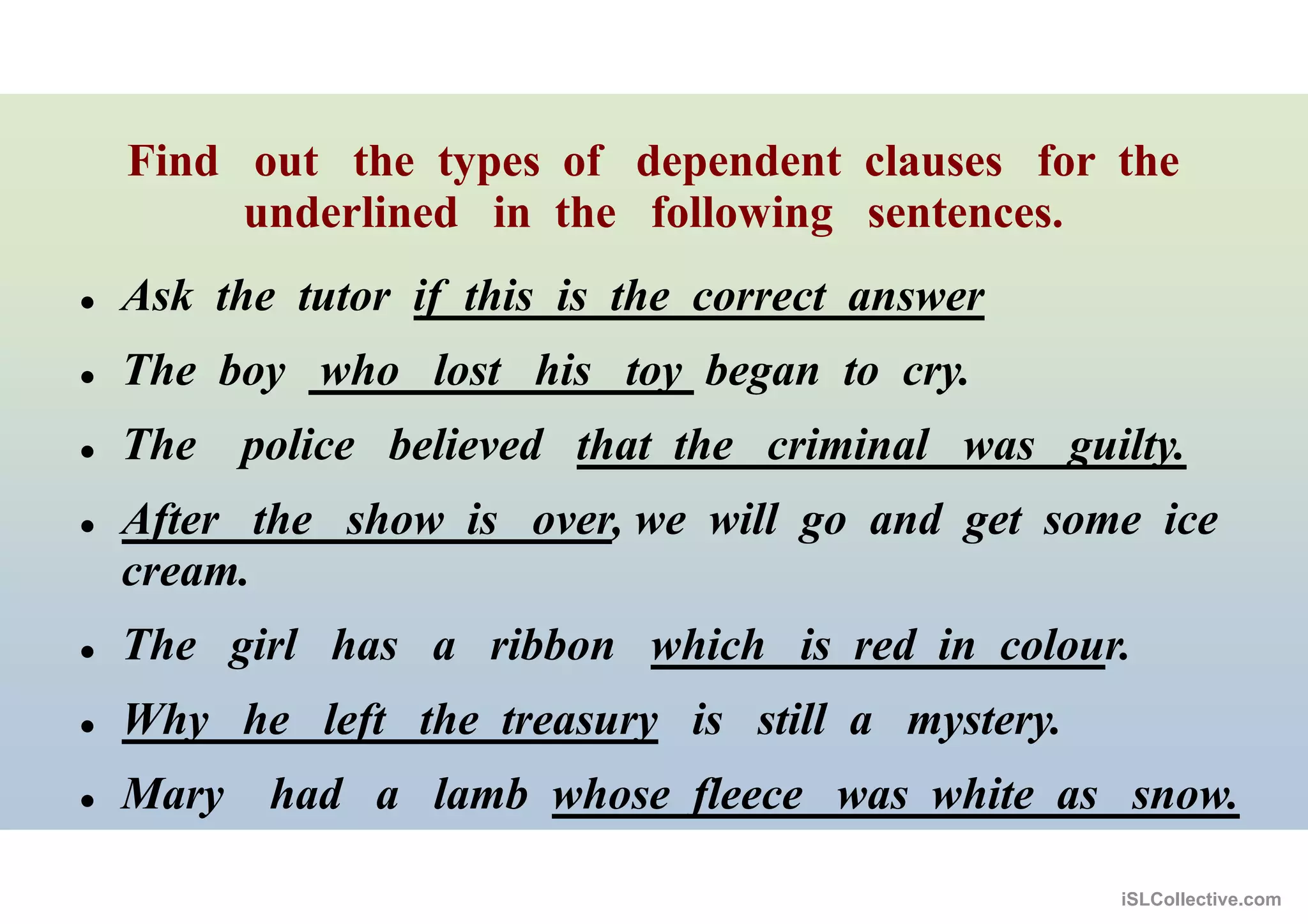
Find out the types of dependent clauses for the
underlined in the following sentences.
 Ask the tutor if this is the correct answer
 The boy who lost his toy began to cry.
 The police believed that the criminal was guilty.
 After the show is over, we will go and get some ice
cream.
 The girl has a ribbon which is red in colour.
 Why he left the treasury is still a mystery.
 Mary had a lamb whose fleece was white as snow.
iSLCollective.com
THE END
iSLCollective.com

Clause.pdf

  • 1.
  • 2.
    A clause isa group of words that has both a subject and a predicate [or a verb]. Examples: Lavanya sings a song. In the above example, Lavanya is the Subject. Sings is the verb. The sentence tells about Lavanya who sings a song. So the sentence has one clause. CLAUSE iSLCollective.com
  • 3.
     It wasraining and we stayed at home.  In the above example,we can find two clauses. One is It was raining and the other clause is We stayed at home. Both the clauses have subject and predicate on their own. 1 iSLCollective.com
  • 4.
    Slide 3 1 ,4/16/2020 iSLCollective.com
  • 5.
    There are twotypes of clause.  Independent clause [Main clause]  Dependent clause [Subordinate clause]  Independent clause [Main clause] contains a subject and a predicate which can stand alone and expresses a complete thought. EXAMPLE: He went to library .  Dependent clause [Subordinate clause] contains a subject and a predicate but they cannot stand alone and does not express a complete thought. It has to depend on the main clause to give a complete meaning. EXAMPLE: As Hari is fond of reading books. iSLCollective.com
  • 6.
    As Hari isfond of reading, he went to library. Now the dependent clause is attached to the main clause to give a complete meaningful sentence. iSLCollective.com
  • 7.
    Example 2: When Isaw an Elephant, I started running. iSLCollective.com
  • 8.
    In the example,I started running is the independent clause which has a subject and a predicate and can stand alone and expresses a complete thought. When I saw an Elephant is the Dependent clause which has a subject and a predicate but cannot stand alone and do not express a complete thought. It has to depend on the Independent clause to give a complete, meaningful sentence. iSLCollective.com
  • 9.
     Dependent orsub-ordinate clause are of three types:  1. Noun Clause.  2. Adjective Clause.  3. Adverb Clause. iSLCollective.com
  • 10.
    NOUN CLAUSE A Nounclause contains a subject and a verb. The noun clause plays the role of a noun in a sentence. They cannot stand on their own because they are not a complete thought and must be paired with the main clause. A noun clause begins with a subordinator that iSLCollective.com
  • 11.
    Example 1: Whatever youlearn will help you in future. In the above example, Whatever you learn is the noun clause as it does the work of a noun. It has the subject you and the verb learn. iSLCollective.com
  • 12.
    . Example 2: Ourteacher knows that Sherin will pass the test. That Sherin will pass the test acts as a noun in the sentence. It has the subject [ Sherin] and the verb [will pass]. So that he will pass the test is a noun clause. iSLCollective.com
  • 13.
    ADJECTIVE CLAUSE  Adependent clause that functions as an adjective in a sentence is called an Adjective clause.  An adjective clause works like an adjective in a sentence. The function of an adjective is to describe a noun or a pronoun.  An Adjective clause describes or gives information about a noun- tells us which one, what kind, or how many.  It will begin with a relative pronoun [who, whom, whose, that, or which] or a relative adverb [when, where, or why]. iSLCollective.com
  • 14.
     Example 1: We met the boy who had helped my brother. In the above sentence, who had helped my brother is the Adjective Clause. It describes the noun boy and does the work of an Adjective. iSLCollective.com
  • 15.
     Example 2: The apple which is plucked by Riya tastes good.  Which is plucked by Riya is the clause that describes about the noun Apple. Therefore Which is plucked by Diya is the Adjective Clause. iSLCollective.com
  • 16.
    ADVERB CLAUSE  Adependent clause that functions as an adverb in a sentence is called adverb clause.  An adverb clause like an adverb modifies a verb, adjective clause or other adverb clause in a sentence.  It modifies (describes) the situation in main clause in terms of “time, frequency (how often), cause and effect, contrast, condition, intensity (to what extent).”  The subordinating conjunctions used for adverb clauses are as follows: Time - when, whenever, since, until, before, after, while, as, by the time, as soon as iSLCollective.com
  • 17.
     Example 1: Kannan takes the medicine because he is ill. In the above example, because he is ill is the Adverb Clause which contains the subject he and the verb is. This adverb clause answers the question,"Why does Kannan takes the medicine?" iSLCollective.com
  • 18.
     Example 2: Although Sanjana tried a lot, she couldn’t climb up the tree.  Although Sanjana tried a lot is the clause which contains the subject Sanjay and the verb tried It modifies the verb couldn't climb in the iSLCollective.com
  • 19.
    Find out thetypes of dependent clauses for the underlined in the following sentences.  Ask the tutor if this is the correct answer  The boy who lost his toy began to cry.  The police believed that the criminal was guilty.  After the show is over, we will go and get some ice cream.  The girl has a ribbon which is red in colour.  Why he left the treasury is still a mystery.  Mary had a lamb whose fleece was white as snow. iSLCollective.com
  • 20.