K2-18
BASIC NOTIONS OF
FUNCTIONAL GRAMMAR
Group 2
Irvink Fachrul Pratama de Naldi
Redha Shafira
Thesya Lorenza Asri
 Linguistic Context
It refers to other linguistic units that accompany one unit under session
For Example:
“I will get some risk”
(“I will …….. some risk” unit) is the context for unit “get”,
when someone discusses about the word “get”.
The Context of Language Usage
 Social Context
It refers to other word which accompanies the language. The form of social
context are written and spoken. There are three items:
 Situational Context
 Cultural Context
 Ideological Context
 Situational Context
It consist of what the text about? (field), relationship between speaker/writer
and listener/reader (tenor), and how the text is constructed? (mode).
Example
• Field (choral music, gardening, interior design)
• Tenor (the purpose of discourse - its speech function, like could we stop for
a minute please! Is a request.)
• Mode (A mother talking her young child through a toilet – training session is
spoken channel. Language as a action.)
 Cultural Context
To finding the corresponding three components in the target language or
to achieve goal.
 Ideological Context
It refers to social concepts that establish what a person does in social
interaction.
• Metafunctions are systemic clusters; that is, they are groups of semantic
systems that make meanings of a related kind. The three metafunctions
are mapped onto the structure of the clause
• Halliday: each of the three fundamental, universal functions of language
(ideational, interpersonal, and textual) underlying the development of
linguistic structures
Language Metafunction
 Ideational Function
 The ideational function is language concerned with building and maintaining
a theory of experience. It includes the experiential function and the logical
function.
 The ideational stage to the Theme, known as topical Theme, can be
recognized as the first element in the clause that expresses some kind of
‘representational’ meaning. It is a function from the transitivity structure of
the clause.
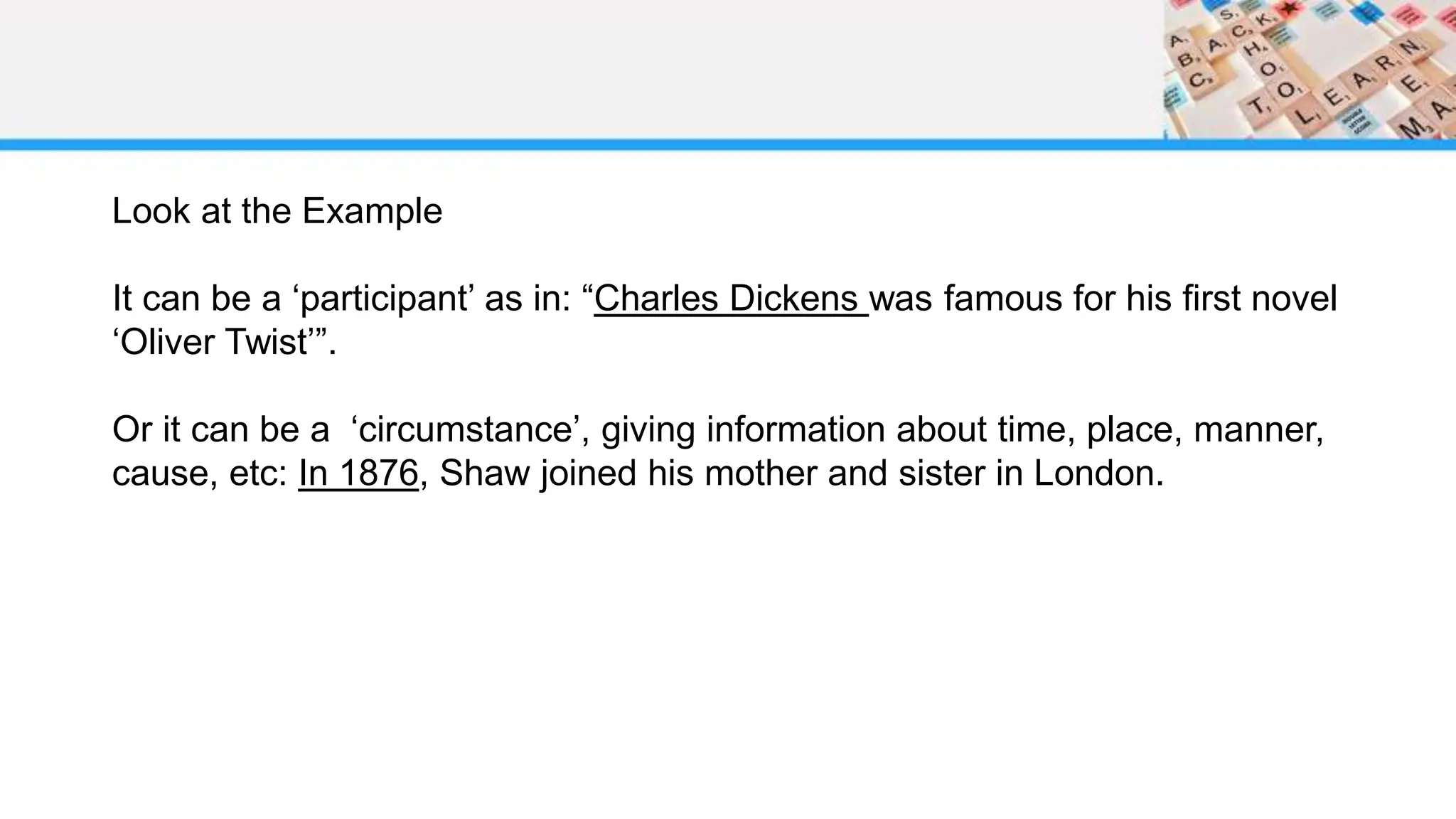
Look at the Example
It can be a ‘participant’ as in: “Charles Dickens was famous for his first novel
‘Oliver Twist’”.
Or it can be a ‘circumstance’, giving information about time, place, manner,
cause, etc: In 1876, Shaw joined his mother and sister in London.
 Interpersonal Metafunction
• The interpersonal function concentrates on social roles and relations through
formality degree, pronouns, clausal mood (whether declarative, imperative or
interrogative), etc.
example : The way in which people adress others(Dear sir, Dear professor, etc)
• In the framework of functional grammar it is concerned with interaction between
the adresser and addressee in the discourse situation
• This metafunction needs communication between the speaker and the hearer
also their responses to each other.
• This metafunction is the system of mood
• The mood system enable us to make statements,
ask questions, and give command
Example :
- “this is a cat”  a statements
- “who’s own this cat?”  a question
- “let me get this cat out from here”  offer the doing of action
 Textual Metafunction
• It is related to the construction of the text, how it is held together
• To link complex ideas together into cohessive and coherent waves of
information
Example : firstly, secondly, on the other hand, however, and, but, moreover,.....
ect.
• How texts are organised – theme + rheme
• The textual metafunction is concerned with clause as message and theme
system belong to it
• Theme is the starting point of the caluse message, must contain a participants,
process, or circumstance, includes any element preceding the first participants,
process or circumstance
• Rheme is the remainder of the message in the clause which theme is developed
Example :
- Therefore, after dinner, we visited Mr. John
textual
theme
rheme

Basic Notions of Functional Grammar by Group 2.pptx

  • 1.
  • 2.
    Group 2 Irvink FachrulPratama de Naldi Redha Shafira Thesya Lorenza Asri
  • 3.
     Linguistic Context Itrefers to other linguistic units that accompany one unit under session For Example: “I will get some risk” (“I will …….. some risk” unit) is the context for unit “get”, when someone discusses about the word “get”. The Context of Language Usage
  • 4.
     Social Context Itrefers to other word which accompanies the language. The form of social context are written and spoken. There are three items:  Situational Context  Cultural Context  Ideological Context
  • 5.
     Situational Context Itconsist of what the text about? (field), relationship between speaker/writer and listener/reader (tenor), and how the text is constructed? (mode). Example • Field (choral music, gardening, interior design) • Tenor (the purpose of discourse - its speech function, like could we stop for a minute please! Is a request.) • Mode (A mother talking her young child through a toilet – training session is spoken channel. Language as a action.)
  • 6.
     Cultural Context Tofinding the corresponding three components in the target language or to achieve goal.  Ideological Context It refers to social concepts that establish what a person does in social interaction.
  • 7.
    • Metafunctions aresystemic clusters; that is, they are groups of semantic systems that make meanings of a related kind. The three metafunctions are mapped onto the structure of the clause • Halliday: each of the three fundamental, universal functions of language (ideational, interpersonal, and textual) underlying the development of linguistic structures Language Metafunction
  • 8.
     Ideational Function The ideational function is language concerned with building and maintaining a theory of experience. It includes the experiential function and the logical function.  The ideational stage to the Theme, known as topical Theme, can be recognized as the first element in the clause that expresses some kind of ‘representational’ meaning. It is a function from the transitivity structure of the clause.
  • 9.
    Look at theExample It can be a ‘participant’ as in: “Charles Dickens was famous for his first novel ‘Oliver Twist’”. Or it can be a ‘circumstance’, giving information about time, place, manner, cause, etc: In 1876, Shaw joined his mother and sister in London.
  • 10.
     Interpersonal Metafunction •The interpersonal function concentrates on social roles and relations through formality degree, pronouns, clausal mood (whether declarative, imperative or interrogative), etc. example : The way in which people adress others(Dear sir, Dear professor, etc) • In the framework of functional grammar it is concerned with interaction between the adresser and addressee in the discourse situation • This metafunction needs communication between the speaker and the hearer also their responses to each other.
  • 11.
    • This metafunctionis the system of mood • The mood system enable us to make statements, ask questions, and give command Example : - “this is a cat”  a statements - “who’s own this cat?”  a question - “let me get this cat out from here”  offer the doing of action
  • 12.
     Textual Metafunction •It is related to the construction of the text, how it is held together • To link complex ideas together into cohessive and coherent waves of information Example : firstly, secondly, on the other hand, however, and, but, moreover,..... ect. • How texts are organised – theme + rheme • The textual metafunction is concerned with clause as message and theme system belong to it
  • 13.
    • Theme isthe starting point of the caluse message, must contain a participants, process, or circumstance, includes any element preceding the first participants, process or circumstance • Rheme is the remainder of the message in the clause which theme is developed Example : - Therefore, after dinner, we visited Mr. John textual theme rheme