This document discusses the concepts of theme and rheme and how they help understand how information is conveyed in clauses. Theme refers to the element that serves as the starting point of the message in the clause, while rheme is the remainder of the message. Themes can be unmarked or marked. Unmarked themes are typically nominal groups, while marked themes involve other elements like complements. Clauses also contain elements like subjects, verbs, complements, and adjuncts. Themes can be simple, consisting of just one constituent, or multiple, containing different types of themes.
THEME AND RHEME
THEMEAND RHEME HELP US UNDERSTAND HOW IS INFORMATION CONVEYED IN
CLAUSES.
Henry Is my father
Theme Rheme
4.
MARKED AND UNMARKEDTHEME
UNMARKED THEME
Can be noun (pronoun, proper, common) or noun clause
Halliday classify them into :
1. Nominal group; proper as head
2. Nominal group ; common or proper noun as head
3. Nominalization
5.
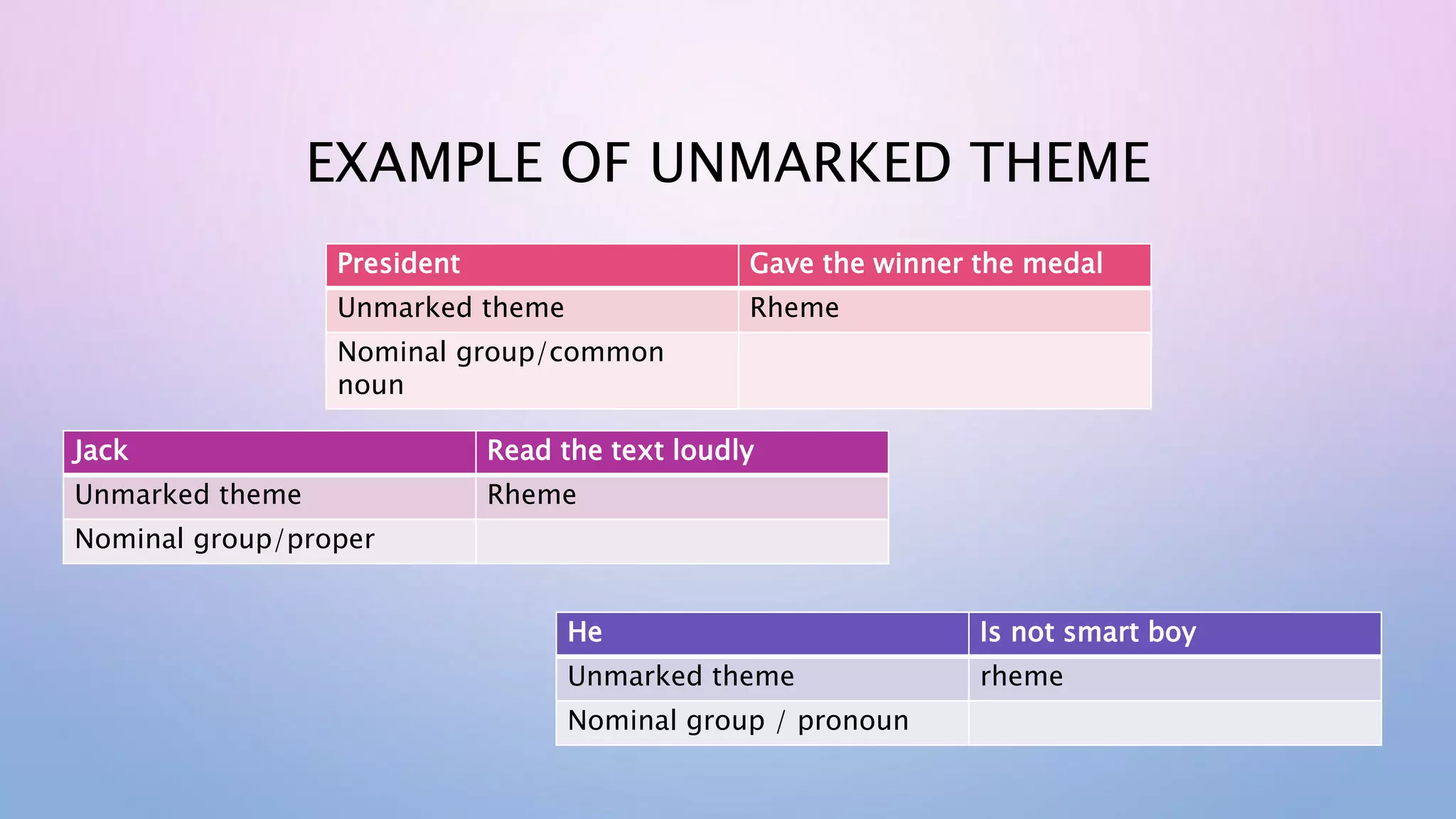
EXAMPLE OF UNMARKEDTHEME
President Gave the winner the medal
Unmarked theme Rheme
Nominal group/common
noun
Jack Read the text loudly
Unmarked theme Rheme
Nominal group/proper
He Is not smart boy
Unmarked theme rheme
Nominal group / pronoun
6.
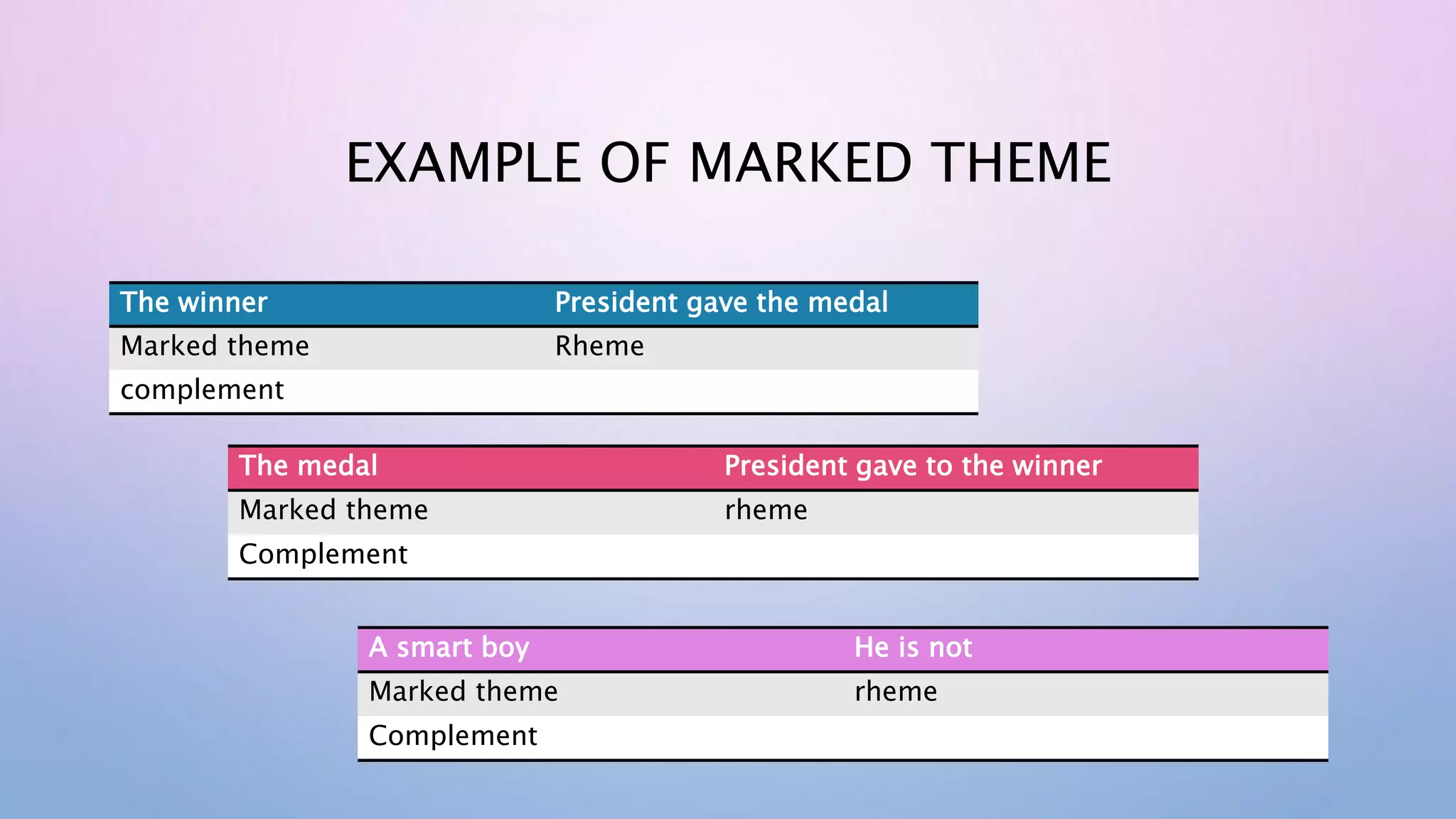
EXAMPLE OF MARKEDTHEME
The winner President gave the medal
Marked theme Rheme
complement
The medal President gave to the winner
Marked theme rheme
Complement
A smart boy He is not
Marked theme rheme
Complement
SIMPLE THEME
Simple themecan be expressed by theme of a clause consist of just one element,
and that element is represented by just one constituent ;
one nominal group – The Boy – The boy is my cousin
One adverbial group – very fast – very fast he walks Topical
Theme
One prepositional phrase - in the morning – in the morning I saw him
9.
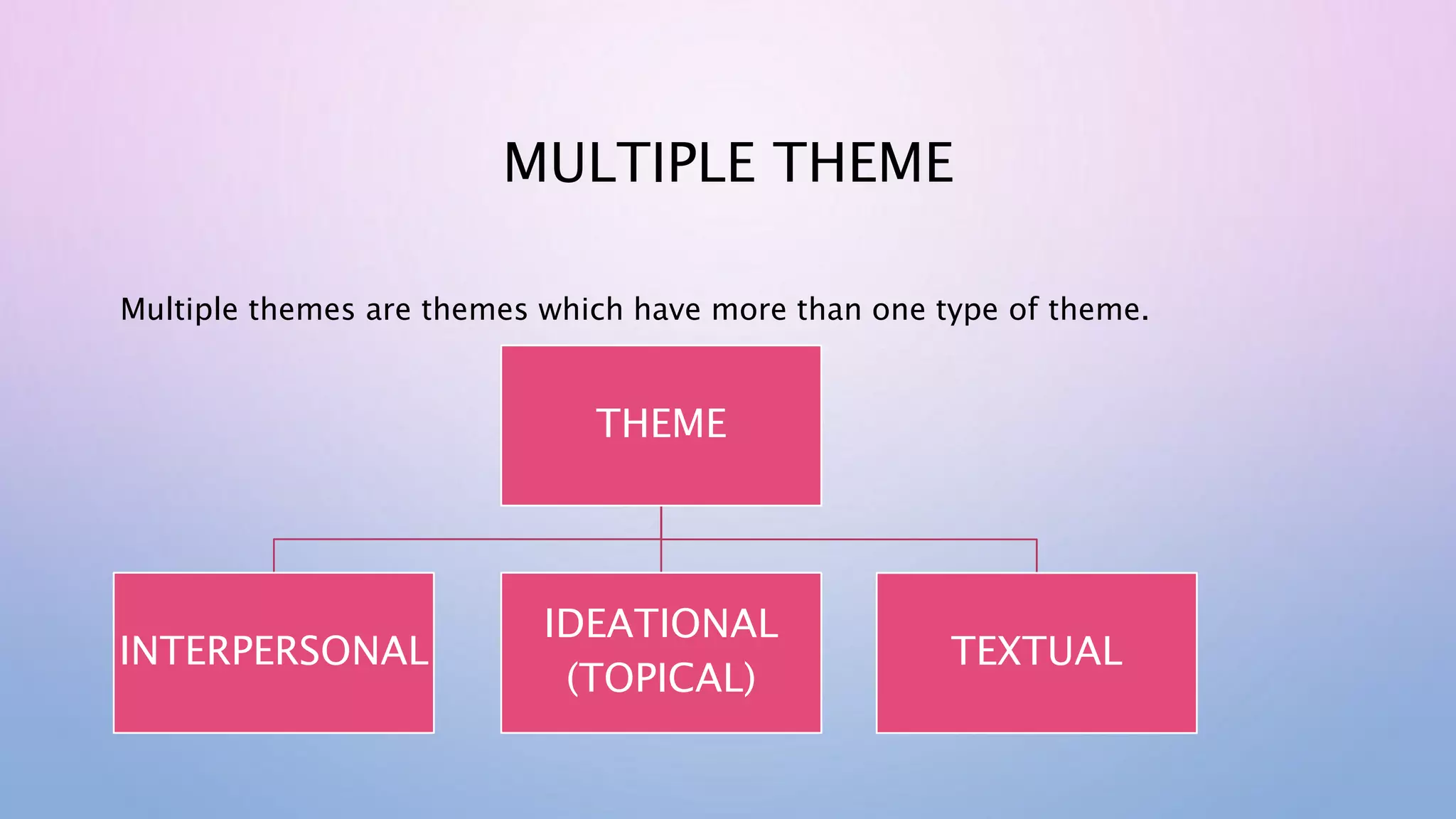
MULTIPLE THEME
Multiple themesare themes which have more than one type of theme.
THEME
INTERPERSONAL
IDEATIONAL
(TOPICAL)
TEXTUAL