Classroom
Management
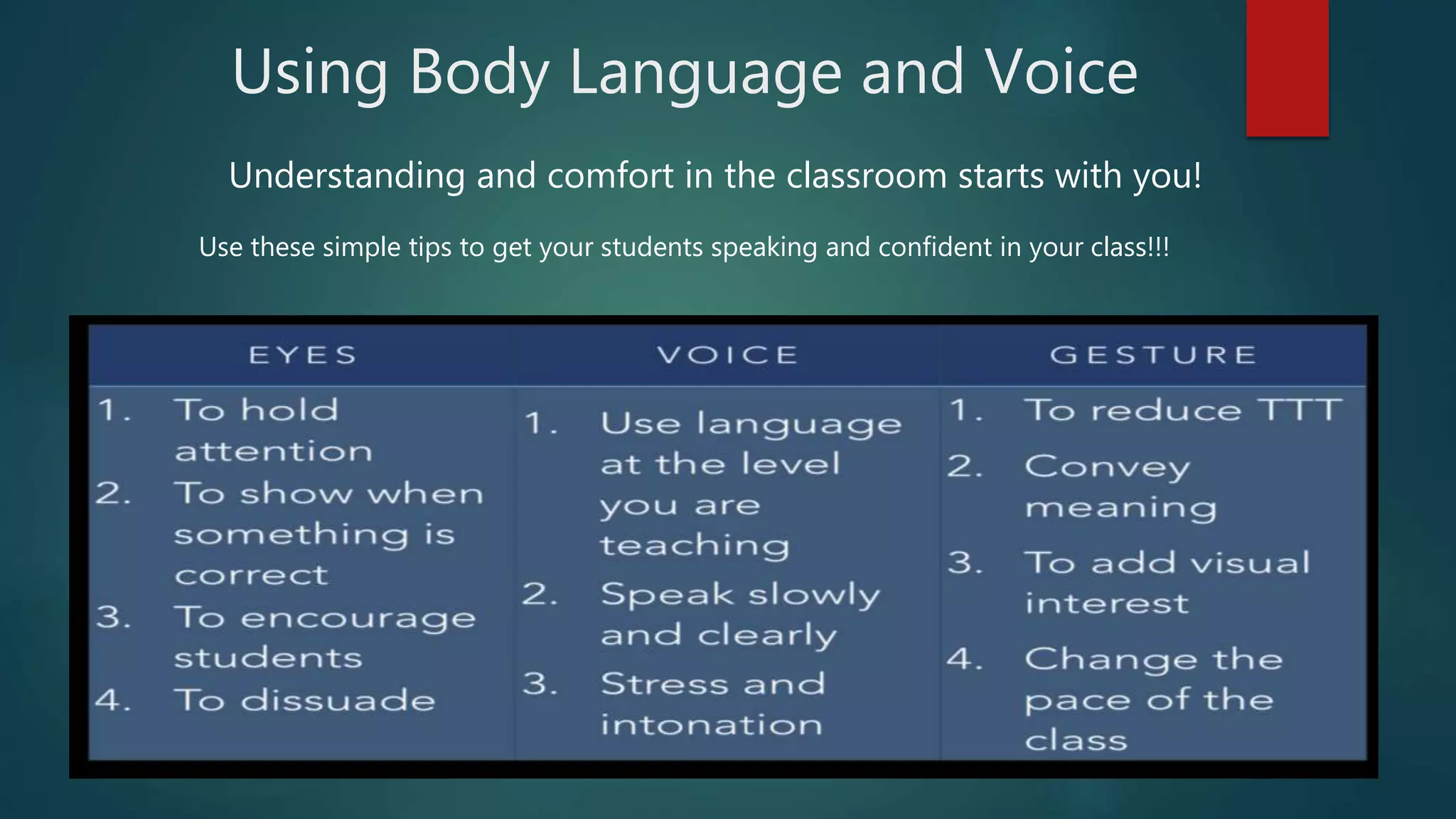
Using Body Language and Voice
Understanding and comfort in the classroom starts with you!
Use these simple tips to get your students speaking and confident in your class!!!
**********MOST IMPORTANT**********
SPEAK SLOWLY AND
CLEARLY
Picture how slow you might think you need to speak in and English classroom…..and then speak
slower than that (especially with beginners)
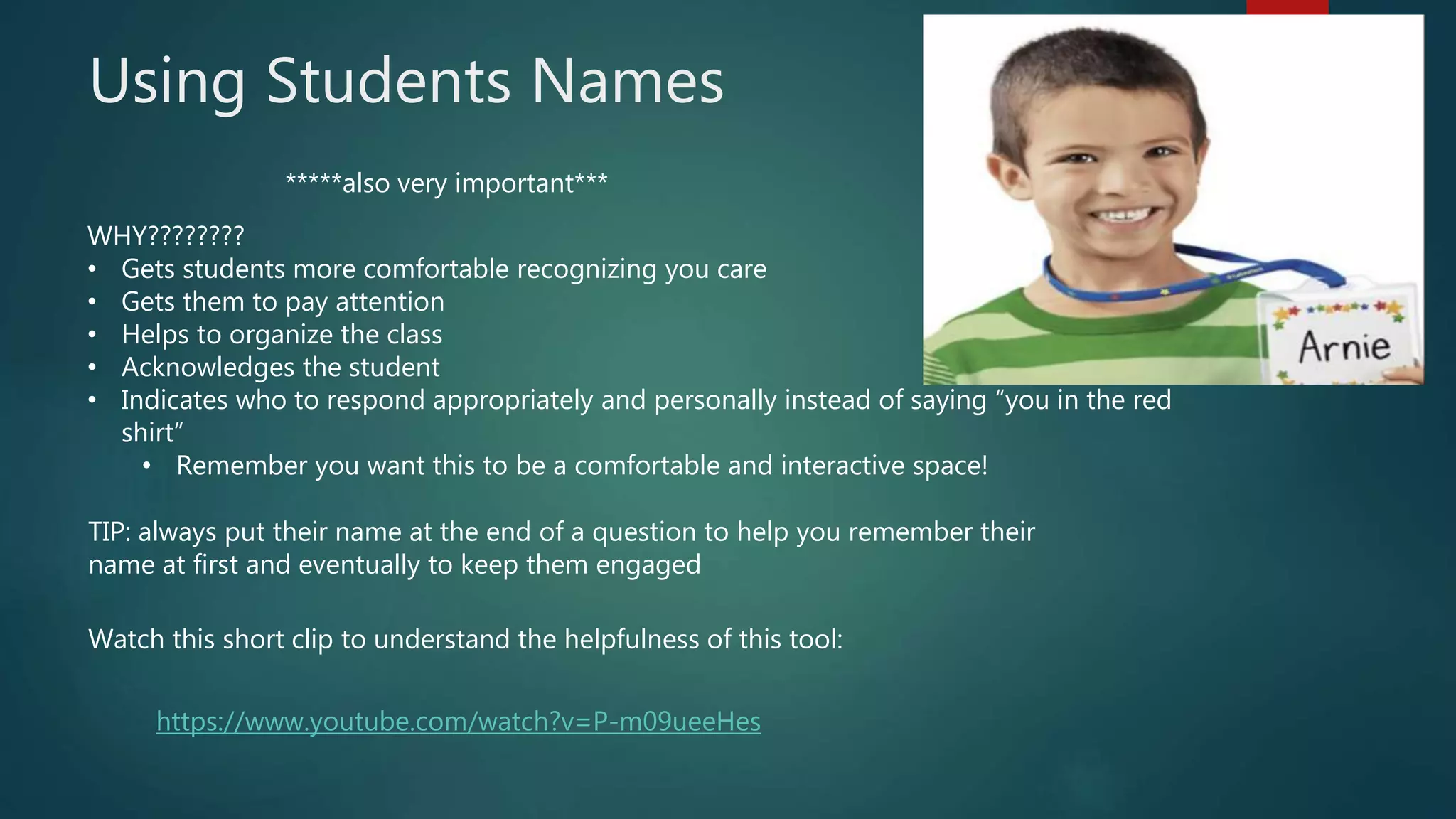
Using Students Names
https://www.youtube.com/watch?v=P-m09ueeHes
*****also very important***
WHY????????
• Gets students more comfortable recognizing you care
• Gets them to pay attention
• Helps to organize the class
• Acknowledges the student
• Indicates who to respond appropriately and personally instead of saying “you in the red
shirt”
• Remember you want this to be a comfortable and interactive space!
TIP: always put their name at the end of a question to help you remember their
name at first and eventually to keep them engaged
Watch this short clip to understand the helpfulness of this tool:
Classroom Arrangement
• Things to think about when
arranging the classroom:
• Age of students
• Physical space available
• Students personalities
• Things to ask yourself:
• How will this affect the classroom
atmosphere?
• How much classroom control do I
need?
• Will it encourage the students to
talk?
• Is it possible to do all planned
activities?
You will find that different layouts of the classroom inspire different responses from
your students. For example……
BENEFITS
• Great for pair work
• Discourages chatter as they are
all facing the teacher
DISADVANTAGES
• Might be intimidating for students
to speak up
• Easier for students to doze off
• Could be difficult to control
BENEFITS
• Encourages group discussion
• Creates an inclusive environment
• Every student can interact with one
another
• Easier to control
DISADVANTAGES
• Could reach a point of too much
group discussion
• Not all students are facing directly
towards you
BENEFITS
• Good for group work
• Encourages a lot o student
talk time
• Students can get more
comfortable among their
peers
DISADVANTAGES
• Hard to control
• Allows for chatter (in a language
other than English)
*A lot of the times
you will not have a
class big enough to
arrange the room
like this*
Classwork Type
Individual Work
• Benefits:
• Allows you (teacher) to respond to the
individual students needs
• You can see exactly where they are at in
their understanding of the material
• Students become more self-reliant
• Disadvantages
• Creates more pressure
• Confused and shy students may remain
confused
• No speaking practice
Pair Work:
• Benefits:
• Student talk time is high
• They can help each other out
• You can be strategic in your
pairings (ex. Lower level student
with higher level so they can help,
pairs that won’t get distracted etc.)
• Disadvantages
• Pairs might not get along
• Hard to answer the questions of all
pairs
Group Work
Presentation
 Give explanation/ run through examples before dividing class
 Make sure students understand exactly what they have to do before setting them free
Process
 Monitor the groups- walk around
 Contribute if necessary- give support answer questions
 Make sure everyone is speaking English
Ending
 Signal ending time
 Try to end activity while students are still engaged and groups are waiting around too long
Benefits
• Inclusive, good for discussion
• good for control
Disadvantages
• Not so much student talk time
• Students might not like group wark
Tips
Concept Checking
 What is concept checking???
 Concept checking is the teachers responsibility to make sure that the students
are understanding the material.
 This is specifically important in an English class because its possible that if they
don’t understand a specific word that you said, all of the rest is lost
 You should concept check multiple times throughout your presentation of the
material to see where you need to allocate your time.
How Do I Concept Check?
 Always make sure your students understood the concept
 Worksheet /exercise
 Simply ask them if they understand
 Summary: “What have you learned today?”
 Oral questions:
 You can ask them to answer specific questions in which their answer would
indicate
 For example, if you are doing a class on how much vs. how many you can ask them “Which
one can you count?”
 Production activity – This is any game or activity in which they are producing the material that they learned
 Thumbs up – I like to use this because sometimes students are embarrassed to stop you and tell you they
don’t understand. I tell them thumbs up is if they 100% understand and down is if they didn’t understand at
all. They have to put their thumb anywhere inbetween
Teacher Language/behavior
Your behavior, voice, and body language is ESSENTIAL in the progress of your
students
You are the authority figure/ expert- act like it!
Board work
 It must be clear and organized
 Always have a section on your board for new vocabulary that comes up in class- it won’t stick if you don’t
write it down
 When you put verbs on the board make sure they are in the infinitive form and use infinitive particle (ex. To
walk instead of walk)
 If you are particularly disorganized with your notes- plan out your board work before class
 Make different sections of the board so its clear
 Make sure you write the correct spelling- its okay if you need to look it up! We are all human!
 Make sure people understand things you erase before you erase them
 Its okay for students to wait for you to write something! Maybe read it as you go – try to make shorter
sentences/ examples
 Be aware of resources- for example if you have a classroom with a small whiteboard, it might be difficult to
write a lot
 No cursive
 Don’t mix upper and lower case letters- stuck with one!
Have you ever had a teacher who wrote notes on the board so sporadic that it was impossible to follow?
DON’T BE THAT TEACHER!!
BE…..

Classroom management

  • 1.
  • 2.
    Using Body Languageand Voice Understanding and comfort in the classroom starts with you! Use these simple tips to get your students speaking and confident in your class!!!
  • 3.
    **********MOST IMPORTANT********** SPEAK SLOWLYAND CLEARLY Picture how slow you might think you need to speak in and English classroom…..and then speak slower than that (especially with beginners)
  • 4.
    Using Students Names https://www.youtube.com/watch?v=P-m09ueeHes *****alsovery important*** WHY???????? • Gets students more comfortable recognizing you care • Gets them to pay attention • Helps to organize the class • Acknowledges the student • Indicates who to respond appropriately and personally instead of saying “you in the red shirt” • Remember you want this to be a comfortable and interactive space! TIP: always put their name at the end of a question to help you remember their name at first and eventually to keep them engaged Watch this short clip to understand the helpfulness of this tool:
  • 5.
    Classroom Arrangement • Thingsto think about when arranging the classroom: • Age of students • Physical space available • Students personalities • Things to ask yourself: • How will this affect the classroom atmosphere? • How much classroom control do I need? • Will it encourage the students to talk? • Is it possible to do all planned activities? You will find that different layouts of the classroom inspire different responses from your students. For example……
  • 6.
    BENEFITS • Great forpair work • Discourages chatter as they are all facing the teacher DISADVANTAGES • Might be intimidating for students to speak up • Easier for students to doze off • Could be difficult to control
  • 7.
    BENEFITS • Encourages groupdiscussion • Creates an inclusive environment • Every student can interact with one another • Easier to control DISADVANTAGES • Could reach a point of too much group discussion • Not all students are facing directly towards you
  • 8.
    BENEFITS • Good forgroup work • Encourages a lot o student talk time • Students can get more comfortable among their peers DISADVANTAGES • Hard to control • Allows for chatter (in a language other than English) *A lot of the times you will not have a class big enough to arrange the room like this*
  • 9.
    Classwork Type Individual Work •Benefits: • Allows you (teacher) to respond to the individual students needs • You can see exactly where they are at in their understanding of the material • Students become more self-reliant • Disadvantages • Creates more pressure • Confused and shy students may remain confused • No speaking practice Pair Work: • Benefits: • Student talk time is high • They can help each other out • You can be strategic in your pairings (ex. Lower level student with higher level so they can help, pairs that won’t get distracted etc.) • Disadvantages • Pairs might not get along • Hard to answer the questions of all pairs
  • 10.
    Group Work Presentation  Giveexplanation/ run through examples before dividing class  Make sure students understand exactly what they have to do before setting them free Process  Monitor the groups- walk around  Contribute if necessary- give support answer questions  Make sure everyone is speaking English Ending  Signal ending time  Try to end activity while students are still engaged and groups are waiting around too long Benefits • Inclusive, good for discussion • good for control Disadvantages • Not so much student talk time • Students might not like group wark Tips
  • 11.
    Concept Checking  Whatis concept checking???  Concept checking is the teachers responsibility to make sure that the students are understanding the material.  This is specifically important in an English class because its possible that if they don’t understand a specific word that you said, all of the rest is lost  You should concept check multiple times throughout your presentation of the material to see where you need to allocate your time.
  • 12.
    How Do IConcept Check?  Always make sure your students understood the concept  Worksheet /exercise  Simply ask them if they understand  Summary: “What have you learned today?”  Oral questions:  You can ask them to answer specific questions in which their answer would indicate  For example, if you are doing a class on how much vs. how many you can ask them “Which one can you count?”  Production activity – This is any game or activity in which they are producing the material that they learned  Thumbs up – I like to use this because sometimes students are embarrassed to stop you and tell you they don’t understand. I tell them thumbs up is if they 100% understand and down is if they didn’t understand at all. They have to put their thumb anywhere inbetween
  • 13.
    Teacher Language/behavior Your behavior,voice, and body language is ESSENTIAL in the progress of your students You are the authority figure/ expert- act like it!
  • 14.
    Board work  Itmust be clear and organized  Always have a section on your board for new vocabulary that comes up in class- it won’t stick if you don’t write it down  When you put verbs on the board make sure they are in the infinitive form and use infinitive particle (ex. To walk instead of walk)  If you are particularly disorganized with your notes- plan out your board work before class  Make different sections of the board so its clear  Make sure you write the correct spelling- its okay if you need to look it up! We are all human!  Make sure people understand things you erase before you erase them  Its okay for students to wait for you to write something! Maybe read it as you go – try to make shorter sentences/ examples  Be aware of resources- for example if you have a classroom with a small whiteboard, it might be difficult to write a lot  No cursive  Don’t mix upper and lower case letters- stuck with one! Have you ever had a teacher who wrote notes on the board so sporadic that it was impossible to follow? DON’T BE THAT TEACHER!!
  • 15.