Universidad Autónoma de Guerrero
Unidad Académica de Lenguas Extranjeras
Licenciatura en la Enseñanza del Idioma Inglés
Evaluación del Aprendizaje de Lenguas
Dra. Dora María Ocampo Herrera
Classroom Assessment Technique/Word Journal
• Description
Word journal is an abstract or a synopsis.
Word journal encourages two part response:
The Ss summarizes a short text in a single
word.
The Ss writes a paragraph or two explaining
why he or she chose that particular word to
summarize the text.
Purpose
I. Hability to read carefully and deeply.
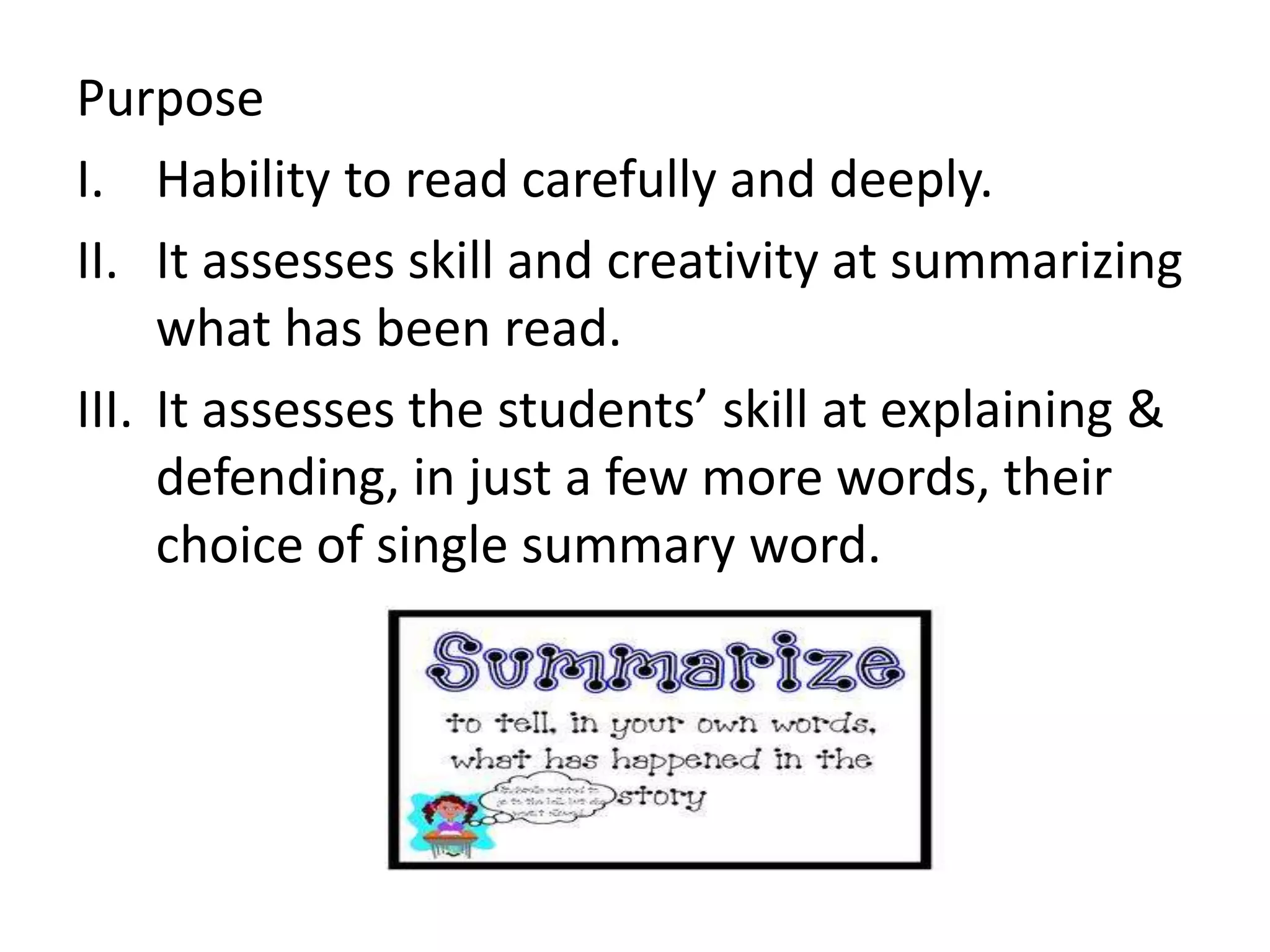
II. It assesses skill and creativity at summarizing
what has been read.
III. It assesses the students’ skill at explaining &
defending, in just a few more words, their
choice of single summary word.
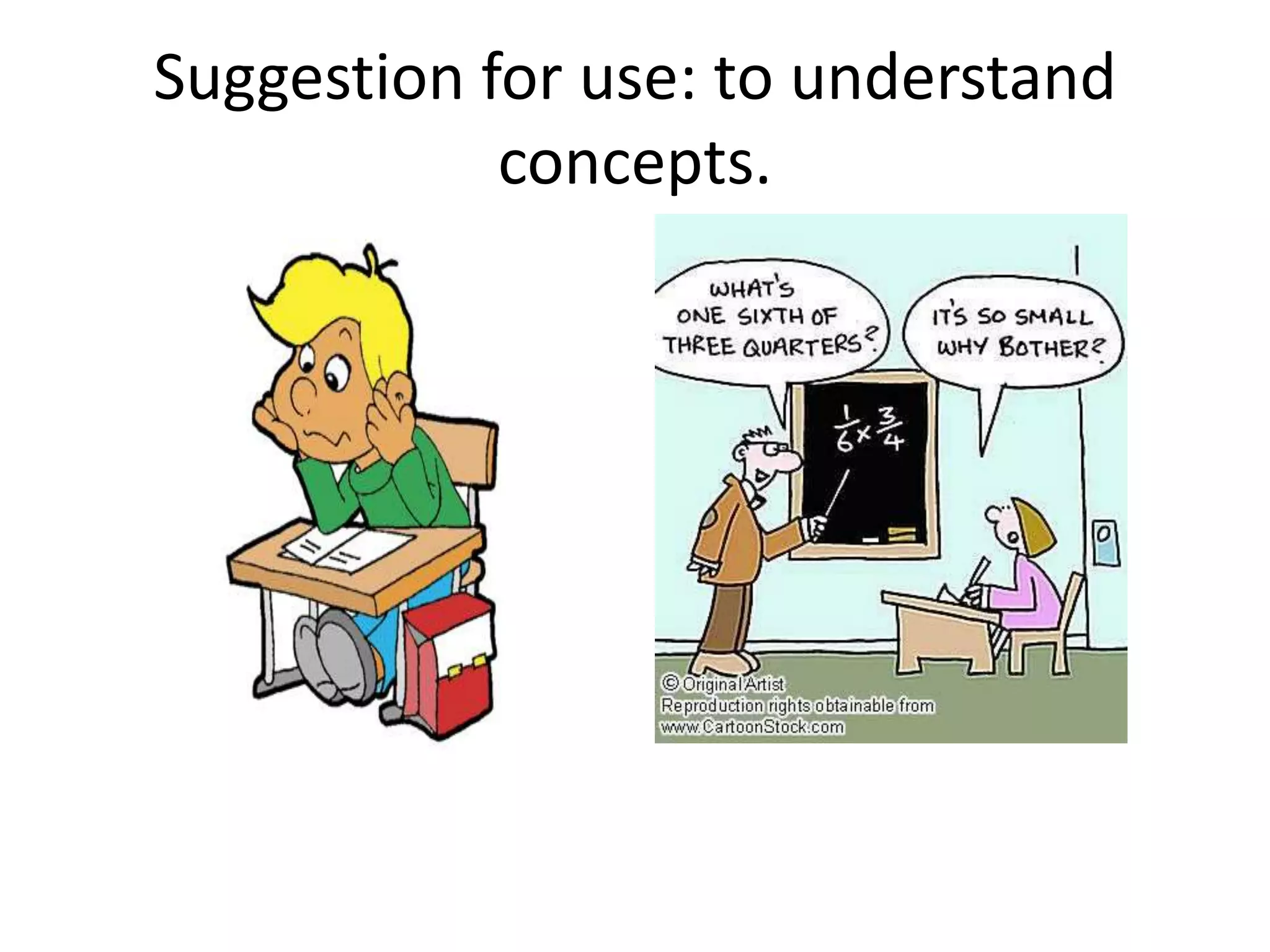
Suggestion for use: to understand
concepts.
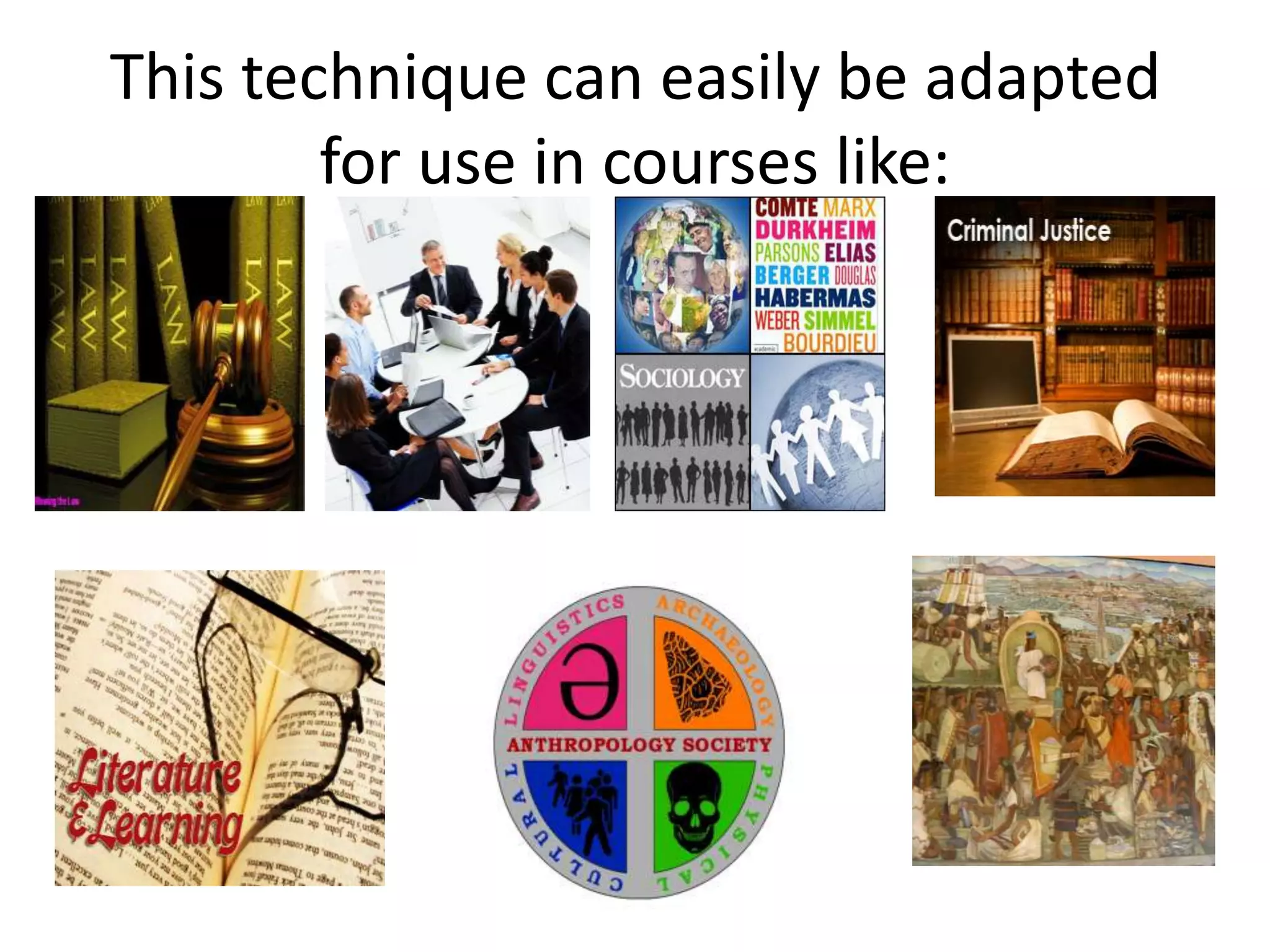
This technique can easily be adapted
for use in courses like:
Step by step procedure:
• Choose one of the short texts that your
Ss will be assigned to read.
• Decide what aspect of that text – main
theme, central conflict or problem,
core metaphore – you want Ss to focus
on.
• To determine whether the exercise is
feasible and productive, try following
your own directions.
• If you find the WJ process thought-
provoking, prepare to explain and
administer the technique in your
course.
• Tell the Ss that the choice of specific
word is less important than the quality
of the explanations should contain, and
inform them that the words they
choose must be connected to their
interpretations of the text.
• Pros
• The word journal requires Ss to
read deeply and to construct
meaning from they have read, WJ
promotes active learning through
reading.
• The act of choosing a single word
to sum up a reading, and then
explaining and advocating for that
word, encourages Ss to make
personal connections with texts
they are reading and to take
responsibility for their ideas.
• As with the One-Sentence
Summary.
• Cons
• The WJ takes time and energy to
prepare, carry out, analyze, and
discuss. It is worth using only if the
development of these reading and
summarizing skills is a central goal
of the course.
• Unlesss Ss have opportunities to
discuss and compare their
responses, they will benefit
relatively little from the
assessment.
• Given the importance of
discussion, it is very difficult to
ensure the anonymity of Ss
responses to the WJ.
• Caveats
This is not an effective technique to use in cases
where there is only one acceptable way to
summarize a given text. The WJ works only
when Ss have the freedom to explore & express
their own interpretations.
• The chalets at Tangala are old, and dark. There is no electricity, only
paraffin lighting, and it’s really hard to see anything, day and night. I
don’t mind the darkness, but I don’t like spiders, bats, or rats. Floris,
the ranger, got me into the game viewing vehicle. He could see I was
a little down and had probably been warned about “That Travel
Woman who is used to luxury”. It was true. I can be a bit of a travel
snob, my job taking me to top end lodges around Southern Africa.
This three star lodge in the Thornybush Reserve was not really my
style. I went on the game drive, albeit reluctantly, first shutting my
door really tightly, ensuring that not even an ant could get in. And
oh, I am so glad I went, Floris –Dutch name- was the most stylish
relaxed ranger I had never met, Floris with amazing intuition always
knowing where the animals would come out, or which way they
were heading. And so we saw the most phenomenal game. A herd
of about 60 elephants that surrounded us, sniffed us, and then
moved on. Hyena with their babes that tried to chew the tracker’s
shoes. A male lion on the hunt, wchich was pretty cool until he
stared me in the eyes. Porcupine, wild dogs, dung beetles, all at
close range, all made incredibly interesting by Floris. Dinner was
surpringisngly good. As was my night. The chalets may be simple
and ordinary, but the beds were deliciously comfortable.
Classroom Assessment Technique

Classroom Assessment Technique

  • 1.
    Universidad Autónoma deGuerrero Unidad Académica de Lenguas Extranjeras Licenciatura en la Enseñanza del Idioma Inglés Evaluación del Aprendizaje de Lenguas Dra. Dora María Ocampo Herrera Classroom Assessment Technique/Word Journal
  • 2.
    • Description Word journalis an abstract or a synopsis. Word journal encourages two part response: The Ss summarizes a short text in a single word. The Ss writes a paragraph or two explaining why he or she chose that particular word to summarize the text.
  • 3.
    Purpose I. Hability toread carefully and deeply. II. It assesses skill and creativity at summarizing what has been read. III. It assesses the students’ skill at explaining & defending, in just a few more words, their choice of single summary word.
  • 4.
    Suggestion for use:to understand concepts.
  • 5.
    This technique caneasily be adapted for use in courses like:
  • 6.
    Step by stepprocedure: • Choose one of the short texts that your Ss will be assigned to read. • Decide what aspect of that text – main theme, central conflict or problem, core metaphore – you want Ss to focus on. • To determine whether the exercise is feasible and productive, try following your own directions. • If you find the WJ process thought- provoking, prepare to explain and administer the technique in your course. • Tell the Ss that the choice of specific word is less important than the quality of the explanations should contain, and inform them that the words they choose must be connected to their interpretations of the text.
  • 7.
    • Pros • Theword journal requires Ss to read deeply and to construct meaning from they have read, WJ promotes active learning through reading. • The act of choosing a single word to sum up a reading, and then explaining and advocating for that word, encourages Ss to make personal connections with texts they are reading and to take responsibility for their ideas. • As with the One-Sentence Summary. • Cons • The WJ takes time and energy to prepare, carry out, analyze, and discuss. It is worth using only if the development of these reading and summarizing skills is a central goal of the course. • Unlesss Ss have opportunities to discuss and compare their responses, they will benefit relatively little from the assessment. • Given the importance of discussion, it is very difficult to ensure the anonymity of Ss responses to the WJ.
  • 8.
    • Caveats This isnot an effective technique to use in cases where there is only one acceptable way to summarize a given text. The WJ works only when Ss have the freedom to explore & express their own interpretations.
  • 9.
    • The chaletsat Tangala are old, and dark. There is no electricity, only paraffin lighting, and it’s really hard to see anything, day and night. I don’t mind the darkness, but I don’t like spiders, bats, or rats. Floris, the ranger, got me into the game viewing vehicle. He could see I was a little down and had probably been warned about “That Travel Woman who is used to luxury”. It was true. I can be a bit of a travel snob, my job taking me to top end lodges around Southern Africa. This three star lodge in the Thornybush Reserve was not really my style. I went on the game drive, albeit reluctantly, first shutting my door really tightly, ensuring that not even an ant could get in. And oh, I am so glad I went, Floris –Dutch name- was the most stylish relaxed ranger I had never met, Floris with amazing intuition always knowing where the animals would come out, or which way they were heading. And so we saw the most phenomenal game. A herd of about 60 elephants that surrounded us, sniffed us, and then moved on. Hyena with their babes that tried to chew the tracker’s shoes. A male lion on the hunt, wchich was pretty cool until he stared me in the eyes. Porcupine, wild dogs, dung beetles, all at close range, all made incredibly interesting by Floris. Dinner was surpringisngly good. As was my night. The chalets may be simple and ordinary, but the beds were deliciously comfortable.