CLASSICAL
BELIEF SYSTEMS
In CONTEXT
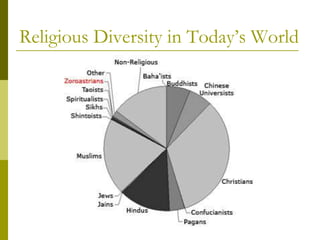
Religious Diversity in Today’s World
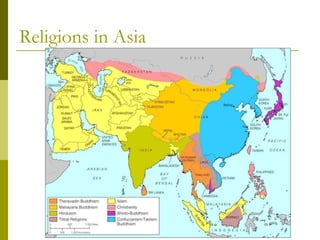
Religions in Asia
Belief systems in CONTEXT
 Historians view religion in the context
of time and place.
 For example: Buddhists in India in the 300s ce were
not the same as Buddhists in Southeast Asia in the
1800s c.e. though some of the core beliefs remained
unchanged.
 Historians view religions as an
influence ON culture AND influenced BY
culture.
 For example: Christianity changed Roman culture
and the Renaissance in Europe influenced
Christianity.
Belief systems as a study topic
 Historians view religions as a
part of human experience
 For example: Hinduism is not judged as
right or wrong in its beliefs or
practices, but interpreted in how it
influenced human history as it started in
South Asia and spread elsewhere.
 Confucianism is not judged as good or
bad, but understood in the ways it
influenced Chinese social classes, etc.
Hinduism, Judaism, Zoroa
strianism, Buddhism, Gree
k Rationalism, Daoism &
Christianity
Belief Systems of the Classical
Period
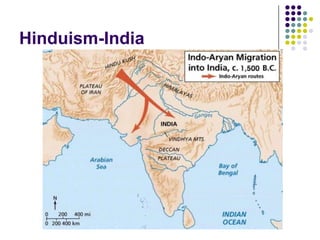
Hinduism-India
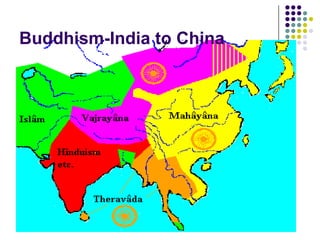
Buddhism-India to China
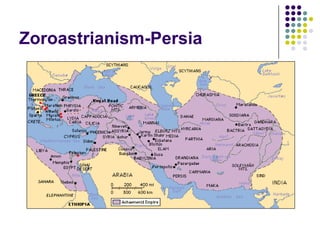
Zoroastrianism-Persia
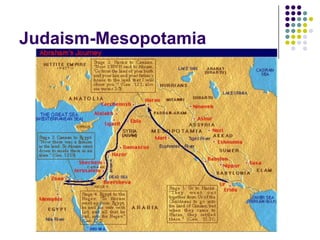
Judaism-Mesopotamia
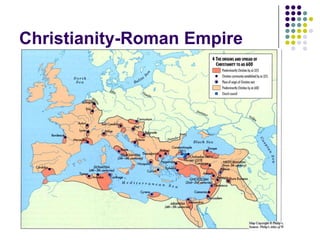
Christianity-Roman Empire
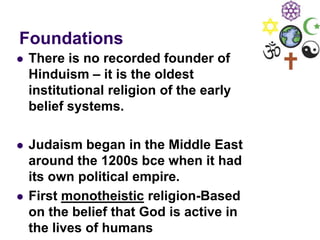
Foundations
 There is no recorded founder of
Hinduism – it is the oldest
institutional religion of the early
belief systems.
 Judaism began in the Middle East
around the 1200s bce when it had
its own political empire.
 First monotheistic religion-Based
on the belief that God is active in
the lives of humans
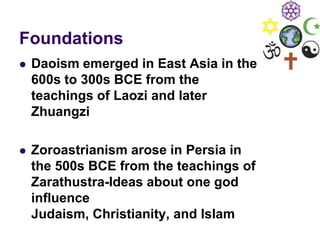
Foundations
 Daoism emerged in East Asia in the
600s to 300s BCE from the
teachings of Laozi and later
Zhuangzi
 Zoroastrianism arose in Persia in
the 500s BCE from the teachings of
Zarathustra-Ideas about one god
influence
Judaism, Christianity, and Islam
Foundations
 Siddhartha Gautama (the
Buddha), the founder of
Buddhism, was originally a Hindu
in the upperclass.
 Buddhism emerged in South Asia
out of Hinduism starting in the 500s
bce.
Foundations
 Jesus of Nazareth, the founder of
Christianity, was a lower-class Jew
living in Roman controlled Middle
East.
 The Jesus movement became
Christianity with non-Jewish
converts based on the teachings of
the Apostle Paul.
Existence after Death
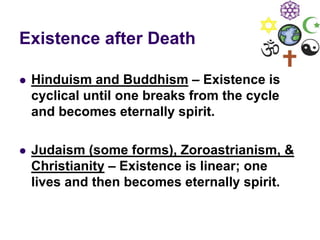
 Hinduism and Buddhism – Existence is
cyclical until one breaks from the cycle
and becomes eternally spirit.
 Judaism (some forms), Zoroastrianism, &
Christianity – Existence is linear; one
lives and then becomes eternally spirit.
Spread
 Groups within Buddhism and Christianity
supported missionaries – men and
women who purposely took the message
of a religion into different regions.
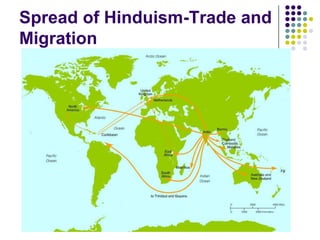
 Religions also spread through
conquest, along trade routes, and through
migrations.
Spread of Hinduism-Trade and
Migration
Spread
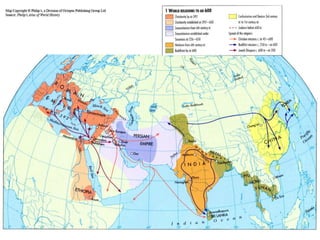
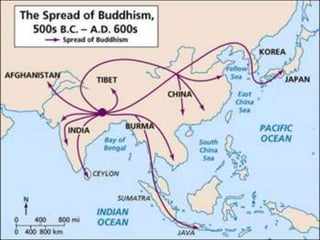
 Buddhism spread from South Asia into East
and SE Asia.
 Buddhism by the 500s ce was stronger in
areas where it spread than where it
originated.
 How does this compare to Zoroastrianism?
 How does this compare with Hinduism?
Spread
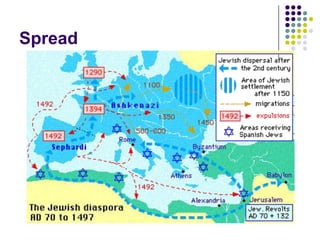
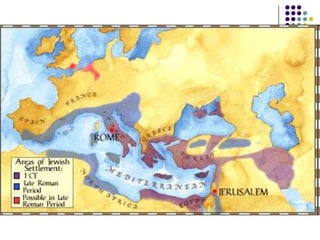
 Judaism spread after the Romans exiled
Jews to new territories in Europe
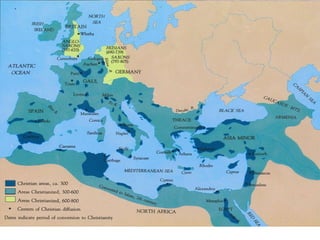
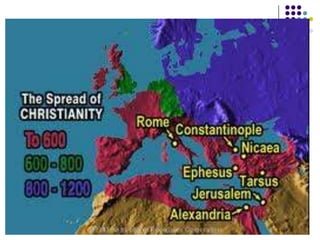
 Christianity spread into the Roman
Empire, into North and East Africa, and
beyond.
 Christianity by the 1200s was stronger
in areas where it had spread than in
where it originated.
Spread
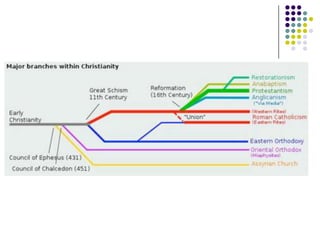
Spread & CHANGE
 As religions spread and new
interpretations arose – there were
changes, splits into different sects (or
groups), and new influences
Texts
 The founders of Buddhism and
Christianity did not record their own
statements or life story.
 Which belief systems are connected to
these texts?
Vedas and Upanishads
Torah
Gospels & Epistles
Analects
Sutras
Challenges to Society
 Both Buddhism and Christianity, more
than the other belief systems, challenged
the social class system and women’s
status.
 Especially in the early centuries, these
religions appealed to lower classes and
women.
Greek Rationalism…What’s up
with that???
 Greece-polytheism remained
 Intellectuals abandoned mythology
 Natural laws govern world
 Humans can understand those laws
 Power of Human Reason!
 KEY ELEMENT-the way questions are asked
(argument, logic, questioning of received
wisdom)
Greek Rationalism…What’s up
with that???
 Socrates, Plato, and Aristotle
 Constant questioning of assumptions
 Applied rationalism to understanding human
behavior..Herodotus-the first historian (why
did the Persians and Greeks fight each
other?)
 Influenced later Western Civs-knowledge
preserved by Byzantines and Islam
 Religion Quiz

Classical belief systems

  • 1.
  • 2.
    Religious Diversity inToday’s World
  • 3.
  • 4.
    Belief systems inCONTEXT  Historians view religion in the context of time and place.  For example: Buddhists in India in the 300s ce were not the same as Buddhists in Southeast Asia in the 1800s c.e. though some of the core beliefs remained unchanged.  Historians view religions as an influence ON culture AND influenced BY culture.  For example: Christianity changed Roman culture and the Renaissance in Europe influenced Christianity.
  • 5.
    Belief systems asa study topic  Historians view religions as a part of human experience  For example: Hinduism is not judged as right or wrong in its beliefs or practices, but interpreted in how it influenced human history as it started in South Asia and spread elsewhere.  Confucianism is not judged as good or bad, but understood in the ways it influenced Chinese social classes, etc.
  • 6.
    Hinduism, Judaism, Zoroa strianism,Buddhism, Gree k Rationalism, Daoism & Christianity Belief Systems of the Classical Period
  • 7.
  • 8.
  • 9.
  • 10.
  • 11.
  • 12.
    Foundations  There isno recorded founder of Hinduism – it is the oldest institutional religion of the early belief systems.  Judaism began in the Middle East around the 1200s bce when it had its own political empire.  First monotheistic religion-Based on the belief that God is active in the lives of humans
  • 13.
    Foundations  Daoism emergedin East Asia in the 600s to 300s BCE from the teachings of Laozi and later Zhuangzi  Zoroastrianism arose in Persia in the 500s BCE from the teachings of Zarathustra-Ideas about one god influence Judaism, Christianity, and Islam
  • 14.
    Foundations  Siddhartha Gautama(the Buddha), the founder of Buddhism, was originally a Hindu in the upperclass.  Buddhism emerged in South Asia out of Hinduism starting in the 500s bce.
  • 15.
    Foundations  Jesus ofNazareth, the founder of Christianity, was a lower-class Jew living in Roman controlled Middle East.  The Jesus movement became Christianity with non-Jewish converts based on the teachings of the Apostle Paul.
  • 16.
    Existence after Death Hinduism and Buddhism – Existence is cyclical until one breaks from the cycle and becomes eternally spirit.  Judaism (some forms), Zoroastrianism, & Christianity – Existence is linear; one lives and then becomes eternally spirit.
  • 18.
    Spread  Groups withinBuddhism and Christianity supported missionaries – men and women who purposely took the message of a religion into different regions.  Religions also spread through conquest, along trade routes, and through migrations.
  • 19.
  • 21.
    Spread  Buddhism spreadfrom South Asia into East and SE Asia.  Buddhism by the 500s ce was stronger in areas where it spread than where it originated.  How does this compare to Zoroastrianism?  How does this compare with Hinduism?
  • 22.
    Spread  Judaism spreadafter the Romans exiled Jews to new territories in Europe  Christianity spread into the Roman Empire, into North and East Africa, and beyond.  Christianity by the 1200s was stronger in areas where it had spread than in where it originated.
  • 23.
  • 27.
    Spread & CHANGE As religions spread and new interpretations arose – there were changes, splits into different sects (or groups), and new influences
  • 31.
    Texts  The foundersof Buddhism and Christianity did not record their own statements or life story.  Which belief systems are connected to these texts? Vedas and Upanishads Torah Gospels & Epistles Analects Sutras
  • 32.
    Challenges to Society Both Buddhism and Christianity, more than the other belief systems, challenged the social class system and women’s status.  Especially in the early centuries, these religions appealed to lower classes and women.
  • 33.
    Greek Rationalism…What’s up withthat???  Greece-polytheism remained  Intellectuals abandoned mythology  Natural laws govern world  Humans can understand those laws  Power of Human Reason!  KEY ELEMENT-the way questions are asked (argument, logic, questioning of received wisdom)
  • 34.
    Greek Rationalism…What’s up withthat???  Socrates, Plato, and Aristotle  Constant questioning of assumptions  Applied rationalism to understanding human behavior..Herodotus-the first historian (why did the Persians and Greeks fight each other?)  Influenced later Western Civs-knowledge preserved by Byzantines and Islam
  • 35.