oKJ9J11111AAAAAAAAAAAA3i122222222222222222222222222qa
a
Quality Education For All
INTRODUCTION
TO ECONOMICS
CHAPTER – 1
PART 2
Importance of
the Study of
Economics
• Recognize the scarcity of
resources against the unlimited
wants;
• Prioritizing the use of resources
and identifying more important
and less important.
• Economize (save) on the use of
resources and search for more
efficient ways of using the
resources;
• Engage in economic activity to
support family as well as the
country;
• Contribute to government’s
revenue and assist it in discharge
of its developmental and welfare
programmes;
• Understand socio-economic problems
of the country like poverty,
unemployment, inflation, etc., and try
to provide solutions to the same; and
• Suggest better policies and
better ways of implementing
policies for bringing about
desired growth and
development of the country.
Economic goods and
services
• Most of the goods and services that
we use everyday are limited in
supply, and hence are not available
free of cost. These goods and
services are called economic goods
and services
Economic activities can be
classified into four kinds:
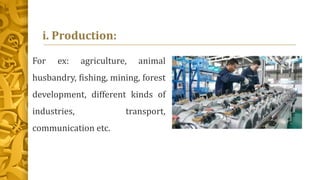
For ex: agriculture, animal
husbandry, fishing, mining, forest
development, different kinds of
industries, transport,
communication etc.
i. Production:
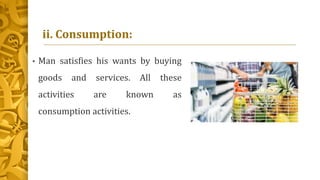
ii. Consumption:
• Man satisfies his wants by buying
goods and services. All these
activities are known as
consumption activities.
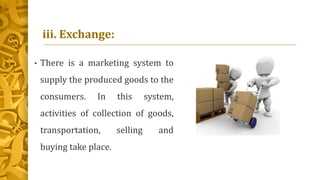
iii. Exchange:
• There is a marketing system to
supply the produced goods to the
consumers. In this system,
activities of collection of goods,
transportation, selling and
buying take place.
iv. Distribution
• The income that is earned through
the production of goods has to be
distributed to the various factors of
production (land, labor, capital and
entrepreneurship or organization)
that have enabled the production.
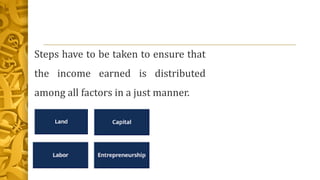
Steps have to be taken to ensure that
the income earned is distributed
among all factors in a just manner.
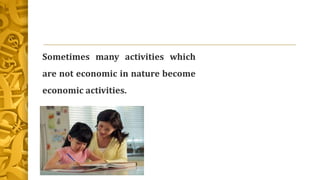
Sometimes many activities which
are not economic in nature become
economic activities.
When a teacher gives free tuitions at
home to students is not an economic
activity. When the same teacher charges
fees for giving tuitions, it becomes an
economic activity.
For ex:
Micro and Macro
Economics
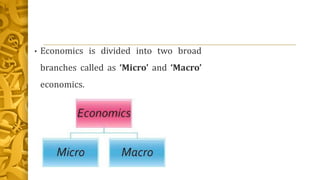
• Economics is divided into two broad
branches called as ‘Micro’ and ‘Macro’
economics.
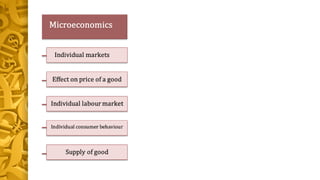
Micro Economics
We study the behaviour of
individual economic agents in the
markets for different goods and
services and try to figure out how
prices and quantities of goods and
services are determined through
the interaction of individuals in
these markets.
Some such
decisions are:
You have to buy various goods and services
to satisfy your wants. Which wants will
satisfy you?
How much price are you willing to
pay for a specific goods or service?
1500 RS
2500 RS
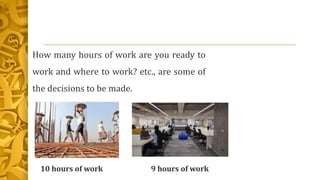
How many hours of work are you ready to
work and where to work? etc., are some of
the decisions to be made.
10 hours of work 9 hours of work
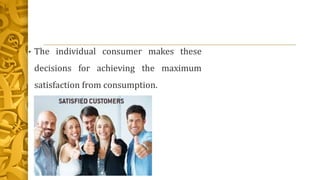
• The individual consumer makes these
decisions for achieving the maximum
satisfaction from consumption.
What influences the
decision of the firms?
A production or a business unit, called a
firm, that produces goods and services
will have to decide about the quantity
to be produced and the price at which
the goods or service to be sold.
• It has to decide about the
combination of inputs (or factors
of production) so that it
produces the desired quantity at
the minimum cost.
Price:
The price is determined by the
interaction of the buyers and the
sellers in a market. How they
interact and on what basis they
decide a mutually acceptable price
is also the subject matter of micro
economics.
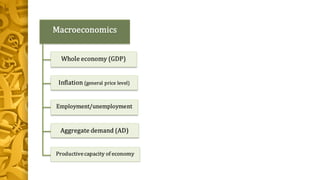
Macro Economics
• The word macro means ‘total’ or ‘large’.
The society or the country or the economy
is a very large entity compared to an
individual. Some decisions have to be taken
at such aggregative level. The economic
decisions taken at the level of the economy
as a whole are the subject matter of macro
economics
The economic decisions like collection of
taxes, expenditure on public amenities and
welfare activities, regulation of inflation,
promotion of economic growth, etc. which
affect the whole economy fall in the purview
of Macro Economics. Such decisions are
usually taken by the government.
Basic Economic
Problems
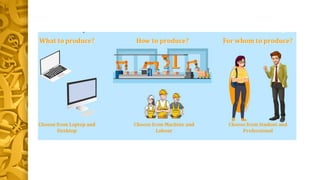
i. What to produce?
An individual or a society has to
decide about what goods and services
to produce. Whether to produce more
of food or weapons; agricultural or
industrial goods; education or health;
consumer goods or machineries?
ii. How to produce?
Whether to use a technology that
uses more labor (labor intensive
technology) or capital (capital
intensive technology) is to be decided
by the society. This is essential to
minimize the cost of production and
efficient use of existing resources.
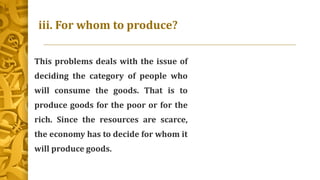
iii. For whom to produce?
This problems deals with the issue of
deciding the category of people who
will consume the goods. That is to
produce goods for the poor or for the
rich. Since the resources are scarce,
the economy has to decide for whom it
will produce goods.
Conclusion:
Thus, the study of Economics helps us
to understand the current use of
resources and plan for their more
efficient use in the future. The
economists usually advise government
on these matters. As a result, the well-
being of the individuals and the
country can be improved.
Class 8 Economics ( Chapter 1 , Part 2)

Class 8 Economics ( Chapter 1 , Part 2)

  • 1.
  • 2.
  • 3.
  • 4.
    • Recognize thescarcity of resources against the unlimited wants; • Prioritizing the use of resources and identifying more important and less important.
  • 5.
    • Economize (save)on the use of resources and search for more efficient ways of using the resources; • Engage in economic activity to support family as well as the country;
  • 6.
    • Contribute togovernment’s revenue and assist it in discharge of its developmental and welfare programmes;
  • 7.
    • Understand socio-economicproblems of the country like poverty, unemployment, inflation, etc., and try to provide solutions to the same; and
  • 8.
    • Suggest betterpolicies and better ways of implementing policies for bringing about desired growth and development of the country.
  • 9.
  • 10.
    • Most ofthe goods and services that we use everyday are limited in supply, and hence are not available free of cost. These goods and services are called economic goods and services
  • 12.
    Economic activities canbe classified into four kinds:
  • 13.
    For ex: agriculture,animal husbandry, fishing, mining, forest development, different kinds of industries, transport, communication etc. i. Production:
  • 14.
    ii. Consumption: • Mansatisfies his wants by buying goods and services. All these activities are known as consumption activities.
  • 15.
    iii. Exchange: • Thereis a marketing system to supply the produced goods to the consumers. In this system, activities of collection of goods, transportation, selling and buying take place.
  • 16.
    iv. Distribution • Theincome that is earned through the production of goods has to be distributed to the various factors of production (land, labor, capital and entrepreneurship or organization) that have enabled the production.
  • 17.
    Steps have tobe taken to ensure that the income earned is distributed among all factors in a just manner.
  • 18.
    Sometimes many activitieswhich are not economic in nature become economic activities.
  • 19.
    When a teachergives free tuitions at home to students is not an economic activity. When the same teacher charges fees for giving tuitions, it becomes an economic activity. For ex:
  • 20.
  • 21.
    • Economics isdivided into two broad branches called as ‘Micro’ and ‘Macro’ economics.
  • 22.
  • 23.
    We study thebehaviour of individual economic agents in the markets for different goods and services and try to figure out how prices and quantities of goods and services are determined through the interaction of individuals in these markets.
  • 25.
  • 26.
    You have tobuy various goods and services to satisfy your wants. Which wants will satisfy you?
  • 27.
    How much priceare you willing to pay for a specific goods or service? 1500 RS 2500 RS
  • 28.
    How many hoursof work are you ready to work and where to work? etc., are some of the decisions to be made. 10 hours of work 9 hours of work
  • 29.
    • The individualconsumer makes these decisions for achieving the maximum satisfaction from consumption.
  • 30.
  • 31.
    A production ora business unit, called a firm, that produces goods and services will have to decide about the quantity to be produced and the price at which the goods or service to be sold.
  • 32.
    • It hasto decide about the combination of inputs (or factors of production) so that it produces the desired quantity at the minimum cost.
  • 33.
  • 34.
    The price isdetermined by the interaction of the buyers and the sellers in a market. How they interact and on what basis they decide a mutually acceptable price is also the subject matter of micro economics.
  • 35.
  • 36.
    • The wordmacro means ‘total’ or ‘large’. The society or the country or the economy is a very large entity compared to an individual. Some decisions have to be taken at such aggregative level. The economic decisions taken at the level of the economy as a whole are the subject matter of macro economics
  • 38.
    The economic decisionslike collection of taxes, expenditure on public amenities and welfare activities, regulation of inflation, promotion of economic growth, etc. which affect the whole economy fall in the purview of Macro Economics. Such decisions are usually taken by the government.
  • 39.
  • 40.
    i. What toproduce? An individual or a society has to decide about what goods and services to produce. Whether to produce more of food or weapons; agricultural or industrial goods; education or health; consumer goods or machineries?
  • 41.
    ii. How toproduce? Whether to use a technology that uses more labor (labor intensive technology) or capital (capital intensive technology) is to be decided by the society. This is essential to minimize the cost of production and efficient use of existing resources.
  • 42.
    iii. For whomto produce? This problems deals with the issue of deciding the category of people who will consume the goods. That is to produce goods for the poor or for the rich. Since the resources are scarce, the economy has to decide for whom it will produce goods.
  • 44.
  • 45.
    Thus, the studyof Economics helps us to understand the current use of resources and plan for their more efficient use in the future. The economists usually advise government on these matters. As a result, the well- being of the individuals and the country can be improved.