1
I NSTITUTO DE FORMACIÓN DOCENTE CONTINUA
LENGUAS VIVAS BARILOCHE (A-052)
TALLER DE PRÁCTICA DOCENTE
Student:GieserLeticia
Períodode Práctica: Nivel Inicial
Numberof Students:28
Institution:Jardín Cavagnaro
Adress:Calle 70 – N° 2753
Age:4 yearsold
Level:Beginners
Lessonplan: a class
Date: May, 23th
Time: 30’ (9.30 a 10 HS)
 Teaching Points: The numbers (1-10)
 Aims: During this lesson, learners will be able to…
 Develop their listening skills by watching a video about numbers
 To remember different shapes and their size.
 To compare the different sizes.
 To count different objects using the new vocabulary (numbers).
Language Focus:
LEXIS FUNCTION STRUCTURE PRONUNCIATION
2
REVISION Shapes (square –
circle – rectangle –
triangle - oval)
Size: big - small
Describing
the shapes
and their
colour
Recognize
the shape
size.
What’s this?
What colour is it?
Is it a…?
What size is it?
Is it big/small?
Small /ɔ:/
NEW Numbers (1-10) Describing
the quantity
shapes
How many…are
there?
Let’s count!
Where is…?
Three /θ/
 Teaching Approach: The lessonis based on the Natural Approach, and organized
trough the PPP procedure (Harmer, 2010).
 Materials and Resources: pictures about the different shapes and numbers made on
cardboard with different colours. Video (numbers and shapes) –
 Pedagogical use of ICT in class: in this lesson, the students will remember the
shapes, their size using images. Activities organised through the use of audio-visual
materials enhance language learning and acquisition. Also the students will watch a
video to recognize and learn the numbers with shapes.
 Seating arrangement: students will be sitting in a circle on the floor in order to
facilitate visual contact and interaction within the group. At some points in the
lesson, they’ll move around the class. The will participate using the board to
complete an activity.
 Possible problems /difficulties and their possible solutionsduring the class: children
may remember the numbers until 5, so the teacher will use different materials to
teach the rest of them, until 10.
 Potential problems students may have with the language: studentsmay find it hard
to pronounce some numberssuch as eight, but here the teacher will help them to
repeat slowly to internalize the sound.
 Assessment: what willbe assessed and how: the teacher will check students’
comprehension by miming, doing gestures and watching if they perform the
actions or not. She will observe if they interest with the video and understand
correctly. Encourage them to produce the new vocabulary. If they get shy, the
teacher will check they can recognize the items by using pictures about the topic.
Routine: 5’
The teacher will get into the classroom and greet the students with a froggy puppet: ‘Hello!,
how are you today?’ EA: Hello!
3
T: are you happy (she will miming that to sts can understand) or are you sad?
The teacher will ask to students to sit in a circle on the floor and we will sing the hello
song:
Hello. Hello. Hello. How are you?
I'm fine. I'm fine. I hope that you are too.
Hello. Hello. Hello. How are you?
I'm fine. I'm fine. I hope that you are too. (chorus x2)
Transition: ‘Well kids…’ ‘Sit down please and pay close attention!’ Here the teacher will
show to students a foamy train where in every wagon they have different shapes and
numbers to introduce the topic.
Warm – up 5’
Transition: ‘well now look!’
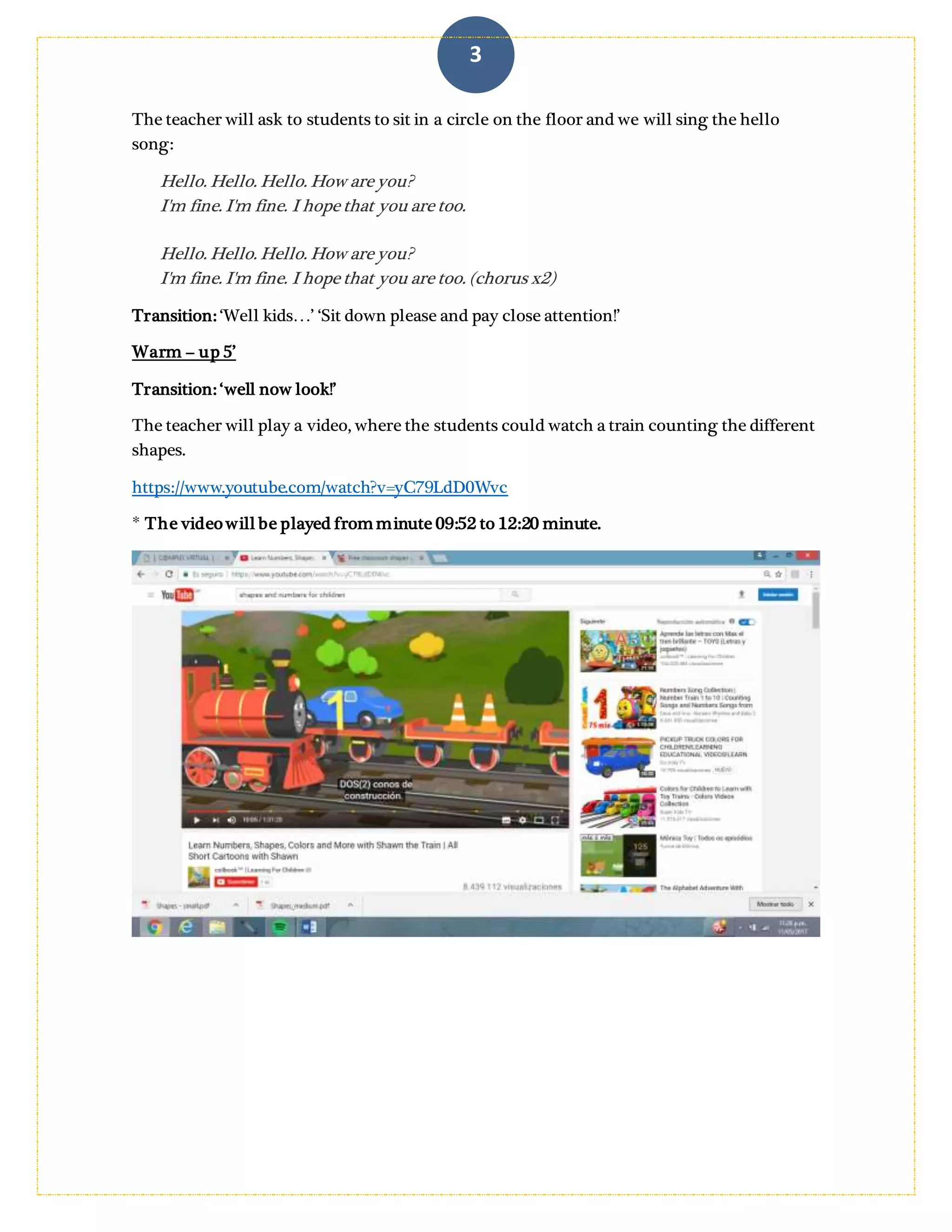
The teacher will play a video, where the students could watch a train counting the different
shapes.
https://www.youtube.com/watch?v=yC79LdD0Wvc
* The videowill be played from minute 09:52 to 12:20 minute.
4
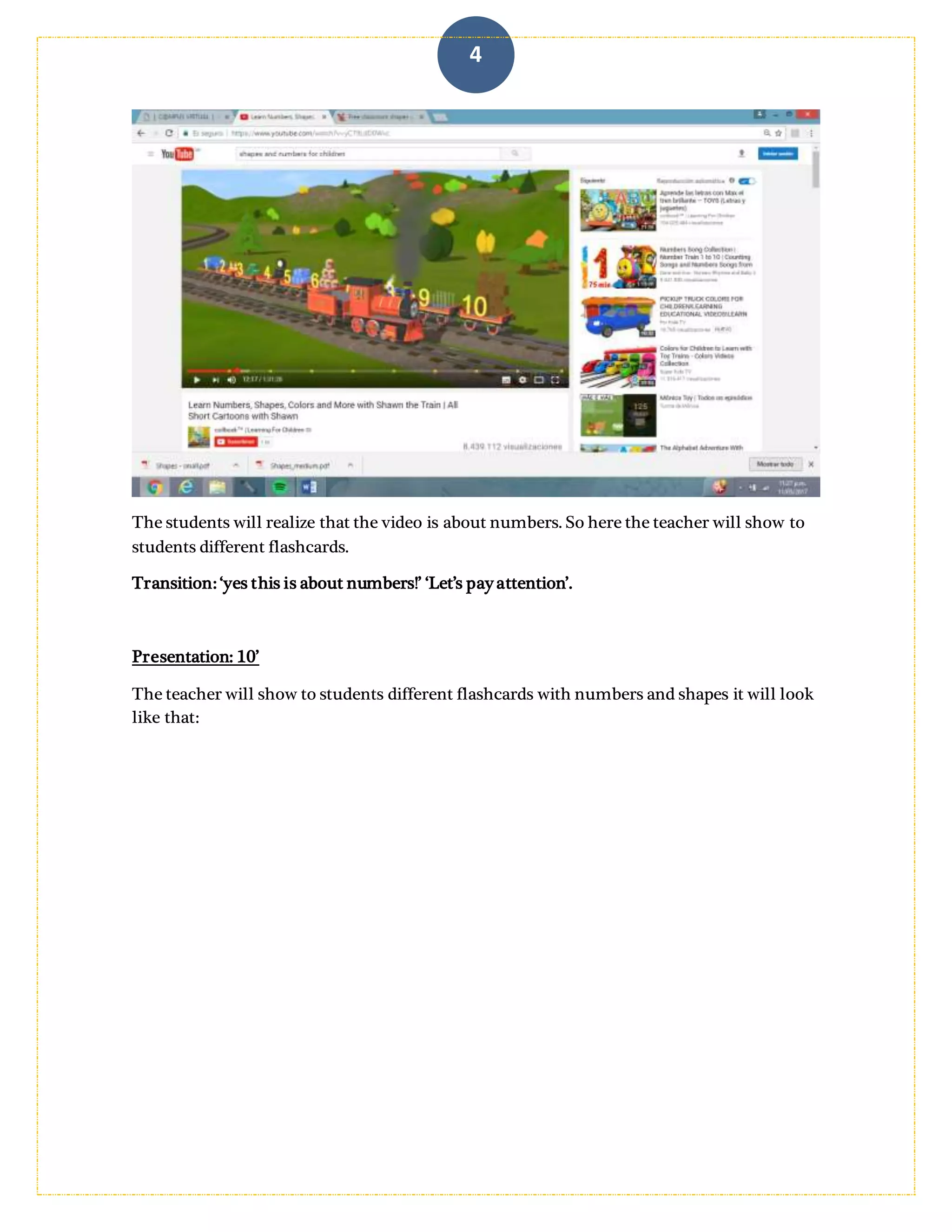
The students will realize that the video is about numbers. So here the teacher will show to
students different flashcards.
Transition: ‘yes this is about numbers!’ ‘Let’s pay attention’.
Presentation: 10’
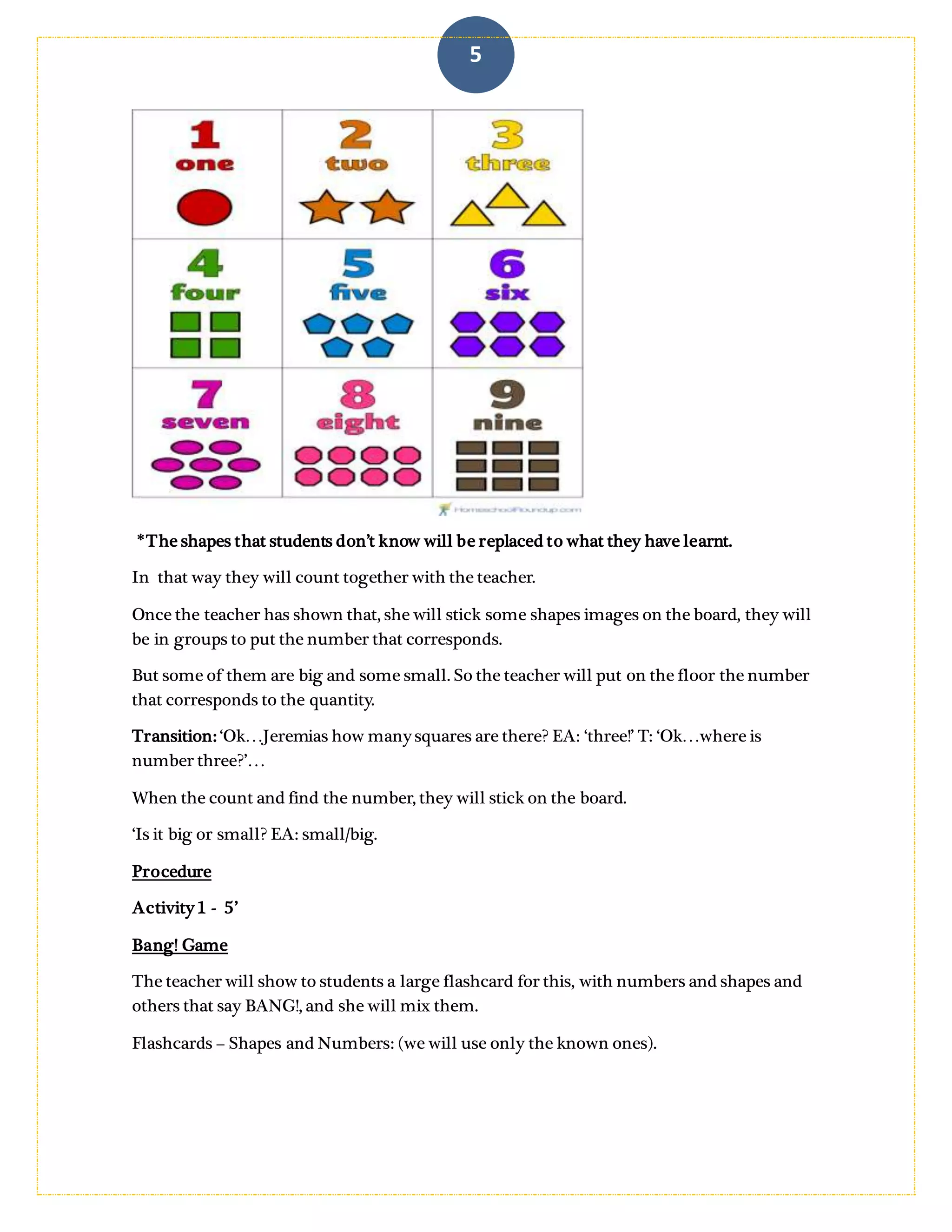
The teacher will show to students different flashcards with numbers and shapes it will look
like that:
5
*The shapes that students don’t know will be replaced to what they have learnt. The
number willbe covered and apart the teacher willhave the numbersthat corresponds to
the quantity, so together they will countand the teacher will invite to some students to pass
and stick the correct number.
In that way they will count together with the teacher.
Once the teacher has shown that, she will stick some shapes images on the board, they will
be in groups to put the number that corresponds.
But some of them are big and some small. So the teacher will put on the floor the number
that corresponds to the quantity.
Transition: ‘Ok…Jeremias how many squares are there? EA: ‘three!’ T: ‘Ok…where is
number three?’…
When the count and find the number, they will stick on the board.
‘Is it big or small? (about the shape) EA: small/big.
Procedure
Activity 1 - 5’
Bang! Game
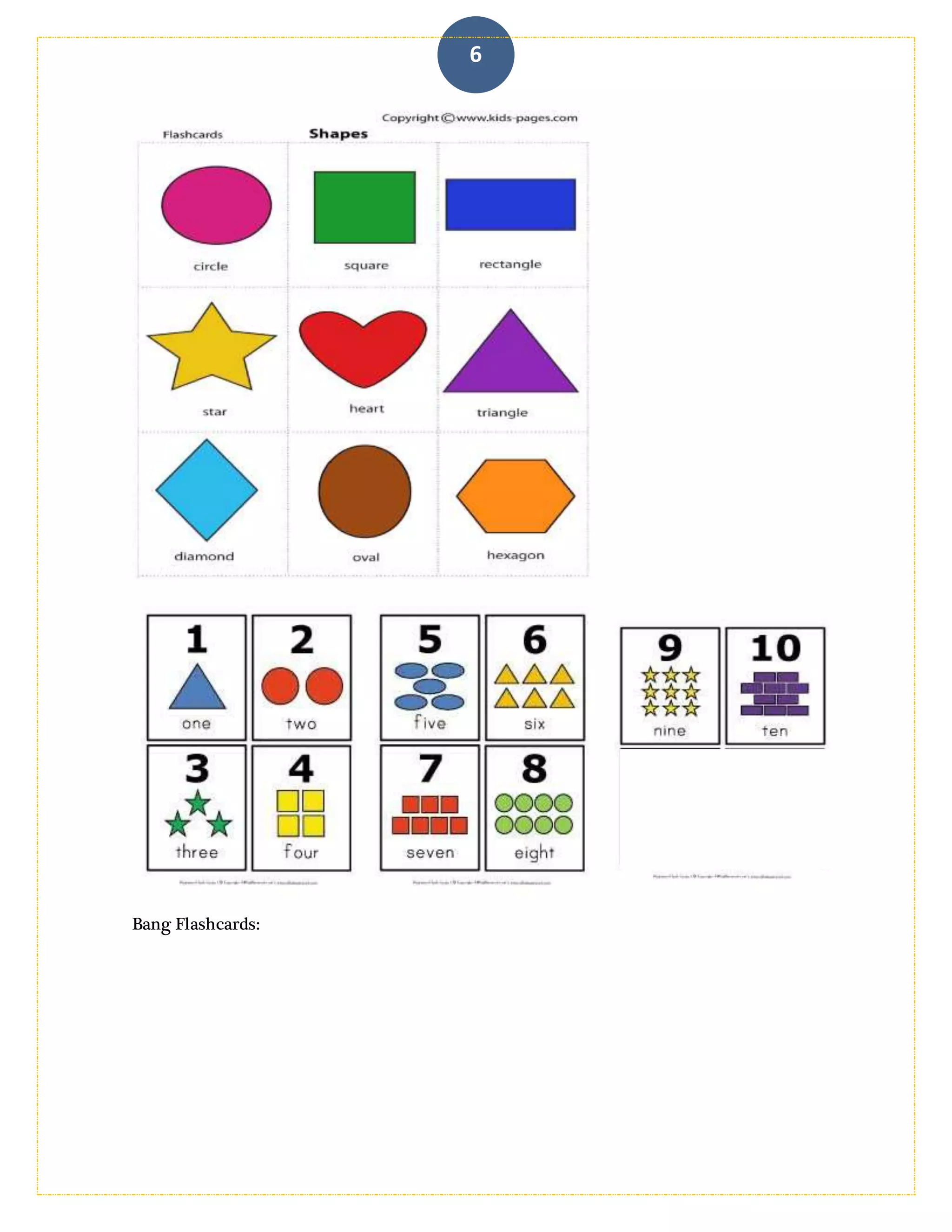
The teacher will show to students a large flashcard for this, with numbers and shapes and
others that say BANG!, and she will mix them.
6
Flashcards – Shapes and Numbers: (we will use only the known ones).
Bang Flashcards:
7
Then the teacher will invite students, putting them in the middle of the circle on the floor,
to take one by one every card. While they are taking the cards, they will say the number
and shape. But when the students will come to a BANG card, they will shout ‘BANG!’ and
they all have to stand up! Here the teacher will demonstrate the game and imitate it to
understand what they have to do.
Transition: ‘Great! Did you like the game?’ ‘Well, now sit on the floor, on your seats.
Closure – 5’
Transition: ‘let’s sing the goodbye song!’ ‘Help me please!’
‘This is the way we say goodbye, say goodbye, say goodbye.
This is the way we say goodbye, to you, and you, and you.’
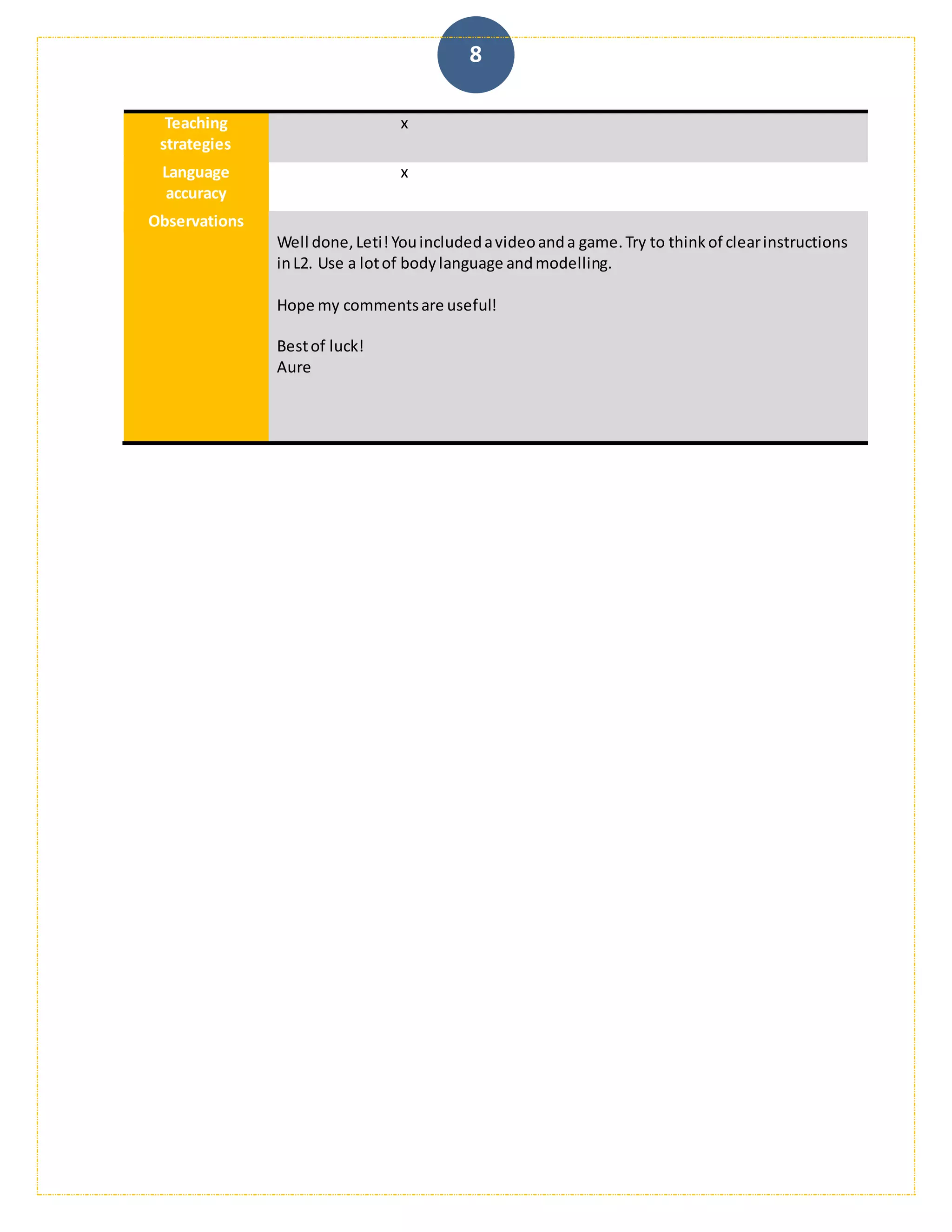
Lesson plan
component
Excellent
5
Very Good
4
Good
3
Acceptable
2
Below
Standard
1
Visual
organization
x
Coherence and
sequencing
x
Variety of
resources –
Learning styles
x
Stages and
activities
X
8
Teaching
strategies
x
Language
accuracy
x
Observations
Well done,Leti!Youincludedavideoanda game.Try to thinkof clearinstructions
inL2. Use a lotof bodylanguage andmodelling.
Hope my commentsare useful!
Bestof luck!
Aure

Lesson Plan - Class 3

  • 1.
    1 I NSTITUTO DEFORMACIÓN DOCENTE CONTINUA LENGUAS VIVAS BARILOCHE (A-052) TALLER DE PRÁCTICA DOCENTE Student:GieserLeticia Períodode Práctica: Nivel Inicial Numberof Students:28 Institution:Jardín Cavagnaro Adress:Calle 70 – N° 2753 Age:4 yearsold Level:Beginners Lessonplan: a class Date: May, 23th Time: 30’ (9.30 a 10 HS)  Teaching Points: The numbers (1-10)  Aims: During this lesson, learners will be able to…  Develop their listening skills by watching a video about numbers  To remember different shapes and their size.  To compare the different sizes.  To count different objects using the new vocabulary (numbers). Language Focus: LEXIS FUNCTION STRUCTURE PRONUNCIATION
  • 2.
    2 REVISION Shapes (square– circle – rectangle – triangle - oval) Size: big - small Describing the shapes and their colour Recognize the shape size. What’s this? What colour is it? Is it a…? What size is it? Is it big/small? Small /ɔ:/ NEW Numbers (1-10) Describing the quantity shapes How many…are there? Let’s count! Where is…? Three /θ/  Teaching Approach: The lessonis based on the Natural Approach, and organized trough the PPP procedure (Harmer, 2010).  Materials and Resources: pictures about the different shapes and numbers made on cardboard with different colours. Video (numbers and shapes) –  Pedagogical use of ICT in class: in this lesson, the students will remember the shapes, their size using images. Activities organised through the use of audio-visual materials enhance language learning and acquisition. Also the students will watch a video to recognize and learn the numbers with shapes.  Seating arrangement: students will be sitting in a circle on the floor in order to facilitate visual contact and interaction within the group. At some points in the lesson, they’ll move around the class. The will participate using the board to complete an activity.  Possible problems /difficulties and their possible solutionsduring the class: children may remember the numbers until 5, so the teacher will use different materials to teach the rest of them, until 10.  Potential problems students may have with the language: studentsmay find it hard to pronounce some numberssuch as eight, but here the teacher will help them to repeat slowly to internalize the sound.  Assessment: what willbe assessed and how: the teacher will check students’ comprehension by miming, doing gestures and watching if they perform the actions or not. She will observe if they interest with the video and understand correctly. Encourage them to produce the new vocabulary. If they get shy, the teacher will check they can recognize the items by using pictures about the topic. Routine: 5’ The teacher will get into the classroom and greet the students with a froggy puppet: ‘Hello!, how are you today?’ EA: Hello!
  • 3.
    3 T: are youhappy (she will miming that to sts can understand) or are you sad? The teacher will ask to students to sit in a circle on the floor and we will sing the hello song: Hello. Hello. Hello. How are you? I'm fine. I'm fine. I hope that you are too. Hello. Hello. Hello. How are you? I'm fine. I'm fine. I hope that you are too. (chorus x2) Transition: ‘Well kids…’ ‘Sit down please and pay close attention!’ Here the teacher will show to students a foamy train where in every wagon they have different shapes and numbers to introduce the topic. Warm – up 5’ Transition: ‘well now look!’ The teacher will play a video, where the students could watch a train counting the different shapes. https://www.youtube.com/watch?v=yC79LdD0Wvc * The videowill be played from minute 09:52 to 12:20 minute.
  • 4.
    4 The students willrealize that the video is about numbers. So here the teacher will show to students different flashcards. Transition: ‘yes this is about numbers!’ ‘Let’s pay attention’. Presentation: 10’ The teacher will show to students different flashcards with numbers and shapes it will look like that:
  • 5.
    5 *The shapes thatstudents don’t know will be replaced to what they have learnt. The number willbe covered and apart the teacher willhave the numbersthat corresponds to the quantity, so together they will countand the teacher will invite to some students to pass and stick the correct number. In that way they will count together with the teacher. Once the teacher has shown that, she will stick some shapes images on the board, they will be in groups to put the number that corresponds. But some of them are big and some small. So the teacher will put on the floor the number that corresponds to the quantity. Transition: ‘Ok…Jeremias how many squares are there? EA: ‘three!’ T: ‘Ok…where is number three?’… When the count and find the number, they will stick on the board. ‘Is it big or small? (about the shape) EA: small/big. Procedure Activity 1 - 5’ Bang! Game The teacher will show to students a large flashcard for this, with numbers and shapes and others that say BANG!, and she will mix them.
  • 6.
    6 Flashcards – Shapesand Numbers: (we will use only the known ones). Bang Flashcards:
  • 7.
    7 Then the teacherwill invite students, putting them in the middle of the circle on the floor, to take one by one every card. While they are taking the cards, they will say the number and shape. But when the students will come to a BANG card, they will shout ‘BANG!’ and they all have to stand up! Here the teacher will demonstrate the game and imitate it to understand what they have to do. Transition: ‘Great! Did you like the game?’ ‘Well, now sit on the floor, on your seats. Closure – 5’ Transition: ‘let’s sing the goodbye song!’ ‘Help me please!’ ‘This is the way we say goodbye, say goodbye, say goodbye. This is the way we say goodbye, to you, and you, and you.’ Lesson plan component Excellent 5 Very Good 4 Good 3 Acceptable 2 Below Standard 1 Visual organization x Coherence and sequencing x Variety of resources – Learning styles x Stages and activities X
  • 8.
    8 Teaching strategies x Language accuracy x Observations Well done,Leti!Youincludedavideoanda game.Tryto thinkof clearinstructions inL2. Use a lotof bodylanguage andmodelling. Hope my commentsare useful! Bestof luck! Aure