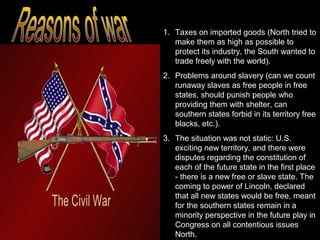
1. Taxes on imported goods (North tried to
make them as high as possible to
protect its industry, the South wanted to
trade freely with the world).
2. Problems around slavery (can we count
runaway slaves as free people in free
states, should punish people who
providing them with shelter, can
southern states forbid in its territory free
blacks, etc.).
3. The situation was not static: U.S.
exciting new territory, and there were
disputes regarding the constitution of
each of the future state in the first place
- there is a new free or slave state. The
coming to power of Lincoln, declared
that all new states would be free, meant
for the southern states remain in a
minority perspective in the future play in
Congress on all contentious issues
North.
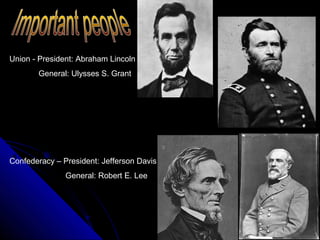
Union - President: Abraham Lincoln
General: Ulysses S. Grant

Confederacy – President: Jefferson Davis
General: Robert E. Lee
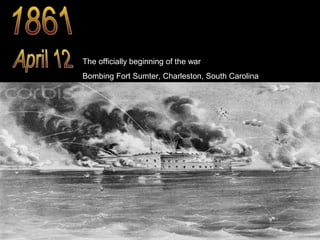
The officially beginning of the war
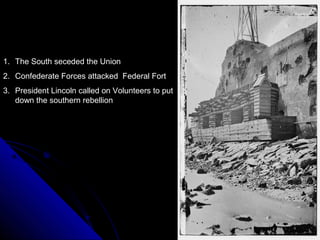
Bombing Fort Sumter, Charleston, South Carolina
1. The South seceded the Union
2. Confederate Forces attacked Federal Fort
3. President Lincoln called on Volunteers to put
down the southern rebellion
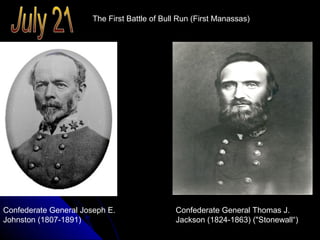
The First Battle of Bull Run (First Manassas)

Confederate General Joseph E.
Johnston (1807-1891)

Confederate General Thomas J.
Jackson (1824-1863) ("Stonewall“)
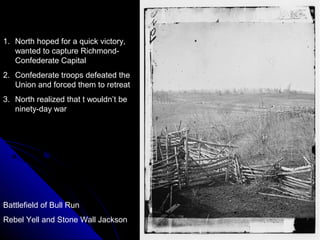
1. North hoped for a quick victory,
wanted to capture RichmondConfederate Capital
2. Confederate troops defeated the
Union and forced them to retreat
3. North realized that t wouldn’t be
ninety-day war

Battlefield of Bull Run
Rebel Yell and Stone Wall Jackson
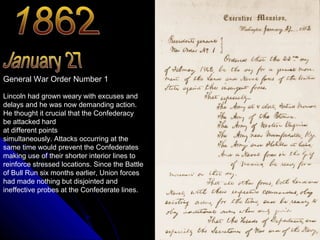
General War Order Number 1
Lincoln had grown weary with excuses and
delays and he was now demanding action.
He thought it crucial that the Confederacy
be attacked hard
at different points
simultaneously. Attacks occurring at the
same time would prevent the Confederates
making use of their shorter interior lines to
reinforce stressed locations. Since the Battle
of Bull Run six months earlier, Union forces
had made nothing but disjointed and
ineffective probes at the Confederate lines.
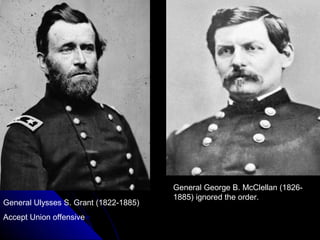
General Ulysses S. Grant (1822-1885)
Accept Union offensive

General George B. McClellan (18261885) ignored the order.
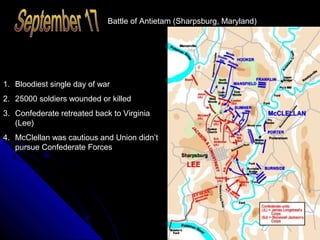
Battle of Antietam (Sharpsburg, Maryland)

1. Bloodiest single day of war
2. 25000 soldiers wounded or killed
3. Confederate retreated back to Virginia
(Lee)
4. McClellan was cautious and Union didn’t
pursue Confederate Forces
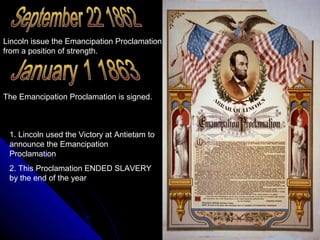
Lincoln issue the Emancipation Proclamation
from a position of strength.

The Emancipation Proclamation is signed.

1. Lincoln used the Victory at Antietam to
announce the Emancipation
Proclamation
2. This Proclamation ENDED SLAVERY
by the end of the year
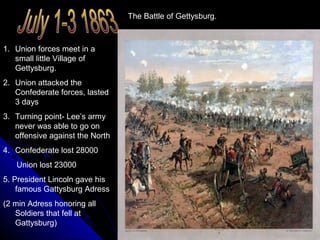
The Battle of Gettysburg.

1. Union forces meet in a
small little Village of
Gettysburg.
2. Union attacked the
Confederate forces, lasted
3 days
3. Turning point- Lee’s army
never was able to go on
offensive against the North
4. Confederate lost 28000
Union lost 23000
5. President Lincoln gave his
famous Gattysburg Adress
(2 min Adress honoring all
Soldiers that fell at
Gattysburg)
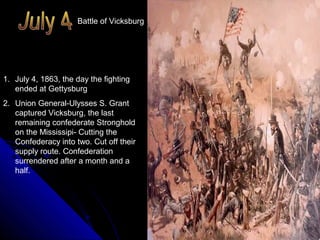
Battle of Vicksburg

1. July 4, 1863, the day the fighting
ended at Gettysburg
2. Union General-Ulysses S. Grant
captured Vicksburg, the last
remaining confederate Stronghold
on the Mississipi- Cutting the
Confederacy into two. Cut off their
supply route. Confederation
surrendered after a month and a
half.
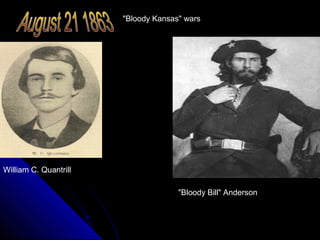
"Bloody Kansas" wars

William C. Quantrill
"Bloody Bill" Anderson
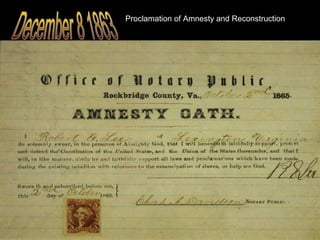
Proclamation of Amnesty and Reconstruction
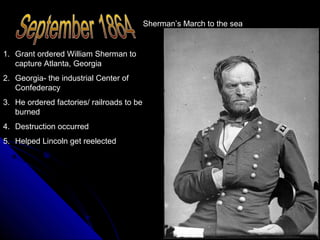
Sherman’s March to the sea

1. Grant ordered William Sherman to
capture Atlanta, Georgia
2. Georgia- the industrial Center of
Confederacy
3. He ordered factories/ railroads to be
burned
4. Destruction occurred
5. Helped Lincoln get reelected
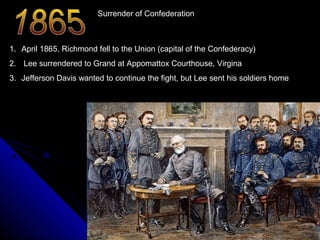
Surrender of Confederation

1. April 1865, Richmond fell to the Union (capital of the Confederacy)
2. Lee surrendered to Grand at Appomattox Courthouse, Virgina
3. Jefferson Davis wanted to continue the fight, but Lee sent his soldiers home
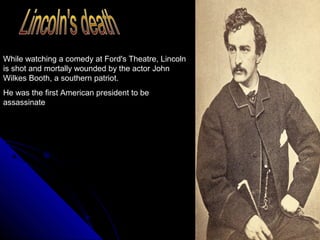
While watching a comedy at Ford's Theatre, Lincoln
is shot and mortally wounded by the actor John
Wilkes Booth, a southern patriot.
He was the first American president to be
assassinate
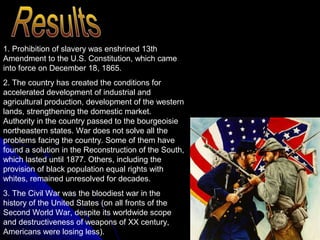
1. Prohibition of slavery was enshrined 13th
Amendment to the U.S. Constitution, which came
into force on December 18, 1865.
2. The country has created the conditions for
accelerated development of industrial and
agricultural production, development of the western
lands, strengthening the domestic market.
Authority in the country passed to the bourgeoisie
northeastern states. War does not solve all the
problems facing the country. Some of them have
found a solution in the Reconstruction of the South,
which lasted until 1877. Others, including the
provision of black population equal rights with
whites, remained unresolved for decades.
3. The Civil War was the bloodiest war in the
history of the United States (on all fronts of the
Second World War, despite its worldwide scope
and destructiveness of weapons of XX century,
Americans were losing less).
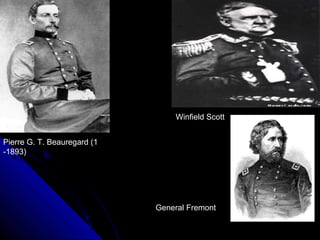
Winfield Scott
Pierre G. T. Beauregard (1
-1893)

General Fremont
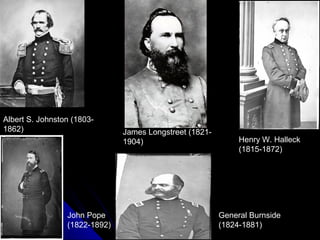
Albert S. Johnston (18031862)

John Pope
(1822-1892)

James Longstreet (18211904)

Henry W. Halleck
(1815-1872)

General Burnside
(1824-1881)
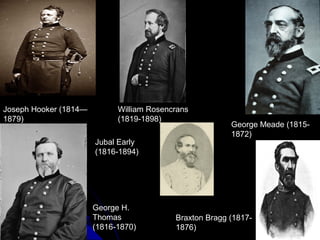
Joseph Hooker (1814—
1879)

William Rosencrans
(1819-1898)
Jubal Early
(1816-1894)

George H.
Thomas
(1816-1870)

George Meade (18151872)

Braxton Bragg (18171876)
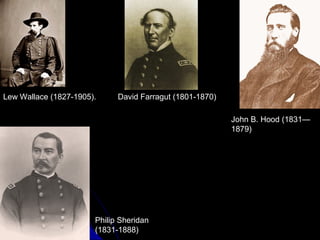
Lew Wallace (1827-1905).

David Farragut (1801-1870)
John B. Hood (1831—
1879)

Philip Sheridan
(1831-1888)

Civil war (main battles)

  • 2.
    1. Taxes onimported goods (North tried to make them as high as possible to protect its industry, the South wanted to trade freely with the world). 2. Problems around slavery (can we count runaway slaves as free people in free states, should punish people who providing them with shelter, can southern states forbid in its territory free blacks, etc.). 3. The situation was not static: U.S. exciting new territory, and there were disputes regarding the constitution of each of the future state in the first place - there is a new free or slave state. The coming to power of Lincoln, declared that all new states would be free, meant for the southern states remain in a minority perspective in the future play in Congress on all contentious issues North.
  • 3.
    Union - President:Abraham Lincoln General: Ulysses S. Grant Confederacy – President: Jefferson Davis General: Robert E. Lee
  • 4.
    The officially beginningof the war Bombing Fort Sumter, Charleston, South Carolina
  • 5.
    1. The Southseceded the Union 2. Confederate Forces attacked Federal Fort 3. President Lincoln called on Volunteers to put down the southern rebellion
  • 6.
    The First Battleof Bull Run (First Manassas) Confederate General Joseph E. Johnston (1807-1891) Confederate General Thomas J. Jackson (1824-1863) ("Stonewall“)
  • 7.
    1. North hopedfor a quick victory, wanted to capture RichmondConfederate Capital 2. Confederate troops defeated the Union and forced them to retreat 3. North realized that t wouldn’t be ninety-day war Battlefield of Bull Run Rebel Yell and Stone Wall Jackson
  • 8.
    General War OrderNumber 1 Lincoln had grown weary with excuses and delays and he was now demanding action. He thought it crucial that the Confederacy be attacked hard at different points simultaneously. Attacks occurring at the same time would prevent the Confederates making use of their shorter interior lines to reinforce stressed locations. Since the Battle of Bull Run six months earlier, Union forces had made nothing but disjointed and ineffective probes at the Confederate lines.
  • 9.
    General Ulysses S.Grant (1822-1885) Accept Union offensive General George B. McClellan (18261885) ignored the order.
  • 10.
    Battle of Antietam(Sharpsburg, Maryland) 1. Bloodiest single day of war 2. 25000 soldiers wounded or killed 3. Confederate retreated back to Virginia (Lee) 4. McClellan was cautious and Union didn’t pursue Confederate Forces
  • 11.
    Lincoln issue theEmancipation Proclamation from a position of strength. The Emancipation Proclamation is signed. 1. Lincoln used the Victory at Antietam to announce the Emancipation Proclamation 2. This Proclamation ENDED SLAVERY by the end of the year
  • 12.
    The Battle ofGettysburg. 1. Union forces meet in a small little Village of Gettysburg. 2. Union attacked the Confederate forces, lasted 3 days 3. Turning point- Lee’s army never was able to go on offensive against the North 4. Confederate lost 28000 Union lost 23000 5. President Lincoln gave his famous Gattysburg Adress (2 min Adress honoring all Soldiers that fell at Gattysburg)
  • 13.
    Battle of Vicksburg 1.July 4, 1863, the day the fighting ended at Gettysburg 2. Union General-Ulysses S. Grant captured Vicksburg, the last remaining confederate Stronghold on the Mississipi- Cutting the Confederacy into two. Cut off their supply route. Confederation surrendered after a month and a half.
  • 14.
    "Bloody Kansas" wars WilliamC. Quantrill "Bloody Bill" Anderson
  • 15.
    Proclamation of Amnestyand Reconstruction
  • 16.
    Sherman’s March tothe sea 1. Grant ordered William Sherman to capture Atlanta, Georgia 2. Georgia- the industrial Center of Confederacy 3. He ordered factories/ railroads to be burned 4. Destruction occurred 5. Helped Lincoln get reelected
  • 17.
    Surrender of Confederation 1.April 1865, Richmond fell to the Union (capital of the Confederacy) 2. Lee surrendered to Grand at Appomattox Courthouse, Virgina 3. Jefferson Davis wanted to continue the fight, but Lee sent his soldiers home
  • 18.
    While watching acomedy at Ford's Theatre, Lincoln is shot and mortally wounded by the actor John Wilkes Booth, a southern patriot. He was the first American president to be assassinate
  • 19.
    1. Prohibition ofslavery was enshrined 13th Amendment to the U.S. Constitution, which came into force on December 18, 1865. 2. The country has created the conditions for accelerated development of industrial and agricultural production, development of the western lands, strengthening the domestic market. Authority in the country passed to the bourgeoisie northeastern states. War does not solve all the problems facing the country. Some of them have found a solution in the Reconstruction of the South, which lasted until 1877. Others, including the provision of black population equal rights with whites, remained unresolved for decades. 3. The Civil War was the bloodiest war in the history of the United States (on all fronts of the Second World War, despite its worldwide scope and destructiveness of weapons of XX century, Americans were losing less).
  • 20.
    Winfield Scott Pierre G.T. Beauregard (1 -1893) General Fremont
  • 21.
    Albert S. Johnston(18031862) John Pope (1822-1892) James Longstreet (18211904) Henry W. Halleck (1815-1872) General Burnside (1824-1881)
  • 22.
    Joseph Hooker (1814— 1879) WilliamRosencrans (1819-1898) Jubal Early (1816-1894) George H. Thomas (1816-1870) George Meade (18151872) Braxton Bragg (18171876)
  • 23.
    Lew Wallace (1827-1905). DavidFarragut (1801-1870) John B. Hood (1831— 1879) Philip Sheridan (1831-1888)