CITING SOURCES &BIBLIOGRAPHIES
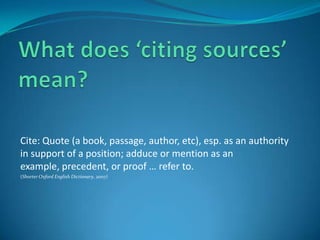
What does ‘citing sources’ mean?Cite: Quote (a book, passage, author, etc), esp. as an authority in support of a position; adduce or mention as an example, precedent, or proof … refer to.(Shorter Oxford English Dictionary, 2007)
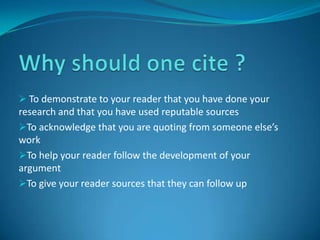
Why should one cite ? To demonstrate to your reader that you have done your research and that you have used reputable sources
To acknowledge that you are quoting from someone else’s work
To help your reader follow the development of your argument
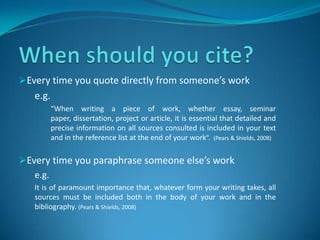
To give your reader sources that they can follow upWhen should you cite?Every time you quote directly from someone’s worke.g. “When writing a piece of work, whether essay, seminar paper, dissertation, project or article, it is essential that detailed and precise information on all sources consulted is included in your text and in the reference list at the end of your work”.  (Pears & Shields, 2008)Every time you paraphrase someone else’s worke.g.It is of paramount importance that, whatever form your writing takes, all sources must be included both in the body of your work and in the bibliography. (Pears & Shields, 2008)
Does it matter?Yes
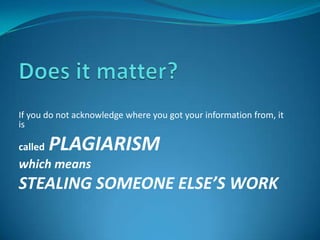
Does it matter?If you do not acknowledge where you got your information from, it is calledPLAGIARISMwhich meansSTEALING SOMEONE ELSE’S WORK
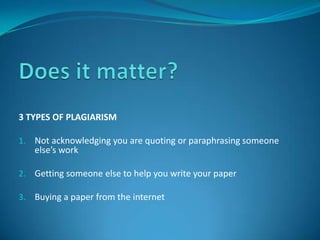
Does it matter?3 TYPES OF PLAGIARISMNot acknowledging you are quoting or paraphrasing someone else’s workGetting someone else to help you write your paperBuying a paper from the internet
Does it matter?It can have very serious consequences.At the very least, you can be given a ZERO mark.
If it is a graduation project, this could affect whether you graduate or not.
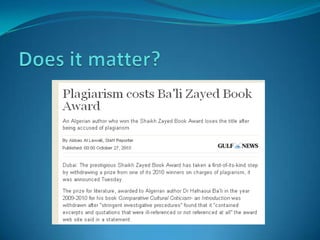
Plagiarism can ruin lives…Does it matter?
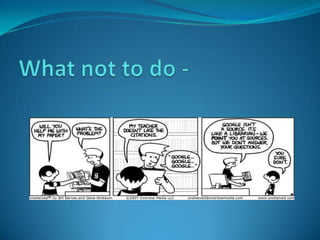
What not to do -
What should be included in a citation?Enough information to let the reader find the source you have quoted:TitleAuthorPublisher Date of publicationPlace of publication
How to add a citation to your workThere  are many conventions for preparing citations  which involve different ways of presenting the information.We will be using the MLA (Modern Language Association) referencing style
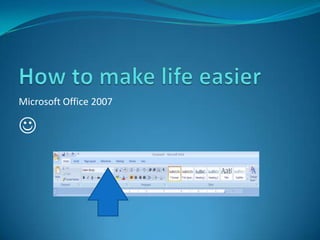
How to make life easierMicrosoft Office 2007   		
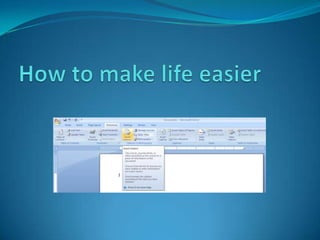
How to make life easier
What do you need to do?REMEMBER  to keep track of all the sources you useA useful way to do this is to set up an account with a bibliography and citation maker such as:Easybib – www.easybib.comOrBibme – http://bibme.org

Citing sources

  • 1.
  • 2.
    What does ‘citingsources’ mean?Cite: Quote (a book, passage, author, etc), esp. as an authority in support of a position; adduce or mention as an example, precedent, or proof … refer to.(Shorter Oxford English Dictionary, 2007)
  • 3.
    Why should onecite ? To demonstrate to your reader that you have done your research and that you have used reputable sources
  • 4.
    To acknowledge thatyou are quoting from someone else’s work
  • 5.
    To help yourreader follow the development of your argument
  • 6.
    To give yourreader sources that they can follow upWhen should you cite?Every time you quote directly from someone’s worke.g. “When writing a piece of work, whether essay, seminar paper, dissertation, project or article, it is essential that detailed and precise information on all sources consulted is included in your text and in the reference list at the end of your work”. (Pears & Shields, 2008)Every time you paraphrase someone else’s worke.g.It is of paramount importance that, whatever form your writing takes, all sources must be included both in the body of your work and in the bibliography. (Pears & Shields, 2008)
  • 7.
  • 8.
    Does it matter?Ifyou do not acknowledge where you got your information from, it is calledPLAGIARISMwhich meansSTEALING SOMEONE ELSE’S WORK
  • 9.
    Does it matter?3TYPES OF PLAGIARISMNot acknowledging you are quoting or paraphrasing someone else’s workGetting someone else to help you write your paperBuying a paper from the internet
  • 10.
    Does it matter?Itcan have very serious consequences.At the very least, you can be given a ZERO mark.
  • 11.
    If it isa graduation project, this could affect whether you graduate or not.
  • 12.
    Plagiarism can ruinlives…Does it matter?
  • 13.
  • 14.
    What should beincluded in a citation?Enough information to let the reader find the source you have quoted:TitleAuthorPublisher Date of publicationPlace of publication
  • 15.
    How to adda citation to your workThere are many conventions for preparing citations which involve different ways of presenting the information.We will be using the MLA (Modern Language Association) referencing style
  • 16.
    How to makelife easierMicrosoft Office 2007 
  • 17.
    How to makelife easier
  • 18.
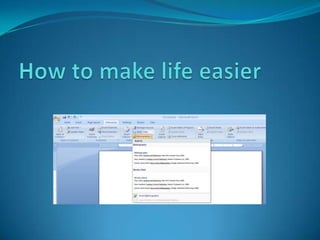
    How to makelife easier
  • 19.
    What do youneed to do?REMEMBER to keep track of all the sources you useA useful way to do this is to set up an account with a bibliography and citation maker such as:Easybib – www.easybib.comOrBibme – http://bibme.org
  • 20.
    What do youneed to do?Whatever reading you do, first of all make a note of:AuthorTitleURL (and date of accession)PublisherPlace of publicationDate of Publication
  • 21.
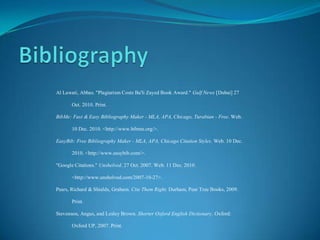
    DefinitionsCitation: Writtenin the body of your work as an acknowledgement of the source of the quotationAt the end of your paper:Citations/references: A list of all the sources you have quoted fromBibliography: A list of all the sources you have consulted whether or not you have quoted from them
  • 22.

Editor's Notes

  • #3 Adduce – bring forward for consideration
  • #4 Reputable sources” friend’s cousin or Mr JamesNot expected to produce an original piece of researchTeachers know a lot and can often tell if you have understood what you have read by the sources you quote