CIRCULAR
ECONOMY
Dr. Salem Baidas
Circular economy
A Sustainable Economic Model
that Promotes the Reuse and
Recycling of Materials to Reduce
Natural Resource Consumption
and Waste Generation.
s
Paper, Electronics
Metals & Glass.
Source Consumption
& Waste Generation.
Furniture, Clothing
& Electronics.
Non-Recyclable Like
Single-Use Plastics.
GBES.COM
CIRCULAR ECONOMY
PRINCIPLES of the 4Rs
Promotes Sustainable Material Management through Efficient
Reuse, Reducing Waste & Carbon Emissions.
Environmental
Requires New Business Models, Technologies & Infrastructure
which Generates New Jobs in Recycling, Repairs & Refurbishment.
Economic
Redesigning Materials & Products for Circular Use will Boost
Innovation & Competitiveness Across Various Industries.
Innovation
Provides Durable & High-Quality Products with Longer Lifespans
Potentially Saving Consumers Money in the Long Run.
Cost Savings
Promotes Recyclable, Reusable & Renewable Products
Safeguarding Resources such as Energy, Water, Materials & Land.
preservation
EUROPARL.EUROPA.EU
benefits
CIRCULAR ECONOMY
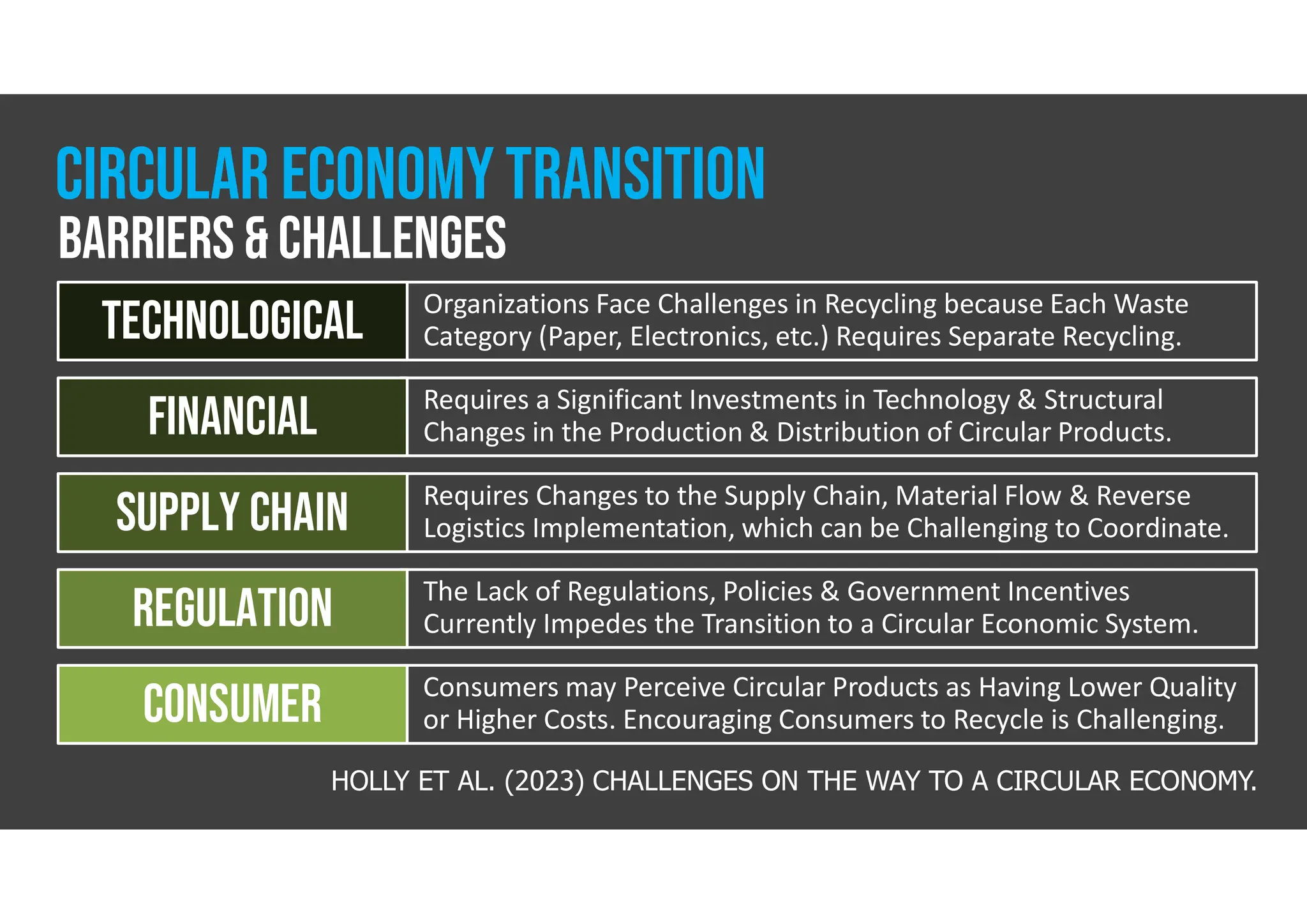
Organizations Face Challenges in Recycling because Each Waste
Category (Paper, Electronics, etc.) Requires Separate Recycling.
Technological
Requires a Significant Investments in Technology & Structural
Changes in the Production & Distribution of Circular Products.
financial
Requires Changes to the Supply Chain, Material Flow & Reverse
Logistics Implementation, which can be Challenging to Coordinate.
supply chain
The Lack of Regulations, Policies & Government Incentives
Currently Impedes the Transition to a Circular Economic System.
regulation
Consumers may Perceive Circular Products as Having Lower Quality
or Higher Costs. Encouraging Consumers to Recycle is Challenging.
consumer
HOLLY ET AL. (2023) CHALLENGES ON THE WAY TO A CIRCULAR ECONOMY.
Barriers & challenges
CIRCULAR ECONOMYtransition
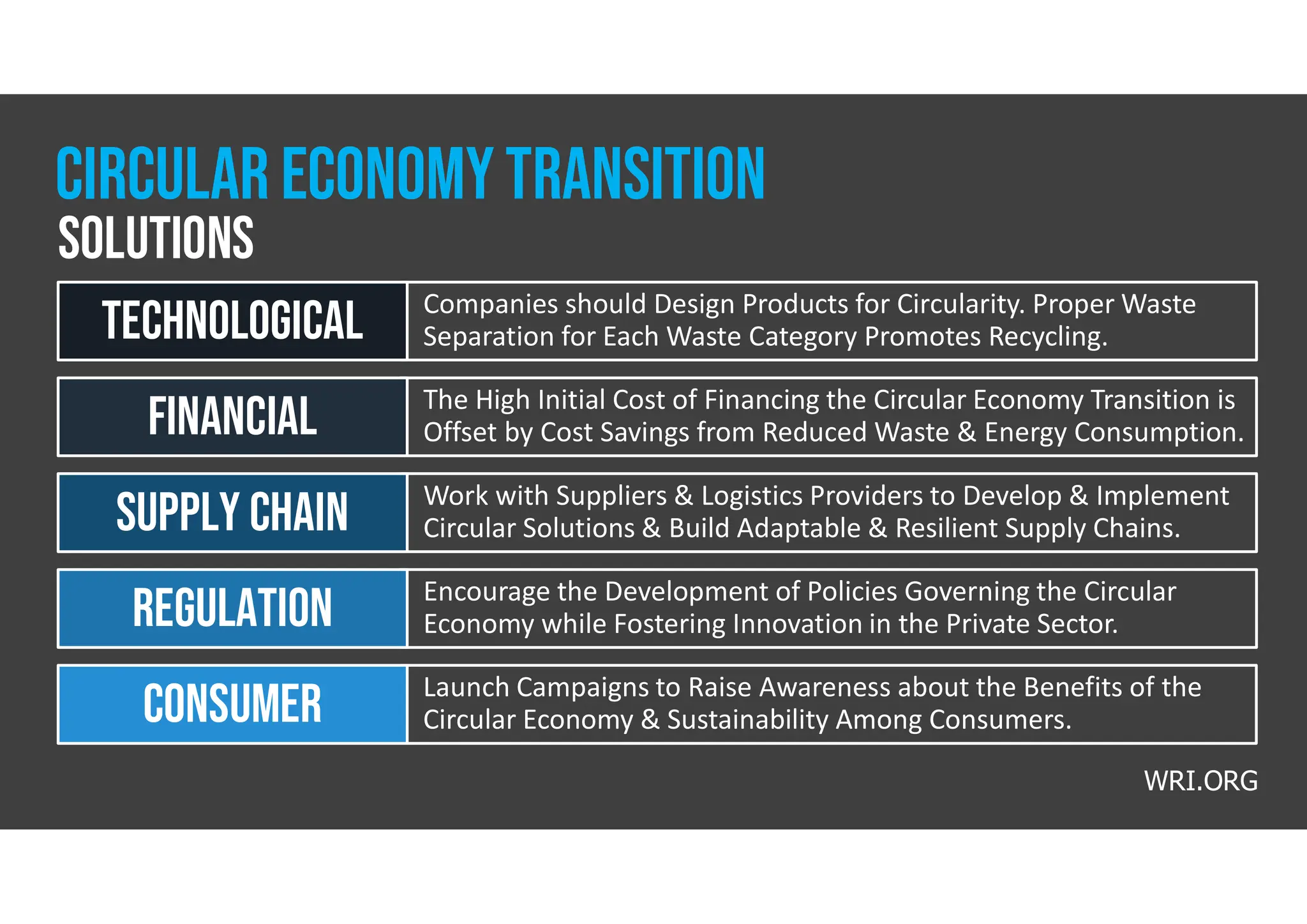
Companies should Design Products for Circularity. Proper Waste
Separation for Each Waste Category Promotes Recycling.
Technological
The High Initial Cost of Financing the Circular Economy Transition is
Offset by Cost Savings from Reduced Waste & Energy Consumption.
financial
Work with Suppliers & Logistics Providers to Develop & Implement
Circular Solutions & Build Adaptable & Resilient Supply Chains.
supply chain
Encourage the Development of Policies Governing the Circular
Economy while Fostering Innovation in the Private Sector.
regulation
Launch Campaigns to Raise Awareness about the Benefits of the
Circular Economy & Sustainability Among Consumers.
consumer
solutions
WRI.ORG
CIRCULAR ECONOMYTransition
The Circular Economy is an Essential
Part of the Sustainability Agenda and
Can Contribute to Several Sustainable
Development Goals (SDGs). Circular
Economy Directly Supports SDG 12
and Indirectly Supports SDGs 2, 6, 7
13, and 15.
Dept. of Economic & Social Affairs
Circular Economy
SDGS.UN.ORG
This is a placeholder text. This text
can be replaced with your own text.
This text can be replaced with your
own text. This is a placeholder text.
This text can be replaced with your
own text. This text can be replaced
with your own text.
9.7
6.6
4.1
3.6
2022 2026
339
713
STATISTA.COM
2X
INCREASE
circular economyrevenue worldwide & OUTLOOK
BILLION DOLLARS
circular economyrevenue worldwide IN 2022
Billion $
Category
93
Consumerelectronics
73
DIY & hardware
61
CLOTHING
31
FURNITURE
28
Household appliances
16
Accessories
BY CATEGORY (BILLIONDOLLARS)
STATISTA.COM
number of circular economy transactions & OUTLOOK
2022 2026
20
32
STATISTA.COM
60%
INCREASE
Billions(Worldwide)
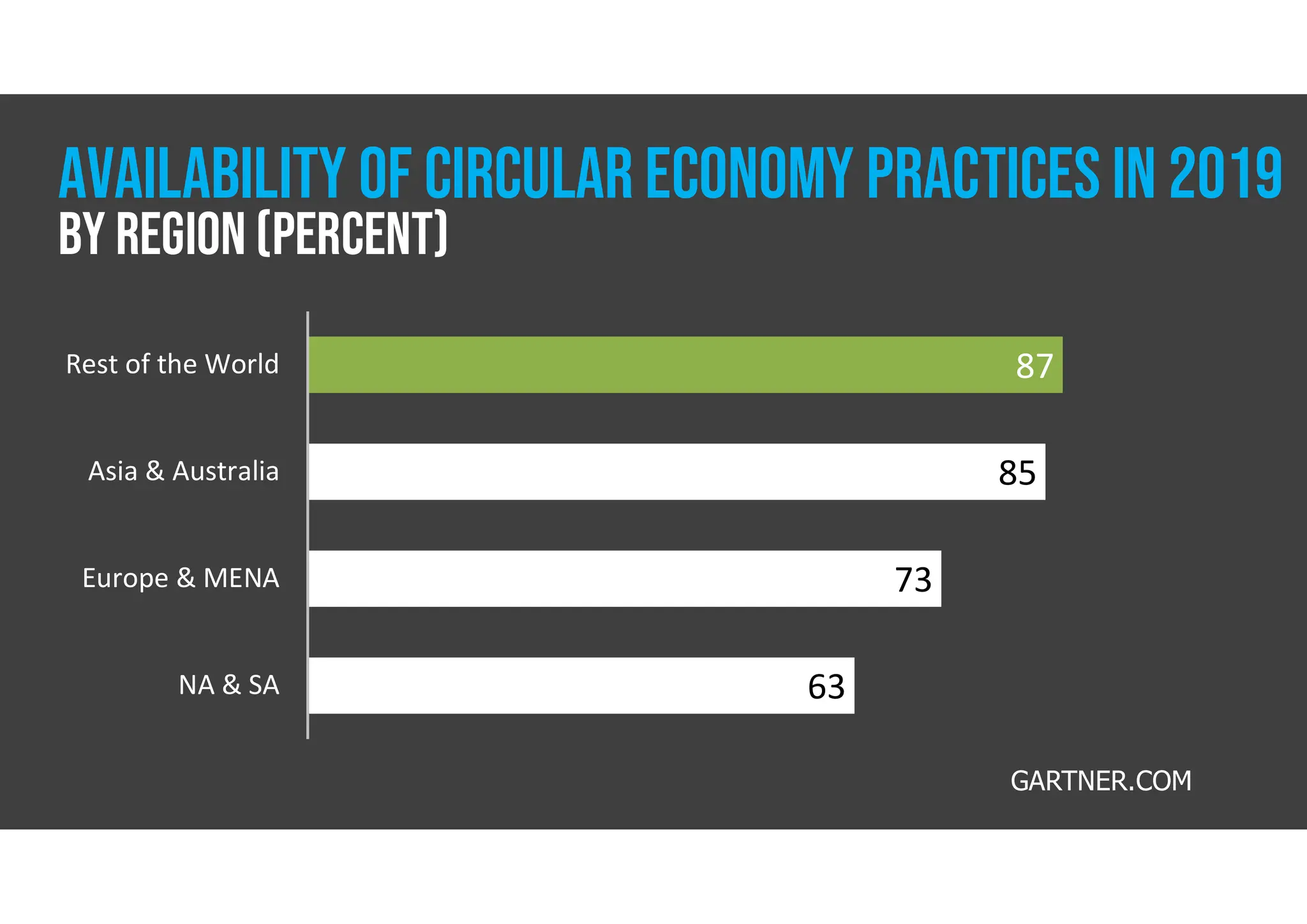
87
85
73
63
Rest of the World
Asia & Australia
Europe & MENA
NA & SA
GARTNER.COM
By region (percent)
Availability of circular economy practices in 2019
Supply chain approaches to circular economy
%
strategy
28
Implement circular design approaches in innovationstrategy
27
Integratece into businessunitsand growth strategies
24
Integrateend-of-lifeproducts into logisticsstrategy
17
Create separate businessunit for CE activitiesto drive growth
16
Integratece skillsin talent strategy
12
LinkCE to digital technology
2019 (worldwide)
GARTNER.COM
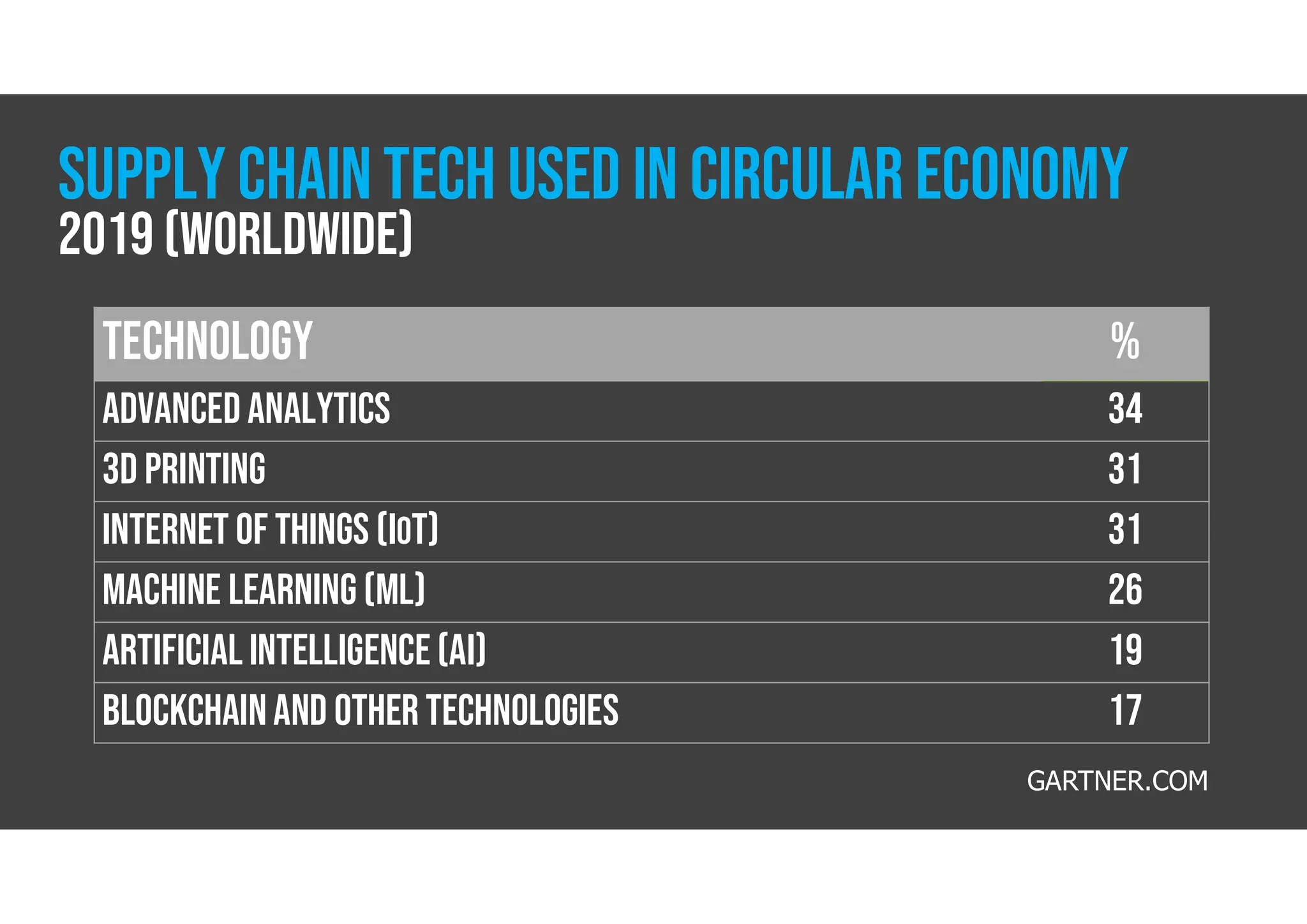
2019 (Worldwide)
%
Technology
34
Advanced analytics
31
3D printing
31
Internet of Things (IoT)
26
Machine learning(ML)
19
Artificialintelligence(AI)
17
Blockchainand other technologies
Supply chain tech used in circular economy
GARTNER.COM
Share of consumers(2021) Worldwide
%
reason
60
Product labelsdo notclearly indicate environmentalimpact
56
do notwant to compromiseon quality
55
do notwant to compromiseon cost
54
It is the manufacturer’sresponsibilityto reduce waste
53
do notwant to compromiseon convenience
51
do nottrust the manufacturer (greenwashing)
Consumers not engaging in circular actions
CAPGEMINI.COM
Share of consumers(Percent)
%
action
48
Bought new productswith recycled properties
45
Bought secondhand products
36
Bought less
35
Performed a circularactiontoextend product life
33
Performed a circularactiontomanage end-of-life
15
Rented instead of owning
Consumers circular actions worldwide in 2020
DNV.COM
S2ADesign.com

Circular Economy

  • 1.
  • 2.
    Circular economy A SustainableEconomic Model that Promotes the Reuse and Recycling of Materials to Reduce Natural Resource Consumption and Waste Generation.
  • 3.
    s Paper, Electronics Metals &Glass. Source Consumption & Waste Generation. Furniture, Clothing & Electronics. Non-Recyclable Like Single-Use Plastics. GBES.COM CIRCULAR ECONOMY PRINCIPLES of the 4Rs
  • 4.
    Promotes Sustainable MaterialManagement through Efficient Reuse, Reducing Waste & Carbon Emissions. Environmental Requires New Business Models, Technologies & Infrastructure which Generates New Jobs in Recycling, Repairs & Refurbishment. Economic Redesigning Materials & Products for Circular Use will Boost Innovation & Competitiveness Across Various Industries. Innovation Provides Durable & High-Quality Products with Longer Lifespans Potentially Saving Consumers Money in the Long Run. Cost Savings Promotes Recyclable, Reusable & Renewable Products Safeguarding Resources such as Energy, Water, Materials & Land. preservation EUROPARL.EUROPA.EU benefits CIRCULAR ECONOMY
  • 5.
    Organizations Face Challengesin Recycling because Each Waste Category (Paper, Electronics, etc.) Requires Separate Recycling. Technological Requires a Significant Investments in Technology & Structural Changes in the Production & Distribution of Circular Products. financial Requires Changes to the Supply Chain, Material Flow & Reverse Logistics Implementation, which can be Challenging to Coordinate. supply chain The Lack of Regulations, Policies & Government Incentives Currently Impedes the Transition to a Circular Economic System. regulation Consumers may Perceive Circular Products as Having Lower Quality or Higher Costs. Encouraging Consumers to Recycle is Challenging. consumer HOLLY ET AL. (2023) CHALLENGES ON THE WAY TO A CIRCULAR ECONOMY. Barriers & challenges CIRCULAR ECONOMYtransition
  • 6.
    Companies should DesignProducts for Circularity. Proper Waste Separation for Each Waste Category Promotes Recycling. Technological The High Initial Cost of Financing the Circular Economy Transition is Offset by Cost Savings from Reduced Waste & Energy Consumption. financial Work with Suppliers & Logistics Providers to Develop & Implement Circular Solutions & Build Adaptable & Resilient Supply Chains. supply chain Encourage the Development of Policies Governing the Circular Economy while Fostering Innovation in the Private Sector. regulation Launch Campaigns to Raise Awareness about the Benefits of the Circular Economy & Sustainability Among Consumers. consumer solutions WRI.ORG CIRCULAR ECONOMYTransition
  • 8.
    The Circular Economyis an Essential Part of the Sustainability Agenda and Can Contribute to Several Sustainable Development Goals (SDGs). Circular Economy Directly Supports SDG 12 and Indirectly Supports SDGs 2, 6, 7 13, and 15. Dept. of Economic & Social Affairs Circular Economy SDGS.UN.ORG
  • 9.
    This is aplaceholder text. This text can be replaced with your own text. This text can be replaced with your own text. This is a placeholder text. This text can be replaced with your own text. This text can be replaced with your own text. 9.7 6.6 4.1 3.6
  • 11.
  • 12.
    circular economyrevenue worldwideIN 2022 Billion $ Category 93 Consumerelectronics 73 DIY & hardware 61 CLOTHING 31 FURNITURE 28 Household appliances 16 Accessories BY CATEGORY (BILLIONDOLLARS) STATISTA.COM
  • 13.
    number of circulareconomy transactions & OUTLOOK 2022 2026 20 32 STATISTA.COM 60% INCREASE Billions(Worldwide)
  • 14.
    87 85 73 63 Rest of theWorld Asia & Australia Europe & MENA NA & SA GARTNER.COM By region (percent) Availability of circular economy practices in 2019
  • 15.
    Supply chain approachesto circular economy % strategy 28 Implement circular design approaches in innovationstrategy 27 Integratece into businessunitsand growth strategies 24 Integrateend-of-lifeproducts into logisticsstrategy 17 Create separate businessunit for CE activitiesto drive growth 16 Integratece skillsin talent strategy 12 LinkCE to digital technology 2019 (worldwide) GARTNER.COM
  • 16.
    2019 (Worldwide) % Technology 34 Advanced analytics 31 3Dprinting 31 Internet of Things (IoT) 26 Machine learning(ML) 19 Artificialintelligence(AI) 17 Blockchainand other technologies Supply chain tech used in circular economy GARTNER.COM
  • 18.
    Share of consumers(2021)Worldwide % reason 60 Product labelsdo notclearly indicate environmentalimpact 56 do notwant to compromiseon quality 55 do notwant to compromiseon cost 54 It is the manufacturer’sresponsibilityto reduce waste 53 do notwant to compromiseon convenience 51 do nottrust the manufacturer (greenwashing) Consumers not engaging in circular actions CAPGEMINI.COM
  • 19.
    Share of consumers(Percent) % action 48 Boughtnew productswith recycled properties 45 Bought secondhand products 36 Bought less 35 Performed a circularactiontoextend product life 33 Performed a circularactiontomanage end-of-life 15 Rented instead of owning Consumers circular actions worldwide in 2020 DNV.COM
  • 20.