IASI – A HISTORICAL CITY Churches and monasteries In Iasi city there are famous  religious buildings  for the Moldavian history.
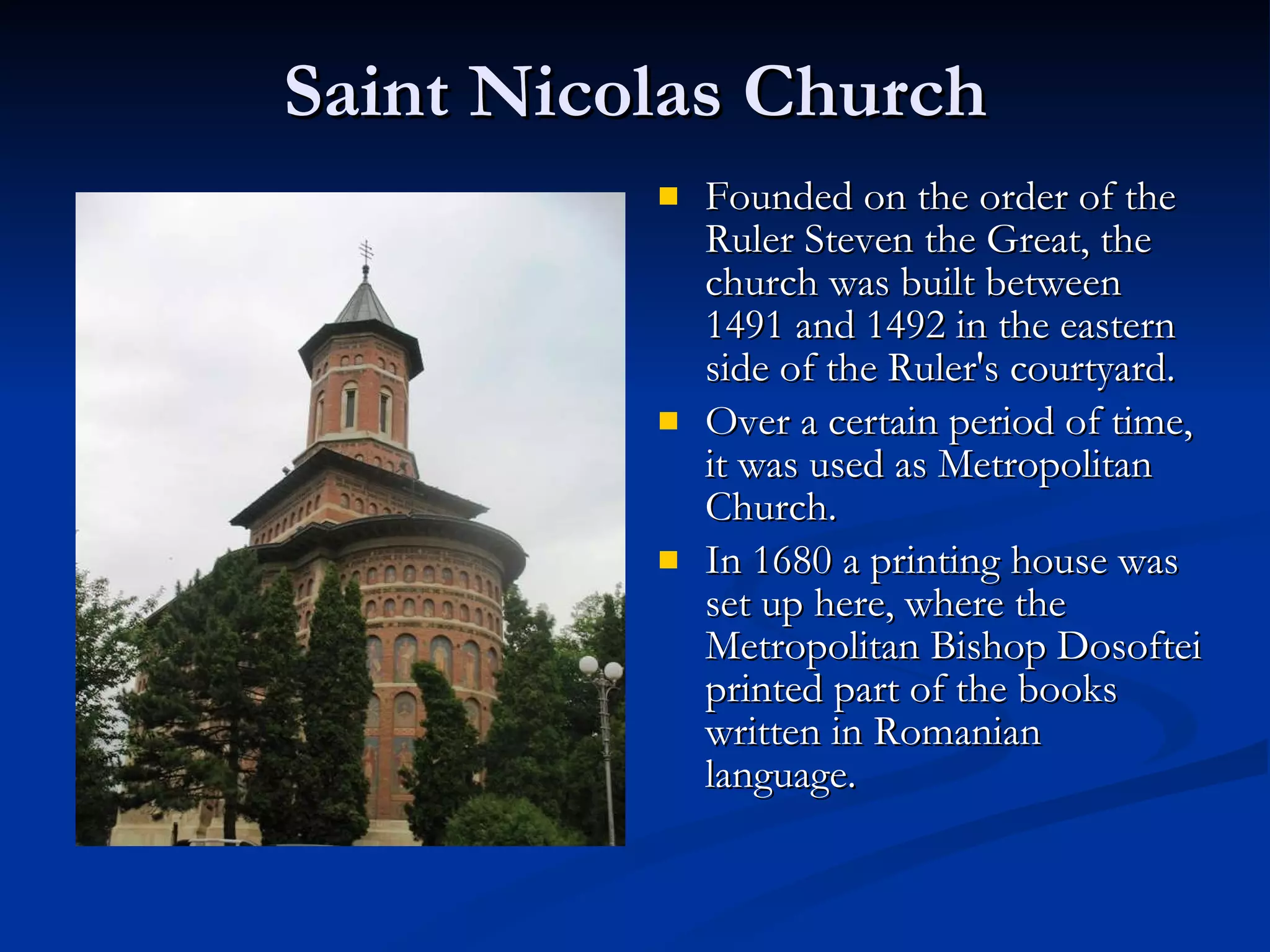
Saint Nicolas Church Founded on the order of the Ruler Steven the Great, the church was built between 1491 and 1492 in the eastern side of the Ruler's courtyard. Over a certain period of time, it was used as Metropolitan Church. In 1680 a printing house was set up here, where the Metropolitan Bishop Dosoftei printed part of the books written in Romanian language.
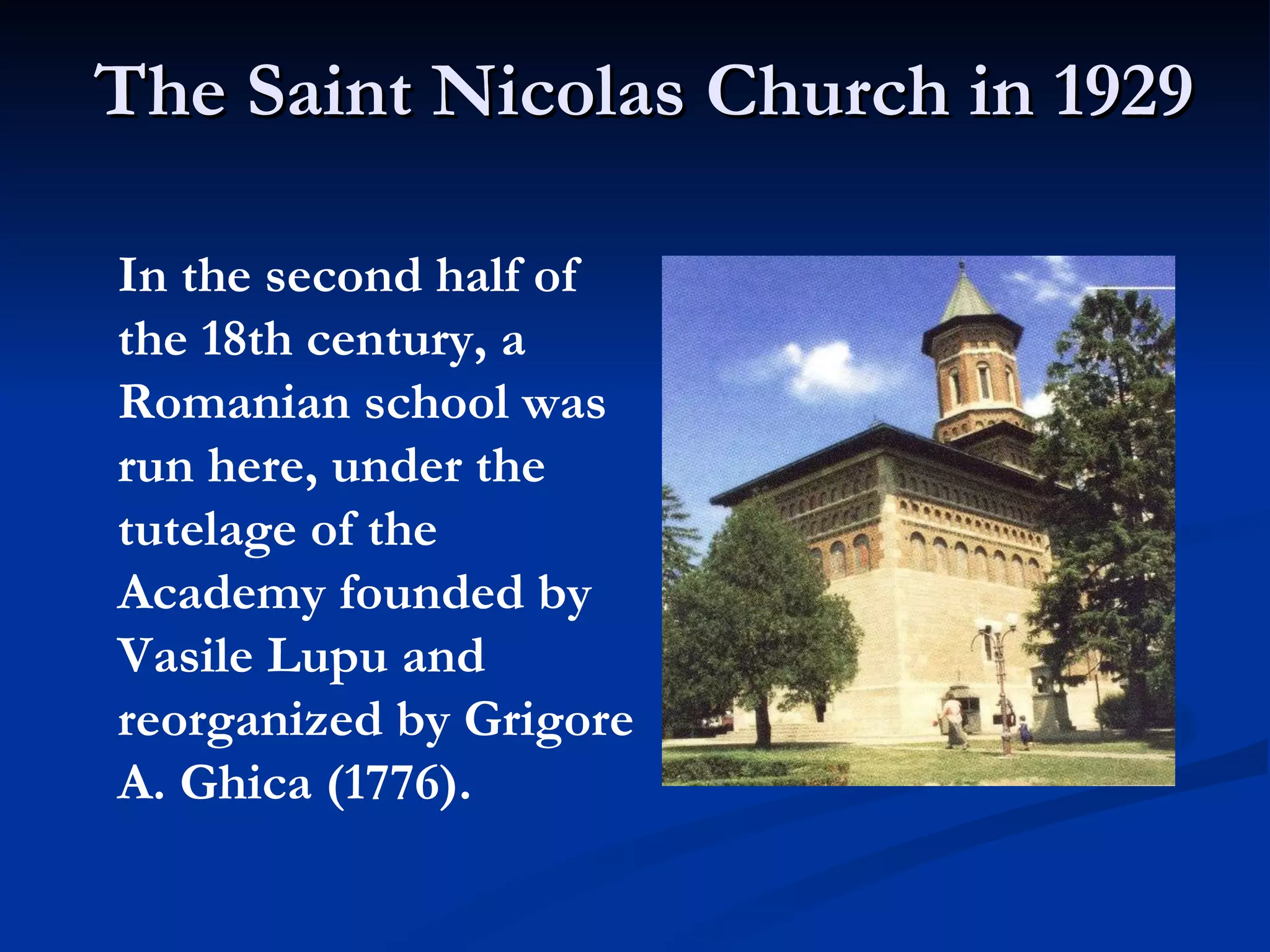
The Saint Nicolas Church in 1929 In the second half of the 18th century, a Romanian school was run here, under the tutelage of the Academy founded by Vasile Lupu and reorganized by Grigore A. Ghica (1776).
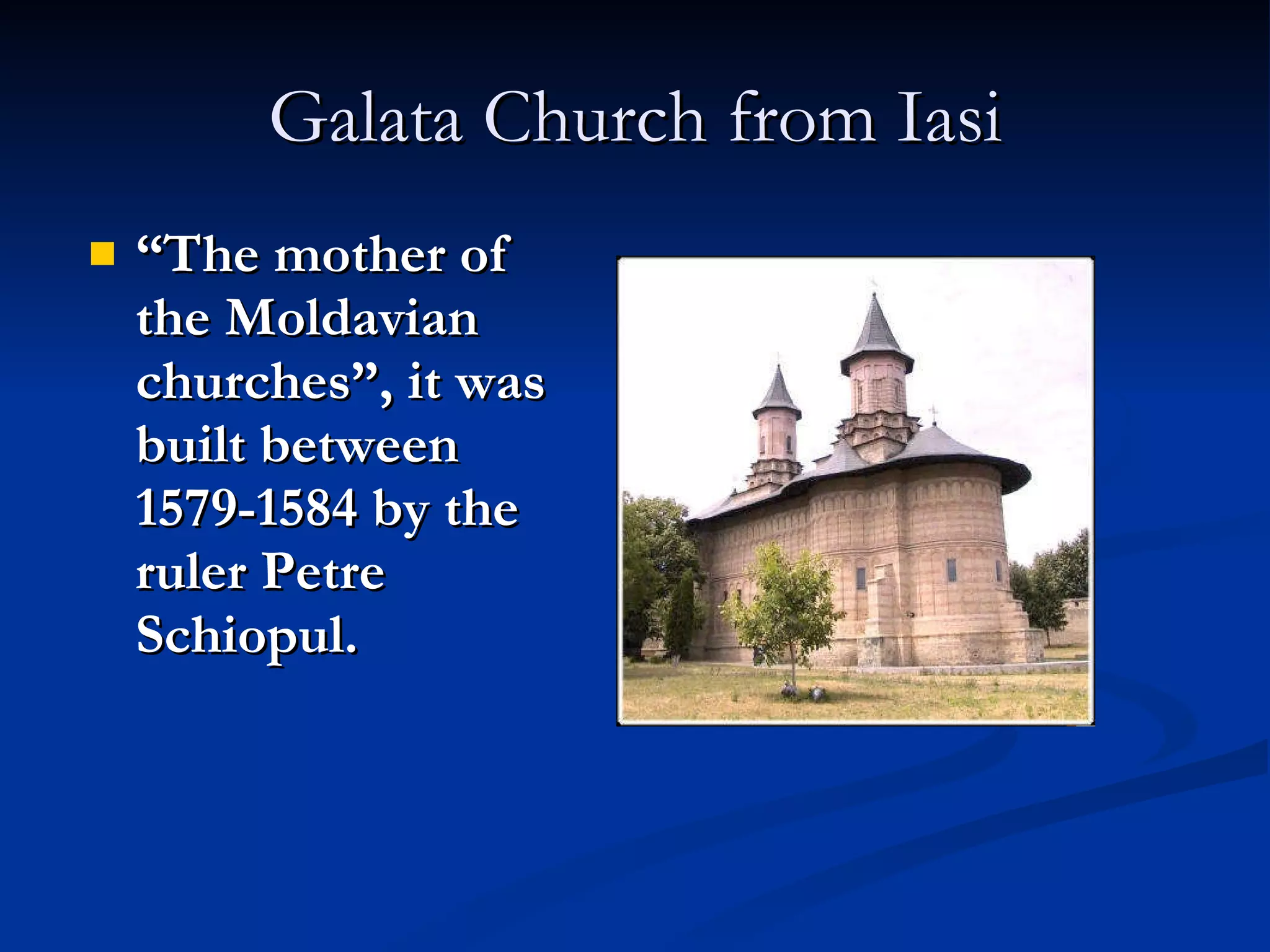
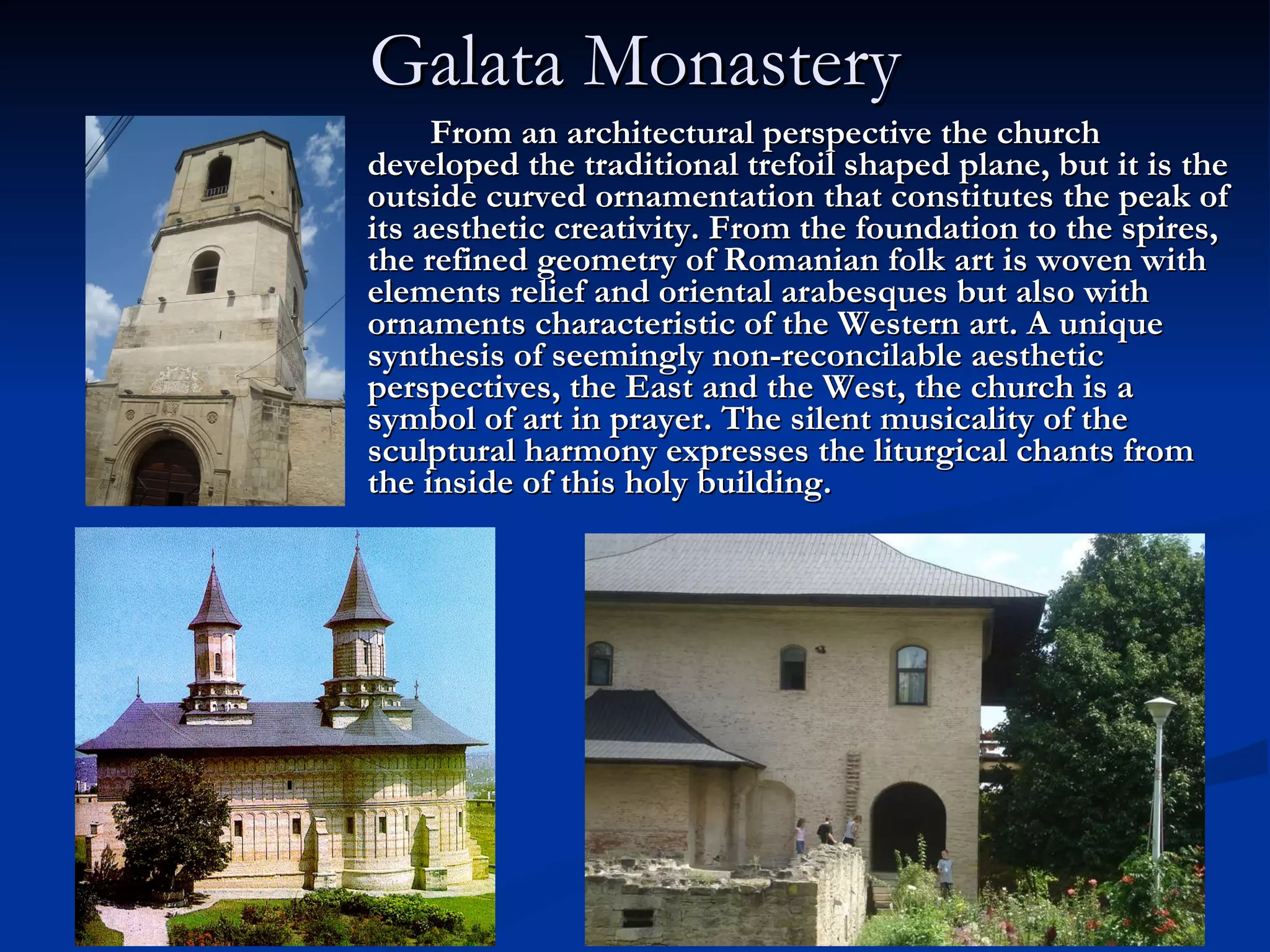
Galata Church from Iasi “ The mother of the Moldavian churches”, it was built between 1579-1584 by the ruler Petre Schiopul.
Galata Monastery From an architectural perspective the church developed the traditional trefoil shaped plane, but it is the outside curved ornamentation that constitutes the peak of its aesthetic creativity. From the foundation to the spires, the refined geometry of Romanian folk art is woven with elements relief and oriental arabesques but also with ornaments characteristic of the Western art. A unique synthesis of seemingly non-reconcilable aesthetic perspectives, the East and the West, the church is a symbol of art in prayer. The silent musicality of the sculptural harmony expresses the liturgical chants from the inside of this holy building.
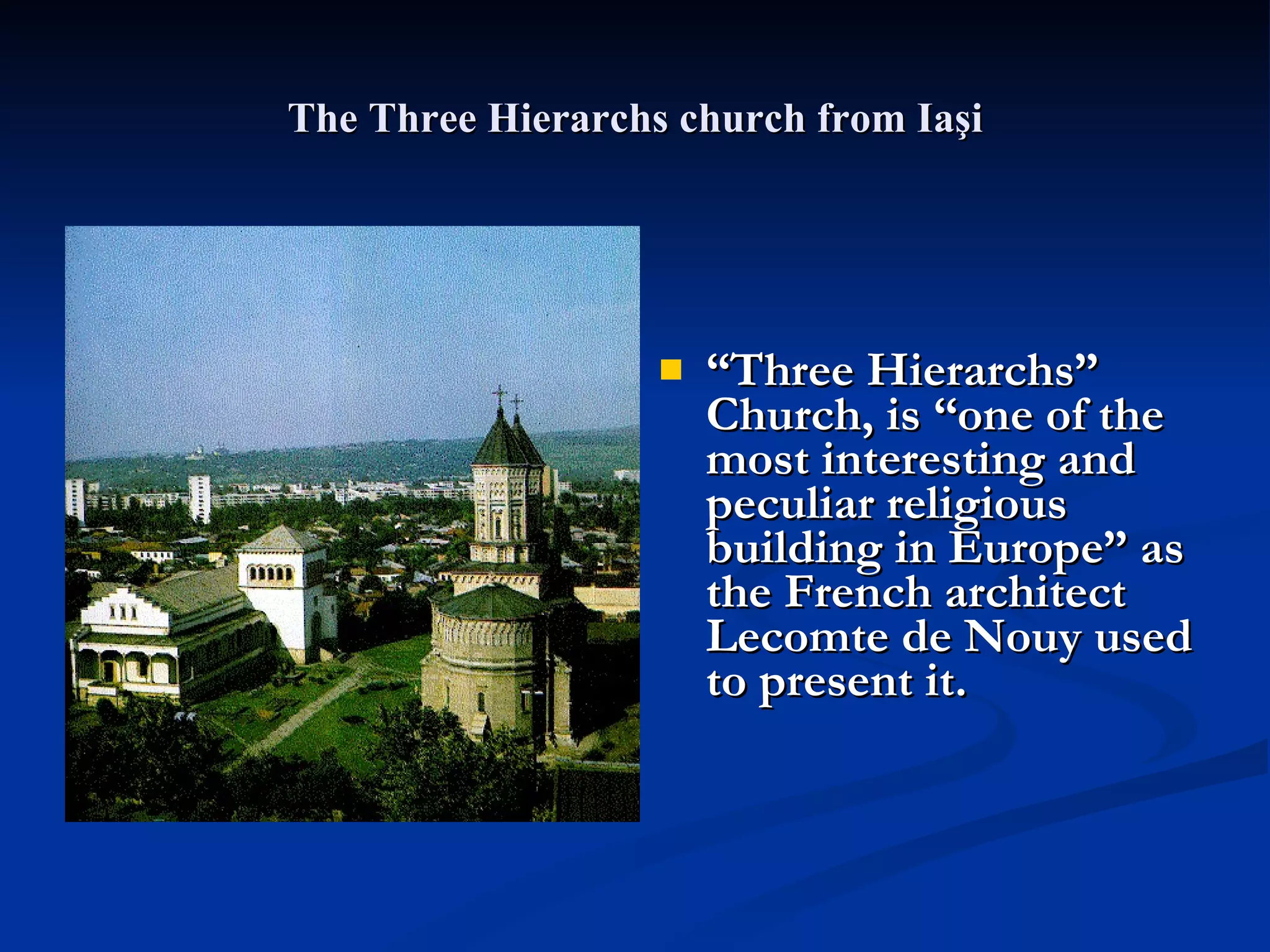
The Three Hierarchs church from Iaşi “ Three Hierarchs” Church, is “one of the most interesting and peculiar religious building in Europe” as the French architect Lecomte de Nouy used to present it.
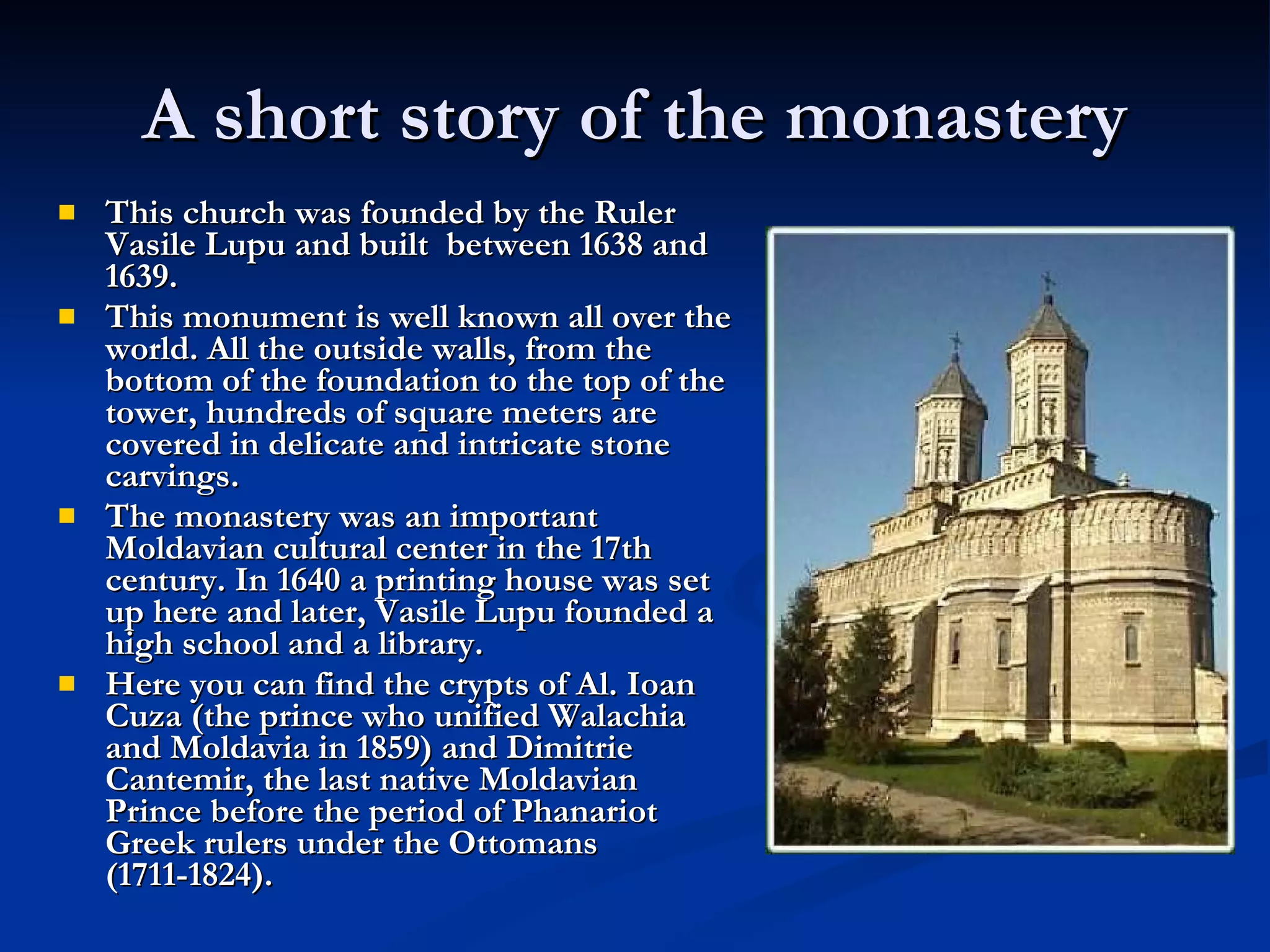
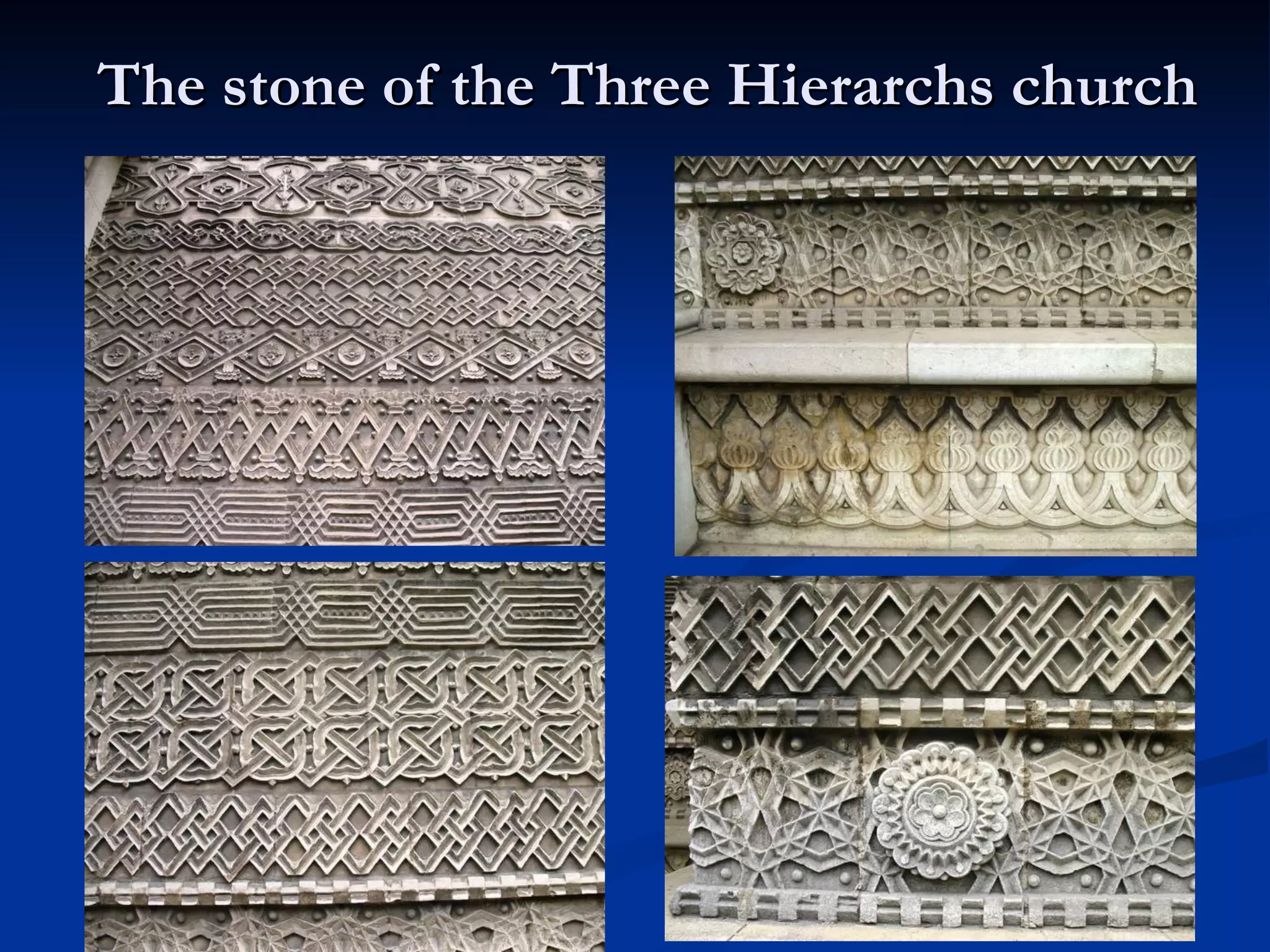
A short story of the monastery This church was founded by the Ruler Vasile Lupu and built  between 1638 and 1639. This monument is well known all over the world. All the outside walls, from the bottom of the foundation to the top of the tower, hundreds of square meters are covered in delicate and intricate stone carvings.  The monastery was an important Moldavian cultural center in the 17th century.  In 1640 a printing house was set up here and later, Vasile Lupu founded a high school and a library.  Here you can find the crypts of Al. Ioan Cuza (the prince who unified Walachia and Moldavia in 1859) and Dimitrie Cantemir, the last native Moldavian Prince before the period of Phanariot Greek rulers under the Ottomans (1711-1824).
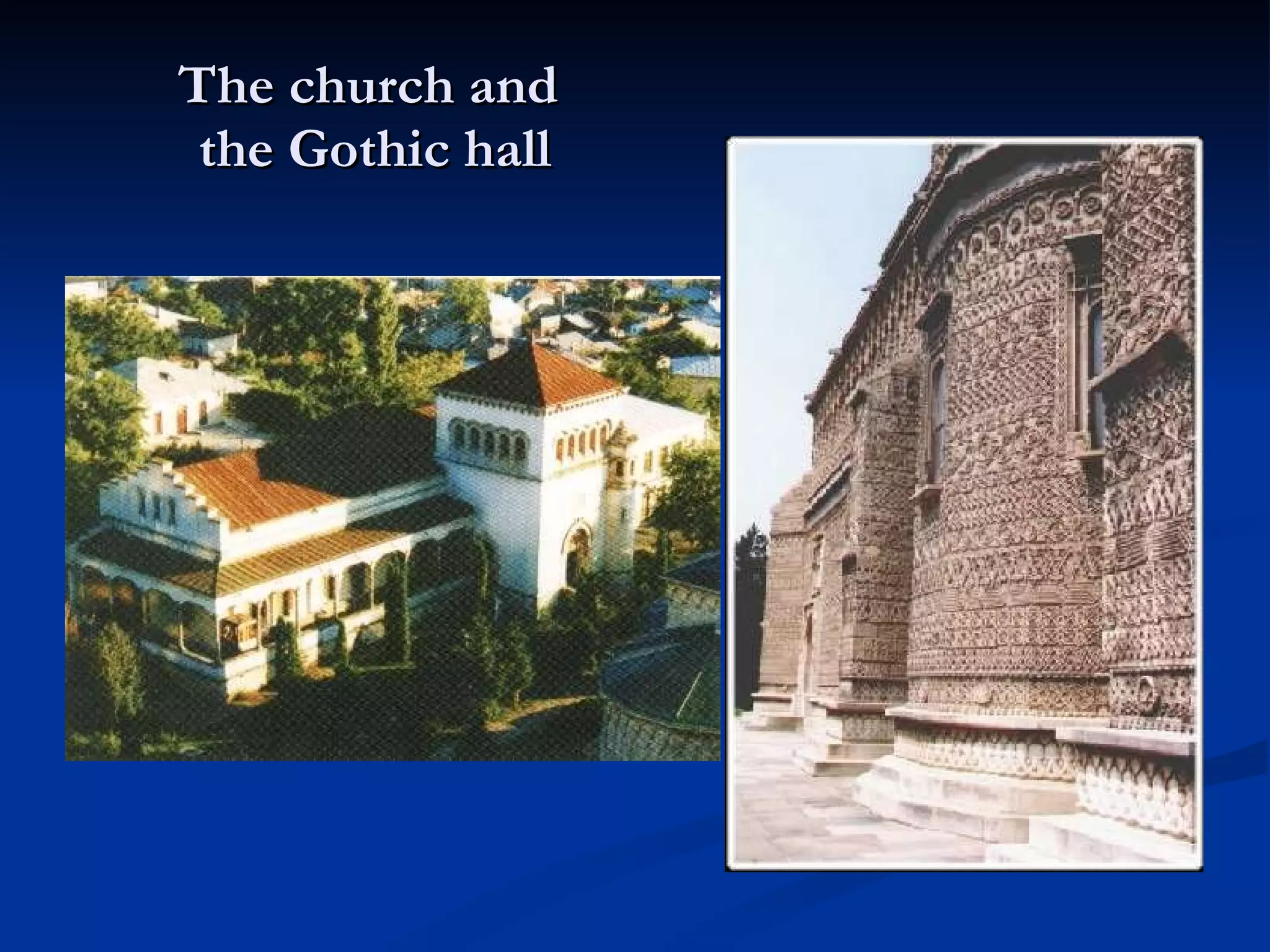
The church and  the Gothic hall
The stone of the Three Hierarchs church
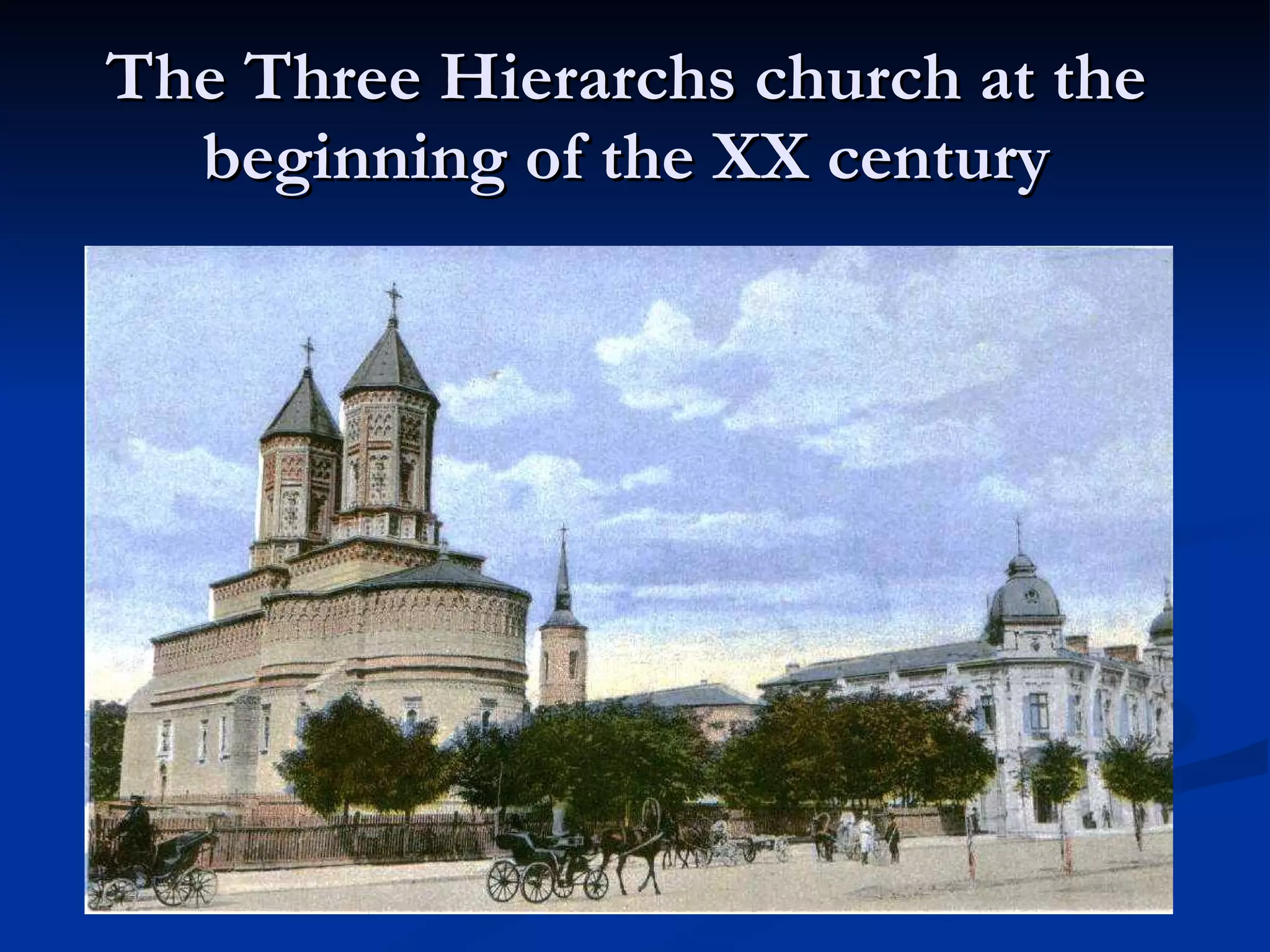
The Three Hierarchs church at the beginning of the XX century
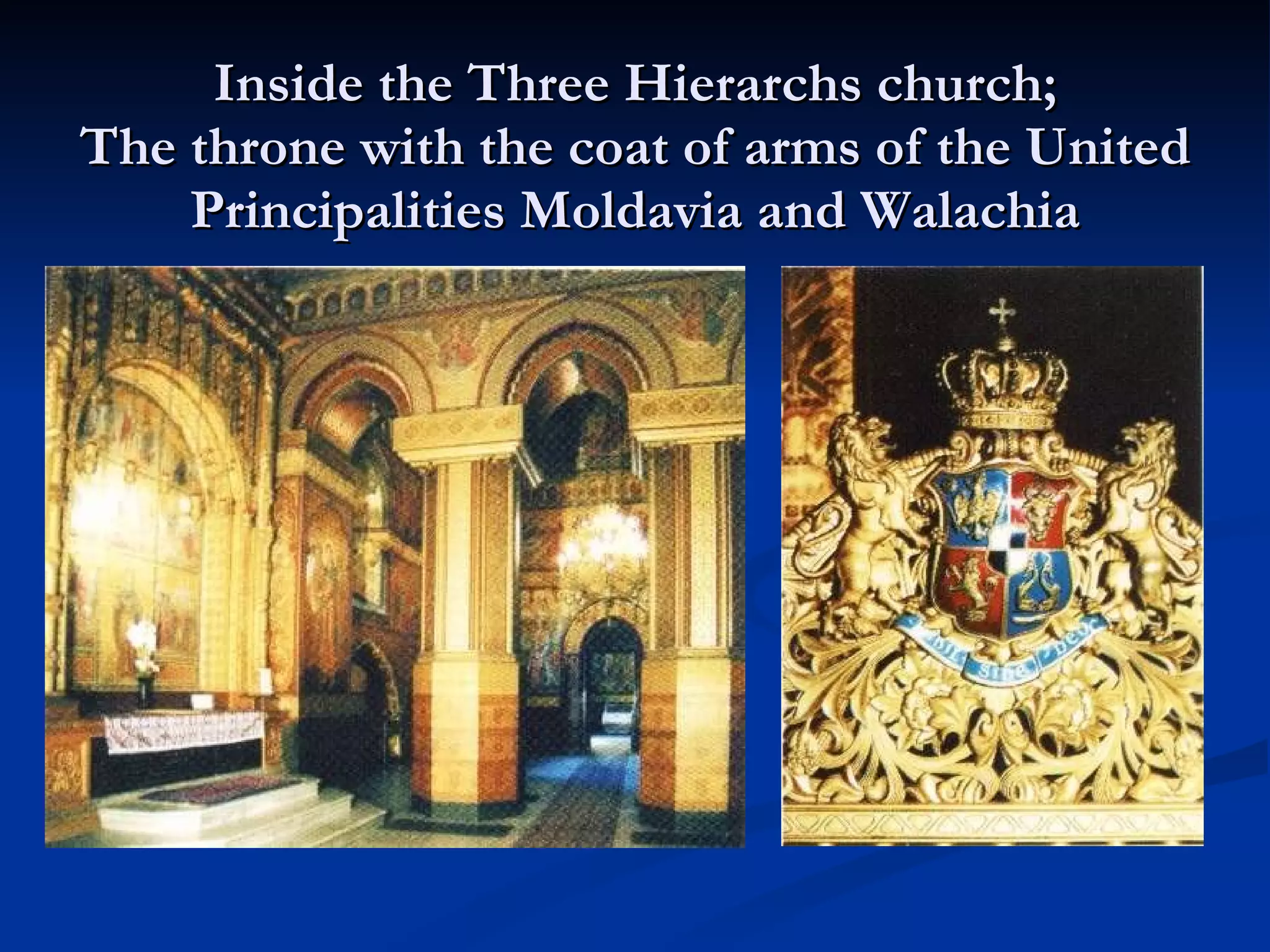
Inside the Three Hierarchs church; The throne with the coat of arms of the United Principalities Moldavia and Walachia
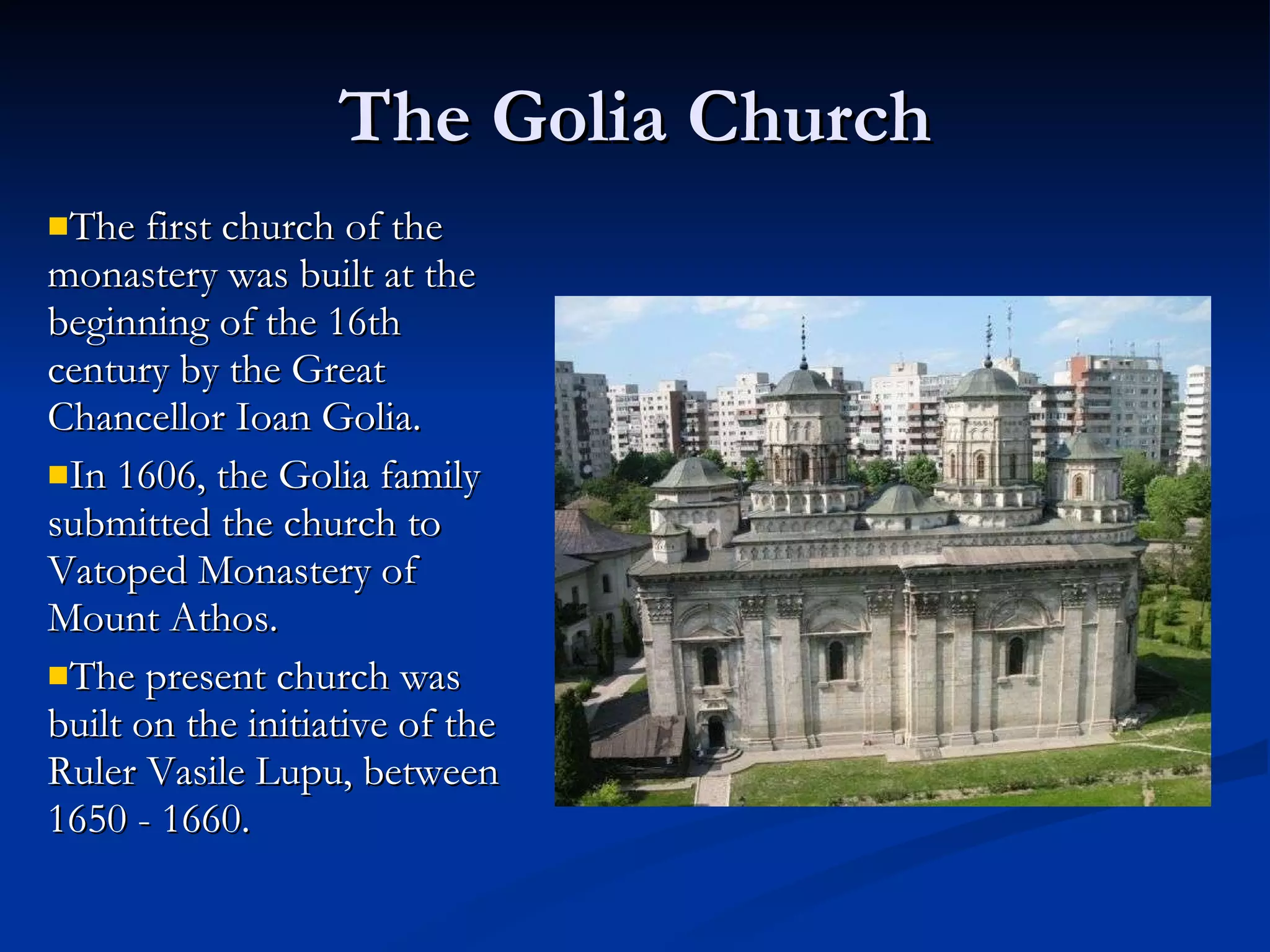
The Golia Church The first church of the monastery was built at the beginning of the 16th century by the Great Chancellor Ioan Golia.  In 1606, the Golia family submitted the church to Vatoped Monastery of Mount Athos.  The present church was built on the initiative of the Ruler Vasile Lupu, between 1650 - 1660.
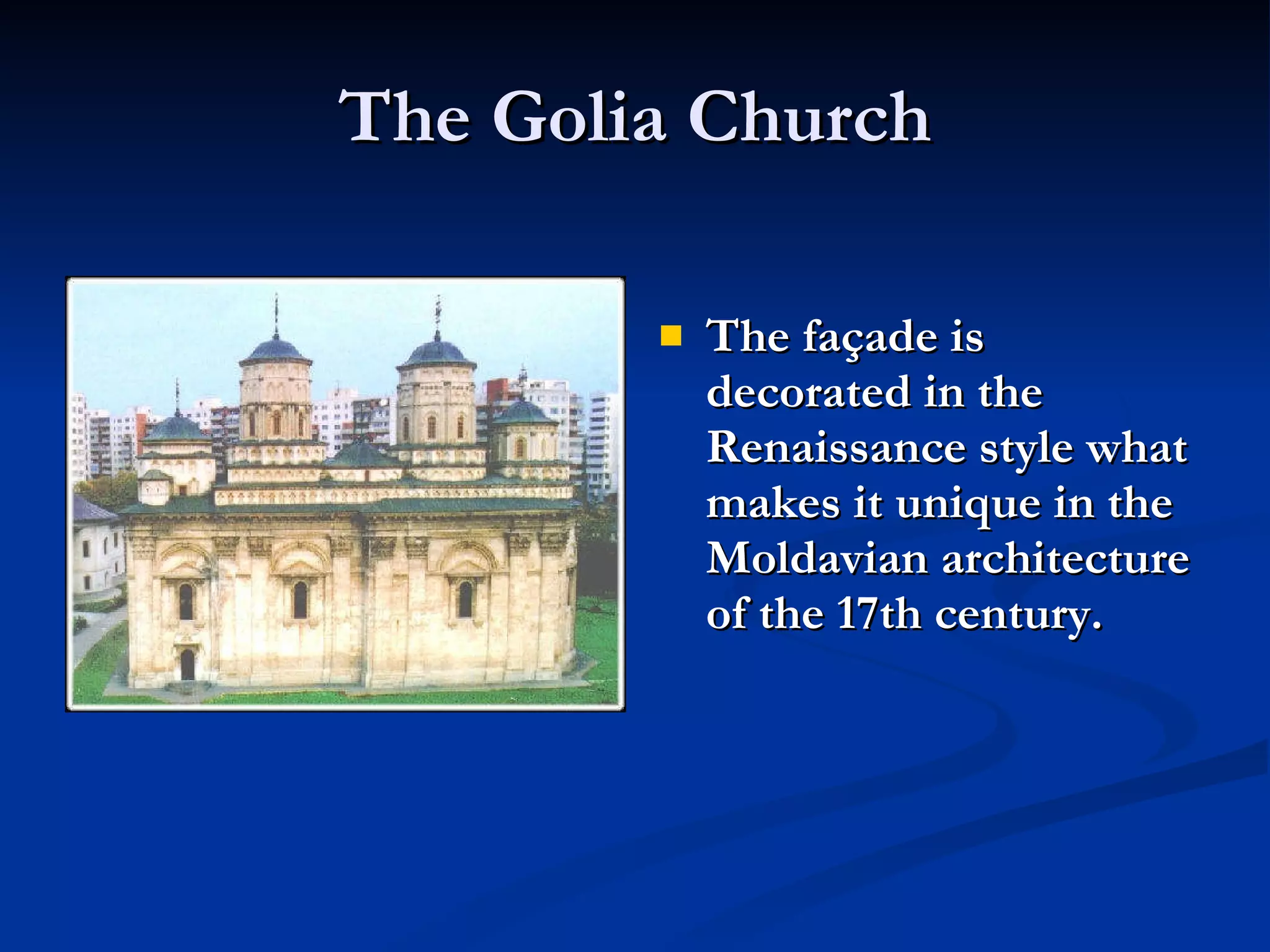
The Golia Church The façade is decorated in the Renaissance style what makes it unique in the Moldavian architecture of the 17th century.
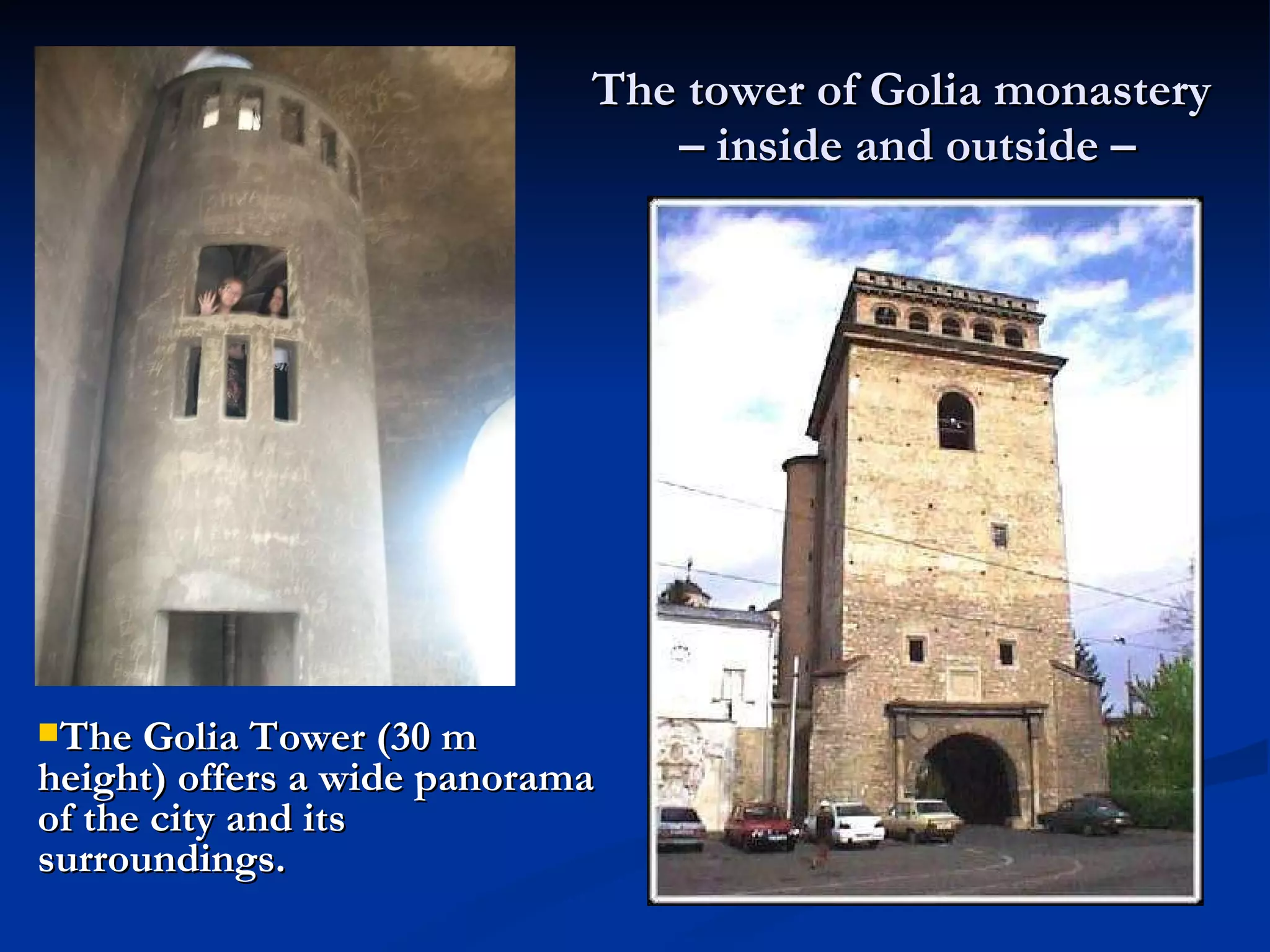
The tower of Golia monastery  – inside and outside  – The Golia Tower (30 m height) offers a wide panorama of the city and its surroundings.
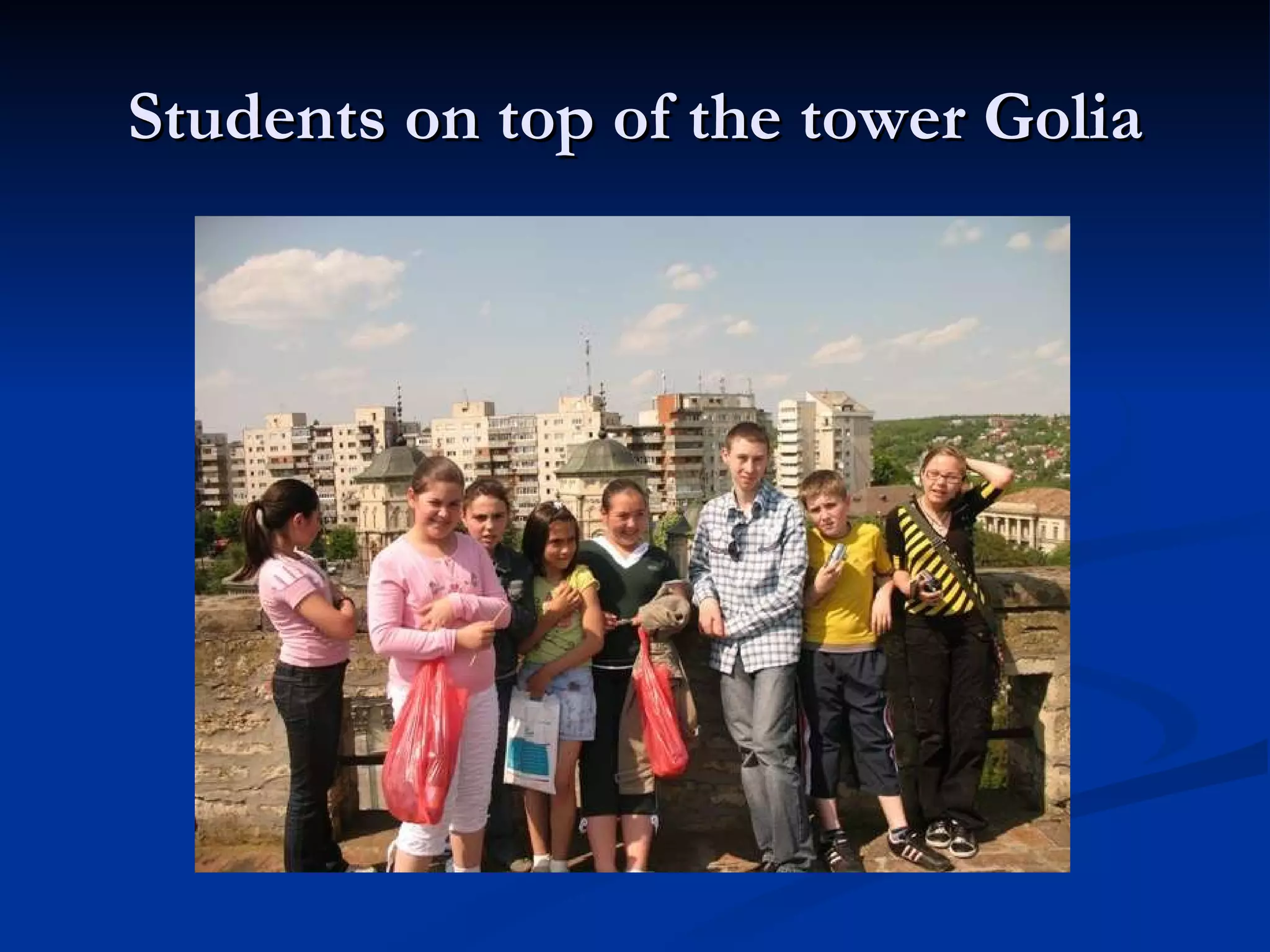
Students on  top of  the tower Golia
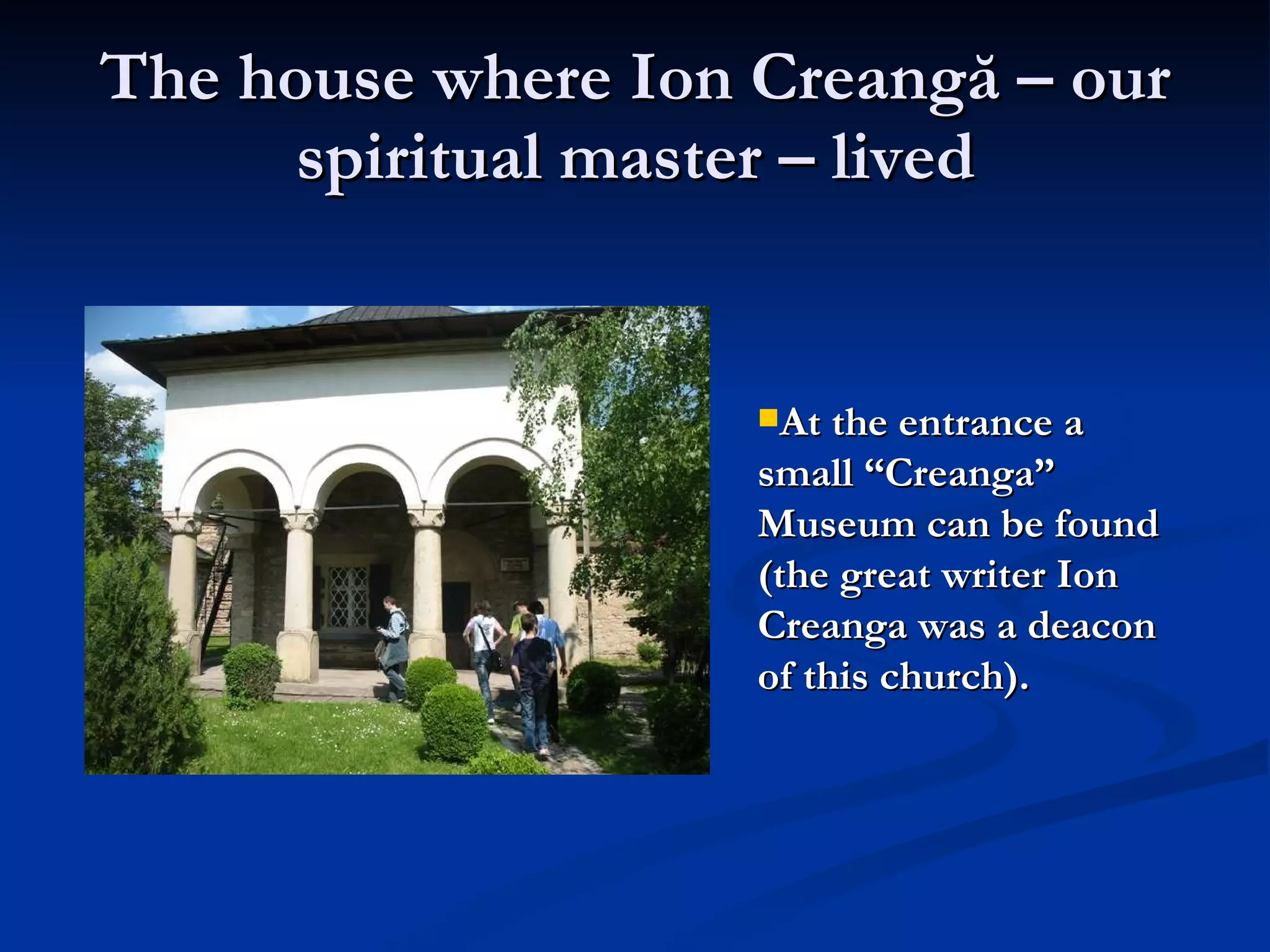
The house where Ion  Creangă  – our spiritual master – lived At the entrance a small “Creanga” Museum can be found (the great writer Ion Creanga was a deacon of this church).
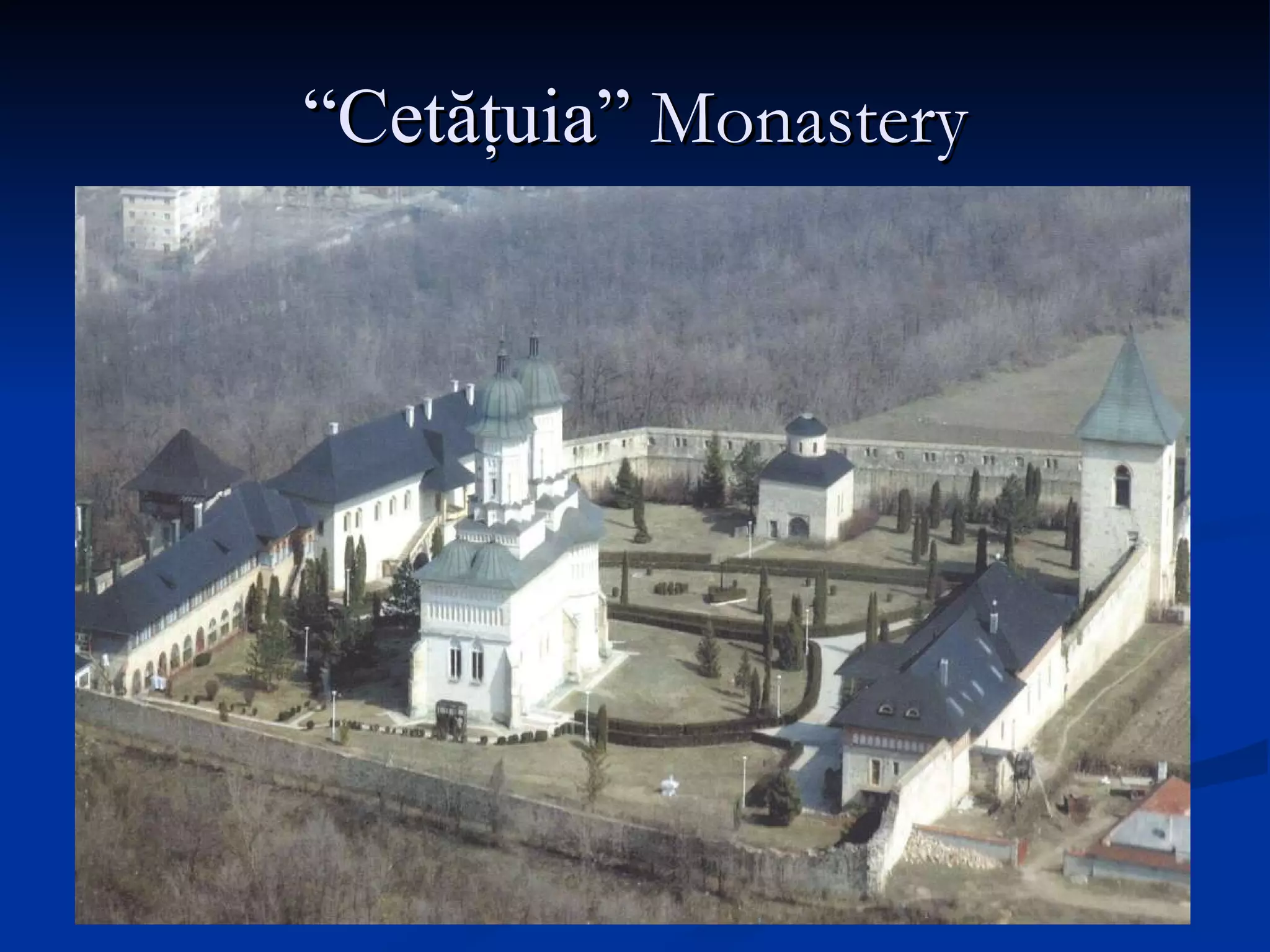
“ Cetăţuia”  Monastery
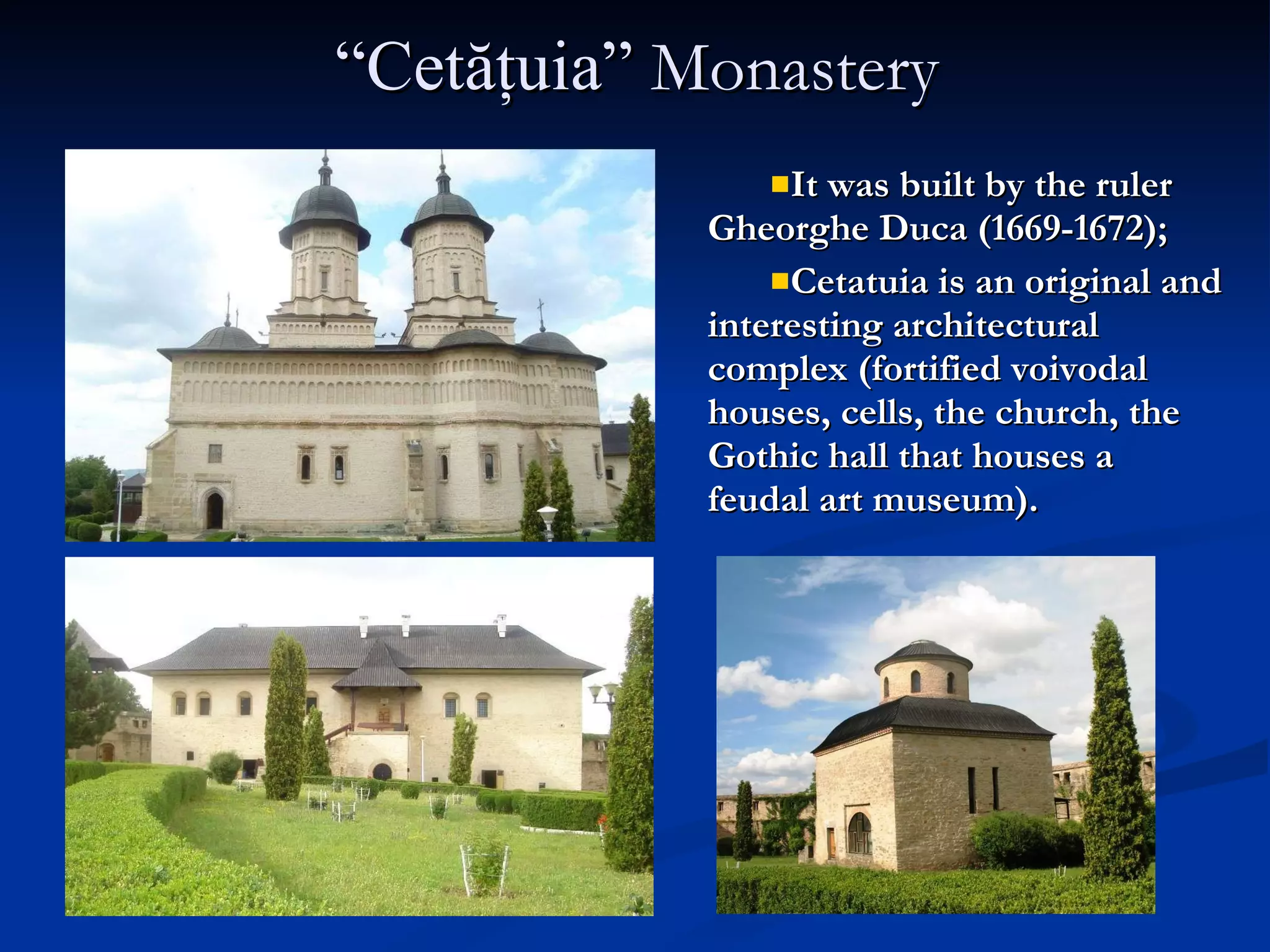
“ Cetăţuia”  Monastery It was built by the ruler Gheorghe Duca (1669-1672); Cetatuia is an original and interesting architectural complex (fortified voivodal houses, cells, the church, the Gothic hall that houses a feudal art museum).
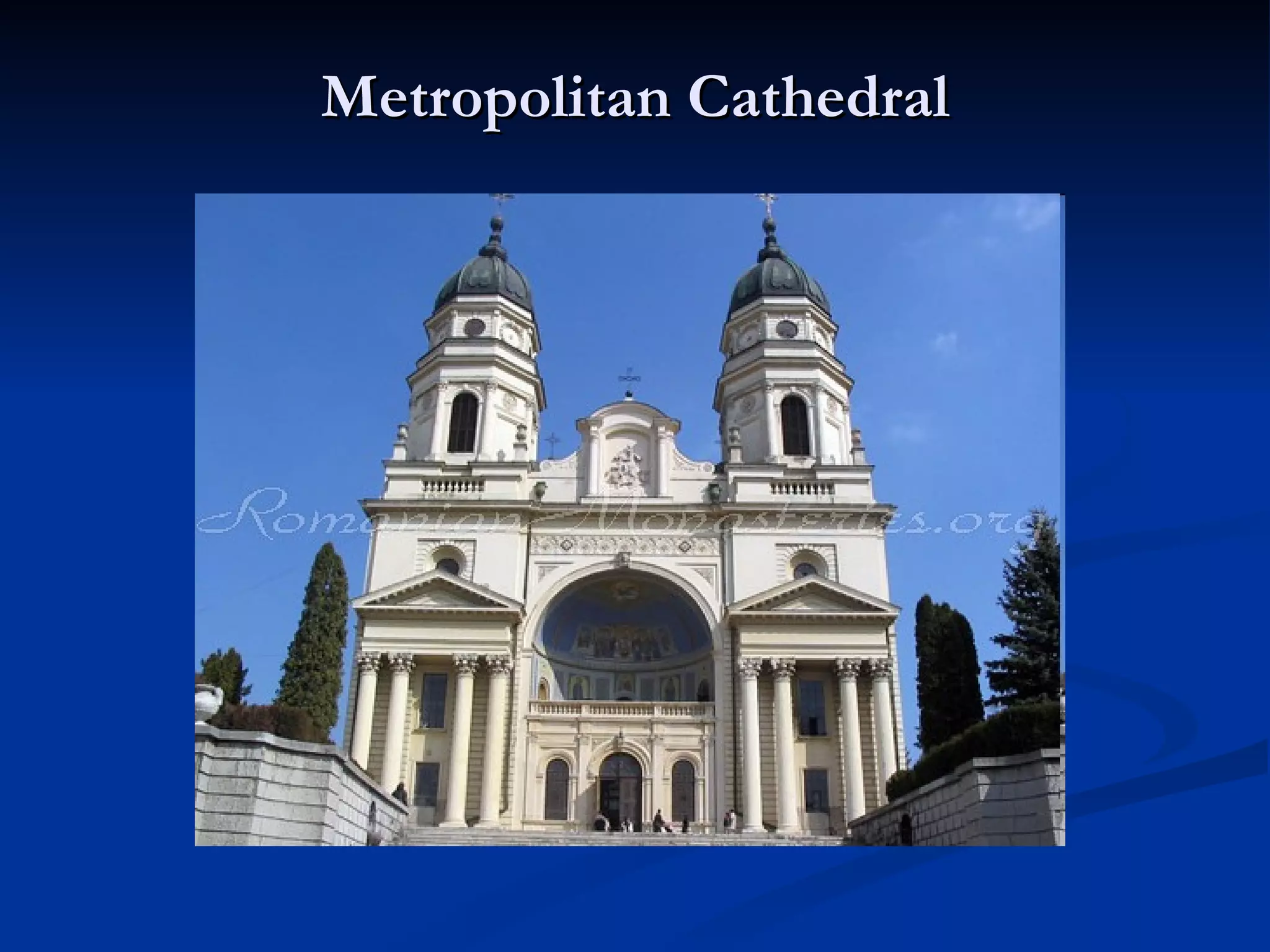
Metropolitan Cathedral
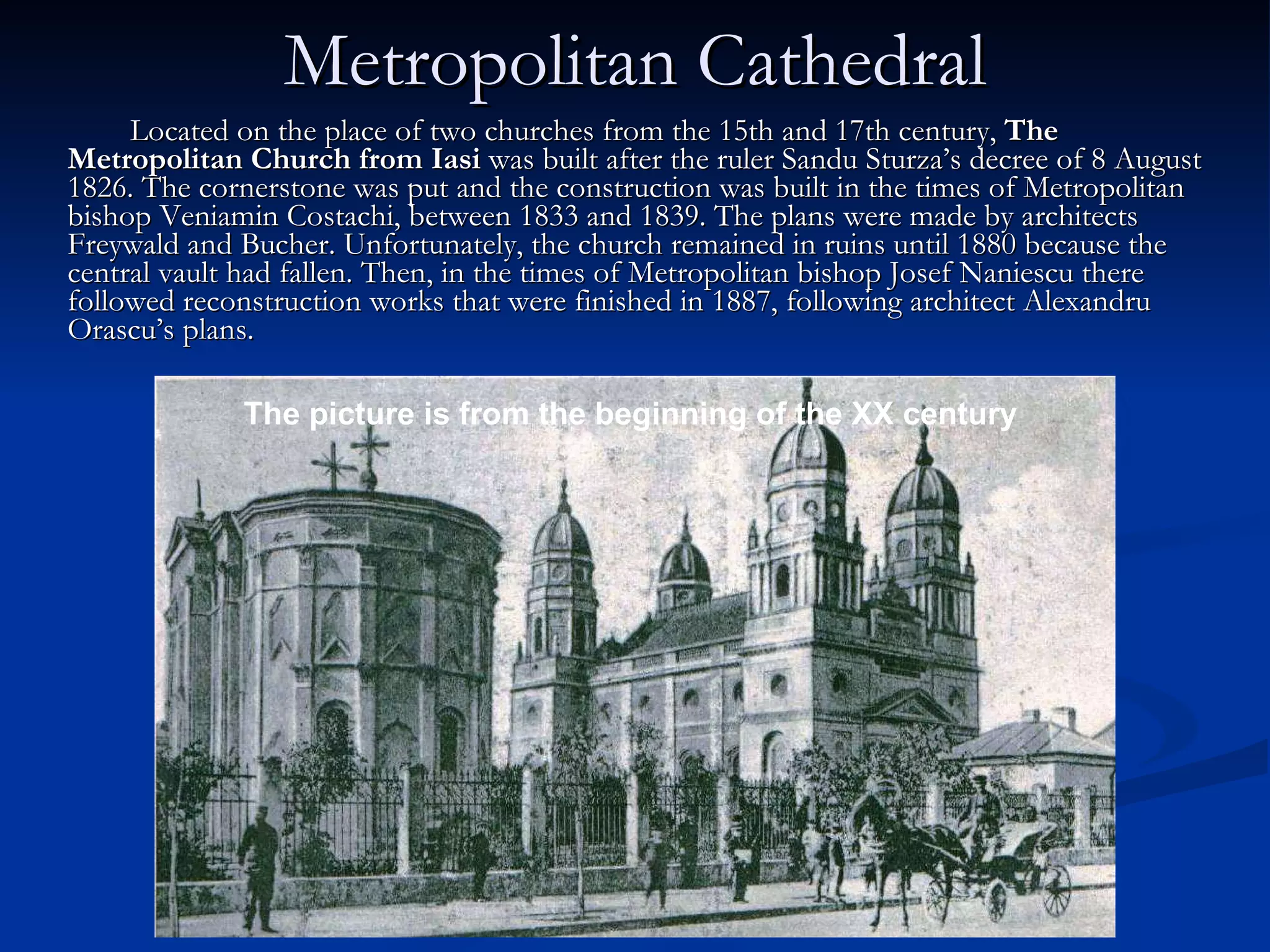
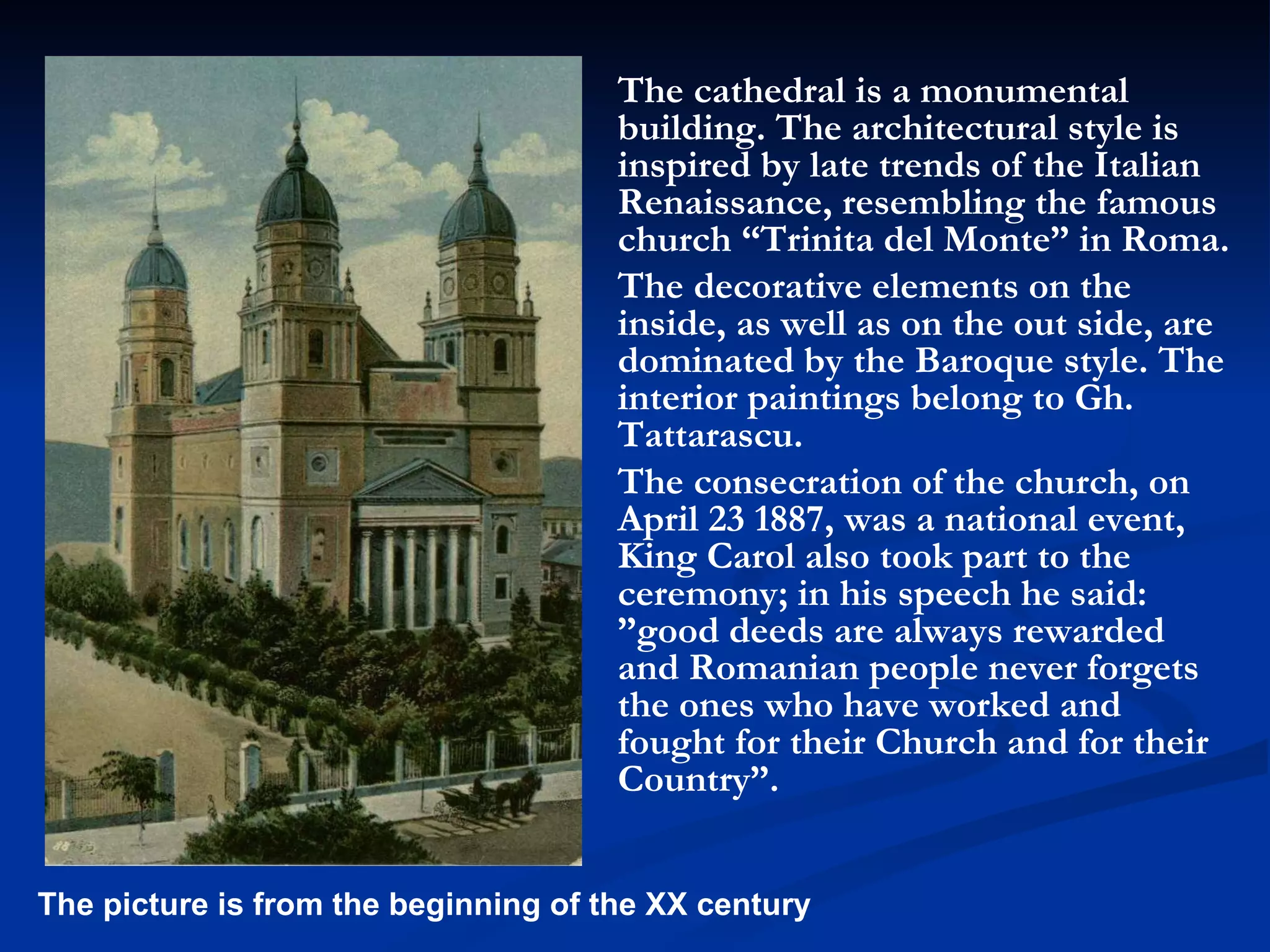
Metropolitan Cathedral Located on the place of two churches from the 15th and 17th century,  The Metropolitan Church from Iasi  was built after the ruler Sandu Sturza’s decree of 8 August 1826. The cornerstone was put and the construction was built in the times of Metropolitan bishop Veniamin Costachi, between 1833 and 1839. The plans were made by architects Freywald and Bucher. Unfortunately, the church remained in ruins until 1880 because the central vault had fallen. Then, in the times of Metropolitan bishop Josef Naniescu there followed reconstruction works that were finished in 1887, following architect Alexandru Orascu’s plans.  The picture is from the beginning of the XX century
The cathedral is a monumental building. The architectural style is inspired by late trends of the Italian Renaissance, resembling the famous church “Trinita del Monte” in Roma.  The decorative elements on the inside, as well as on the out side, are dominated by the Baroque style. The interior paintings belong to Gh. Tattarascu.  The consecration of the church, on April 23 1887, was a national event, King Carol also took part to the ceremony; in his speech he said: ”good deeds are always rewarded and Romanian people never forgets the ones who have worked and fought for their Church and for their Country”.  The picture is from the beginning of the XX century
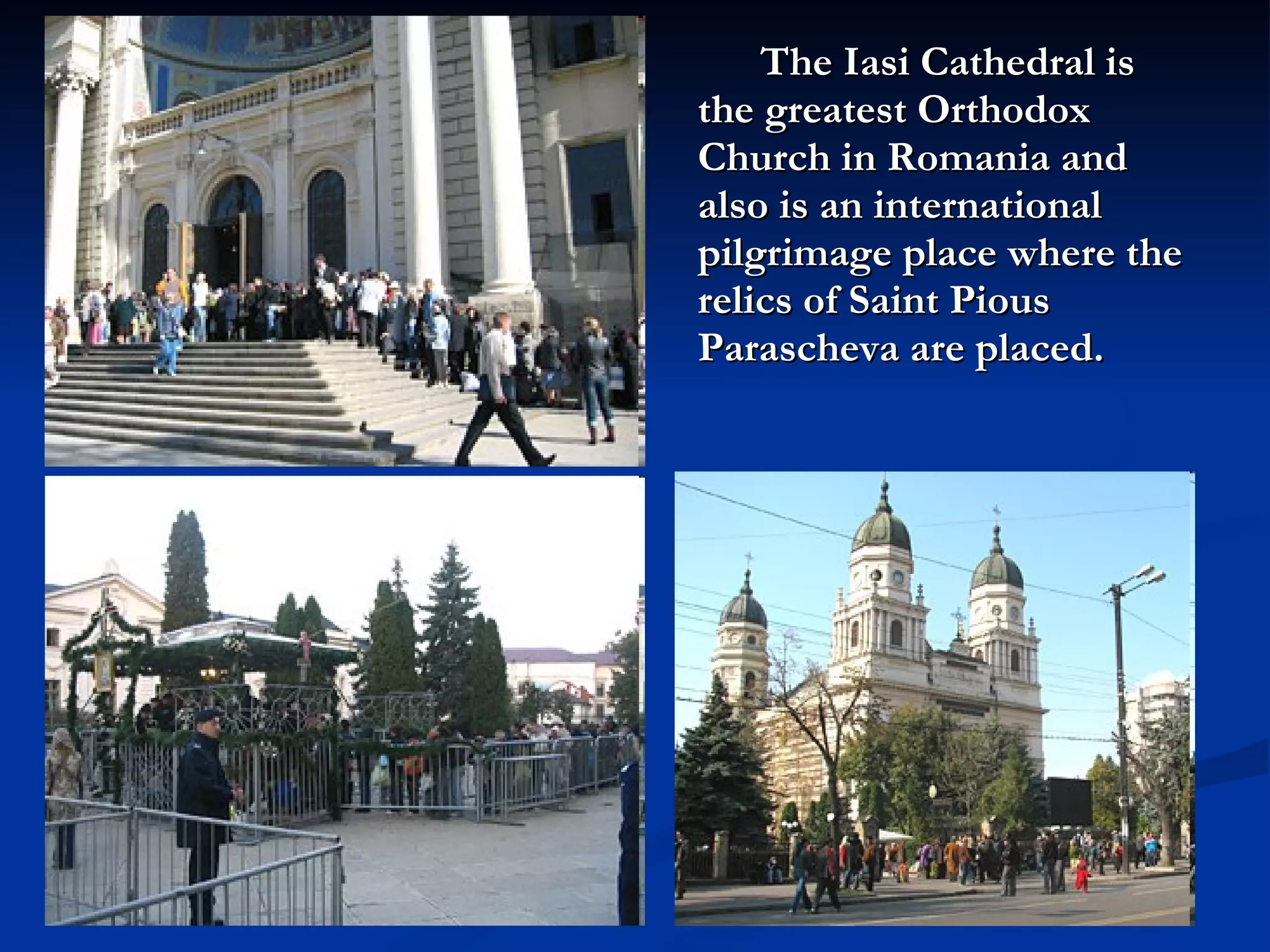
The Iasi Cathedral is the greatest Orthodox Church in Romania and also is an international pilgrimage place where the relics of Saint Pious Parascheva are placed.
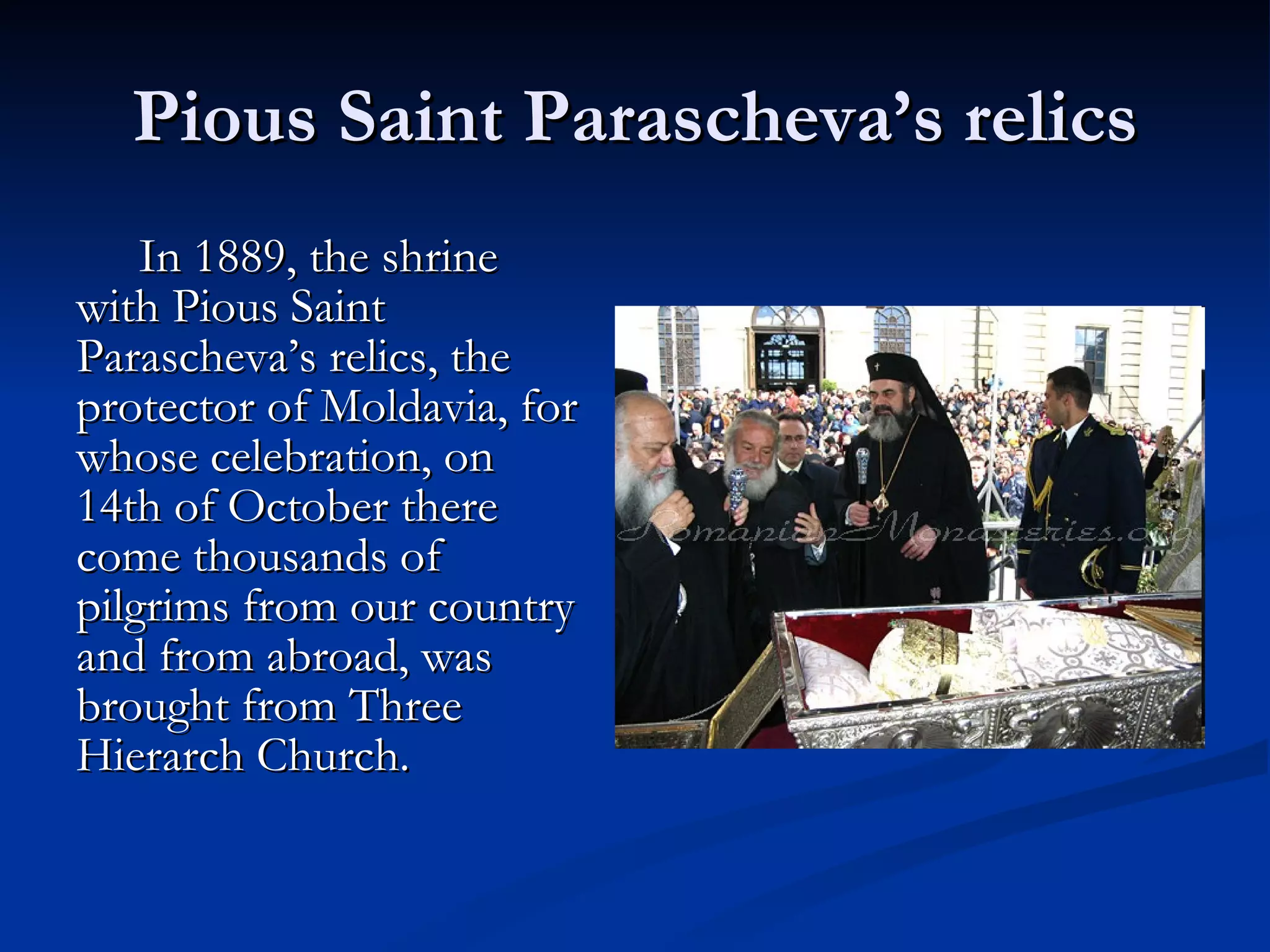
Pious Saint Parascheva’s relics In 1889, the shrine with Pious Saint Parascheva’s relics, the protector of Moldavia, for whose celebration, on 14th of October there come thousands of pilgrims from our country and from abroad, was brought from Three Hierarch Church.

Churches and monasteries

  • 1.
    IASI – AHISTORICAL CITY Churches and monasteries In Iasi city there are famous religious buildings for the Moldavian history.
  • 2.
    Saint Nicolas ChurchFounded on the order of the Ruler Steven the Great, the church was built between 1491 and 1492 in the eastern side of the Ruler's courtyard. Over a certain period of time, it was used as Metropolitan Church. In 1680 a printing house was set up here, where the Metropolitan Bishop Dosoftei printed part of the books written in Romanian language.
  • 3.
    The Saint NicolasChurch in 1929 In the second half of the 18th century, a Romanian school was run here, under the tutelage of the Academy founded by Vasile Lupu and reorganized by Grigore A. Ghica (1776).
  • 4.
    Galata Church fromIasi “ The mother of the Moldavian churches”, it was built between 1579-1584 by the ruler Petre Schiopul.
  • 5.
    Galata Monastery Froman architectural perspective the church developed the traditional trefoil shaped plane, but it is the outside curved ornamentation that constitutes the peak of its aesthetic creativity. From the foundation to the spires, the refined geometry of Romanian folk art is woven with elements relief and oriental arabesques but also with ornaments characteristic of the Western art. A unique synthesis of seemingly non-reconcilable aesthetic perspectives, the East and the West, the church is a symbol of art in prayer. The silent musicality of the sculptural harmony expresses the liturgical chants from the inside of this holy building.
  • 6.
    The Three Hierarchschurch from Iaşi “ Three Hierarchs” Church, is “one of the most interesting and peculiar religious building in Europe” as the French architect Lecomte de Nouy used to present it.
  • 7.
    A short storyof the monastery This church was founded by the Ruler Vasile Lupu and built between 1638 and 1639. This monument is well known all over the world. All the outside walls, from the bottom of the foundation to the top of the tower, hundreds of square meters are covered in delicate and intricate stone carvings. The monastery was an important Moldavian cultural center in the 17th century. In 1640 a printing house was set up here and later, Vasile Lupu founded a high school and a library. Here you can find the crypts of Al. Ioan Cuza (the prince who unified Walachia and Moldavia in 1859) and Dimitrie Cantemir, the last native Moldavian Prince before the period of Phanariot Greek rulers under the Ottomans (1711-1824).
  • 8.
    The church and the Gothic hall
  • 9.
    The stone ofthe Three Hierarchs church
  • 10.
    The Three Hierarchschurch at the beginning of the XX century
  • 11.
    Inside the ThreeHierarchs church; The throne with the coat of arms of the United Principalities Moldavia and Walachia
  • 12.
    The Golia ChurchThe first church of the monastery was built at the beginning of the 16th century by the Great Chancellor Ioan Golia. In 1606, the Golia family submitted the church to Vatoped Monastery of Mount Athos. The present church was built on the initiative of the Ruler Vasile Lupu, between 1650 - 1660.
  • 13.
    The Golia ChurchThe façade is decorated in the Renaissance style what makes it unique in the Moldavian architecture of the 17th century.
  • 14.
    The tower ofGolia monastery – inside and outside – The Golia Tower (30 m height) offers a wide panorama of the city and its surroundings.
  • 15.
    Students on top of the tower Golia
  • 16.
    The house whereIon Creangă – our spiritual master – lived At the entrance a small “Creanga” Museum can be found (the great writer Ion Creanga was a deacon of this church).
  • 17.
  • 18.
    “ Cetăţuia” Monastery It was built by the ruler Gheorghe Duca (1669-1672); Cetatuia is an original and interesting architectural complex (fortified voivodal houses, cells, the church, the Gothic hall that houses a feudal art museum).
  • 19.
  • 20.
    Metropolitan Cathedral Locatedon the place of two churches from the 15th and 17th century, The Metropolitan Church from Iasi was built after the ruler Sandu Sturza’s decree of 8 August 1826. The cornerstone was put and the construction was built in the times of Metropolitan bishop Veniamin Costachi, between 1833 and 1839. The plans were made by architects Freywald and Bucher. Unfortunately, the church remained in ruins until 1880 because the central vault had fallen. Then, in the times of Metropolitan bishop Josef Naniescu there followed reconstruction works that were finished in 1887, following architect Alexandru Orascu’s plans. The picture is from the beginning of the XX century
  • 21.
    The cathedral isa monumental building. The architectural style is inspired by late trends of the Italian Renaissance, resembling the famous church “Trinita del Monte” in Roma. The decorative elements on the inside, as well as on the out side, are dominated by the Baroque style. The interior paintings belong to Gh. Tattarascu. The consecration of the church, on April 23 1887, was a national event, King Carol also took part to the ceremony; in his speech he said: ”good deeds are always rewarded and Romanian people never forgets the ones who have worked and fought for their Church and for their Country”. The picture is from the beginning of the XX century
  • 22.
    The Iasi Cathedralis the greatest Orthodox Church in Romania and also is an international pilgrimage place where the relics of Saint Pious Parascheva are placed.
  • 23.
    Pious Saint Parascheva’srelics In 1889, the shrine with Pious Saint Parascheva’s relics, the protector of Moldavia, for whose celebration, on 14th of October there come thousands of pilgrims from our country and from abroad, was brought from Three Hierarch Church.