MATERIA MEDICA-I
(MTM-353)
Shayan Fatima Azad
1
Learning Objectives
This presentation is about Cholinergic Drugs
Cholinergic drugs are term used for the agents/ drugs producing
effects either as CholinergicAgonist or CholinergicAntagonist
In this presentation, students will be able to learn both of these
categories, further as below:
• The cholinergic neuron
• Types of Cholinergic receptors
• Classification of cholinergic agonist agents
• Classification of cholinergic antagonist drugs
• Complete description of each agent (name, mechanism of action,
therapeutic uses, kinetics, adverse effects, drug interactions,
overdosage and more )
2
Previous Lecture
• The previous lecture was about Nervous System
• Its divisions, Peripheral Nervous System and Central Nervous
System
• PNS further divided into afferent division and efferent division.
• Efferent divided into Autonomic Nervous System and Somatic
Nervous System
• ANS grouped into Enteric, Parasympathetic and Sympathetic
3
CHOLINERGIC DRUGS
(Parasympathomimetic Drugs) (Cholinomimetic Drugs)
• Introduction of Cholinergic drugs
• Overview of Classification of CholinergicAgonists
• Cholinergic neuron (6 steps of formation of Acteyl CoA)
• Cholinergic receptors
• Direct-Acting cholinergic agonists
• Indirect-Acting (reversible and irreversible)
• Toxicology of Anticholinesterase agents
• Overview and Classification ofCholinergic antagonists
• Anti muscarinic agents,Ganglionic blockers, Neuro Muscular
Blocking agents
4
CHOLINERGIC DRUGS
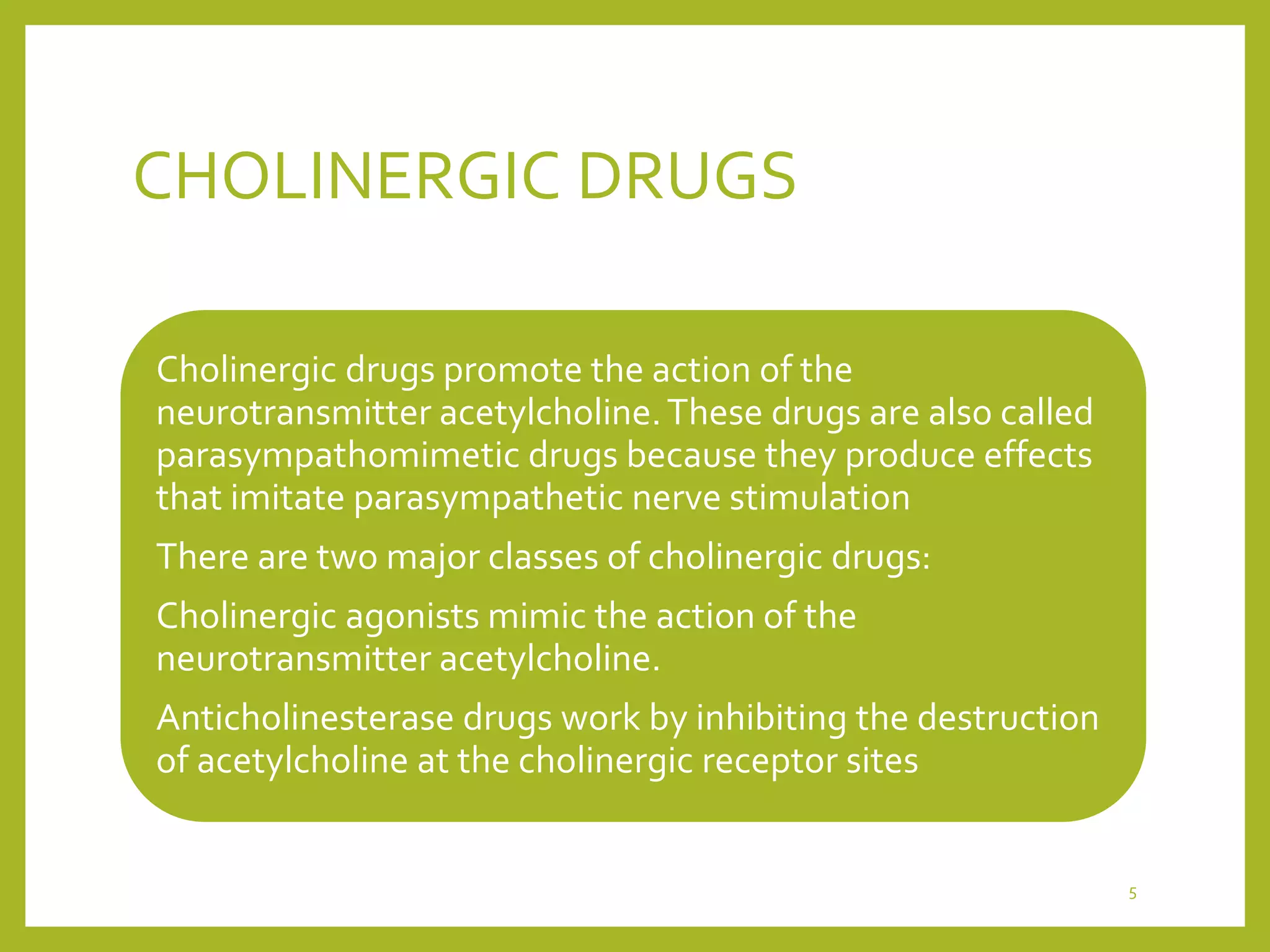
Cholinergic drugs promote the action of the
neurotransmitter acetylcholine.These drugs are also called
parasympathomimetic drugs because they produce effects
that imitate parasympathetic nerve stimulation
There are two major classes of cholinergic drugs:
Cholinergic agonists mimic the action of the
neurotransmitter acetylcholine.
Anticholinesterase drugs work by inhibiting the destruction
of acetylcholine at the cholinergic receptor sites
5
6
7
CHOLINERGIC AGONISTS
These are drugs which produce action
similar to that of ACh, either by
directly interacting with cholinergic
receptor (Cholinergic agonist) or by
increasing availability of ACh at these
sites (Anticholinesterases).
8
Classification of Cholinergic Drugs
Direct Acting
Cholinergic
Drugs
Choline Esters:
• Acetyl choline
• Bethanechol
• Carbachol
• Cevimeline
• Methacholine
Naturally
Occurring:
• Nicotine
• Pilocarpine
9
Classification of Cholinergic Drugs
Indirect Acting
Cholinergic
Agonists
(Reversible)
• Donepezil
• Edrophonium
• Galantamine
• Neostigmine
• Physostigmine
• Pyridostigmine
• Rivastigmine
10
Classification of Cholinergic Drugs
• Echothiophate
Indirect Acting Cholinergic Agonist
• Pralidoxime
Reactivation of Acetylcholinesterase
11
Synthesis and Release of Acetylcholine
12
Synthesis and Release of Acetylcholine
13
14
Mechanism of Action of Cholinergic
Receptors
15
S.No. Receptor Name Types of Receptor Mechanism of Action
1. M1 Gq coupled PhospholipaseC IP3, DAG, Ca2+
2. M2 Gi Adenylyl cyclase cAMP
3. M3 Gq coupled PhospholipaseC IP3, DAG, Ca2+
4. Nn No 2nd messenger Activation/Opening of Na/K channels
5. Nm No 2nd messenger Activation of Na/K channels
Cholinergic Receptor Sites of Actions
16
S.No Organs Receptor Name Site/Area Action
1. Eye M3. Sphincter Miosis- contraction
Eye M3 Ciliary Muscle Contraction—accommodation for
near vision
2. Heart M2 SA Node ↓ HR — negative chronotropy
M2 AV Node ↓ Conduction velocity—negative
No effects on ventricles, Purkinje
system
3. Lungs M3 Bronchioles Contraction — bronchospasm
M3 Glands Secretions
4. GITract M3 Stomach ↑ Motility—cramps
M3 Glands Secretion
M3 Intestine Contraction—Diarrhea, involuntary
defecation
Cholinergic Receptor Sites of Actions
17
S.No Organs Receptor Name Site/Area Action
5. Urinary
Bladder
M3. Sphincter Trigone/Sphincter- Relaxation
Urinary incontinence
M3 Muscle Contraction- Detroser muscle
6. Sphincters M3 Relaxation, except lower esophageal,
which contracts
7. Glands M3 Secretion—sweat
(thermoregulatory), salivation, and
lacrimation
8. Endothelial
BloodVessels
M3 Dilation (via NO/endothelium-derived
relaxing factor)—no innervation, no
effects of indirect agonists
DESCRIPTION OF CHOLINERGIC
AGONIST DRUGS
(Intro, How these works,Therapeutic
Indications, Dosage, Adverse Actions)
18
19
20
21
22
23
24
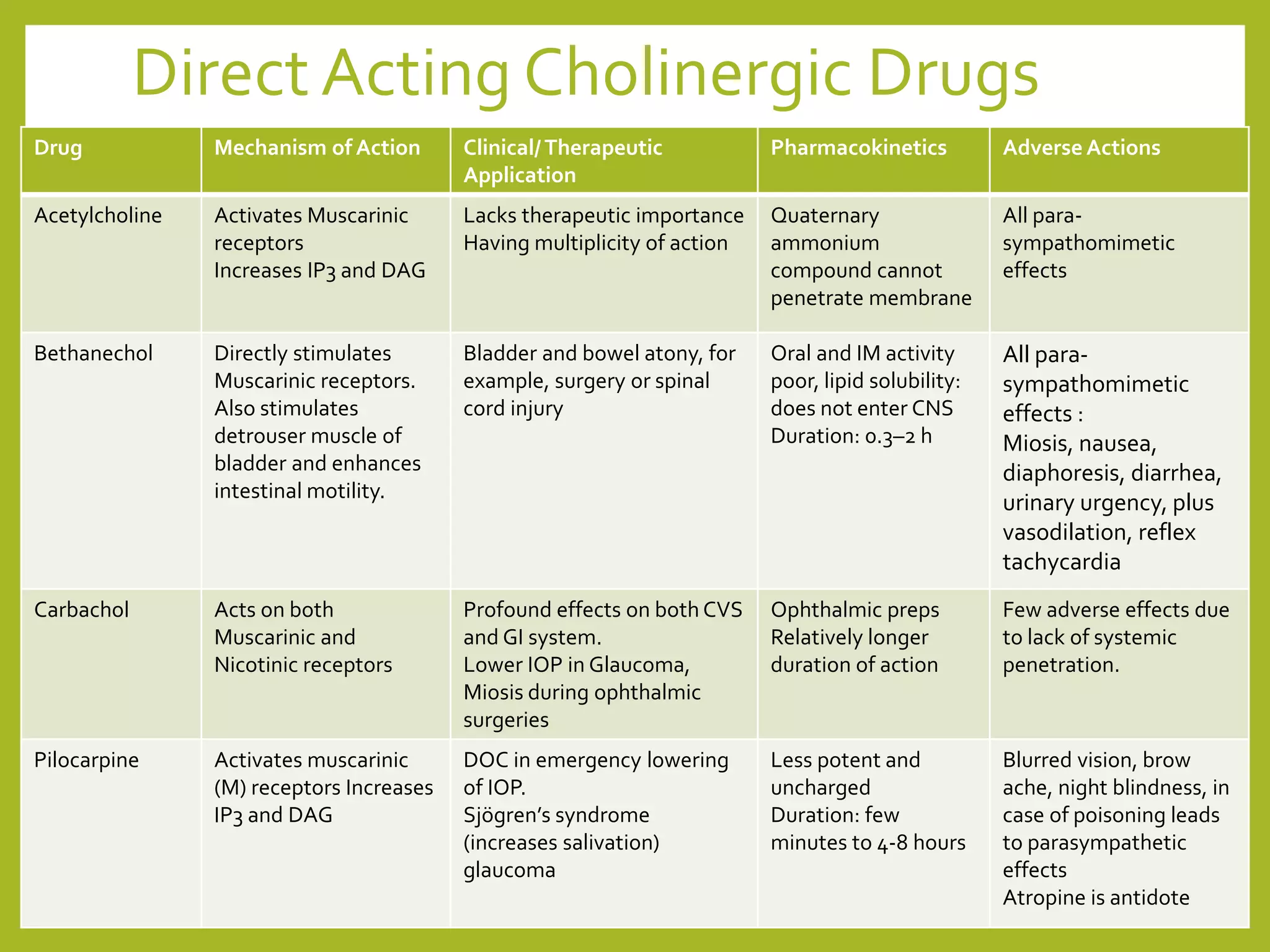
Direct Acting Cholinergic Drugs
25
Drug Mechanism of Action Clinical/Therapeutic
Application
Pharmacokinetics Adverse Actions
Acetylcholine Activates Muscarinic
receptors
Increases IP3 and DAG
Lacks therapeutic importance
Having multiplicity of action
Quaternary
ammonium
compound cannot
penetrate membrane
All para-
sympathomimetic
effects
Bethanechol Directly stimulates
Muscarinic receptors.
Also stimulates
detrouser muscle of
bladder and enhances
intestinal motility.
Bladder and bowel atony, for
example, surgery or spinal
cord injury
Oral and IM activity
poor, lipid solubility:
does not enter CNS
Duration: 0.3–2 h
All para-
sympathomimetic
effects :
Miosis, nausea,
diaphoresis, diarrhea,
urinary urgency, plus
vasodilation, reflex
tachycardia
Carbachol Acts on both
Muscarinic and
Nicotinic receptors
Profound effects on both CVS
and GI system.
Lower IOP in Glaucoma,
Miosis during ophthalmic
surgeries
Ophthalmic preps
Relatively longer
duration of action
Few adverse effects due
to lack of systemic
penetration.
Pilocarpine Activates muscarinic
(M) receptors Increases
IP3 and DAG
DOC in emergency lowering
of IOP.
Sjögren’s syndrome
(increases salivation)
glaucoma
Less potent and
uncharged
Duration: few
minutes to 4-8 hours
Blurred vision, brow
ache, night blindness, in
case of poisoning leads
to parasympathetic
effects
Atropine is antidote
Indirect Acting Cholinergic Agonists (Reversible)
Drug Mechanism of Action Clinical/Therapeutic
Application
Pharmacokinetics Adverse Actions
Edrophonium Binds to active center of
AChE, preventing hydrolysis
of Ach.
Used in diagnosis of
Myasthenia gravis, also
use in differentiating
cholinergic and
myasthenic crises
IV is effective
DOA: 10-20 mins rapid
renal elimination
May provoke a
cholinergic crises
Atropine is antidote
Physostigmine
(Tertiary amine
and found
naturally in plants)
Wide range of effects,
muscarinic and nicotinic sites
of ANS, but also nicotinic
receptors of NMJ.
Use in treatment of
overdosages of drugs
with anticholinergic
actions.
Reverse effects of
NMBs.
Intermediate acting
agent
DOA: 30 mins-2 hours
It can enter and
stimulate cholinergic
sites of CNS
Convulsions,
bradycardia,
hypotension,
depolarizing effects
leads to paralysis of
skeletal muscles
Neostigmine
(synthetic
compound
carbamic acid
ester)
Reversibly inhibits AChE in
similar manner to
physostigmine
Does not enter CNS
To manage symptoms
of myasthenia gravis
More polar and absorbs
poorly from GI
Greater effects on
skeletal muscles
DOA: 30 mins- 2 hours
Intermediate acting
Increased salivation
Flushing, nausea,
diarrhea, etc
Contraindicated in
obstruction of urinary
bladder and intestine
Pyridostigmine AChE inhibitor Chronic management of
MG
DOA: 3-6 hours Similar to neostigmine
Tacrine,
Donepezil,
Rivastigmine,
Galantamine
Inhibition of AChE It is DOC in Alzhiemer’s
disease due to decrease
levels of Ach Possible
remedy for loss of
cognitive functions
Tacrine has
hepatotoxic effects
Others has GI distress
as adverse effects26
Indirect Acting Cholinergic Agonists
Anti-cholinesterase agents
(Irreversible)
Drug Mechanism of
Action
Clinical/
Therapeutic
Application
Pharmacokinetics Adverse Actions
Echothiophate
Organophosphate
compound
Covalently binds
with phosphate
group at site of
AChE, once this
occur enzyme is
permenantly
inactivated and
restoration requires
synthesis of new
enzyme molecules
Open angle
glaucoma
Pralidoxime breaks
bond between
remaining drug and
enzyme
DOA: 100 hours
Increase risks of
cataracts
27
TOXICOLOGY OF ANTI
CHOLINESTERASE AGENTS
• Irreversible AChE inhibitors are commonly used as
organophosphate compounds
• This leads to numerous cases of poisoning
• Also used for Homicidal and Suicidal purpose
• Toxicities manifested as Nicotinic and Muscarinic signs and
symptoms
• Depending on agent effects can be peripheral or central
28
Reactivation of AChE
• Pralidoxime can reactivate inhibited AChE.
• It is unable to penetrate into the CNS
• It is not useful in treating the CNS effects of organophosphates.
• Pralidoxime is a weak AChE inhibitor.
• At higher doses, may cause side effects similar to other AChE
inhibitors
• If given before aging of alkylated enzyme, it can reverse both
nicotinic and muscarinic peripheral effects of organophosphate
poisoning
• It cannot overcome toxicity of reversible AChE inhibitors (for
example, physostigmine)
29
Other treatments
• Atropine is administered to prevent muscarinic side.
• Such include bronchial and salivary secretion, bronchoconstriction
and bradycardia.
• Diazepam is also administered to reduce the persistent convulsion
caused by these agents.
• General supportive measures, such as maintenance of patent
airway, oxygen supply, and artificial respiration, may be necessary
as well.
30
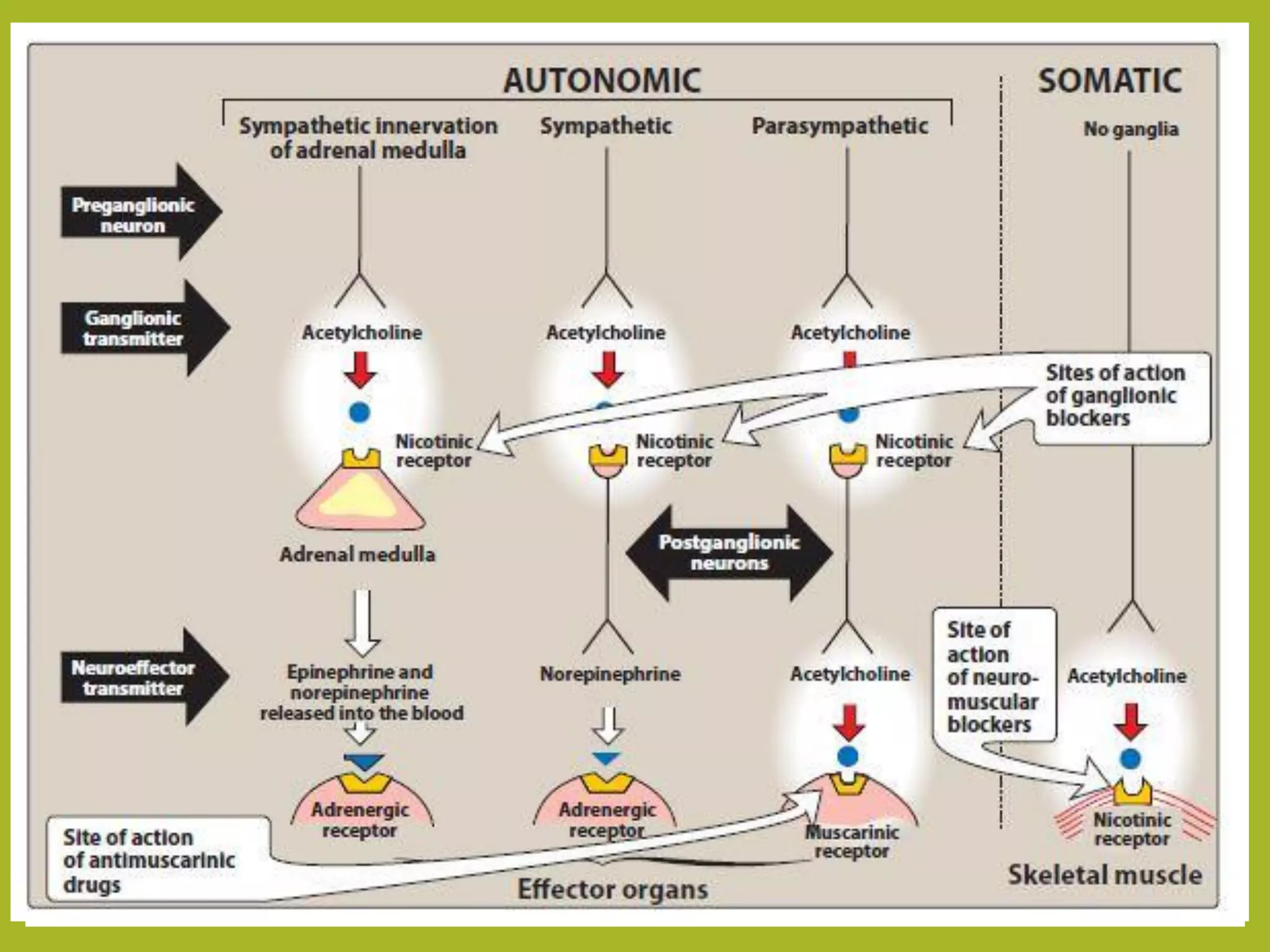
CHOLINERGIC ANTAGONISTS
Cholinergic blocking drugs interrupt
parasympathetic nerve impulses in the
central and autonomic nervous systems.
These drugs are also referred to as
anticholinergic drugs because they
prevent acetylcholine from stimulating
cholinergic receptors.
31
32
Classification of CholinergicAntagonists
• Aclidinium
• Atropine
• Benztropine
• Cyclopentolate
• Darifenacin
• Fesoterodine
• Glycopyrrolate
• Hyoscyamine
• Ipratropium
• Ocybutynin
• Scopolamine
• Solifenacin
• Tiotropium
• Tolterodine
• Trihexyphenidyl
• Tropicamide
• Trospium
Antimuscarinic
agents
33
Classification of CholinergicAntagonists
Ganglionic Blockers
• Nicotine
Neuro Muscular Blockers
• Cisatracurium
• Mivacurium
• Pancuronium
• Rocuronium
• Succinylcholine
• Vecuronium
34
35
36
37
38
Antimuscarinic Agents
• Commonly known as anticholinergic drugs
• Some drugs block exceptional sympathetic neurons that are
cholinergic (salivary and sweat glands)
• Antimuscarinic have little or no effects on skeletal neuromuscular
junctions or autonomic ganglia
• A number of antihistamines and antidepressants also have
antimuscarinic activity (TCAs)
39
Drug Mechanism of Action Therapeutic Application Pharmacokinetics Adverse Actions
Atropine
(tertiary amine
extracted from
belladona
alkaloid
Higher affinity for
muscarinic receptors
Binds competitively to
preventAch for binding
Centrally and peripherally
both
Inhibitory effects are seen in
bronchial tissue, salivary and
sweat glands.
Eye: Mydriasis and
cycloplegic effects
GI: Antispasmodic
CVS: Injectable to treat
bradycardia
Antisecretory: Blocks
respiratory secretions
prior surgery
Antidote for Cholinergic
agonist
Readily absorbed,
partially metabolized
by liver and eliminated
in urine
Half-life: 4 hours
Tropical
administration on
eyes may lasts for
days
Dry mouth
Blurred vision
Tachycardia
Sandy eyes
Urinary retention
Constipation
Hallucinations
Delirium
Collapse
Antidote:
Physostigmine
Scopolamine
(tertiary amine
plant alkaloid)
Peripheral effects similar to
atropine
Greater action on CNS
Produces sedation
May produce Euphoria and
is susceptible to abuse
As topical patch used for
prevention of Motion
sickness (3days)
prophylactically.
Post-Op nausea and
vomit
Blocking short term
memory
Longer half-life Similar to
atropine
Aclinidium,
Glycopyrrolate,
Tiotropium
Bronchodilators
Inhalation route
Do not enter systemic
circulation
COPD Long acting
muscarinic antagonist
Similar to other
cholinergic
antagonists
Ipratropium Inhalation route
Do not enter systemic
circulation
Bronchospasm
associated withCOPD
Short acting
muscarinic antagonist
Similar to other
cholinergic
antagonists40
41
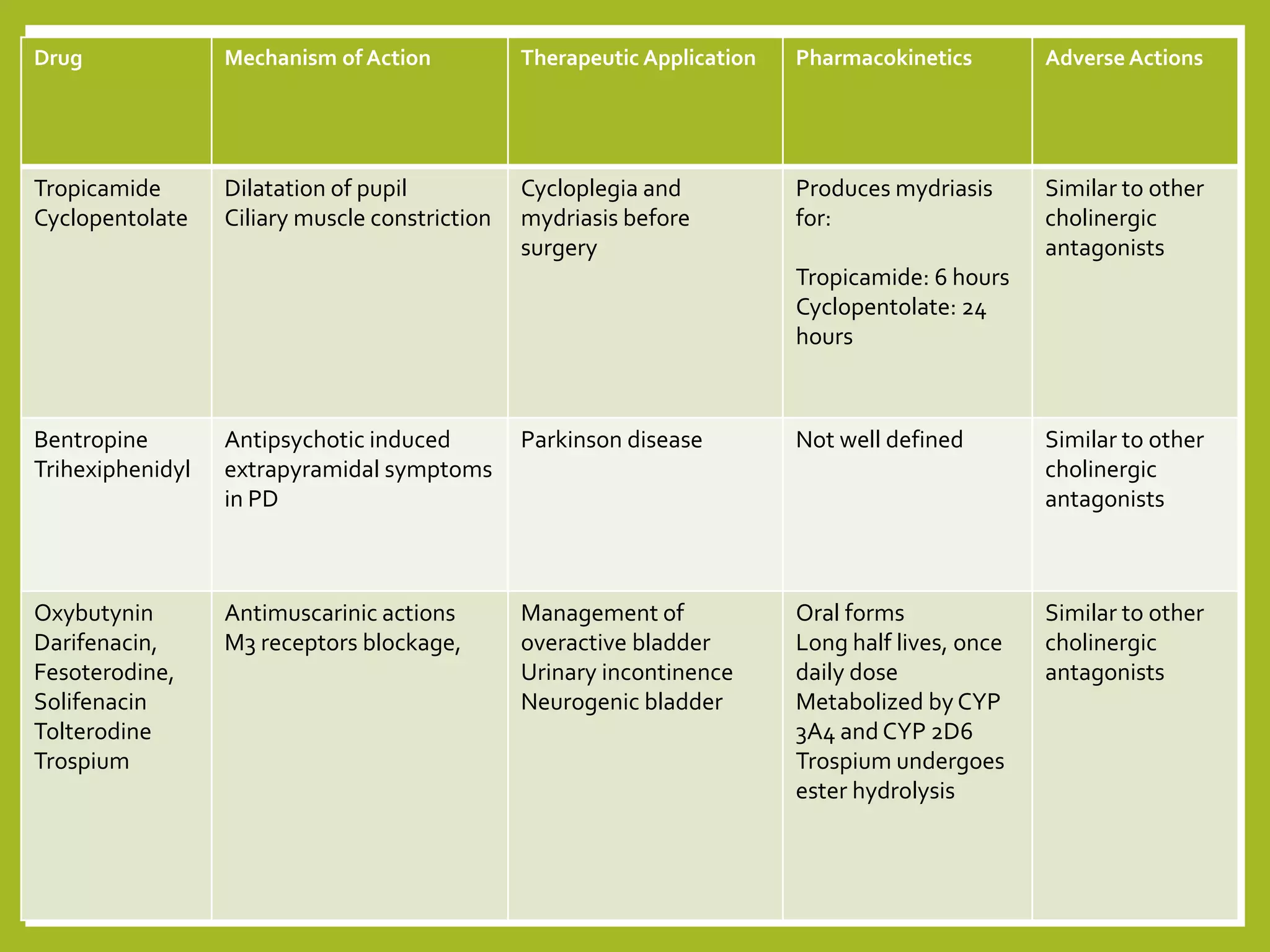
Drug Mechanism of Action Therapeutic Application Pharmacokinetics Adverse Actions
Tropicamide
Cyclopentolate
Dilatation of pupil
Ciliary muscle constriction
Cycloplegia and
mydriasis before
surgery
Produces mydriasis
for:
Tropicamide: 6 hours
Cyclopentolate: 24
hours
Similar to other
cholinergic
antagonists
Bentropine
Trihexiphenidyl
Antipsychotic induced
extrapyramidal symptoms
in PD
Parkinson disease Not well defined Similar to other
cholinergic
antagonists
Oxybutynin
Darifenacin,
Fesoterodine,
Solifenacin
Tolterodine
Trospium
Antimuscarinic actions
M3 receptors blockage,
Management of
overactive bladder
Urinary incontinence
Neurogenic bladder
Oral forms
Long half lives, once
daily dose
Metabolized by CYP
3A4 and CYP 2D6
Trospium undergoes
ester hydrolysis
Similar to other
cholinergic
antagonists
42
43
Ganglionic Blocker
Specific on Nicotinic receptors
Not effective as neuromuscular antagonists
Blocks entire output at nicotinic receptor
Rarely therapeutically used due to unpredictable and complex responses
Serves as tool for experimental pharmacology
44
Nicotine
• A component of cigarette smoke, active ingredient in tobacco. Poison with many undesirable
actions
• Deleterious to health
• Nicotine depolarizes autonomic ganglia, resulting in stimulation and then paralysis of all ganglia
• The stimulatory effect are complex and result from increased release of neurotransmitters
• Second to alcohol as most abused drug
• Highly lipid soluble drug readily crosses BBB
• Absorption readily occurs via oral mucosa, lungs,GI mucosa and skin
• Crosses placental barrier and is secreted in milk
• Acute lethal dose is 60mg
• >90% inhaled in smoke is absorbed
• It has potential for addiction and withdrawal
45
46
47
48
49
50
Neuro Muscular Blocking Agents
These drugs block cholinergic transmission between motor nerve
endings and nicotinic receptors on skeletal muscle
They possess some chemical similarities to Ach
Act as antagonist (Non Depolarizing) or as agonist
(Depolarizing) at receptor end plate of NMJ
NMBs are clinically useful to facilitate rapid
intubation when needed due to respiratory failure
During surgery they are use to facilitate ETT
and provide complete muscle relaxation at
lower doses
Not a substitute for inadequate
anesthesia
51
Nondepolarizing (Competitive)
Blockers
First was curare, which amazon used to paralyze prey
Development ofTubocurarine followed, it has been replaced by agents with fewer
adverse effects
At Low Doses:
• NMBs competitively block Ach at the nicotinic receptors
• They compete with Ach at receptor without stimulating it, preventing depolarization of the muscle cell
membrane and inhibiting muscular contraction.
• Their competitive actions can be overcome by administration of cholinesterase inhibitors, such as
neostigmine and edrophonium which increases conc. Of Ach in NMJ.
At High Doses:
• Can block ion channels of motor end plate.
• Leads to neuromuscular transmission, reducing ability of cholinesterase inhibitors to reverse actions of
nondepolarizing blockers. 52
Nondepolarizing (Competitive)
Blockers
• Muscles having differing sensitivity to blockade by
competitive agents
• Small, rapidly contracting muscles of face and eye
• Followed by fingers, limbs, neck and trunk muscle.
• Intercostal muscle are affected and diaphragm
• The muscles recover in reverse manner
Actions:
• All NMBs are injected IV or IM
• These agents are possess 2 or more
• They penetrate membranes very poorly and do not enter
cells or cross BBB
• Pancuronium is excreted unchanged in urine
• Cisatracurium undergoes organ independent metabolism
Pharmacokinetics:
53
Nondepolarizing (Competitive)
Blockers
Adverse Effects
• Minimal side effects
Drug Interactions
• Cholinesterase inhibitors: Drugs as neostigmine, physostigmine,
pyridostigmine and edrophonium
• Increased dosage, cholinesterase inhibitors can cause a depolarizing block
due to elevatedACh concentrations at end plate membrane
• Halogenated hydrocarbon anesthetics: Drugs such as desflurane act to
enhance neuromuscular blockade by exerting stabilizing action at NMJ
• Aminogylcoside antibiotics: Drugs such as gentamicin and tobramycin inhibit
ACh release from cholinergic nerves by competing with calcium ion
• CalciumChannel Blockers:These agents may increase neuromuscular
blockade of competitive blockers.
54
55
Depolarizing Agents
Depolarizing blocking agent work by depolarizing plasma membrane of
muscle fiber, similar to action of ACh
These agents are more resistant to degradation by acetylcholinesterase
(AChE) and can more persistently depolarize muscle fiber.
SuccinylCholine is only depolarizing muscle relaxant in use today
Mechanism of Action:
• Succinylcholine attaches to nicotinic receptors and acts like Ach to depolarize junction
• AChE, depolarizing agent persists at high conc. in synaptic cleft, remaining attached
to receptor for longer time and providing sustained depolarization of muscle cell.
56
57
Mechanism of Action of
depolarizing agents
Depolarizing Agents
Actions:
• As with competitive blockers, respiratory muscles paralyzed last
• Succinylcholine initially produces brief muscle fasciculations causes muscle soreness
• DOA is very short due to rapid hydrolysis by plasma cholinesterase
Therapeutic uses:
• It is useful when rapid ETT is required
• Also use in electroconvulsive shock treatment
Pharmacokinetics:
• It is injected IV, rapid disappearance upon discontinuation
Adverse effects:
• Hypothermia
• Apnea
• Hyperkalemia
58
Summary
Cholinergic
antagonist
Cholinergic
agonists
This was
entire
description of
Cholinergic
Drugs
59
Further Reading and References
Lippincott Illustrated Reviews: Pharmacology (7th Edition)
60

Cholinergic drugs

  • 1.
  • 2.
    Learning Objectives This presentationis about Cholinergic Drugs Cholinergic drugs are term used for the agents/ drugs producing effects either as CholinergicAgonist or CholinergicAntagonist In this presentation, students will be able to learn both of these categories, further as below: • The cholinergic neuron • Types of Cholinergic receptors • Classification of cholinergic agonist agents • Classification of cholinergic antagonist drugs • Complete description of each agent (name, mechanism of action, therapeutic uses, kinetics, adverse effects, drug interactions, overdosage and more ) 2
  • 3.
    Previous Lecture • Theprevious lecture was about Nervous System • Its divisions, Peripheral Nervous System and Central Nervous System • PNS further divided into afferent division and efferent division. • Efferent divided into Autonomic Nervous System and Somatic Nervous System • ANS grouped into Enteric, Parasympathetic and Sympathetic 3
  • 4.
    CHOLINERGIC DRUGS (Parasympathomimetic Drugs)(Cholinomimetic Drugs) • Introduction of Cholinergic drugs • Overview of Classification of CholinergicAgonists • Cholinergic neuron (6 steps of formation of Acteyl CoA) • Cholinergic receptors • Direct-Acting cholinergic agonists • Indirect-Acting (reversible and irreversible) • Toxicology of Anticholinesterase agents • Overview and Classification ofCholinergic antagonists • Anti muscarinic agents,Ganglionic blockers, Neuro Muscular Blocking agents 4
  • 5.
    CHOLINERGIC DRUGS Cholinergic drugspromote the action of the neurotransmitter acetylcholine.These drugs are also called parasympathomimetic drugs because they produce effects that imitate parasympathetic nerve stimulation There are two major classes of cholinergic drugs: Cholinergic agonists mimic the action of the neurotransmitter acetylcholine. Anticholinesterase drugs work by inhibiting the destruction of acetylcholine at the cholinergic receptor sites 5
  • 6.
  • 7.
  • 8.
    CHOLINERGIC AGONISTS These aredrugs which produce action similar to that of ACh, either by directly interacting with cholinergic receptor (Cholinergic agonist) or by increasing availability of ACh at these sites (Anticholinesterases). 8
  • 9.
    Classification of CholinergicDrugs Direct Acting Cholinergic Drugs Choline Esters: • Acetyl choline • Bethanechol • Carbachol • Cevimeline • Methacholine Naturally Occurring: • Nicotine • Pilocarpine 9
  • 10.
    Classification of CholinergicDrugs Indirect Acting Cholinergic Agonists (Reversible) • Donepezil • Edrophonium • Galantamine • Neostigmine • Physostigmine • Pyridostigmine • Rivastigmine 10
  • 11.
    Classification of CholinergicDrugs • Echothiophate Indirect Acting Cholinergic Agonist • Pralidoxime Reactivation of Acetylcholinesterase 11
  • 12.
    Synthesis and Releaseof Acetylcholine 12
  • 13.
    Synthesis and Releaseof Acetylcholine 13
  • 14.
  • 15.
    Mechanism of Actionof Cholinergic Receptors 15 S.No. Receptor Name Types of Receptor Mechanism of Action 1. M1 Gq coupled PhospholipaseC IP3, DAG, Ca2+ 2. M2 Gi Adenylyl cyclase cAMP 3. M3 Gq coupled PhospholipaseC IP3, DAG, Ca2+ 4. Nn No 2nd messenger Activation/Opening of Na/K channels 5. Nm No 2nd messenger Activation of Na/K channels
  • 16.
    Cholinergic Receptor Sitesof Actions 16 S.No Organs Receptor Name Site/Area Action 1. Eye M3. Sphincter Miosis- contraction Eye M3 Ciliary Muscle Contraction—accommodation for near vision 2. Heart M2 SA Node ↓ HR — negative chronotropy M2 AV Node ↓ Conduction velocity—negative No effects on ventricles, Purkinje system 3. Lungs M3 Bronchioles Contraction — bronchospasm M3 Glands Secretions 4. GITract M3 Stomach ↑ Motility—cramps M3 Glands Secretion M3 Intestine Contraction—Diarrhea, involuntary defecation
  • 17.
    Cholinergic Receptor Sitesof Actions 17 S.No Organs Receptor Name Site/Area Action 5. Urinary Bladder M3. Sphincter Trigone/Sphincter- Relaxation Urinary incontinence M3 Muscle Contraction- Detroser muscle 6. Sphincters M3 Relaxation, except lower esophageal, which contracts 7. Glands M3 Secretion—sweat (thermoregulatory), salivation, and lacrimation 8. Endothelial BloodVessels M3 Dilation (via NO/endothelium-derived relaxing factor)—no innervation, no effects of indirect agonists
  • 18.
    DESCRIPTION OF CHOLINERGIC AGONISTDRUGS (Intro, How these works,Therapeutic Indications, Dosage, Adverse Actions) 18
  • 19.
  • 20.
  • 21.
  • 22.
  • 23.
  • 24.
  • 25.
    Direct Acting CholinergicDrugs 25 Drug Mechanism of Action Clinical/Therapeutic Application Pharmacokinetics Adverse Actions Acetylcholine Activates Muscarinic receptors Increases IP3 and DAG Lacks therapeutic importance Having multiplicity of action Quaternary ammonium compound cannot penetrate membrane All para- sympathomimetic effects Bethanechol Directly stimulates Muscarinic receptors. Also stimulates detrouser muscle of bladder and enhances intestinal motility. Bladder and bowel atony, for example, surgery or spinal cord injury Oral and IM activity poor, lipid solubility: does not enter CNS Duration: 0.3–2 h All para- sympathomimetic effects : Miosis, nausea, diaphoresis, diarrhea, urinary urgency, plus vasodilation, reflex tachycardia Carbachol Acts on both Muscarinic and Nicotinic receptors Profound effects on both CVS and GI system. Lower IOP in Glaucoma, Miosis during ophthalmic surgeries Ophthalmic preps Relatively longer duration of action Few adverse effects due to lack of systemic penetration. Pilocarpine Activates muscarinic (M) receptors Increases IP3 and DAG DOC in emergency lowering of IOP. Sjögren’s syndrome (increases salivation) glaucoma Less potent and uncharged Duration: few minutes to 4-8 hours Blurred vision, brow ache, night blindness, in case of poisoning leads to parasympathetic effects Atropine is antidote
  • 26.
    Indirect Acting CholinergicAgonists (Reversible) Drug Mechanism of Action Clinical/Therapeutic Application Pharmacokinetics Adverse Actions Edrophonium Binds to active center of AChE, preventing hydrolysis of Ach. Used in diagnosis of Myasthenia gravis, also use in differentiating cholinergic and myasthenic crises IV is effective DOA: 10-20 mins rapid renal elimination May provoke a cholinergic crises Atropine is antidote Physostigmine (Tertiary amine and found naturally in plants) Wide range of effects, muscarinic and nicotinic sites of ANS, but also nicotinic receptors of NMJ. Use in treatment of overdosages of drugs with anticholinergic actions. Reverse effects of NMBs. Intermediate acting agent DOA: 30 mins-2 hours It can enter and stimulate cholinergic sites of CNS Convulsions, bradycardia, hypotension, depolarizing effects leads to paralysis of skeletal muscles Neostigmine (synthetic compound carbamic acid ester) Reversibly inhibits AChE in similar manner to physostigmine Does not enter CNS To manage symptoms of myasthenia gravis More polar and absorbs poorly from GI Greater effects on skeletal muscles DOA: 30 mins- 2 hours Intermediate acting Increased salivation Flushing, nausea, diarrhea, etc Contraindicated in obstruction of urinary bladder and intestine Pyridostigmine AChE inhibitor Chronic management of MG DOA: 3-6 hours Similar to neostigmine Tacrine, Donepezil, Rivastigmine, Galantamine Inhibition of AChE It is DOC in Alzhiemer’s disease due to decrease levels of Ach Possible remedy for loss of cognitive functions Tacrine has hepatotoxic effects Others has GI distress as adverse effects26
  • 27.
    Indirect Acting CholinergicAgonists Anti-cholinesterase agents (Irreversible) Drug Mechanism of Action Clinical/ Therapeutic Application Pharmacokinetics Adverse Actions Echothiophate Organophosphate compound Covalently binds with phosphate group at site of AChE, once this occur enzyme is permenantly inactivated and restoration requires synthesis of new enzyme molecules Open angle glaucoma Pralidoxime breaks bond between remaining drug and enzyme DOA: 100 hours Increase risks of cataracts 27
  • 28.
    TOXICOLOGY OF ANTI CHOLINESTERASEAGENTS • Irreversible AChE inhibitors are commonly used as organophosphate compounds • This leads to numerous cases of poisoning • Also used for Homicidal and Suicidal purpose • Toxicities manifested as Nicotinic and Muscarinic signs and symptoms • Depending on agent effects can be peripheral or central 28
  • 29.
    Reactivation of AChE •Pralidoxime can reactivate inhibited AChE. • It is unable to penetrate into the CNS • It is not useful in treating the CNS effects of organophosphates. • Pralidoxime is a weak AChE inhibitor. • At higher doses, may cause side effects similar to other AChE inhibitors • If given before aging of alkylated enzyme, it can reverse both nicotinic and muscarinic peripheral effects of organophosphate poisoning • It cannot overcome toxicity of reversible AChE inhibitors (for example, physostigmine) 29
  • 30.
    Other treatments • Atropineis administered to prevent muscarinic side. • Such include bronchial and salivary secretion, bronchoconstriction and bradycardia. • Diazepam is also administered to reduce the persistent convulsion caused by these agents. • General supportive measures, such as maintenance of patent airway, oxygen supply, and artificial respiration, may be necessary as well. 30
  • 31.
    CHOLINERGIC ANTAGONISTS Cholinergic blockingdrugs interrupt parasympathetic nerve impulses in the central and autonomic nervous systems. These drugs are also referred to as anticholinergic drugs because they prevent acetylcholine from stimulating cholinergic receptors. 31
  • 32.
  • 33.
    Classification of CholinergicAntagonists •Aclidinium • Atropine • Benztropine • Cyclopentolate • Darifenacin • Fesoterodine • Glycopyrrolate • Hyoscyamine • Ipratropium • Ocybutynin • Scopolamine • Solifenacin • Tiotropium • Tolterodine • Trihexyphenidyl • Tropicamide • Trospium Antimuscarinic agents 33
  • 34.
    Classification of CholinergicAntagonists GanglionicBlockers • Nicotine Neuro Muscular Blockers • Cisatracurium • Mivacurium • Pancuronium • Rocuronium • Succinylcholine • Vecuronium 34
  • 35.
  • 36.
  • 37.
  • 38.
  • 39.
    Antimuscarinic Agents • Commonlyknown as anticholinergic drugs • Some drugs block exceptional sympathetic neurons that are cholinergic (salivary and sweat glands) • Antimuscarinic have little or no effects on skeletal neuromuscular junctions or autonomic ganglia • A number of antihistamines and antidepressants also have antimuscarinic activity (TCAs) 39
  • 40.
    Drug Mechanism ofAction Therapeutic Application Pharmacokinetics Adverse Actions Atropine (tertiary amine extracted from belladona alkaloid Higher affinity for muscarinic receptors Binds competitively to preventAch for binding Centrally and peripherally both Inhibitory effects are seen in bronchial tissue, salivary and sweat glands. Eye: Mydriasis and cycloplegic effects GI: Antispasmodic CVS: Injectable to treat bradycardia Antisecretory: Blocks respiratory secretions prior surgery Antidote for Cholinergic agonist Readily absorbed, partially metabolized by liver and eliminated in urine Half-life: 4 hours Tropical administration on eyes may lasts for days Dry mouth Blurred vision Tachycardia Sandy eyes Urinary retention Constipation Hallucinations Delirium Collapse Antidote: Physostigmine Scopolamine (tertiary amine plant alkaloid) Peripheral effects similar to atropine Greater action on CNS Produces sedation May produce Euphoria and is susceptible to abuse As topical patch used for prevention of Motion sickness (3days) prophylactically. Post-Op nausea and vomit Blocking short term memory Longer half-life Similar to atropine Aclinidium, Glycopyrrolate, Tiotropium Bronchodilators Inhalation route Do not enter systemic circulation COPD Long acting muscarinic antagonist Similar to other cholinergic antagonists Ipratropium Inhalation route Do not enter systemic circulation Bronchospasm associated withCOPD Short acting muscarinic antagonist Similar to other cholinergic antagonists40
  • 41.
    41 Drug Mechanism ofAction Therapeutic Application Pharmacokinetics Adverse Actions Tropicamide Cyclopentolate Dilatation of pupil Ciliary muscle constriction Cycloplegia and mydriasis before surgery Produces mydriasis for: Tropicamide: 6 hours Cyclopentolate: 24 hours Similar to other cholinergic antagonists Bentropine Trihexiphenidyl Antipsychotic induced extrapyramidal symptoms in PD Parkinson disease Not well defined Similar to other cholinergic antagonists Oxybutynin Darifenacin, Fesoterodine, Solifenacin Tolterodine Trospium Antimuscarinic actions M3 receptors blockage, Management of overactive bladder Urinary incontinence Neurogenic bladder Oral forms Long half lives, once daily dose Metabolized by CYP 3A4 and CYP 2D6 Trospium undergoes ester hydrolysis Similar to other cholinergic antagonists
  • 42.
  • 43.
  • 44.
    Ganglionic Blocker Specific onNicotinic receptors Not effective as neuromuscular antagonists Blocks entire output at nicotinic receptor Rarely therapeutically used due to unpredictable and complex responses Serves as tool for experimental pharmacology 44
  • 45.
    Nicotine • A componentof cigarette smoke, active ingredient in tobacco. Poison with many undesirable actions • Deleterious to health • Nicotine depolarizes autonomic ganglia, resulting in stimulation and then paralysis of all ganglia • The stimulatory effect are complex and result from increased release of neurotransmitters • Second to alcohol as most abused drug • Highly lipid soluble drug readily crosses BBB • Absorption readily occurs via oral mucosa, lungs,GI mucosa and skin • Crosses placental barrier and is secreted in milk • Acute lethal dose is 60mg • >90% inhaled in smoke is absorbed • It has potential for addiction and withdrawal 45
  • 46.
  • 47.
  • 48.
  • 49.
  • 50.
  • 51.
    Neuro Muscular BlockingAgents These drugs block cholinergic transmission between motor nerve endings and nicotinic receptors on skeletal muscle They possess some chemical similarities to Ach Act as antagonist (Non Depolarizing) or as agonist (Depolarizing) at receptor end plate of NMJ NMBs are clinically useful to facilitate rapid intubation when needed due to respiratory failure During surgery they are use to facilitate ETT and provide complete muscle relaxation at lower doses Not a substitute for inadequate anesthesia 51
  • 52.
    Nondepolarizing (Competitive) Blockers First wascurare, which amazon used to paralyze prey Development ofTubocurarine followed, it has been replaced by agents with fewer adverse effects At Low Doses: • NMBs competitively block Ach at the nicotinic receptors • They compete with Ach at receptor without stimulating it, preventing depolarization of the muscle cell membrane and inhibiting muscular contraction. • Their competitive actions can be overcome by administration of cholinesterase inhibitors, such as neostigmine and edrophonium which increases conc. Of Ach in NMJ. At High Doses: • Can block ion channels of motor end plate. • Leads to neuromuscular transmission, reducing ability of cholinesterase inhibitors to reverse actions of nondepolarizing blockers. 52
  • 53.
    Nondepolarizing (Competitive) Blockers • Muscleshaving differing sensitivity to blockade by competitive agents • Small, rapidly contracting muscles of face and eye • Followed by fingers, limbs, neck and trunk muscle. • Intercostal muscle are affected and diaphragm • The muscles recover in reverse manner Actions: • All NMBs are injected IV or IM • These agents are possess 2 or more • They penetrate membranes very poorly and do not enter cells or cross BBB • Pancuronium is excreted unchanged in urine • Cisatracurium undergoes organ independent metabolism Pharmacokinetics: 53
  • 54.
    Nondepolarizing (Competitive) Blockers Adverse Effects •Minimal side effects Drug Interactions • Cholinesterase inhibitors: Drugs as neostigmine, physostigmine, pyridostigmine and edrophonium • Increased dosage, cholinesterase inhibitors can cause a depolarizing block due to elevatedACh concentrations at end plate membrane • Halogenated hydrocarbon anesthetics: Drugs such as desflurane act to enhance neuromuscular blockade by exerting stabilizing action at NMJ • Aminogylcoside antibiotics: Drugs such as gentamicin and tobramycin inhibit ACh release from cholinergic nerves by competing with calcium ion • CalciumChannel Blockers:These agents may increase neuromuscular blockade of competitive blockers. 54
  • 55.
  • 56.
    Depolarizing Agents Depolarizing blockingagent work by depolarizing plasma membrane of muscle fiber, similar to action of ACh These agents are more resistant to degradation by acetylcholinesterase (AChE) and can more persistently depolarize muscle fiber. SuccinylCholine is only depolarizing muscle relaxant in use today Mechanism of Action: • Succinylcholine attaches to nicotinic receptors and acts like Ach to depolarize junction • AChE, depolarizing agent persists at high conc. in synaptic cleft, remaining attached to receptor for longer time and providing sustained depolarization of muscle cell. 56
  • 57.
    57 Mechanism of Actionof depolarizing agents
  • 58.
    Depolarizing Agents Actions: • Aswith competitive blockers, respiratory muscles paralyzed last • Succinylcholine initially produces brief muscle fasciculations causes muscle soreness • DOA is very short due to rapid hydrolysis by plasma cholinesterase Therapeutic uses: • It is useful when rapid ETT is required • Also use in electroconvulsive shock treatment Pharmacokinetics: • It is injected IV, rapid disappearance upon discontinuation Adverse effects: • Hypothermia • Apnea • Hyperkalemia 58
  • 59.
  • 60.
    Further Reading andReferences Lippincott Illustrated Reviews: Pharmacology (7th Edition) 60