CHILD ABUSE
Compiled and Edited By
Ajita Gupta
Research Scholar
Dayalbagh Educational Institute
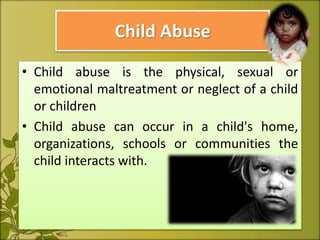
Child Abuse
• Child abuse is the physical, sexual or
emotional maltreatment or neglect of a child
or children
• Child abuse can occur in a child's home,
organizations, schools or communities the
child interacts with.
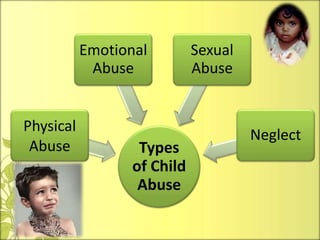
Types
of Child
Abuse
Physical
Abuse
Emotional
Abuse
Sexual
Abuse
Neglect
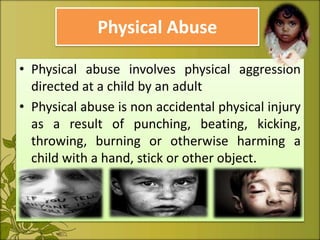
Physical Abuse
• Physical abuse involves physical aggression
directed at a child by an adult
• Physical abuse is non accidental physical injury
as a result of punching, beating, kicking,
throwing, burning or otherwise harming a
child with a hand, stick or other object.
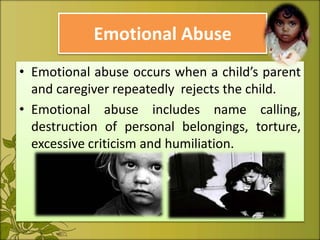
Emotional Abuse
• Emotional abuse occurs when a child’s parent
and caregiver repeatedly rejects the child.
• Emotional abuse includes name calling,
destruction of personal belongings, torture,
excessive criticism and humiliation.
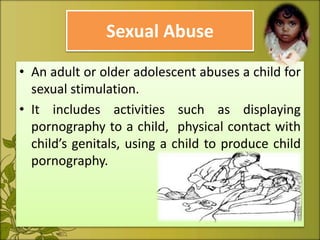
Sexual Abuse
• An adult or older adolescent abuses a child for
sexual stimulation.
• It includes activities such as displaying
pornography to a child, physical contact with
child’s genitals, using a child to produce child
pornography.
Neglect
• Child neglect is a failure of a parent or other
person with responsibility for the child to provide
basic needs.
• Physical: To provide necessary food, clothing and
safety.
• Medical: To provide medical or mental health
treatment.
• Educational: To educate a child.
• Emotional: To provide psychological care, love
and attention.
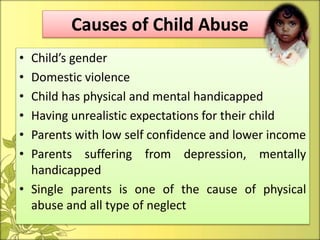
Causes of Child Abuse
• Child’s gender
• Domestic violence
• Child has physical and mental handicapped
• Having unrealistic expectations for their child
• Parents with low self confidence and lower income
• Parents suffering from depression, mentally
handicapped
• Single parents is one of the cause of physical
abuse and all type of neglect
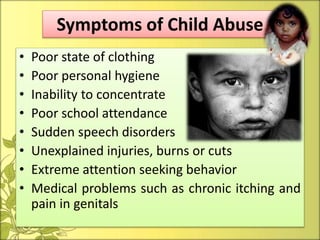
• Poor state of clothing
• Poor personal hygiene
• Inability to concentrate
• Poor school attendance
• Sudden speech disorders
• Unexplained injuries, burns or cuts
• Extreme attention seeking behavior
• Medical problems such as chronic itching and
pain in genitals
Symptoms of Child Abuse
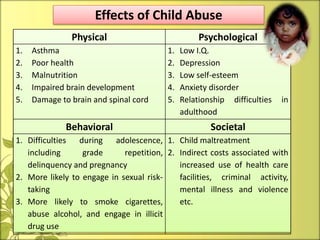
Effects of Child Abuse
Physical Psychological
1. Asthma
2. Poor health
3. Malnutrition
4. Impaired brain development
5. Damage to brain and spinal cord
1. Low I.Q.
2. Depression
3. Low self-esteem
4. Anxiety disorder
5. Relationship difficulties in
adulthood
Behavioral Societal
1. Difficulties during adolescence,
including grade repetition,
delinquency and pregnancy
2. More likely to engage in sexual risk-
taking
3. More likely to smoke cigarettes,
abuse alcohol, and engage in illicit
drug use
1. Child maltreatment
2. Indirect costs associated with
increased use of health care
facilities, criminal activity,
mental illness and violence
etc.
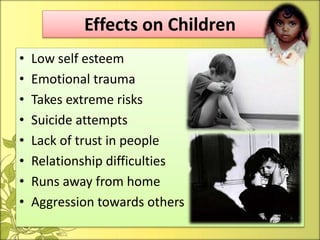
• Low self esteem
• Emotional trauma
• Takes extreme risks
• Suicide attempts
• Lack of trust in people
• Relationship difficulties
• Runs away from home
• Aggression towards others
Effects on Children
• Help the child to build trust and support
• Teach children about their rights
• Help to build the child’s confidence
• Be an active listener and show interest
• Praise and encourage child during good times
• Provide a lot of positive feedback to build the
child’s self-esteem
Ways to prevent Child Abuse
• Act passed by the federal government in
1974 and reauthorized in 2010
• Act provides federal funding to States in
support of prevention, assessment,
investigation and treatment activities and
intended to keep them free from all forms
of abuse
Child Abuse Prevention and Treatment
Act

Child abuse

  • 1.
    CHILD ABUSE Compiled andEdited By Ajita Gupta Research Scholar Dayalbagh Educational Institute
  • 2.
    Child Abuse • Childabuse is the physical, sexual or emotional maltreatment or neglect of a child or children • Child abuse can occur in a child's home, organizations, schools or communities the child interacts with.
  • 3.
  • 4.
    Physical Abuse • Physicalabuse involves physical aggression directed at a child by an adult • Physical abuse is non accidental physical injury as a result of punching, beating, kicking, throwing, burning or otherwise harming a child with a hand, stick or other object.
  • 5.
    Emotional Abuse • Emotionalabuse occurs when a child’s parent and caregiver repeatedly rejects the child. • Emotional abuse includes name calling, destruction of personal belongings, torture, excessive criticism and humiliation.
  • 6.
    Sexual Abuse • Anadult or older adolescent abuses a child for sexual stimulation. • It includes activities such as displaying pornography to a child, physical contact with child’s genitals, using a child to produce child pornography.
  • 7.
    Neglect • Child neglectis a failure of a parent or other person with responsibility for the child to provide basic needs. • Physical: To provide necessary food, clothing and safety. • Medical: To provide medical or mental health treatment. • Educational: To educate a child. • Emotional: To provide psychological care, love and attention.
  • 8.
    Causes of ChildAbuse • Child’s gender • Domestic violence • Child has physical and mental handicapped • Having unrealistic expectations for their child • Parents with low self confidence and lower income • Parents suffering from depression, mentally handicapped • Single parents is one of the cause of physical abuse and all type of neglect
  • 9.
    • Poor stateof clothing • Poor personal hygiene • Inability to concentrate • Poor school attendance • Sudden speech disorders • Unexplained injuries, burns or cuts • Extreme attention seeking behavior • Medical problems such as chronic itching and pain in genitals Symptoms of Child Abuse
  • 10.
    Effects of ChildAbuse Physical Psychological 1. Asthma 2. Poor health 3. Malnutrition 4. Impaired brain development 5. Damage to brain and spinal cord 1. Low I.Q. 2. Depression 3. Low self-esteem 4. Anxiety disorder 5. Relationship difficulties in adulthood Behavioral Societal 1. Difficulties during adolescence, including grade repetition, delinquency and pregnancy 2. More likely to engage in sexual risk- taking 3. More likely to smoke cigarettes, abuse alcohol, and engage in illicit drug use 1. Child maltreatment 2. Indirect costs associated with increased use of health care facilities, criminal activity, mental illness and violence etc.
  • 11.
    • Low selfesteem • Emotional trauma • Takes extreme risks • Suicide attempts • Lack of trust in people • Relationship difficulties • Runs away from home • Aggression towards others Effects on Children
  • 12.
    • Help thechild to build trust and support • Teach children about their rights • Help to build the child’s confidence • Be an active listener and show interest • Praise and encourage child during good times • Provide a lot of positive feedback to build the child’s self-esteem Ways to prevent Child Abuse
  • 13.
    • Act passedby the federal government in 1974 and reauthorized in 2010 • Act provides federal funding to States in support of prevention, assessment, investigation and treatment activities and intended to keep them free from all forms of abuse Child Abuse Prevention and Treatment Act