Chiefdom HIV/AIDS
Response
Conceptual Framework
Author: Chanda Michael Mulimansenga
© 2005
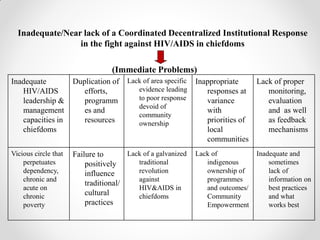
Inadequate/Near lack of a Coordinated Decentralized Institutional Response
in the fight against HIV/AIDS in chiefdoms
(Immediate Problems)
Inadequate
HIV/AIDS
leadership &
management
capacities in
chiefdoms
Duplication of
efforts,
programm
es and
resources
Lack of area specific
evidence leading
to poor response
devoid of
community
ownership
Inappropriate
responses at
variance
with
priorities of
local
communities
Lack of proper
monitoring,
evaluation
and as well
as feedback
mechanisms
Vicious circle that
perpetuates
dependency,
chronic and
acute on
chronic
poverty
Failure to
positively
influence
traditional/
cultural
practices
Lack of a galvanized
traditional
revolution
against
HIV&AIDS in
chiefdoms
Lack of
indigenous
ownership of
programmes
and outcomes/
Community
Empowerment
Inadequate and
sometimes
lack of
information on
best practices
and what
works best
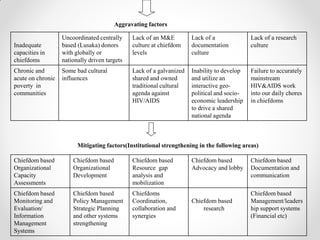
Aggravating factors
Inadequate
capacities in
chiefdoms
Uncoordinated centrally
based (Lusaka) donors
with globally or
nationally driven targets
Lack of an M&E
culture at chiefdom
levels
Lack of a
documentation
culture
Lack of a research
culture
Chronic and
acute on chronic
poverty in
communities
Some bad cultural
influences
Lack of a galvanized
shared and owned
traditional cultural
agenda against
HIV/AIDS
Inability to develop
and utilize an
interactive geo-
political and socio-
economic leadership
to drive a shared
national agenda
Failure to accurately
mainstream
HIV&AIDS work
into our daily chores
in chiefdoms
Mitigating factors(Institutional strengthening in the following areas)
Chiefdom based
Organizational
Capacity
Assessments
Chiefdom based
Organizational
Development
Chiefdom based
Resource gap
analysis and
mobilization
Chiefdom based
Advocacy and lobby
Chiefdom based
Documentation and
communication
Chiefdom based
Monitoring and
Evaluation/
Information
Management
Systems
Chiefdom based
Policy Management
Strategic Planning
and other systems
strengthening
Chiefdoms
Coordination,
collaboration and
synergies
Chiefdom based
research
Chiefdom based
Management/leaders
hip support systems
(Financial etc)
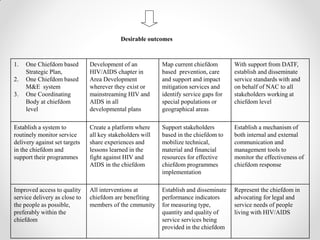
Desirable outcomes
1. One Chiefdom based
Strategic Plan,
2. One Chiefdom based
M&E system
3. One Coordinating
Body at chiefdom
level
Development of an
HIV/AIDS chapter in
Area Development
wherever they exist or
mainstreaming HIV and
AIDS in all
developmental plans
Map current chiefdom
based prevention, care
and support and impact
mitigation services and
identify service gaps for
special populations or
geographical areas
With support from DATF,
establish and disseminate
service standards with and
on behalf of NAC to all
stakeholders working at
chiefdom level
Establish a system to
routinely monitor service
delivery against set targets
in the chiefdom and
support their programmes
Create a platform where
all key stakeholders will
share experiences and
lessons learned in the
fight against HIV and
AIDS in the chiefdom
Support stakeholders
based in the chiefdom to
mobilize technical,
material and financial
resources for effective
chiefdom programmes
implementation
Establish a mechanism of
both internal and external
communication and
management tools to
monitor the effectiveness of
chiefdom response
Improved access to quality
service delivery as close to
the people as possible,
preferably within the
chiefdom
All interventions at
chiefdom are benefiting
members of the cmmunity
Establish and disseminate
performance indicators
for measuring type,
quantity and quality of
service services being
provided in the chiefdom
Represent the chiefdom in
advocating for legal and
service needs of people
living with HIV/AIDS
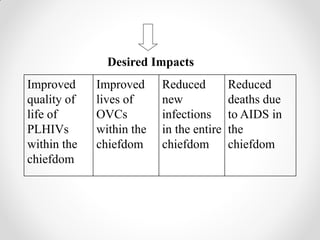
Desired Impacts
Improved
quality of
life of
PLHIVs
within the
chiefdom
Improved
lives of
OVCs
within the
chiefdom
Reduced
new
infections
in the entire
chiefdom
Reduced
deaths due
to AIDS in
the
chiefdom

chiefdom conceptual framework

  • 1.
    Chiefdom HIV/AIDS Response Conceptual Framework Author:Chanda Michael Mulimansenga © 2005
  • 2.
    Inadequate/Near lack ofa Coordinated Decentralized Institutional Response in the fight against HIV/AIDS in chiefdoms (Immediate Problems) Inadequate HIV/AIDS leadership & management capacities in chiefdoms Duplication of efforts, programm es and resources Lack of area specific evidence leading to poor response devoid of community ownership Inappropriate responses at variance with priorities of local communities Lack of proper monitoring, evaluation and as well as feedback mechanisms Vicious circle that perpetuates dependency, chronic and acute on chronic poverty Failure to positively influence traditional/ cultural practices Lack of a galvanized traditional revolution against HIV&AIDS in chiefdoms Lack of indigenous ownership of programmes and outcomes/ Community Empowerment Inadequate and sometimes lack of information on best practices and what works best
  • 3.
    Aggravating factors Inadequate capacities in chiefdoms Uncoordinatedcentrally based (Lusaka) donors with globally or nationally driven targets Lack of an M&E culture at chiefdom levels Lack of a documentation culture Lack of a research culture Chronic and acute on chronic poverty in communities Some bad cultural influences Lack of a galvanized shared and owned traditional cultural agenda against HIV/AIDS Inability to develop and utilize an interactive geo- political and socio- economic leadership to drive a shared national agenda Failure to accurately mainstream HIV&AIDS work into our daily chores in chiefdoms Mitigating factors(Institutional strengthening in the following areas) Chiefdom based Organizational Capacity Assessments Chiefdom based Organizational Development Chiefdom based Resource gap analysis and mobilization Chiefdom based Advocacy and lobby Chiefdom based Documentation and communication Chiefdom based Monitoring and Evaluation/ Information Management Systems Chiefdom based Policy Management Strategic Planning and other systems strengthening Chiefdoms Coordination, collaboration and synergies Chiefdom based research Chiefdom based Management/leaders hip support systems (Financial etc)
  • 4.
    Desirable outcomes 1. OneChiefdom based Strategic Plan, 2. One Chiefdom based M&E system 3. One Coordinating Body at chiefdom level Development of an HIV/AIDS chapter in Area Development wherever they exist or mainstreaming HIV and AIDS in all developmental plans Map current chiefdom based prevention, care and support and impact mitigation services and identify service gaps for special populations or geographical areas With support from DATF, establish and disseminate service standards with and on behalf of NAC to all stakeholders working at chiefdom level Establish a system to routinely monitor service delivery against set targets in the chiefdom and support their programmes Create a platform where all key stakeholders will share experiences and lessons learned in the fight against HIV and AIDS in the chiefdom Support stakeholders based in the chiefdom to mobilize technical, material and financial resources for effective chiefdom programmes implementation Establish a mechanism of both internal and external communication and management tools to monitor the effectiveness of chiefdom response Improved access to quality service delivery as close to the people as possible, preferably within the chiefdom All interventions at chiefdom are benefiting members of the cmmunity Establish and disseminate performance indicators for measuring type, quantity and quality of service services being provided in the chiefdom Represent the chiefdom in advocating for legal and service needs of people living with HIV/AIDS
  • 5.
    Desired Impacts Improved quality of lifeof PLHIVs within the chiefdom Improved lives of OVCs within the chiefdom Reduced new infections in the entire chiefdom Reduced deaths due to AIDS in the chiefdom