JOURNAL CLUB
- DR. ANAND RAM
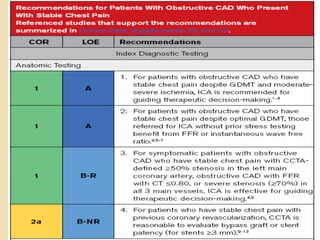
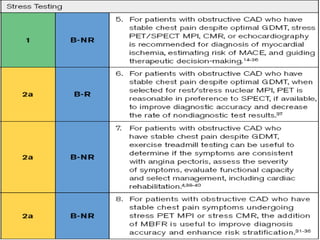
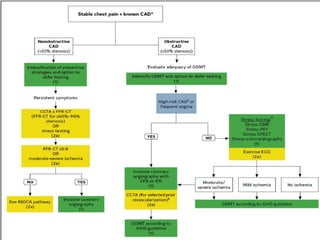
2021AHA/ACC/ASE/CHEST/S
AEM/SCCT/SCMR Guideline
for the Evaluation and
Diagnosis of Chest Pain
Take-Home Messages for the
Evaluation and Diagnosis of
Chest Pain
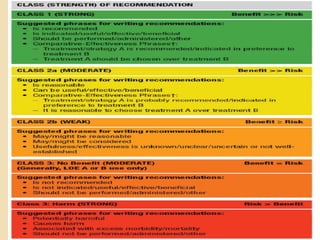
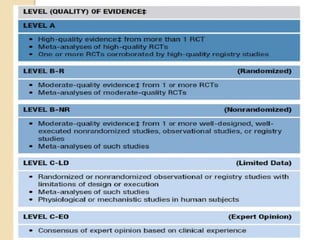
Applying ACC/AHA Class of
Recommendation and Level of
Evidence to Clinical
Strategies, Interventions,
Treatments,
or Diagnostic Testing in
Patient Care (Updated May
2019)*
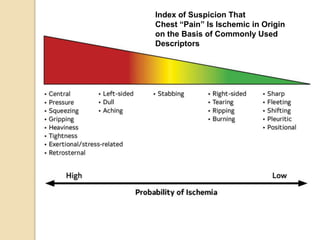
Index of Suspicion That
Chest “Pain” Is Ischemic in Origin
on the Basis of Commonly Used
Descriptors
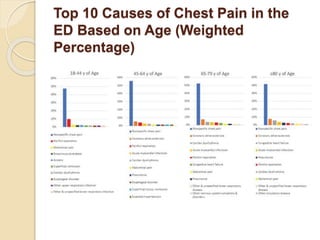
Top 10 Causes of Chest Pain in the
ED Based on Age (Weighted
Percentage)
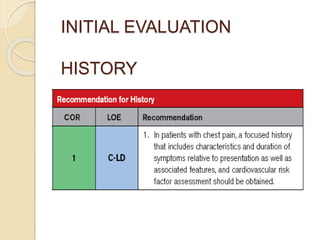
INITIAL EVALUATION
HISTORY
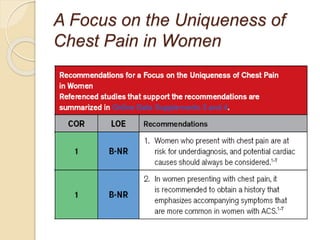
A Focus on the Uniqueness of
Chest Pain in Women
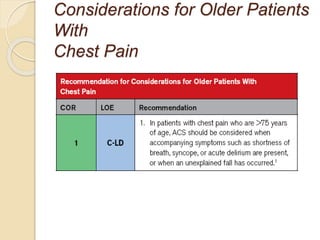
Considerations for Older Patients
With
Chest Pain
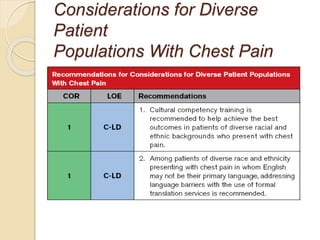
Considerations for Diverse
Patient
Populations With Chest Pain
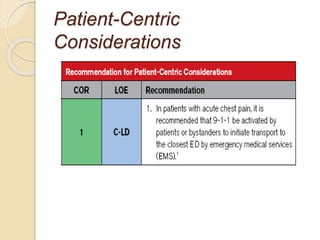
Patient-Centric
Considerations
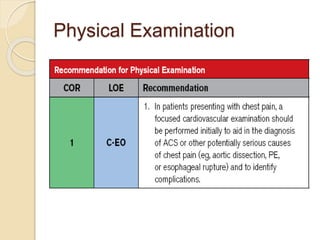
Physical Examination
Chest Pain Characteristics
and Corresponding Causes
Nature
 Anginal symptoms are perceived as
retrosternal chest discomfort (eg, pain,
discomfort, heaviness, tightness,
pressure, constriction, squeezing).
 Sharp chest pain that increases with
inspiration and lying supine is unlikely
related to ischemic heart disease (eg,
these symptoms usually occur with
acute pericarditis).
Onset and duration
 Anginal symptoms gradually build in
intensity over a few minutes.
 Sudden onset of ripping chest pain
(with radiation to the upper or lower
back)
is unlikely to be anginal and is
suspicious of an acute aortic
syndrome.
 Fleeting chest pain—of few seconds’
duration—is unlikely to be related to
Location and radiation
 Pain that can be localized to a very
limited area and pain radiating to
below
the umbilicus or hip are unlikely
related to myocardial ischemia.

Severity
 Ripping chest pain (“worse chest pain
of my life”), especially when sudden in
onset and occurring in a hypertensive
patient, or with a known bicuspid
aortic valve or aortic dilation, is
suspicious of an acute aortic
syndrome (eg, aortic dissection).
Precipitating factors
 Physical exercise or emotional stress
are common triggers of anginal
symptoms.
 Occurrence at rest or with minimal
exertion associated with anginal
symptoms usually indicates ACS.
 Positional chest pain is usually
nonischemic (eg, musculoskeletal).
Relieving factors
 Relief with nitroglycerin is not
necessarily diagnostic of myocardial
ischemia and should not be used as a
diagnostic criterion.
Associated symptoms
 Common symptoms associated with
myocardial ischemia include, but are
not limited to, dyspnea, palpitations,
diaphoresis, lightheadedness,
presyncope or syncope, upper
abdominal pain, or heartburn
unrelated to meals and nausea or
vomiting.
• Symptoms on the left or right side of
the chest, stabbing, sharp pain, or
discomfort in the throat or abdomen may
occur in patients with diabetes, women,
and elderly patients.
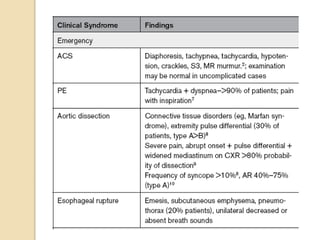
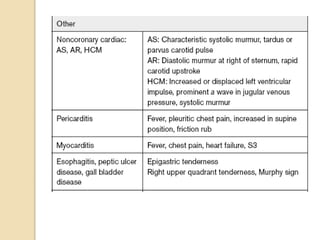
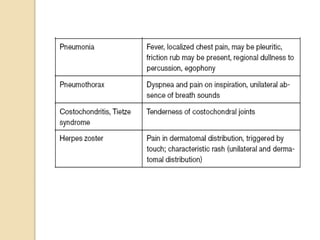
Physical Examination in
Patients With Chest Pain
Diagnostic Testing
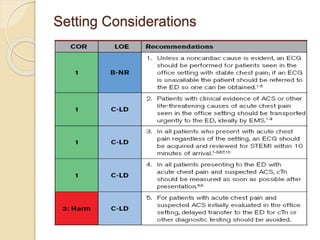
Setting Considerations
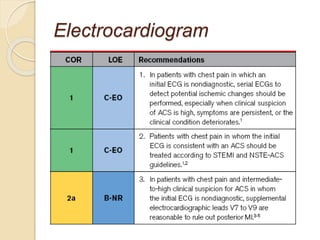
Electrocardiogram
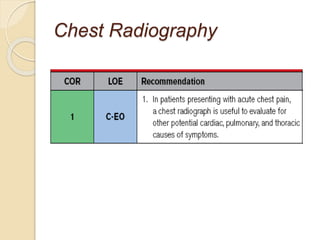
Chest Radiography
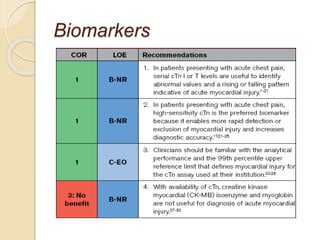
Biomarkers
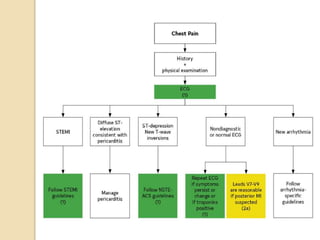
Electrocardiographic-Directed
Management of Chest Pain
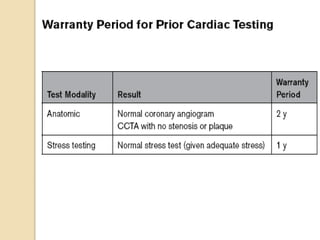
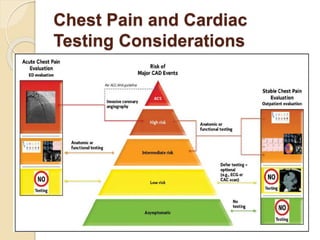
Chest Pain and Cardiac
Testing Considerations
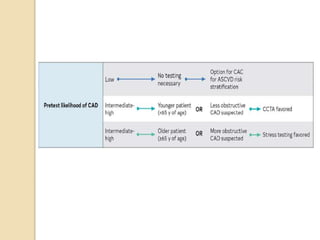
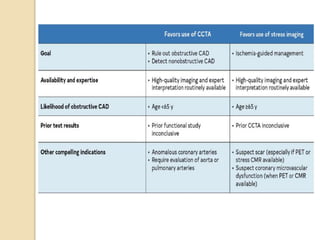
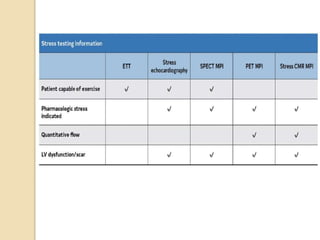
Choosing the Right Diagnostic
Test
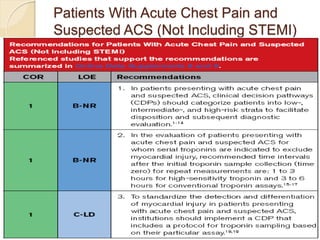
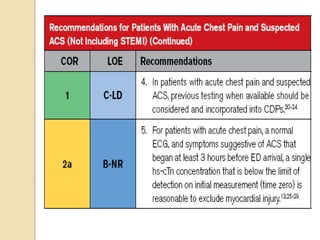
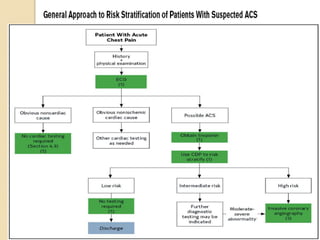
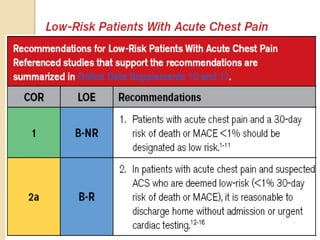
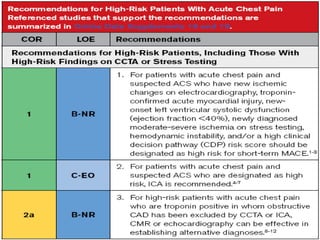
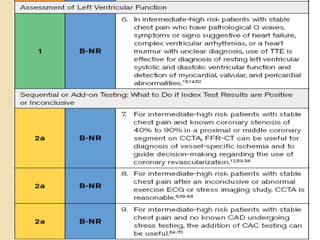
Patients With Acute Chest Pain and
Suspected ACS (Not Including STEMI)
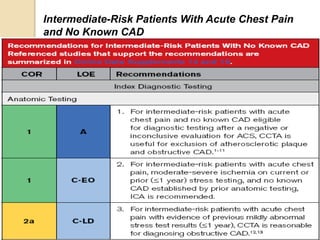
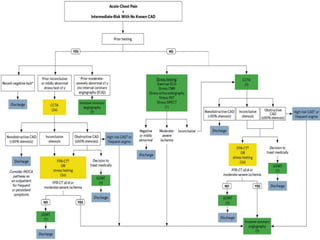
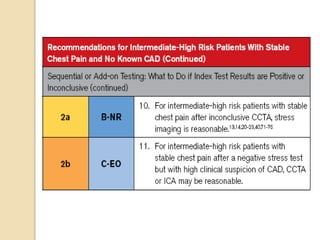
Intermediate-Risk Patients With Acute Chest Pain
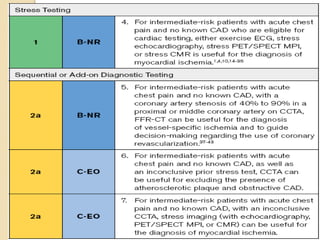
and No Known CAD
Intermediate-Risk Patients With Acute Chest
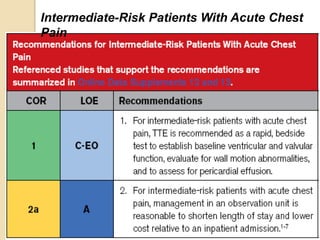
Pain
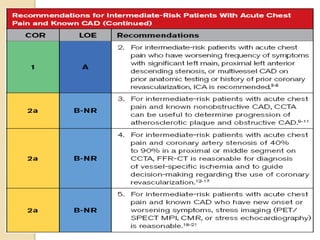
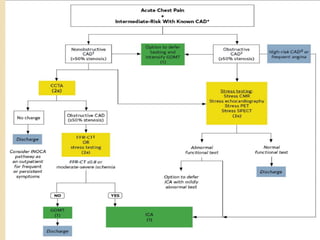
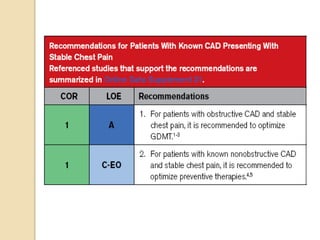
Intermediate-Risk Patients With Acute Chest
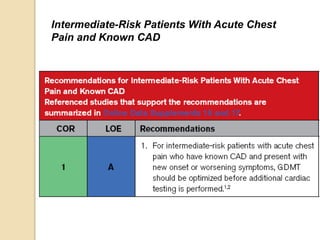
Pain and Known CAD
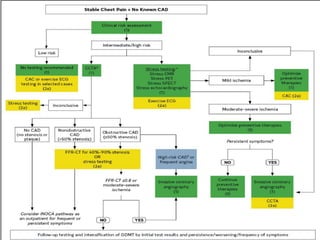
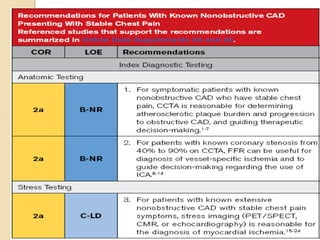
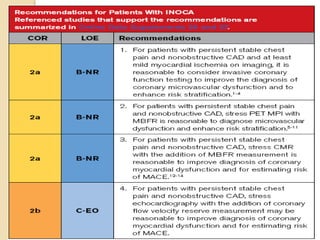
Evaluation Algorithm for Patients With
Suspected ACS at Intermediate Risk
With No Known CAD
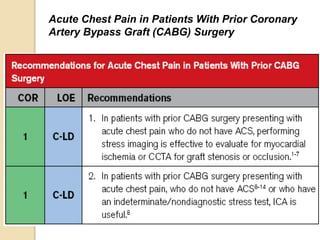
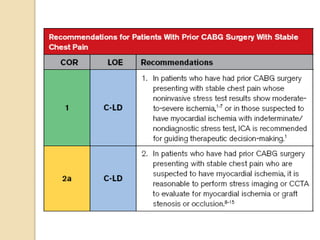
Acute Chest Pain in Patients With Prior Coronary
Artery Bypass Graft (CABG) Surgery
THANK YOU

chest pain GUIDELINES.pptx