Chemotherapy Induced
Peripheral Neurotoxicity
“CIPN”
Emad Shash MBBCh., MSc., MD.
Medical Oncology Department
National Cancer Institute, Cairo University
Don’t Expect from me today
Cover Everything!!
“The Denial Needs to Ends”
A Quote that you need to remember effectively
My presentation will explain, why you need to remember it!!
Questions !!
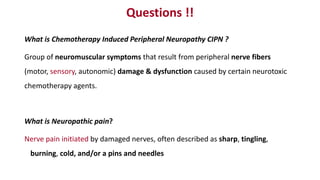
What is Chemotherapy Induced Peripheral Neuropathy CIPN ?
Group of neuromuscular symptoms that result from peripheral nerve fibers
(motor, sensory, autonomic) damage & dysfunction caused by certain neurotoxic
chemotherapy agents.
What is Neuropathic pain?
Nerve pain initiated by damaged nerves, often described as sharp, tingling,
burning, cold, and/or a pins and needles
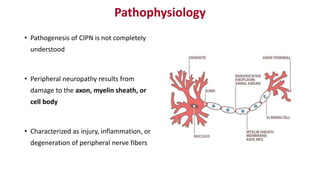
Pathophysiology
• Pathogenesis of CIPN is not completely
understood
• Peripheral neuropathy results from
damage to the axon, myelin sheath, or
cell body
• Characterized as injury, inflammation, or
degeneration of peripheral nerve fibers
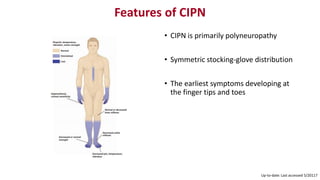
Features of CIPN
• CIPN is primarily polyneuropathy
• Symmetric stocking-glove distribution
• The earliest symptoms developing at
the finger tips and toes
Up-to-date: Last accessed 5/20117
A short but A Common Story
that we face in our practice!
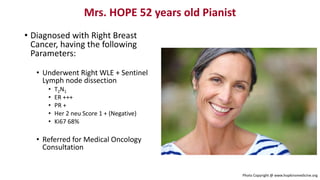
Mrs. HOPE 52 years old Pianist
• Diagnosed with Right Breast
Cancer, having the following
Parameters:
• Underwent Right WLE + Sentinel
Lymph node dissection
• T2N1
• ER +++
• PR +
• Her 2 neu Score 1 + (Negative)
• Ki67 68%
• Referred for Medical Oncology
Consultation
Photo Copyright @ www.hopkinsmedicine.org
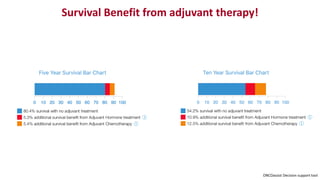
Survival Benefit from adjuvant therapy!
ONCOassist Decision support tool
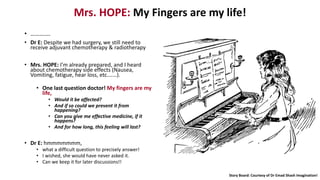
Mrs. HOPE: My Fingers are my life!
• ………….
• Dr E: Despite we had surgery, we still need to
receive adjuvant chemotherapy & radiotherapy
• Mrs. HOPE: I’m already prepared, and I heard
about chemotherapy side effects (Nausea,
Vomiting, fatigue, hear loss, etc.……).
• One last question doctor! My fingers are my
life,
• Would it be affected?
• And if so could we prevent it from
happening?
• Can you give me effective medicine, if it
happens?
• And for how long, this feeling will last?
• Dr E: hmmmmmmm,
• what a difficult question to precisely answer!
• I wished, she would have never asked it.
• Can we keep it for later discussions!!
Story Board: Courtesy of Dr Emad Shash Imagination!
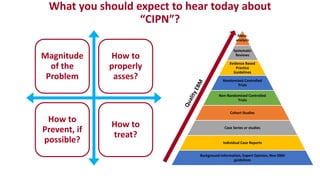
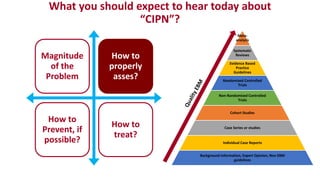
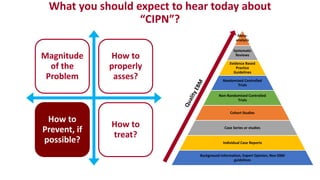
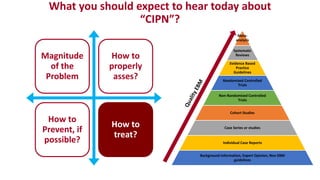
What you should expect to hear today about
“CIPN”?
Magnitude
of the
Problem
How to
properly
asses?
How to
Prevent, if
possible?
How to
treat?
Meta-
analysis
Systematic
Reviews
Evidence Based
Practice
Guidelines
Randomized Controlled
Trials
Non-Randomized Controlled
Trials
Cohort Studies
Case Series or studies
Individual Case Reports
Background Information, Expert Opinion, Non EBM
guidelines
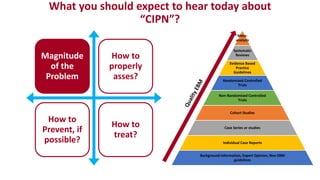
What you should expect to hear today about
“CIPN”?
Magnitude
of the
Problem
How to
properly
asses?
How to
Prevent, if
possible?
How to
treat?
Meta-
analysis
Systematic
Reviews
Evidence Based
Practice
Guidelines
Randomized Controlled
Trials
Non-Randomized Controlled
Trials
Cohort Studies
Case Series or studies
Individual Case Reports
Background Information, Expert Opinion, Non EBM
guidelines
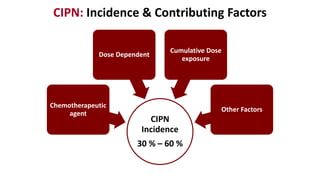
CIPN: Incidence & Contributing Factors
CIPN
Incidence
30 % – 60 %
Chemotherapeutic
agent
Dose Dependent
Cumulative Dose
exposure
Other Factors
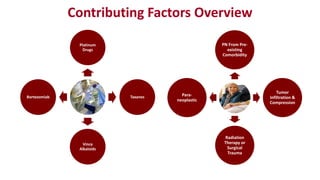
Contributing Factors Overview
Platinum
Drugs
Taxanes
Vinca
Alkaloids
Bortezomiab
PN From Pre-
existing
Comorbidity
Tumor
Infiltration &
Compression
Radiation
Therapy or
Surgical
Trauma
Para-
neoplastic
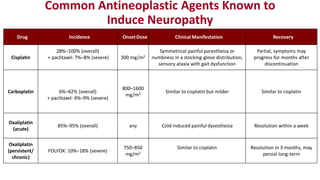
Common Antineoplastic Agents Known to
Induce Neuropathy
Drug Incidence OnsetDose Clinical Manifestation Recovery
Cisplatin
28%–100% (overall)
+ paclitaxel: 7%–8% (severe) 300 mg/m2
Symmetrical painful paresthesia or
numbness in a stocking-glove distribution,
sensory ataxia with gait dysfunction
Partial, symptoms may
progress for months after
discontinuation
Carboplatin 6%–42% (overall)
+ paclitaxel: 4%–9% (severe)
800–1600
mg/m2 Similar to cisplatin but milder Similar to cisplatin
Oxaliplatin
(acute)
85%–95% (overall) any Cold-induced painful dysesthesia Resolution within a week
Oxaliplatin
(persistent/
chronic)
FOLFOX: 10%–18% (severe)
750–850
mg/m2
Similar to cisplatin Resolution in 3 months, may
persist long-term
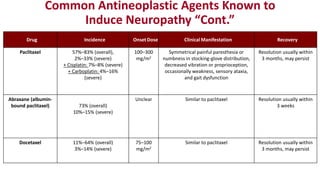
Common Antineoplastic Agents Known to
Induce Neuropathy “Cont.”
Drug Incidence OnsetDose Clinical Manifestation Recovery
Paclitaxel 57%–83% (overall),
2%–33% (severe)
+ Cisplatin: 7%–8% (severe)
+ Carboplatin: 4%–16%
(severe)
100–300
mg/m2
Symmetrical painful paresthesia or
numbness in stocking-glove distribution,
decreased vibration or proprioception,
occasionally weakness, sensory ataxia,
and gait dysfunction
Resolution usually within
3 months, may persist
Abraxane (albumin-
bound paclitaxel) 73% (overall)
10%–15% (severe)
Unclear Similar to paclitaxel Resolution usually within
3 weeks
Docetaxel 11%–64% (overall)
3%–14% (severe)
75–100
mg/m2
Similar to paclitaxel Resolution usually within
3 months, may persist
So it’s a major challenge
that we shouldn’t deny!
The question remains: How to optimally deal?
What you should expect to hear today about
“CIPN”?
Magnitude
of the
Problem
How to
properly
asses?
How to
Prevent, if
possible?
How to
treat?
Meta-
analysis
Systematic
Reviews
Evidence Based
Practice
Guidelines
Randomized Controlled
Trials
Non-Randomized Controlled
Trials
Cohort Studies
Case Series or studies
Individual Case Reports
Background Information, Expert Opinion, Non EBM
guidelines
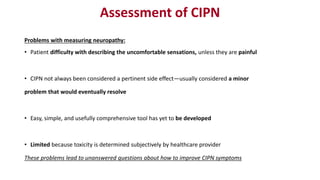
Assessment of CIPN
Problems with measuring neuropathy:
• Patient difficulty with describing the uncomfortable sensations, unless they are painful
• CIPN not always been considered a pertinent side effect—usually considered a minor
problem that would eventually resolve
• Easy, simple, and usefully comprehensive tool has yet to be developed
• Limited because toxicity is determined subjectively by healthcare provider
These problems lead to unanswered questions about how to improve CIPN symptoms
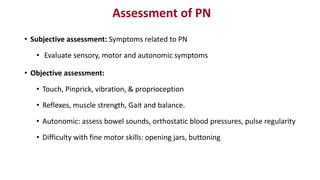
Assessment of PN
• Subjective assessment: Symptoms related to PN
• Evaluate sensory, motor and autonomic symptoms
• Objective assessment:
• Touch, Pinprick, vibration, & proprioception
• Reflexes, muscle strength, Gait and balance.
• Autonomic: assess bowel sounds, orthostatic blood pressures, pulse regularity
• Difficulty with fine motor skills: opening jars, buttoning
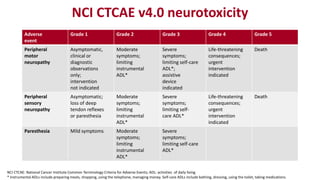
NCI CTCAE v4.0 neurotoxicity
Adverse
event
Grade 1 Grade 2 Grade 3 Grade 4 Grade 5
Peripheral
motor
neuropathy
Asymptomatic,
clinical or
diagnostic
observations
only;
intervention
not indicated
Moderate
symptoms;
limiting
instrumental
ADL*
Severe
symptoms;
limiting self-care
ADL*;
assistive
device
indicated
Life-threatening
consequences;
urgent
intervention
indicated
Death
Peripheral
sensory
neuropathy
Asymptomatic;
loss of deep
tendon reflexes
or paresthesia
Moderate
symptoms;
limiting
instrumental
ADL*
Severe
symptoms;
limiting self-
care ADL*
Life-threatening
consequences;
urgent
intervention
indicated
Death
Paresthesia Mild symptoms Moderate
symptoms;
limiting
instrumental
ADL*
Severe
symptoms;
limiting self-care
ADL*
NCI CTCAE: National Cancer Institute Common Terminology Criteria for Adverse Events; ADL: activities of daily living.
* Instrumental ADLs include preparing meals, shopping, using the telephone, managing money. Self-care ADLs include bathing, dressing, using the toilet, taking medications.
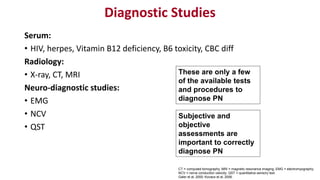
Diagnostic Studies
Serum:
• HIV, herpes, Vitamin B12 deficiency, B6 toxicity, CBC diff
Radiology:
• X-ray, CT, MRI
Neuro-diagnostic studies:
• EMG
• NCV
• QST
CT = computed tomography; MRI = magnetic resonance imaging; EMG = electromyography;
NCV = nerve conduction velocity; QST = quantitative sensory test.
Galer et al, 2000; Kovacs et al, 2006.
These are only a few
of the available tests
and procedures to
diagnose PN
Subjective and
objective
assessments are
important to correctly
diagnose PN
What you should expect to hear today about
“CIPN”?
Magnitude
of the
Problem
How to
properly
asses?
How to
Prevent, if
possible?
How to
treat?
Meta-
analysis
Systematic
Reviews
Evidence Based
Practice
Guidelines
Randomized Controlled
Trials
Non-Randomized Controlled
Trials
Cohort Studies
Case Series or studies
Individual Case Reports
Background Information, Expert Opinion, Non EBM
guidelines
Preventive Approaches
Pharmacologic
Other Measures
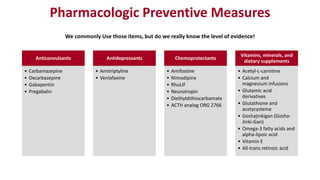
Pharmacologic Preventive Measures
Anticonvulsants
• Carbamazepine
• Oxcarbazepine
• Gabapentin
• Pregabalin
Antidepressants
• Amitriptyline
• Venlafaxine
Chemoprotectants
• Amifostine
• Nimodipine
• RhuLIF
• Neurotropin
• Diethyldithiocarbamate
• ACTH analog ORG 2766
Vitamins, minerals, and
dietary supplements
• Acetyl-L-carnitine
• Calcium and
magnesium infusions
• Glutamic acid
derivatives
• Glutathione and
acetycysteine
• Goshajinkigan (Gosha-
Jinki-Gan)
• Omega-3 fatty acids and
alpha-lipoic acid
• Vitamin E
• All-trans retinoic acid
We commonly Use those items, but do we really know the level of evidence!
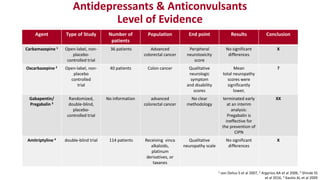
Antidepressants & Anticonvulsants
Level of Evidence
Agent Type of Study Number of
patients
Population End point Results Conclusion
Carbamazepine 1 Open-label, non-
placebo-
controlled trial
36 patients Advanced
colorectal cancer
Peripheral
neurotoxicity
score
No significant
differences
X
Oxcarbazepine 2 Open-label, non-
placebo
controlled
trial
40 patients Colon cancer Qualitative
neurologic
symptom
and disability
scores
Mean
total neuropathy
scores were
significantly
lower,
?
Gabapentin/
Pregabalin 3
Randomized,
double-blind,
placebo-
controlled trial
No information advanced
colorectal cancer
No clear
methodology
terminated early
at an interim
analysis:
Pregabalin is
ineffective for
the prevention of
CIPN
XX
Amitriptyline 4 double-blind trial 114 patients Receiving vinca
alkaloids,
platinum
derivatives, or
taxanes
Qualitative
neuropathy scale
No significant
differences
X
1 von Delius S et al 2007, 2 Argyriou AA et al 2006, 3 Shinde SS
et al 2016, 4 Kautio AL et al 2009
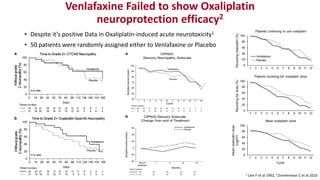
Venlafaxine Failed to show Oxaliplatin
neuroprotection efficacy2
• Despite it’s positive Data in Oxaliplatin-induced acute neurotoxicity1
• 50 patients were randomly assigned either to Venlafaxine or Placebo
1 Lévi F et al 1992, 2 Zimmerman C et al 2016
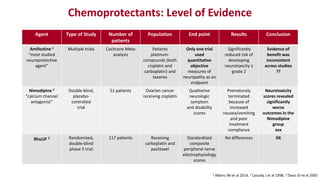
Chemoprotectants: Level of Evidence
Agent Type of Study Number of
patients
Population End point Results Conclusion
Amifostine 1
“most studied
neuroprotective
agent”
Multiple trials Cochrane Meta-
analysis
Patients
platinum-
compounds (both
cisplatin and
carboplatin) and
taxanes
Only one trial
used
quantitative
objective
measures of
neuropathy as an
endpoint
Significantly
reduced risk of
developing
neurotoxicity ≥
grade 2
Evidence of
benefit was
inconsistent
across studies
??
Nimodipine 2
“calcium channel
antagonist”
Double blind,
placebo-
controlled
trial
51 patients Ovarian cancer
receiving cisplatin
Qualitative
neurologic
symptom
and disability
scores
Prematurely
terminated
because of
increased
nausea/vomiting
and poor
treatment
compliance
Neurotoxicity
scores revealed
significantly
worse
outcomes in the
Nimodipine
group
xxx
RhuLIF 3 Randomized,
double-blind
phase II trial
117 patients Receiving
carboplatin and
paclitaxel
Standardized
composite
peripheral nerve
electrophysiology
scores
No differences XX
1 Albers JW et al 2014, 2 Cassidy J et al 1998, 3 Davis ID et al 2005
Vitamins, Minerals & Dietary Supplements
Level of Evidence
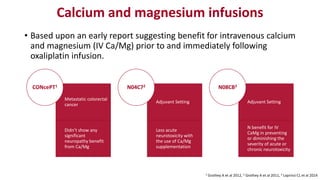
Calcium and magnesium infusions
• Based upon an early report suggesting benefit for intravenous calcium
and magnesium (IV Ca/Mg) prior to and immediately following
oxaliplatin infusion.
Metastatic colorectal
cancer
Didn’t show any
significant
neuropathy benefit
from Ca/Mg
CONcePT1
Adjuvant Setting
Less acute
neurotoxicity with
the use of Ca/Mg
supplementation
N04C72
Adjuvant Setting
N benefit for IV
CaMg in preventing
or diminishing the
severity of acute or
chronic neurotoxicity
N08CB3
1 Grothey A et al 2012, 2 Grothey A et al 2011, 3 Loprinzi CL et al 2014
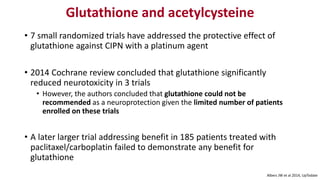
Glutathione and acetylcysteine
• 7 small randomized trials have addressed the protective effect of
glutathione against CIPN with a platinum agent
• 2014 Cochrane review concluded that glutathione significantly
reduced neurotoxicity in 3 trials
• However, the authors concluded that glutathione could not be
recommended as a neuroprotection given the limited number of patients
enrolled on these trials
• A later larger trial addressing benefit in 185 patients treated with
paclitaxel/carboplatin failed to demonstrate any benefit for
glutathione
Albers JW et al 2014, UpTodate
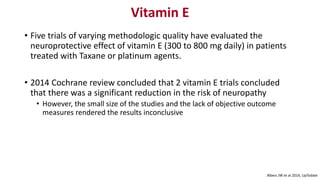
Vitamin E
• Five trials of varying methodologic quality have evaluated the
neuroprotective effect of vitamin E (300 to 800 mg daily) in patients
treated with Taxane or platinum agents.
• 2014 Cochrane review concluded that 2 vitamin E trials concluded
that there was a significant reduction in the risk of neuropathy
• However, the small size of the studies and the lack of objective outcome
measures rendered the results inconclusive
Albers JW et al 2014, UpTodate
2014: ASCO recommendations for prevention
of (CIPN)
• There are no established agents recommended for the prevention of CIPN in patients with cancer
undergoing treatment with neurotoxic agents.
• Clinicians should not offer the following agents for the prevention of CIPN to patients with cancer
undergoing treatment with neurotoxic agents:
• Acetyl-L-carnitine (ALC)
• Amifostine
• Amitriptyline
• CaMg for patients receiving oxaliplatin-based chemotherapy
• Diethyldithio-carbamate (DDTC)
• Glutathione (GSH) for patients receiving paclitaxel/carboplatin chemotherapy
• Nimodipine
• Org 2766
• All-trans-retinoic acid
• Recombinant human leukemia inhibitory factor (rhuLIF)
• Vitamin E
• Venlafaxine is not recommended for routine use in clinical practice.
• Although the venlafaxine data support its potential utility, the data were not strong enough to recommend its use in clinical
practice, until additional supporting data become available.
Some Other measures that could be
useful in prevention!
• Patients treated with oxaliplatin:
• Limiting exposure to cold
• Stopping and reintroducing oxaliplatin
• Lengthened infusion duration
• Patients treated with bortezomib:
• Weekly rather than twice-weekly treatment schedules
• Subcutaneous administration
• Patients treated with vincristine:
• Because of the high incidence of constipation, patients receiving vincristine
should take prophylactic stool softeners and/or laxatives
• Exercise
• Cold gloves
What you should expect to hear today about
“CIPN”?
Magnitude
of the
Problem
How to
properly
asses?
How to
Prevent, if
possible?
How to
treat?
Meta-
analysis
Systematic
Reviews
Evidence Based
Practice
Guidelines
Randomized Controlled
Trials
Non-Randomized Controlled
Trials
Cohort Studies
Case Series or studies
Individual Case Reports
Background Information, Expert Opinion, Non EBM
guidelines
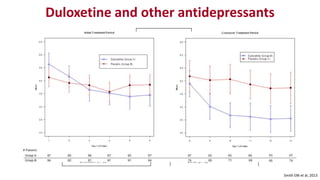
Duloxetine and other antidepressants
Smith EM et al, 2013
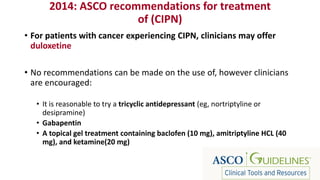
2014: ASCO recommendations for treatment
of (CIPN)
• For patients with cancer experiencing CIPN, clinicians may offer
duloxetine
• No recommendations can be made on the use of, however clinicians
are encouraged:
• It is reasonable to try a tricyclic antidepressant (eg, nortriptyline or
desipramine)
• Gabapentin
• A topical gel treatment containing baclofen (10 mg), amitriptyline HCL (40
mg), and ketamine(20 mg)
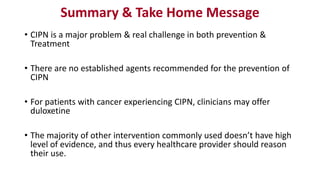
Summary & Take Home Message
• CIPN is a major problem & real challenge in both prevention &
Treatment
• There are no established agents recommended for the prevention of
CIPN
• For patients with cancer experiencing CIPN, clinicians may offer
duloxetine
• The majority of other intervention commonly used doesn’t have high
level of evidence, and thus every healthcare provider should reason
their use.
Thank You

Chemotherapy Induced Peripheral Neuropathy

  • 1.
    Chemotherapy Induced Peripheral Neurotoxicity “CIPN” EmadShash MBBCh., MSc., MD. Medical Oncology Department National Cancer Institute, Cairo University
  • 2.
    Don’t Expect fromme today Cover Everything!!
  • 3.
    “The Denial Needsto Ends” A Quote that you need to remember effectively My presentation will explain, why you need to remember it!!
  • 4.
    Questions !! What isChemotherapy Induced Peripheral Neuropathy CIPN ? Group of neuromuscular symptoms that result from peripheral nerve fibers (motor, sensory, autonomic) damage & dysfunction caused by certain neurotoxic chemotherapy agents. What is Neuropathic pain? Nerve pain initiated by damaged nerves, often described as sharp, tingling, burning, cold, and/or a pins and needles
  • 5.
    Pathophysiology • Pathogenesis ofCIPN is not completely understood • Peripheral neuropathy results from damage to the axon, myelin sheath, or cell body • Characterized as injury, inflammation, or degeneration of peripheral nerve fibers
  • 6.
    Features of CIPN •CIPN is primarily polyneuropathy • Symmetric stocking-glove distribution • The earliest symptoms developing at the finger tips and toes Up-to-date: Last accessed 5/20117
  • 7.
    A short butA Common Story that we face in our practice!
  • 8.
    Mrs. HOPE 52years old Pianist • Diagnosed with Right Breast Cancer, having the following Parameters: • Underwent Right WLE + Sentinel Lymph node dissection • T2N1 • ER +++ • PR + • Her 2 neu Score 1 + (Negative) • Ki67 68% • Referred for Medical Oncology Consultation Photo Copyright @ www.hopkinsmedicine.org
  • 9.
    Survival Benefit fromadjuvant therapy! ONCOassist Decision support tool
  • 10.
    Mrs. HOPE: MyFingers are my life! • …………. • Dr E: Despite we had surgery, we still need to receive adjuvant chemotherapy & radiotherapy • Mrs. HOPE: I’m already prepared, and I heard about chemotherapy side effects (Nausea, Vomiting, fatigue, hear loss, etc.……). • One last question doctor! My fingers are my life, • Would it be affected? • And if so could we prevent it from happening? • Can you give me effective medicine, if it happens? • And for how long, this feeling will last? • Dr E: hmmmmmmm, • what a difficult question to precisely answer! • I wished, she would have never asked it. • Can we keep it for later discussions!! Story Board: Courtesy of Dr Emad Shash Imagination!
  • 11.
    What you shouldexpect to hear today about “CIPN”? Magnitude of the Problem How to properly asses? How to Prevent, if possible? How to treat? Meta- analysis Systematic Reviews Evidence Based Practice Guidelines Randomized Controlled Trials Non-Randomized Controlled Trials Cohort Studies Case Series or studies Individual Case Reports Background Information, Expert Opinion, Non EBM guidelines
  • 12.
    What you shouldexpect to hear today about “CIPN”? Magnitude of the Problem How to properly asses? How to Prevent, if possible? How to treat? Meta- analysis Systematic Reviews Evidence Based Practice Guidelines Randomized Controlled Trials Non-Randomized Controlled Trials Cohort Studies Case Series or studies Individual Case Reports Background Information, Expert Opinion, Non EBM guidelines
  • 13.
    CIPN: Incidence &Contributing Factors CIPN Incidence 30 % – 60 % Chemotherapeutic agent Dose Dependent Cumulative Dose exposure Other Factors
  • 14.
    Contributing Factors Overview Platinum Drugs Taxanes Vinca Alkaloids Bortezomiab PNFrom Pre- existing Comorbidity Tumor Infiltration & Compression Radiation Therapy or Surgical Trauma Para- neoplastic
  • 15.
    Common Antineoplastic AgentsKnown to Induce Neuropathy Drug Incidence OnsetDose Clinical Manifestation Recovery Cisplatin 28%–100% (overall) + paclitaxel: 7%–8% (severe) 300 mg/m2 Symmetrical painful paresthesia or numbness in a stocking-glove distribution, sensory ataxia with gait dysfunction Partial, symptoms may progress for months after discontinuation Carboplatin 6%–42% (overall) + paclitaxel: 4%–9% (severe) 800–1600 mg/m2 Similar to cisplatin but milder Similar to cisplatin Oxaliplatin (acute) 85%–95% (overall) any Cold-induced painful dysesthesia Resolution within a week Oxaliplatin (persistent/ chronic) FOLFOX: 10%–18% (severe) 750–850 mg/m2 Similar to cisplatin Resolution in 3 months, may persist long-term
  • 16.
    Common Antineoplastic AgentsKnown to Induce Neuropathy “Cont.” Drug Incidence OnsetDose Clinical Manifestation Recovery Paclitaxel 57%–83% (overall), 2%–33% (severe) + Cisplatin: 7%–8% (severe) + Carboplatin: 4%–16% (severe) 100–300 mg/m2 Symmetrical painful paresthesia or numbness in stocking-glove distribution, decreased vibration or proprioception, occasionally weakness, sensory ataxia, and gait dysfunction Resolution usually within 3 months, may persist Abraxane (albumin- bound paclitaxel) 73% (overall) 10%–15% (severe) Unclear Similar to paclitaxel Resolution usually within 3 weeks Docetaxel 11%–64% (overall) 3%–14% (severe) 75–100 mg/m2 Similar to paclitaxel Resolution usually within 3 months, may persist
  • 17.
    So it’s amajor challenge that we shouldn’t deny! The question remains: How to optimally deal?
  • 18.
    What you shouldexpect to hear today about “CIPN”? Magnitude of the Problem How to properly asses? How to Prevent, if possible? How to treat? Meta- analysis Systematic Reviews Evidence Based Practice Guidelines Randomized Controlled Trials Non-Randomized Controlled Trials Cohort Studies Case Series or studies Individual Case Reports Background Information, Expert Opinion, Non EBM guidelines
  • 19.
    Assessment of CIPN Problemswith measuring neuropathy: • Patient difficulty with describing the uncomfortable sensations, unless they are painful • CIPN not always been considered a pertinent side effect—usually considered a minor problem that would eventually resolve • Easy, simple, and usefully comprehensive tool has yet to be developed • Limited because toxicity is determined subjectively by healthcare provider These problems lead to unanswered questions about how to improve CIPN symptoms
  • 20.
    Assessment of PN •Subjective assessment: Symptoms related to PN • Evaluate sensory, motor and autonomic symptoms • Objective assessment: • Touch, Pinprick, vibration, & proprioception • Reflexes, muscle strength, Gait and balance. • Autonomic: assess bowel sounds, orthostatic blood pressures, pulse regularity • Difficulty with fine motor skills: opening jars, buttoning
  • 21.
    NCI CTCAE v4.0neurotoxicity Adverse event Grade 1 Grade 2 Grade 3 Grade 4 Grade 5 Peripheral motor neuropathy Asymptomatic, clinical or diagnostic observations only; intervention not indicated Moderate symptoms; limiting instrumental ADL* Severe symptoms; limiting self-care ADL*; assistive device indicated Life-threatening consequences; urgent intervention indicated Death Peripheral sensory neuropathy Asymptomatic; loss of deep tendon reflexes or paresthesia Moderate symptoms; limiting instrumental ADL* Severe symptoms; limiting self- care ADL* Life-threatening consequences; urgent intervention indicated Death Paresthesia Mild symptoms Moderate symptoms; limiting instrumental ADL* Severe symptoms; limiting self-care ADL* NCI CTCAE: National Cancer Institute Common Terminology Criteria for Adverse Events; ADL: activities of daily living. * Instrumental ADLs include preparing meals, shopping, using the telephone, managing money. Self-care ADLs include bathing, dressing, using the toilet, taking medications.
  • 22.
    Diagnostic Studies Serum: • HIV,herpes, Vitamin B12 deficiency, B6 toxicity, CBC diff Radiology: • X-ray, CT, MRI Neuro-diagnostic studies: • EMG • NCV • QST CT = computed tomography; MRI = magnetic resonance imaging; EMG = electromyography; NCV = nerve conduction velocity; QST = quantitative sensory test. Galer et al, 2000; Kovacs et al, 2006. These are only a few of the available tests and procedures to diagnose PN Subjective and objective assessments are important to correctly diagnose PN
  • 23.
    What you shouldexpect to hear today about “CIPN”? Magnitude of the Problem How to properly asses? How to Prevent, if possible? How to treat? Meta- analysis Systematic Reviews Evidence Based Practice Guidelines Randomized Controlled Trials Non-Randomized Controlled Trials Cohort Studies Case Series or studies Individual Case Reports Background Information, Expert Opinion, Non EBM guidelines
  • 24.
  • 25.
    Pharmacologic Preventive Measures Anticonvulsants •Carbamazepine • Oxcarbazepine • Gabapentin • Pregabalin Antidepressants • Amitriptyline • Venlafaxine Chemoprotectants • Amifostine • Nimodipine • RhuLIF • Neurotropin • Diethyldithiocarbamate • ACTH analog ORG 2766 Vitamins, minerals, and dietary supplements • Acetyl-L-carnitine • Calcium and magnesium infusions • Glutamic acid derivatives • Glutathione and acetycysteine • Goshajinkigan (Gosha- Jinki-Gan) • Omega-3 fatty acids and alpha-lipoic acid • Vitamin E • All-trans retinoic acid We commonly Use those items, but do we really know the level of evidence!
  • 26.
    Antidepressants & Anticonvulsants Levelof Evidence Agent Type of Study Number of patients Population End point Results Conclusion Carbamazepine 1 Open-label, non- placebo- controlled trial 36 patients Advanced colorectal cancer Peripheral neurotoxicity score No significant differences X Oxcarbazepine 2 Open-label, non- placebo controlled trial 40 patients Colon cancer Qualitative neurologic symptom and disability scores Mean total neuropathy scores were significantly lower, ? Gabapentin/ Pregabalin 3 Randomized, double-blind, placebo- controlled trial No information advanced colorectal cancer No clear methodology terminated early at an interim analysis: Pregabalin is ineffective for the prevention of CIPN XX Amitriptyline 4 double-blind trial 114 patients Receiving vinca alkaloids, platinum derivatives, or taxanes Qualitative neuropathy scale No significant differences X 1 von Delius S et al 2007, 2 Argyriou AA et al 2006, 3 Shinde SS et al 2016, 4 Kautio AL et al 2009
  • 27.
    Venlafaxine Failed toshow Oxaliplatin neuroprotection efficacy2 • Despite it’s positive Data in Oxaliplatin-induced acute neurotoxicity1 • 50 patients were randomly assigned either to Venlafaxine or Placebo 1 Lévi F et al 1992, 2 Zimmerman C et al 2016
  • 28.
    Chemoprotectants: Level ofEvidence Agent Type of Study Number of patients Population End point Results Conclusion Amifostine 1 “most studied neuroprotective agent” Multiple trials Cochrane Meta- analysis Patients platinum- compounds (both cisplatin and carboplatin) and taxanes Only one trial used quantitative objective measures of neuropathy as an endpoint Significantly reduced risk of developing neurotoxicity ≥ grade 2 Evidence of benefit was inconsistent across studies ?? Nimodipine 2 “calcium channel antagonist” Double blind, placebo- controlled trial 51 patients Ovarian cancer receiving cisplatin Qualitative neurologic symptom and disability scores Prematurely terminated because of increased nausea/vomiting and poor treatment compliance Neurotoxicity scores revealed significantly worse outcomes in the Nimodipine group xxx RhuLIF 3 Randomized, double-blind phase II trial 117 patients Receiving carboplatin and paclitaxel Standardized composite peripheral nerve electrophysiology scores No differences XX 1 Albers JW et al 2014, 2 Cassidy J et al 1998, 3 Davis ID et al 2005
  • 29.
    Vitamins, Minerals &Dietary Supplements Level of Evidence
  • 30.
    Calcium and magnesiuminfusions • Based upon an early report suggesting benefit for intravenous calcium and magnesium (IV Ca/Mg) prior to and immediately following oxaliplatin infusion. Metastatic colorectal cancer Didn’t show any significant neuropathy benefit from Ca/Mg CONcePT1 Adjuvant Setting Less acute neurotoxicity with the use of Ca/Mg supplementation N04C72 Adjuvant Setting N benefit for IV CaMg in preventing or diminishing the severity of acute or chronic neurotoxicity N08CB3 1 Grothey A et al 2012, 2 Grothey A et al 2011, 3 Loprinzi CL et al 2014
  • 31.
    Glutathione and acetylcysteine •7 small randomized trials have addressed the protective effect of glutathione against CIPN with a platinum agent • 2014 Cochrane review concluded that glutathione significantly reduced neurotoxicity in 3 trials • However, the authors concluded that glutathione could not be recommended as a neuroprotection given the limited number of patients enrolled on these trials • A later larger trial addressing benefit in 185 patients treated with paclitaxel/carboplatin failed to demonstrate any benefit for glutathione Albers JW et al 2014, UpTodate
  • 32.
    Vitamin E • Fivetrials of varying methodologic quality have evaluated the neuroprotective effect of vitamin E (300 to 800 mg daily) in patients treated with Taxane or platinum agents. • 2014 Cochrane review concluded that 2 vitamin E trials concluded that there was a significant reduction in the risk of neuropathy • However, the small size of the studies and the lack of objective outcome measures rendered the results inconclusive Albers JW et al 2014, UpTodate
  • 33.
    2014: ASCO recommendationsfor prevention of (CIPN) • There are no established agents recommended for the prevention of CIPN in patients with cancer undergoing treatment with neurotoxic agents. • Clinicians should not offer the following agents for the prevention of CIPN to patients with cancer undergoing treatment with neurotoxic agents: • Acetyl-L-carnitine (ALC) • Amifostine • Amitriptyline • CaMg for patients receiving oxaliplatin-based chemotherapy • Diethyldithio-carbamate (DDTC) • Glutathione (GSH) for patients receiving paclitaxel/carboplatin chemotherapy • Nimodipine • Org 2766 • All-trans-retinoic acid • Recombinant human leukemia inhibitory factor (rhuLIF) • Vitamin E • Venlafaxine is not recommended for routine use in clinical practice. • Although the venlafaxine data support its potential utility, the data were not strong enough to recommend its use in clinical practice, until additional supporting data become available.
  • 34.
    Some Other measuresthat could be useful in prevention! • Patients treated with oxaliplatin: • Limiting exposure to cold • Stopping and reintroducing oxaliplatin • Lengthened infusion duration • Patients treated with bortezomib: • Weekly rather than twice-weekly treatment schedules • Subcutaneous administration • Patients treated with vincristine: • Because of the high incidence of constipation, patients receiving vincristine should take prophylactic stool softeners and/or laxatives • Exercise • Cold gloves
  • 35.
    What you shouldexpect to hear today about “CIPN”? Magnitude of the Problem How to properly asses? How to Prevent, if possible? How to treat? Meta- analysis Systematic Reviews Evidence Based Practice Guidelines Randomized Controlled Trials Non-Randomized Controlled Trials Cohort Studies Case Series or studies Individual Case Reports Background Information, Expert Opinion, Non EBM guidelines
  • 36.
    Duloxetine and otherantidepressants Smith EM et al, 2013
  • 37.
    2014: ASCO recommendationsfor treatment of (CIPN) • For patients with cancer experiencing CIPN, clinicians may offer duloxetine • No recommendations can be made on the use of, however clinicians are encouraged: • It is reasonable to try a tricyclic antidepressant (eg, nortriptyline or desipramine) • Gabapentin • A topical gel treatment containing baclofen (10 mg), amitriptyline HCL (40 mg), and ketamine(20 mg)
  • 38.
    Summary & TakeHome Message • CIPN is a major problem & real challenge in both prevention & Treatment • There are no established agents recommended for the prevention of CIPN • For patients with cancer experiencing CIPN, clinicians may offer duloxetine • The majority of other intervention commonly used doesn’t have high level of evidence, and thus every healthcare provider should reason their use.
  • 39.