APOLLO HOSPITALS, JUBILEE HILLS,
HYDERABAD
DR SUDHIR KUMAR MD DM
CONSULTANT NEUROLOGIST
WHATARE THE CHALLENGESIN INDIA
WHENIT COMESTO “NERVECARE”?
1
MAJOR UNMET NEEDS AND ISSUES IN PERIPHERAL
NEUROPATHY
2
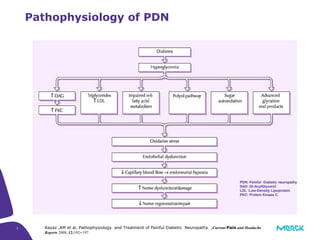
PDN: Painful Diabetic neuropathy
DAG :Di-AcylGlycerol
LDL :Low-Density Lipoprotein
PKC: Protein Kinase C.
Rayaz .AM et al, Pathophysiology and Treatment of Painful Diabetic Neuropathy ,Current Pain and Headache
Reports 2008, 12:192–197
3
Pathophysiology of PDN
4
1
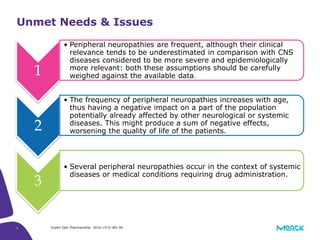
• Peripheral neuropathies are frequent, although their clinical
relevance tends to be underestimated in comparison with CNS
diseases considered to be more severe and epidemiologically
more relevant: both these assumptions should be carefully
weighed against the available data.
2
• The frequency of peripheral neuropathies increases with age,
thus having a negative impact on a part of the population
potentially already affected by other neurological or systemic
diseases. This might produce a sum of negative effects,
worsening the quality of life of the patients.
3
• Several peripheral neuropathies occur in the context of systemic
diseases or medical conditions requiring drug administration.
Unmet Needs & Issues
Expert Opin Pharmacother. 2016;17(3):381-94.
5
4
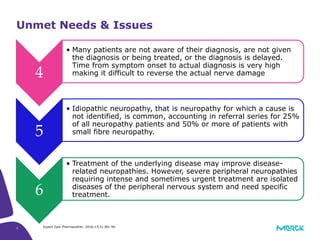
• Many patients are not aware of their diagnosis, are not given
the diagnosis or being treated, or the diagnosis is delayed.
Time from symptom onset to actual diagnosis is very high
making it difficult to reverse the actual nerve damage
5
• Idiopathic neuropathy, that is neuropathy for which a cause is
not identified, is common, accounting in referral series for 25%
of all neuropathy patients and 50% or more of patients with
small fibre neuropathy.
6
• Treatment of the underlying disease may improve disease-
related neuropathies. However, severe peripheral neuropathies
requiring intense and sometimes urgent treatment are isolated
diseases of the peripheral nervous system and need specific
treatment.
Unmet Needs & Issues
Expert Opin Pharmacother. 2016;17(3):381-94.
6
7
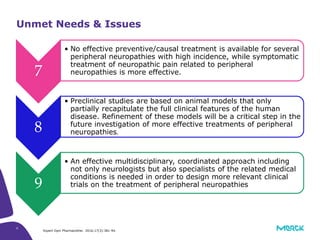
• No effective preventive/causal treatment is available for several
peripheral neuropathies with high incidence, while symptomatic
treatment of neuropathic pain related to peripheral
neuropathies is more effective.
8
• Preclinical studies are based on animal models that only
partially recapitulate the full clinical features of the human
disease. Refinement of these models will be a critical step in the
future investigation of more effective treatments of peripheral
neuropathies.
9
• An effective multidisciplinary, coordinated approach including
not only neurologists but also specialists of the related medical
conditions is needed in order to design more relevant clinical
trials on the treatment of peripheral neuropathies
Unmet Needs & Issues
Expert Opin Pharmacother. 2016;17(3):381-94.
7
Indian Scenario
Prevalence of DPN in India
Indian J Med Res. 2011;133:369-380
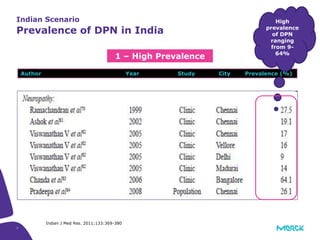
Author Year Study City Prevalence (%)
High
prevalence
of DPN
ranging
from 9-
64%
1 – High Prevalence
8
The cases had a mean age of 47.6 ± 10.2 years (59% males)
duration of symptoms of 5.9 ± 8.2 months prior to presentation.
Overall prevalence of DPN was 29.2% [95% CI 22.8-35.7].
PN among matched control was 10.7% (95% CI 3.5-17.8).
Prevalence of DPN showed an increasing trend with age.
J Postgrad Med. 2014 Jul-Sep;60(3):270-5.
1 – High Prevalence
Indian Scenario
Prevalence of DPN in India
9
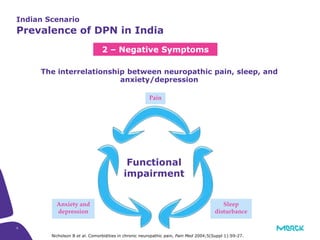
The interrelationship between neuropathic pain, sleep, and
anxiety/depression
Pain
Functional
impairment
Anxiety and
depression
Sleep
disturbance
Nicholson B et al. Comorbidities in chronic neuropathic pain, Pain Med 2004;5(Suppl 1):S9-27.
2 – Negative Symptoms
Indian Scenario
Prevalence of DPN in India
10
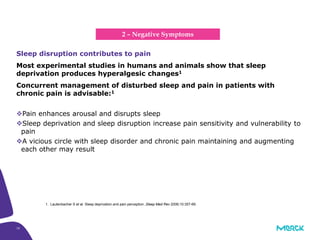
Most experimental studies in humans and animals show that sleep
deprivation produces hyperalgesic changes1
Concurrent management of disturbed sleep and pain in patients with
chronic pain is advisable:1
Pain enhances arousal and disrupts sleep
Sleep deprivation and sleep disruption increase pain sensitivity and vulnerability to
pain
A vicious circle with sleep disorder and chronic pain maintaining and augmenting
each other may result
Sleep disruption contributes to pain
1. Lautenbacher S et al. Sleep deprivation and pain perception ,Sleep Med Rev 2006;10:357-69.
2 – Negative Symptoms
11
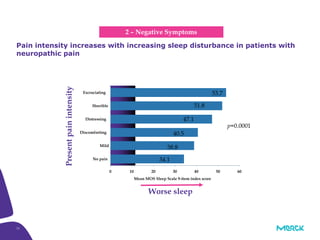
Pain intensity increases with increasing sleep disturbance in patients with
neuropathic pain
Presentpainintensity
p=0.0001
603 patients with neuropathic pain of multiple etiologies
MOS = Medical Outcomes Study
Rejas J et al. Psychometric properties of the MOS (Medical Outcomes Study) Sleep Scale in patients with neuropathic pain Euro J Pain 2007;11:329-40.
Worse sleep
0 10 20 30 40 50 60
No pain
Mild
Discomforting
Distressing
Horrible
Excruciating
Mean MOS Sleep Scale 9-item index score
53.7
51.8
47.1
40.5
38.8
34.1
2 – Negative Symptoms
12
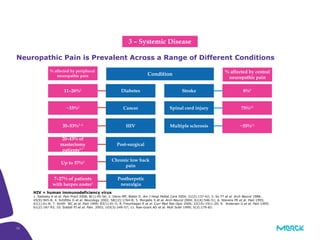
Neuropathic Pain is Prevalent Across a Range of Different Conditions
HIV = human immunodeficiency virus
1. Sadosky A et al. Pain Pract 2008; 8(1):45-56; 2. Davis MP, Walsh D. Am J Hosp Palliat Care 2004; 21(2):137-42; 3. So YT et al. Arch Neurol 1988;
45(9):945-8; 4. Schifitto G et al. Neurology 2002; 58(12):1764-8; 5. Morgello S et al. Arch Neurol 2004; 61(4):546-51; 6. Stevens PE et al. Pain 1995;
61(1):61-8; 7. Smith WC et al. Pain 1999; 83(1):91-5; 8. Freynhagen R et al. Curr Med Res Opin 2006; 22(10):1911-20; 9. Andersen G et al. Pain 1995;
61(2):187-93; 10. Siddall PJ et al. Pain. 2003; 103(3):249-57; 11. Rae-Grant AD et al. Mult Scler 1999; 5(3):179-83.
11–26%1
~33%2
35–53%3–5
20–43% of
mastectomy
patients6,7
Up to 37%8
Diabetes
Cancer
HIV
Post-surgical
Postherpetic
neuralgia
Chronic low back
pain
8%9
75%10
~55%11
Stroke
Spinal cord injury
Multiple sclerosis
7–27% of patients
with herpes zoster1
Condition
% affected by peripheral
neuropathic pain
% affected by central
neuropathic pain
3 – Systemic Disease
13
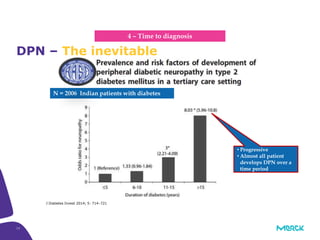
DPN – The inevitable
J Diabetes Invest 2014; 5: 714–721
• Progressive
• Almost all patient
develops DPN over a
time period
N = 2006 Indian patients with diabetes
4 – Time to diagnosis
14
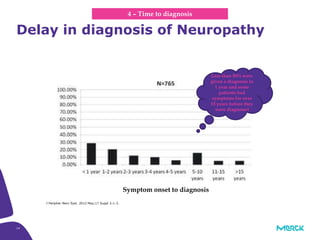
Delay in diagnosis of Neuropathy
Symptom onset to diagnosis
J Peripher Nerv Syst. 2012 May;17 Suppl 2:1-3.
4 – Time to diagnosis
Less than 30% were
given a diagnosis in
1 year and some
patients had
symptoms for over
15 years before they
were diagnosed
15
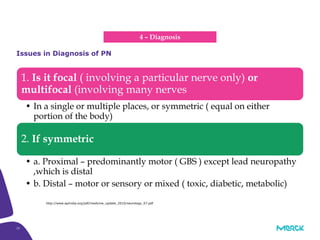
1. Is it focal ( involving a particular nerve only) or
multifocal (involving many nerves
• In a single or multiple places, or symmetric ( equal on either
portion of the body)
2. If symmetric
• a. Proximal – predominantly motor ( GBS ) except lead neuropathy
,which is distal
• b. Distal – motor or sensory or mixed ( toxic, diabetic, metabolic)
Issues in Diagnosis of PN
http://www.apiindia.org/pdf/medicine_update_2010/neurology_07.pdf
4 – Diagnosis
16
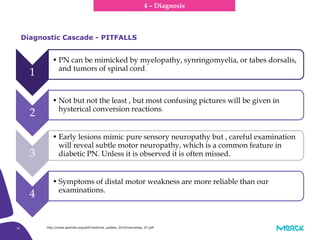
1
• PN can be mimicked by myelopathy, synringomyelia, or tabes dorsalis,
and tumors of spinal cord.
2
• Not but not the least , but most confusing pictures will be given in
hysterical conversion reactions.
3
• Early lesions mimic pure sensory neuropathy but , careful examination
will reveal subtle motor neuropathy, which is a common feature in
diabetic PN. Unless it is observed it is often missed.
4
• Symptoms of distal motor weakness are more reliable than our
examinations.
Diagnostic Cascade - PITFALLS
http://www.apiindia.org/pdf/medicine_update_2010/neurology_07.pdf
4 – Diagnosis
17
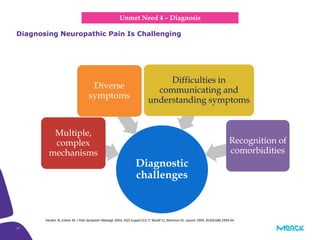
Diagnosing Neuropathic Pain Is Challenging
Harden N, Cohen M. J Pain Symptom Manage 2003; 25(5 Suppl):S12-7; Woolf CJ, Mannion RJ. Lancet 1999; 353(9168):1959-64.
Diagnostic
challenges
Multiple,
complex
mechanisms
Diverse
symptoms
Difficulties in
communicating and
understanding symptoms
Recognition of
comorbidities
Unmet Need 4 – Diagnosis
18
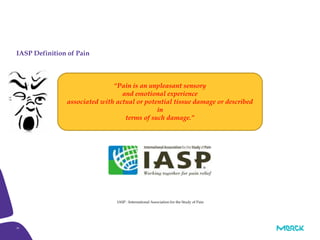
IASP Definition of Pain
IASP : International Association for the Study of Pain
“Pain is an unpleasant sensory
and emotional experience
associated with actual or potential tissue damage or described
in
terms of such damage.”
19
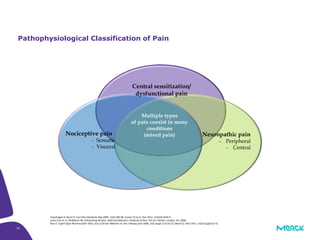
Pathophysiological Classification of Pain
Freynhagen R, Baron R. Curr Pain Headache Rep 2009; 13(3):185-90; Jensen TS et al. Pain 2011; 152(10):2204-5;
Julius D et al. In: McMahon SB, Koltzenburg M (eds). Wall and Melzack’s Textbook of Pain. 5th ed. Elsevier; London, UK: 2006;
Ross E. Expert Opin Pharmacother 2001; 2(1):1529-30; Webster LR. Am J Manag Care 2008; 14(5 Suppl 1):S116-22; Woolf CJ. Pain 2011; 152(3 Suppl):S2-15.
Multiple types
of pain coexist in many
conditions
(mixed pain)Nociceptive pain
- Somatic
- Visceral
Neuropathic pain
- Peripheral
- Central
Central sensitization/
dysfunctional pain
20
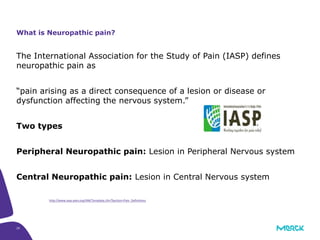
The International Association for the Study of Pain (IASP) defines
neuropathic pain as
“pain arising as a direct consequence of a lesion or disease or
dysfunction affecting the nervous system.”
Two types
Peripheral Neuropathic pain: Lesion in Peripheral Nervous system
Central Neuropathic pain: Lesion in Central Nervous system
What is Neuropathic pain?
http://www.iasp-pain.org/AM/Template.cfm?Section=Pain_Definitions
21
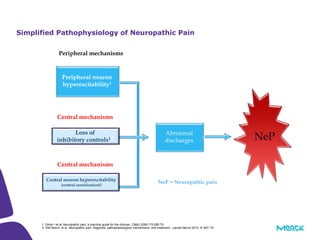
Simplified Pathophysiology of Neuropathic Pain
1. Gilron I et al. Neuropathic pain: a practical guide for the clinician, CMAJ 2006;175:265-75.
2- Ralf Baron, et al, Neuropathic pain: diagnosis, pathophysiological mechanisms, and treatment.. Lancet Neurol 2010; 9: 807–19
NeP
Peripheral mechanisms
Abnormal
discharges
Central mechanisms
Peripheral neuron
hyperexcitability1
Loss of
inhibitory controls1,2
Central mechanisms
Central neuron hyperexcitability
(central sensitization)1 NeP = Neuropathic pain
22
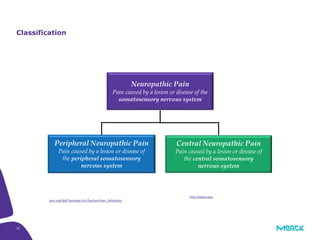
Classification
Neuropathic Pain
Pain caused by a lesion or disease of the
somatosensory nervous system
Peripheral Neuropathic Pain
Pain caused by a lesion or disease of
the peripheral somatosensory
nervous system
Central Neuropathic Pain
Pain caused by a lesion or disease of
the central somatosensory
nervous system
International Association for the Study of Pain. IASP Taxonomy, Changes in the 2011 List. Available at: http://www.iasp-
pain.org/AM/Template.cfm?Section=Pain_Definitions
23
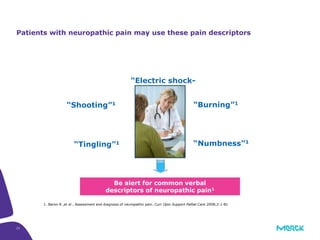
Patients with neuropathic pain may use these pain descriptors
“Numbness”1
“Shooting”1 “Burning”1
“Electric shock-
like”1
“Tingling”1
1. Baron R ,et al , Assessment and diagnosis of neuropathic pain. Curr Opin Support Palliat Care 2008;2:1-81
Be alert for common verbal
descriptors of neuropathic pain1
24
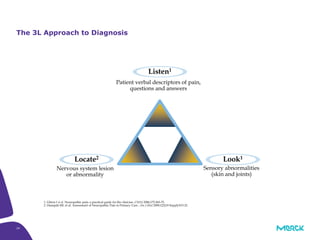
The 3L Approach to Diagnosis
Patient verbal descriptors of pain,
questions and answers
Nervous system lesion
or abnormality
Sensory abnormalities
(skin and joints)
Listen1
Look1Locate2
1. Gilron I et al. Neuropathic pain: a practical guide for the clinician ,CMAJ 2006;175:265-75.
2. Haanpää ML et al. Assessment of Neuropathic Pain in Primary Care , Am J Med 2009;122(10 Suppl):S13-21.
25
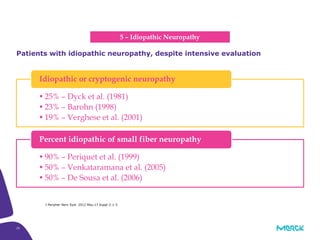
•25% – Dyck et al. (1981)
•23% – Barohn (1998)
•19% – Verghese et al. (2001)
Idiopathic or cryptogenic neuropathy
•90% – Periquet et al. (1999)
•50% – Venkataramana et al. (2005)
•50% – De Sousa et al. (2006)
Percent idiopathic of small fiber neuropathy
Patients with idiopathic neuropathy, despite intensive evaluation
J Peripher Nerv Syst. 2012 May;17 Suppl 2:1-3.
5 – Idiopathic Neuropathy
26
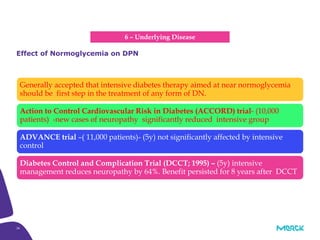
Generally accepted that intensive diabetes therapy aimed at near normoglycemia
should be first step in the treatment of any form of DN.
Action to Control Cardiovascular Risk in Diabetes (ACCORD) trial- (10,000
patients) -new cases of neuropathy significantly reduced intensive group
ADVANCE trial –( 11,000 patients)- (5y) not significantly affected by intensive
control
Diabetes Control and Complication Trial (DCCT; 1995) – (5y) intensive
management reduces neuropathy by 64%. Benefit persisted for 8 years after DCCT
Effect of Normoglycemia on DPN
6 – Underlying Disease
27
Parameters Significance
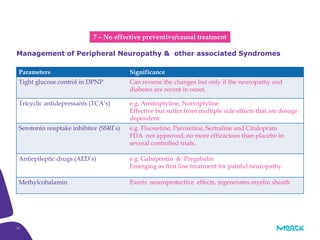
Tight glucose control in DPNP Can reverse the changes but only if the neuropathy and
diabetes are recent in onset.
Tricyclic antidepressants (TCA’s) e.g. Amitriptyline, Nortriptyline
Effective but suffer from multiple side effects that are dosage
dependent
Serotonin reuptake inhibitor (SSRI’s) e.g. Fluoxetine, Paroxetine, Sertraline and Citalopram
FDA not approved, no more efficacious than placebo in
several controlled trials.
Antiepileptic drugs (AED’s) e.g. Gabapentin & Pregabalin
Emerging as first line treatment for painful neuropathy.
Methylcobalamin Exerts neuroprotective effects, regenerates myelin sheath
Management of Peripheral Neuropathy & other associated Syndromes
7 – No effective preventive/causal treatment
28
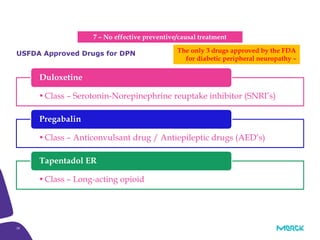
•Class – Serotonin-Norepinephrine reuptake inhibitor (SNRI’s)
Duloxetine
•Class – Anticonvulsant drug / Antiepileptic drugs (AED’s)
Pregabalin
•Class – Long-acting opioid
Tapentadol ER
USFDA Approved Drugs for DPN The only 3 drugs approved by the FDA
for diabetic peripheral neuropathy –
7 – No effective preventive/causal treatment
29
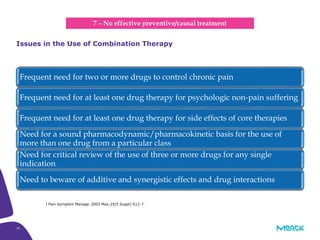
Frequent need for two or more drugs to control chronic pain
Frequent need for at least one drug therapy for psychologic non-pain suffering
Frequent need for at least one drug therapy for side effects of core therapies
Need for a sound pharmacodynamic/pharmacokinetic basis for the use of
more than one drug from a particular class
Need for critical review of the use of three or more drugs for any single
indication
Need to beware of additive and synergistic effects and drug interactions
Issues in the Use of Combination Therapy
7 – No effective preventive/causal treatment
J Pain Symptom Manage. 2003 May;25(5 Suppl):S12-7.
30
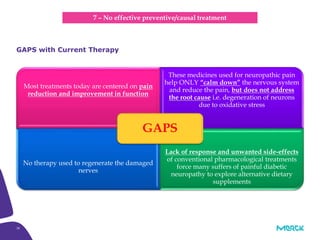
Most treatments today are centered on pain
reduction and improvement in function
These medicines used for neuropathic pain
help ONLY “calm down” the nervous system
and reduce the pain, but does not address
the root cause i.e. degeneration of neurons
due to oxidative stress
No therapy used to regenerate the damaged
nerves
Lack of response and unwanted side-effects
of conventional pharmacological treatments
force many suffers of painful diabetic
neuropathy to explore alternative dietary
supplements
GAPS
GAPS with Current Therapy
7 – No effective preventive/causal treatment
31
Despite peripheral neuropathies being common diseases, in most cases only symptomatic
agents are approved for their treatment
In case of rare neuropathies, new expensive drugs have been approved on the basis of rather
weak although positive results
One of the main reasons for this largely unsatisfactory situation is the incomplete knowledge
of the pathogenic mechanisms leading to peripheral nerve damage, which prevents rationale-
based preclinical studies and effective translation into the clinical practice
Need for Better Pre-Clinical Models
8 – Animal Models
Expert Opin Pharmacother. 2016;17(3):381-94.
32
Under this perspective, refinement of the available preclinical models is a critical step
Diabetic neuropathy stands as a clear example, since none of the available models (e.g. acute
streptozotocin-induced, spontaneous occurring in fatty animals, genetically determined diabetes) is really
able to recapitulate the pathologic, neurophysiologic, and clinical features of the human disease.
Similar, inconsistencies exists in CIPN animal modelling, with highly different results obtained in short-
term, high dose studies (where neuropathic pain is a common feature) versus longer studies using lower
doses that more closely resemble the clinical use of anticancer chemotherapy drugs.
Inflammatory neuropathies have been reproduced in animals without a definite demonstration of more
effective mimicking of the human disease using pure or complex antigens.
Need for Better Pre-Clinical Models
8 – Animal Models
Expert Opin Pharmacother. 2016;17(3):381-94.
33
Recognition of these limitations
will improve preclinical research
in the future and it is likely that
effective treatments will also be
discovered for the peripheral
neuropathies, still ‘orphans’ at
this moment.
Need for Better Pre-Clinical Models
8 – Animal Models
Expert Opin Pharmacother. 2016;17(3):381-94.
34
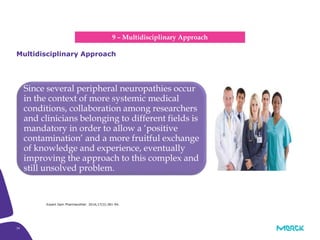
Since several peripheral neuropathies occur
in the context of more systemic medical
conditions, collaboration among researchers
and clinicians belonging to different fields is
mandatory in order to allow a ‘positive
contamination’ and a more fruitful exchange
of knowledge and experience, eventually
improving the approach to this complex and
still unsolved problem.
Multidisciplinary Approach
9 – Multidisciplinary Approach
Expert Opin Pharmacother. 2016;17(3):381-94.
SOLUTIONTO CURRENTUNMETNEEDS
35
36
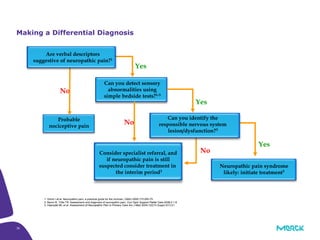
Making a Differential Diagnosis
1. Gilron I et al. Neuropathic pain: a practical guide for the clinician, CMAJ 2006;175:265-75.
2. Baron R, Tölle TR. Assessment and diagnosis of neuropathic pain, Curr Opin Support Palliat Care 2008;2:1-8.
3. Haanpää ML et al. Assessment of Neuropathic Pain in Primary Care Am J Med 2009;122(10 Suppl):S13-21.
Yes
No
Probable
nociceptive pain
Can you detect sensory
abnormalities using
simple bedside tests?1-3
Are verbal descriptors
suggestive of neuropathic pain?1
Yes
No
Neuropathic pain syndrome
likely: initiate treatment3
Yes
No
Can you identify the
responsible nervous system
lesion/dysfunction?3
Consider specialist referral, and
if neuropathic pain is still
suspected consider treatment in
the interim period3
37
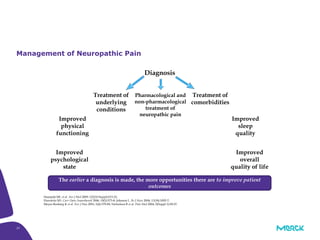
Management of Neuropathic Pain
Treatment of
underlying
conditions
Diagnosis
Improved
sleep
quality
Improved
overall
quality of life
Improved
physical
functioning
Improved
psychological
state
Reduced
pain
Haanpää ML et al. Am J Med 2009; 122(10 Suppl):S13-21;
Horowitz SH. Curr Opin Anaesthesiol 2006; 19(5):573-8; Johnson L. Br J Nurs 2004; 13(18):1092-7;
Meyer-Rosberg K et al. Eur J Pain 2001; 5(4):379-89; Nicholson B et al. Pain Med 2004; 5(Suppl 1):S9-27.
The earlier a diagnosis is made, the more opportunities there are to improve patient
outcomes
Pharmacological and
non-pharmacological
treatment of
neuropathic pain
Treatment of
comorbidities
38
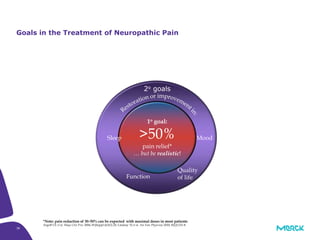
2o goals
Goals in the Treatment of Neuropathic Pain
*Note: pain reduction of 30–50% can be expected with maximal doses in most patients
Argoff CE et al. Mayo Clin Proc 2006; 81(Suppl 4):S12-25; Lindsay TJ et al. Am Fam Physician 2010; 82(2):151-8.
1o goal:
>50%
pain relief*
… but be realistic!
Sleep Mood
Function
Quality
of life
THANKS
drsudhirkumar@yahoo.com
COMMENTS/QUERIES?

Unmet needs in Peripheral Neuropathy

  • 1.
    APOLLO HOSPITALS, JUBILEEHILLS, HYDERABAD DR SUDHIR KUMAR MD DM CONSULTANT NEUROLOGIST WHATARE THE CHALLENGESIN INDIA WHENIT COMESTO “NERVECARE”? 1
  • 2.
    MAJOR UNMET NEEDSAND ISSUES IN PERIPHERAL NEUROPATHY 2
  • 3.
    PDN: Painful Diabeticneuropathy DAG :Di-AcylGlycerol LDL :Low-Density Lipoprotein PKC: Protein Kinase C. Rayaz .AM et al, Pathophysiology and Treatment of Painful Diabetic Neuropathy ,Current Pain and Headache Reports 2008, 12:192–197 3 Pathophysiology of PDN
  • 4.
    4 1 • Peripheral neuropathiesare frequent, although their clinical relevance tends to be underestimated in comparison with CNS diseases considered to be more severe and epidemiologically more relevant: both these assumptions should be carefully weighed against the available data. 2 • The frequency of peripheral neuropathies increases with age, thus having a negative impact on a part of the population potentially already affected by other neurological or systemic diseases. This might produce a sum of negative effects, worsening the quality of life of the patients. 3 • Several peripheral neuropathies occur in the context of systemic diseases or medical conditions requiring drug administration. Unmet Needs & Issues Expert Opin Pharmacother. 2016;17(3):381-94.
  • 5.
    5 4 • Many patientsare not aware of their diagnosis, are not given the diagnosis or being treated, or the diagnosis is delayed. Time from symptom onset to actual diagnosis is very high making it difficult to reverse the actual nerve damage 5 • Idiopathic neuropathy, that is neuropathy for which a cause is not identified, is common, accounting in referral series for 25% of all neuropathy patients and 50% or more of patients with small fibre neuropathy. 6 • Treatment of the underlying disease may improve disease- related neuropathies. However, severe peripheral neuropathies requiring intense and sometimes urgent treatment are isolated diseases of the peripheral nervous system and need specific treatment. Unmet Needs & Issues Expert Opin Pharmacother. 2016;17(3):381-94.
  • 6.
    6 7 • No effectivepreventive/causal treatment is available for several peripheral neuropathies with high incidence, while symptomatic treatment of neuropathic pain related to peripheral neuropathies is more effective. 8 • Preclinical studies are based on animal models that only partially recapitulate the full clinical features of the human disease. Refinement of these models will be a critical step in the future investigation of more effective treatments of peripheral neuropathies. 9 • An effective multidisciplinary, coordinated approach including not only neurologists but also specialists of the related medical conditions is needed in order to design more relevant clinical trials on the treatment of peripheral neuropathies Unmet Needs & Issues Expert Opin Pharmacother. 2016;17(3):381-94.
  • 7.
    7 Indian Scenario Prevalence ofDPN in India Indian J Med Res. 2011;133:369-380 Author Year Study City Prevalence (%) High prevalence of DPN ranging from 9- 64% 1 – High Prevalence
  • 8.
    8 The cases hada mean age of 47.6 ± 10.2 years (59% males) duration of symptoms of 5.9 ± 8.2 months prior to presentation. Overall prevalence of DPN was 29.2% [95% CI 22.8-35.7]. PN among matched control was 10.7% (95% CI 3.5-17.8). Prevalence of DPN showed an increasing trend with age. J Postgrad Med. 2014 Jul-Sep;60(3):270-5. 1 – High Prevalence Indian Scenario Prevalence of DPN in India
  • 9.
    9 The interrelationship betweenneuropathic pain, sleep, and anxiety/depression Pain Functional impairment Anxiety and depression Sleep disturbance Nicholson B et al. Comorbidities in chronic neuropathic pain, Pain Med 2004;5(Suppl 1):S9-27. 2 – Negative Symptoms Indian Scenario Prevalence of DPN in India
  • 10.
    10 Most experimental studiesin humans and animals show that sleep deprivation produces hyperalgesic changes1 Concurrent management of disturbed sleep and pain in patients with chronic pain is advisable:1 Pain enhances arousal and disrupts sleep Sleep deprivation and sleep disruption increase pain sensitivity and vulnerability to pain A vicious circle with sleep disorder and chronic pain maintaining and augmenting each other may result Sleep disruption contributes to pain 1. Lautenbacher S et al. Sleep deprivation and pain perception ,Sleep Med Rev 2006;10:357-69. 2 – Negative Symptoms
  • 11.
    11 Pain intensity increaseswith increasing sleep disturbance in patients with neuropathic pain Presentpainintensity p=0.0001 603 patients with neuropathic pain of multiple etiologies MOS = Medical Outcomes Study Rejas J et al. Psychometric properties of the MOS (Medical Outcomes Study) Sleep Scale in patients with neuropathic pain Euro J Pain 2007;11:329-40. Worse sleep 0 10 20 30 40 50 60 No pain Mild Discomforting Distressing Horrible Excruciating Mean MOS Sleep Scale 9-item index score 53.7 51.8 47.1 40.5 38.8 34.1 2 – Negative Symptoms
  • 12.
    12 Neuropathic Pain isPrevalent Across a Range of Different Conditions HIV = human immunodeficiency virus 1. Sadosky A et al. Pain Pract 2008; 8(1):45-56; 2. Davis MP, Walsh D. Am J Hosp Palliat Care 2004; 21(2):137-42; 3. So YT et al. Arch Neurol 1988; 45(9):945-8; 4. Schifitto G et al. Neurology 2002; 58(12):1764-8; 5. Morgello S et al. Arch Neurol 2004; 61(4):546-51; 6. Stevens PE et al. Pain 1995; 61(1):61-8; 7. Smith WC et al. Pain 1999; 83(1):91-5; 8. Freynhagen R et al. Curr Med Res Opin 2006; 22(10):1911-20; 9. Andersen G et al. Pain 1995; 61(2):187-93; 10. Siddall PJ et al. Pain. 2003; 103(3):249-57; 11. Rae-Grant AD et al. Mult Scler 1999; 5(3):179-83. 11–26%1 ~33%2 35–53%3–5 20–43% of mastectomy patients6,7 Up to 37%8 Diabetes Cancer HIV Post-surgical Postherpetic neuralgia Chronic low back pain 8%9 75%10 ~55%11 Stroke Spinal cord injury Multiple sclerosis 7–27% of patients with herpes zoster1 Condition % affected by peripheral neuropathic pain % affected by central neuropathic pain 3 – Systemic Disease
  • 13.
    13 DPN – Theinevitable J Diabetes Invest 2014; 5: 714–721 • Progressive • Almost all patient develops DPN over a time period N = 2006 Indian patients with diabetes 4 – Time to diagnosis
  • 14.
    14 Delay in diagnosisof Neuropathy Symptom onset to diagnosis J Peripher Nerv Syst. 2012 May;17 Suppl 2:1-3. 4 – Time to diagnosis Less than 30% were given a diagnosis in 1 year and some patients had symptoms for over 15 years before they were diagnosed
  • 15.
    15 1. Is itfocal ( involving a particular nerve only) or multifocal (involving many nerves • In a single or multiple places, or symmetric ( equal on either portion of the body) 2. If symmetric • a. Proximal – predominantly motor ( GBS ) except lead neuropathy ,which is distal • b. Distal – motor or sensory or mixed ( toxic, diabetic, metabolic) Issues in Diagnosis of PN http://www.apiindia.org/pdf/medicine_update_2010/neurology_07.pdf 4 – Diagnosis
  • 16.
    16 1 • PN canbe mimicked by myelopathy, synringomyelia, or tabes dorsalis, and tumors of spinal cord. 2 • Not but not the least , but most confusing pictures will be given in hysterical conversion reactions. 3 • Early lesions mimic pure sensory neuropathy but , careful examination will reveal subtle motor neuropathy, which is a common feature in diabetic PN. Unless it is observed it is often missed. 4 • Symptoms of distal motor weakness are more reliable than our examinations. Diagnostic Cascade - PITFALLS http://www.apiindia.org/pdf/medicine_update_2010/neurology_07.pdf 4 – Diagnosis
  • 17.
    17 Diagnosing Neuropathic PainIs Challenging Harden N, Cohen M. J Pain Symptom Manage 2003; 25(5 Suppl):S12-7; Woolf CJ, Mannion RJ. Lancet 1999; 353(9168):1959-64. Diagnostic challenges Multiple, complex mechanisms Diverse symptoms Difficulties in communicating and understanding symptoms Recognition of comorbidities Unmet Need 4 – Diagnosis
  • 18.
    18 IASP Definition ofPain IASP : International Association for the Study of Pain “Pain is an unpleasant sensory and emotional experience associated with actual or potential tissue damage or described in terms of such damage.”
  • 19.
    19 Pathophysiological Classification ofPain Freynhagen R, Baron R. Curr Pain Headache Rep 2009; 13(3):185-90; Jensen TS et al. Pain 2011; 152(10):2204-5; Julius D et al. In: McMahon SB, Koltzenburg M (eds). Wall and Melzack’s Textbook of Pain. 5th ed. Elsevier; London, UK: 2006; Ross E. Expert Opin Pharmacother 2001; 2(1):1529-30; Webster LR. Am J Manag Care 2008; 14(5 Suppl 1):S116-22; Woolf CJ. Pain 2011; 152(3 Suppl):S2-15. Multiple types of pain coexist in many conditions (mixed pain)Nociceptive pain - Somatic - Visceral Neuropathic pain - Peripheral - Central Central sensitization/ dysfunctional pain
  • 20.
    20 The International Associationfor the Study of Pain (IASP) defines neuropathic pain as “pain arising as a direct consequence of a lesion or disease or dysfunction affecting the nervous system.” Two types Peripheral Neuropathic pain: Lesion in Peripheral Nervous system Central Neuropathic pain: Lesion in Central Nervous system What is Neuropathic pain? http://www.iasp-pain.org/AM/Template.cfm?Section=Pain_Definitions
  • 21.
    21 Simplified Pathophysiology ofNeuropathic Pain 1. Gilron I et al. Neuropathic pain: a practical guide for the clinician, CMAJ 2006;175:265-75. 2- Ralf Baron, et al, Neuropathic pain: diagnosis, pathophysiological mechanisms, and treatment.. Lancet Neurol 2010; 9: 807–19 NeP Peripheral mechanisms Abnormal discharges Central mechanisms Peripheral neuron hyperexcitability1 Loss of inhibitory controls1,2 Central mechanisms Central neuron hyperexcitability (central sensitization)1 NeP = Neuropathic pain
  • 22.
    22 Classification Neuropathic Pain Pain causedby a lesion or disease of the somatosensory nervous system Peripheral Neuropathic Pain Pain caused by a lesion or disease of the peripheral somatosensory nervous system Central Neuropathic Pain Pain caused by a lesion or disease of the central somatosensory nervous system International Association for the Study of Pain. IASP Taxonomy, Changes in the 2011 List. Available at: http://www.iasp- pain.org/AM/Template.cfm?Section=Pain_Definitions
  • 23.
    23 Patients with neuropathicpain may use these pain descriptors “Numbness”1 “Shooting”1 “Burning”1 “Electric shock- like”1 “Tingling”1 1. Baron R ,et al , Assessment and diagnosis of neuropathic pain. Curr Opin Support Palliat Care 2008;2:1-81 Be alert for common verbal descriptors of neuropathic pain1
  • 24.
    24 The 3L Approachto Diagnosis Patient verbal descriptors of pain, questions and answers Nervous system lesion or abnormality Sensory abnormalities (skin and joints) Listen1 Look1Locate2 1. Gilron I et al. Neuropathic pain: a practical guide for the clinician ,CMAJ 2006;175:265-75. 2. Haanpää ML et al. Assessment of Neuropathic Pain in Primary Care , Am J Med 2009;122(10 Suppl):S13-21.
  • 25.
    25 •25% – Dycket al. (1981) •23% – Barohn (1998) •19% – Verghese et al. (2001) Idiopathic or cryptogenic neuropathy •90% – Periquet et al. (1999) •50% – Venkataramana et al. (2005) •50% – De Sousa et al. (2006) Percent idiopathic of small fiber neuropathy Patients with idiopathic neuropathy, despite intensive evaluation J Peripher Nerv Syst. 2012 May;17 Suppl 2:1-3. 5 – Idiopathic Neuropathy
  • 26.
    26 Generally accepted thatintensive diabetes therapy aimed at near normoglycemia should be first step in the treatment of any form of DN. Action to Control Cardiovascular Risk in Diabetes (ACCORD) trial- (10,000 patients) -new cases of neuropathy significantly reduced intensive group ADVANCE trial –( 11,000 patients)- (5y) not significantly affected by intensive control Diabetes Control and Complication Trial (DCCT; 1995) – (5y) intensive management reduces neuropathy by 64%. Benefit persisted for 8 years after DCCT Effect of Normoglycemia on DPN 6 – Underlying Disease
  • 27.
    27 Parameters Significance Tight glucosecontrol in DPNP Can reverse the changes but only if the neuropathy and diabetes are recent in onset. Tricyclic antidepressants (TCA’s) e.g. Amitriptyline, Nortriptyline Effective but suffer from multiple side effects that are dosage dependent Serotonin reuptake inhibitor (SSRI’s) e.g. Fluoxetine, Paroxetine, Sertraline and Citalopram FDA not approved, no more efficacious than placebo in several controlled trials. Antiepileptic drugs (AED’s) e.g. Gabapentin & Pregabalin Emerging as first line treatment for painful neuropathy. Methylcobalamin Exerts neuroprotective effects, regenerates myelin sheath Management of Peripheral Neuropathy & other associated Syndromes 7 – No effective preventive/causal treatment
  • 28.
    28 •Class – Serotonin-Norepinephrinereuptake inhibitor (SNRI’s) Duloxetine •Class – Anticonvulsant drug / Antiepileptic drugs (AED’s) Pregabalin •Class – Long-acting opioid Tapentadol ER USFDA Approved Drugs for DPN The only 3 drugs approved by the FDA for diabetic peripheral neuropathy – 7 – No effective preventive/causal treatment
  • 29.
    29 Frequent need fortwo or more drugs to control chronic pain Frequent need for at least one drug therapy for psychologic non-pain suffering Frequent need for at least one drug therapy for side effects of core therapies Need for a sound pharmacodynamic/pharmacokinetic basis for the use of more than one drug from a particular class Need for critical review of the use of three or more drugs for any single indication Need to beware of additive and synergistic effects and drug interactions Issues in the Use of Combination Therapy 7 – No effective preventive/causal treatment J Pain Symptom Manage. 2003 May;25(5 Suppl):S12-7.
  • 30.
    30 Most treatments todayare centered on pain reduction and improvement in function These medicines used for neuropathic pain help ONLY “calm down” the nervous system and reduce the pain, but does not address the root cause i.e. degeneration of neurons due to oxidative stress No therapy used to regenerate the damaged nerves Lack of response and unwanted side-effects of conventional pharmacological treatments force many suffers of painful diabetic neuropathy to explore alternative dietary supplements GAPS GAPS with Current Therapy 7 – No effective preventive/causal treatment
  • 31.
    31 Despite peripheral neuropathiesbeing common diseases, in most cases only symptomatic agents are approved for their treatment In case of rare neuropathies, new expensive drugs have been approved on the basis of rather weak although positive results One of the main reasons for this largely unsatisfactory situation is the incomplete knowledge of the pathogenic mechanisms leading to peripheral nerve damage, which prevents rationale- based preclinical studies and effective translation into the clinical practice Need for Better Pre-Clinical Models 8 – Animal Models Expert Opin Pharmacother. 2016;17(3):381-94.
  • 32.
    32 Under this perspective,refinement of the available preclinical models is a critical step Diabetic neuropathy stands as a clear example, since none of the available models (e.g. acute streptozotocin-induced, spontaneous occurring in fatty animals, genetically determined diabetes) is really able to recapitulate the pathologic, neurophysiologic, and clinical features of the human disease. Similar, inconsistencies exists in CIPN animal modelling, with highly different results obtained in short- term, high dose studies (where neuropathic pain is a common feature) versus longer studies using lower doses that more closely resemble the clinical use of anticancer chemotherapy drugs. Inflammatory neuropathies have been reproduced in animals without a definite demonstration of more effective mimicking of the human disease using pure or complex antigens. Need for Better Pre-Clinical Models 8 – Animal Models Expert Opin Pharmacother. 2016;17(3):381-94.
  • 33.
    33 Recognition of theselimitations will improve preclinical research in the future and it is likely that effective treatments will also be discovered for the peripheral neuropathies, still ‘orphans’ at this moment. Need for Better Pre-Clinical Models 8 – Animal Models Expert Opin Pharmacother. 2016;17(3):381-94.
  • 34.
    34 Since several peripheralneuropathies occur in the context of more systemic medical conditions, collaboration among researchers and clinicians belonging to different fields is mandatory in order to allow a ‘positive contamination’ and a more fruitful exchange of knowledge and experience, eventually improving the approach to this complex and still unsolved problem. Multidisciplinary Approach 9 – Multidisciplinary Approach Expert Opin Pharmacother. 2016;17(3):381-94.
  • 35.
  • 36.
    36 Making a DifferentialDiagnosis 1. Gilron I et al. Neuropathic pain: a practical guide for the clinician, CMAJ 2006;175:265-75. 2. Baron R, Tölle TR. Assessment and diagnosis of neuropathic pain, Curr Opin Support Palliat Care 2008;2:1-8. 3. Haanpää ML et al. Assessment of Neuropathic Pain in Primary Care Am J Med 2009;122(10 Suppl):S13-21. Yes No Probable nociceptive pain Can you detect sensory abnormalities using simple bedside tests?1-3 Are verbal descriptors suggestive of neuropathic pain?1 Yes No Neuropathic pain syndrome likely: initiate treatment3 Yes No Can you identify the responsible nervous system lesion/dysfunction?3 Consider specialist referral, and if neuropathic pain is still suspected consider treatment in the interim period3
  • 37.
    37 Management of NeuropathicPain Treatment of underlying conditions Diagnosis Improved sleep quality Improved overall quality of life Improved physical functioning Improved psychological state Reduced pain Haanpää ML et al. Am J Med 2009; 122(10 Suppl):S13-21; Horowitz SH. Curr Opin Anaesthesiol 2006; 19(5):573-8; Johnson L. Br J Nurs 2004; 13(18):1092-7; Meyer-Rosberg K et al. Eur J Pain 2001; 5(4):379-89; Nicholson B et al. Pain Med 2004; 5(Suppl 1):S9-27. The earlier a diagnosis is made, the more opportunities there are to improve patient outcomes Pharmacological and non-pharmacological treatment of neuropathic pain Treatment of comorbidities
  • 38.
    38 2o goals Goals inthe Treatment of Neuropathic Pain *Note: pain reduction of 30–50% can be expected with maximal doses in most patients Argoff CE et al. Mayo Clin Proc 2006; 81(Suppl 4):S12-25; Lindsay TJ et al. Am Fam Physician 2010; 82(2):151-8. 1o goal: >50% pain relief* … but be realistic! Sleep Mood Function Quality of life
  • 39.