Chemical Information
    CHEM281 – 2012
We are aiming at…


  Finding reliable (and recent) information sources
  Finding a paper by specific authors
  Finding review articles on particular subjects like
   biochemicals
  Finding information for compounds –
   formulas, structures, toxicity
  Finding out about enzymes – EC numbers
  Using Google Scholar
  Find out how often a paper has been cited
  Formatting a bibliography in the ACS citation style
You already know
(I expect)…


  Journals have articles relating to the journal topic
  A review article sums up other articles written on a
   subject
  Citing = listing what you have read as research or
   background
  References (in-text and at end) are used when the
   author is
     Quoting; or
     Referring to facts
Some may already know…


  APA-style referencing
  How to find papers
     Google Scholar
     Scopus
     Lecturers’ papers  department website
  How to locate chemical data
     Merck Index, etc.
But we need to know more
about…


  How to find reliable sources
     Articles
     References
     Review articles
     Chemical data, EC numbers etc.
  Citation counts
     How much has an article been cited?
  How to reference properly
     ACS citation style
Today we will look at…


  1. How scientists share information

  2. Finding chemical and/or enzyme data

  3. Structure drawing (briefly)

  4. Finding papers

  5. Referencing sources in ACS style
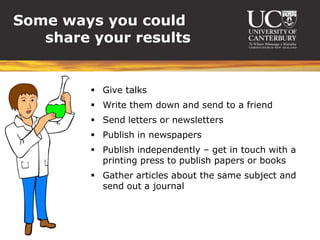
Some ways you could
   share your results


          Give talks
          Write them down and send to a friend
          Send letters or newsletters
          Publish in newspapers
          Publish independently – get in touch with a
           printing press to publish papers or books
          Gather articles about the same subject and
           send out a journal
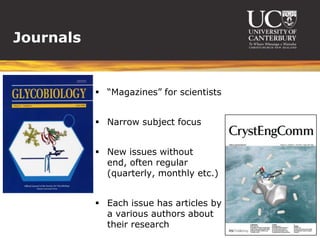
Journals


            “Magazines” for scientists


            Narrow subject focus


            New issues without
             end, often regular
             (quarterly, monthly etc.)


            Each issue has articles by
             a various authors about
             their research
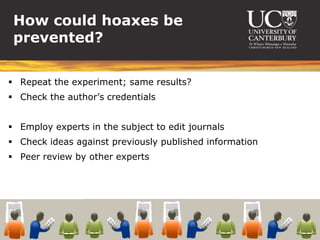
How could hoaxes be
 prevented?

 Repeat the experiment; same results?
 Check the author’s credentials


 Employ experts in the subject to edit journals
 Check ideas against previously published information
 Peer review by other experts
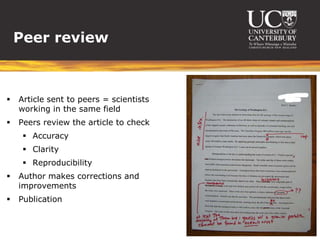
Peer review


   Article sent to peers = scientists
    working in the same field
   Peers review the article to check
      Accuracy
      Clarity
      Reproducibility
   Author makes corrections and
    improvements
   Publication
Balancing access…


          Put journals in a search engine
             Easy to find
          Big companies manage databases
             Articles from many journals all in one
              place
          Articles could be free to view…
… and profit


                Charge institutions
                Subscription fees or pay-per-article
                Free preview, pay for the full article
                Free to view, funded by:
                   advertising
                   research grants
                   donations
                   government
                   universities
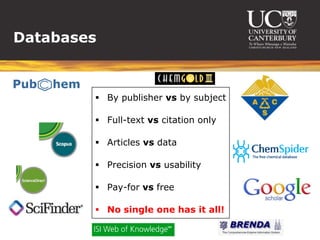
Databases


         By publisher vs by subject

         Full-text vs citation only

         Articles vs data

         Precision vs usability

         Pay-for vs free

         No single one has it all!
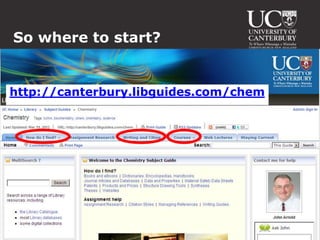
So where to start?


http://canterbury.libguides.com/chem
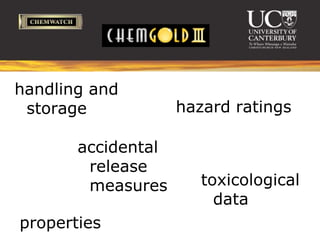
handling and
 storage            hazard ratings

       accidental
        release
        measures       toxicological
                         data
properties
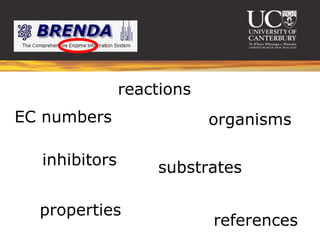
reactions
EC numbers                 organisms

  inhibitors       substrates

  properties
                           references
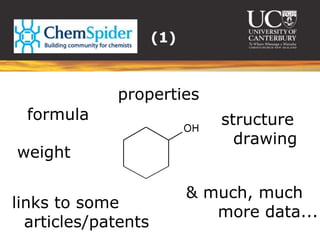
(1)


             properties
 formula                       structure
                                 drawing
weight

                           & much, much
links to some
                              more data...
  articles/patents
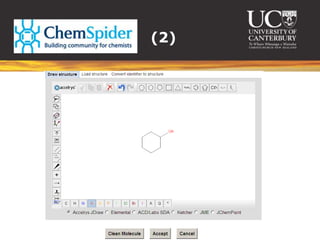
(2)
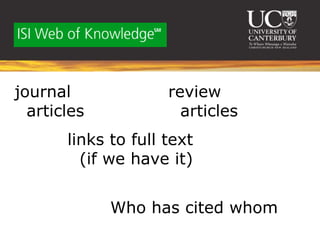
journal              review
  articles             articles
       links to full text
         (if we have it)


             Who has cited whom
How would you…
   cite an article?


  Authors
  Title of the paper
  Where it was published – Journal name
  Year published
  Volume
  Issue
  Page numbers
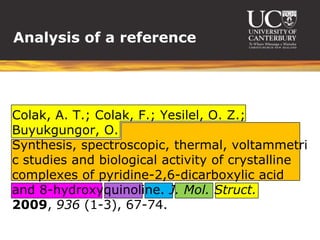
Analysis of a reference


Colak, A. T.; Colak, F.; Yesilel, O. Z.;
Buyukgungor, O.
Synthesis, spectroscopic, thermal, voltammetri
c studies and biological activity of crystalline
complexes of pyridine-2,6-dicarboxylic acid
and 8-hydroxyquinoline. J. Mol. Struct.
2009, 936 (1-3), 67-74.
Summing Up (1)


Chemistry Subject Guide  “How do I find?”
     Chemical data
     Journal articles
     Material Safety Data Sheets
     Citation guide (ACS)
Summing Up (1)


For reliable sources  search in databases that collect peer-reviewed
   journals
      SciFinder, Web of Science, Scopus, Google Scholar
   Specialist databases:
      BRENDA for enzymes and EC numbers
      ChemWatch for hazards and material safety data sheets (MSDS)
      ChemSpider/ChemSketch for structure, properties, drawing
       molecules
Read the Screen!
   Author field
   Refining document type to “Review” for review articles
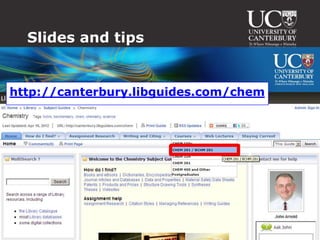
Slides and tips


http://canterbury.libguides.com/chem
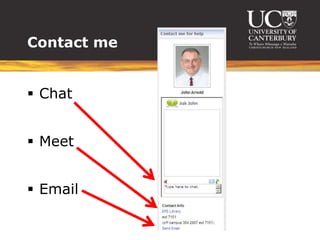
Contact me


 Chat


 Meet


 Email

CHEM281 2012

  • 1.
    Chemical Information CHEM281 – 2012
  • 2.
    We are aimingat…  Finding reliable (and recent) information sources  Finding a paper by specific authors  Finding review articles on particular subjects like biochemicals  Finding information for compounds – formulas, structures, toxicity  Finding out about enzymes – EC numbers  Using Google Scholar  Find out how often a paper has been cited  Formatting a bibliography in the ACS citation style
  • 3.
    You already know (Iexpect)…  Journals have articles relating to the journal topic  A review article sums up other articles written on a subject  Citing = listing what you have read as research or background  References (in-text and at end) are used when the author is  Quoting; or  Referring to facts
  • 4.
    Some may alreadyknow…  APA-style referencing  How to find papers  Google Scholar  Scopus  Lecturers’ papers  department website  How to locate chemical data  Merck Index, etc.
  • 5.
    But we needto know more about…  How to find reliable sources  Articles  References  Review articles  Chemical data, EC numbers etc.  Citation counts  How much has an article been cited?  How to reference properly  ACS citation style
  • 6.
    Today we willlook at… 1. How scientists share information 2. Finding chemical and/or enzyme data 3. Structure drawing (briefly) 4. Finding papers 5. Referencing sources in ACS style
  • 7.
    Some ways youcould share your results  Give talks  Write them down and send to a friend  Send letters or newsletters  Publish in newspapers  Publish independently – get in touch with a printing press to publish papers or books  Gather articles about the same subject and send out a journal
  • 8.
    Journals  “Magazines” for scientists  Narrow subject focus  New issues without end, often regular (quarterly, monthly etc.)  Each issue has articles by a various authors about their research
  • 9.
    How could hoaxesbe prevented?  Repeat the experiment; same results?  Check the author’s credentials  Employ experts in the subject to edit journals  Check ideas against previously published information  Peer review by other experts
  • 10.
    Peer review  Article sent to peers = scientists working in the same field  Peers review the article to check  Accuracy  Clarity  Reproducibility  Author makes corrections and improvements  Publication
  • 11.
    Balancing access…  Put journals in a search engine  Easy to find  Big companies manage databases  Articles from many journals all in one place  Articles could be free to view…
  • 12.
    … and profit  Charge institutions  Subscription fees or pay-per-article  Free preview, pay for the full article  Free to view, funded by:  advertising  research grants  donations  government  universities
  • 13.
    Databases  By publisher vs by subject  Full-text vs citation only  Articles vs data  Precision vs usability  Pay-for vs free  No single one has it all!
  • 14.
    So where tostart? http://canterbury.libguides.com/chem
  • 15.
    handling and storage hazard ratings accidental release measures toxicological data properties
  • 16.
    reactions EC numbers organisms inhibitors substrates properties references
  • 17.
    (1) properties formula structure drawing weight & much, much links to some more data... articles/patents
  • 18.
  • 19.
    journal review articles articles links to full text (if we have it) Who has cited whom
  • 20.
    How would you… cite an article?  Authors  Title of the paper  Where it was published – Journal name  Year published  Volume  Issue  Page numbers
  • 21.
    Analysis of areference Colak, A. T.; Colak, F.; Yesilel, O. Z.; Buyukgungor, O. Synthesis, spectroscopic, thermal, voltammetri c studies and biological activity of crystalline complexes of pyridine-2,6-dicarboxylic acid and 8-hydroxyquinoline. J. Mol. Struct. 2009, 936 (1-3), 67-74.
  • 22.
    Summing Up (1) ChemistrySubject Guide  “How do I find?”  Chemical data  Journal articles  Material Safety Data Sheets  Citation guide (ACS)
  • 23.
    Summing Up (1) Forreliable sources  search in databases that collect peer-reviewed journals  SciFinder, Web of Science, Scopus, Google Scholar  Specialist databases:  BRENDA for enzymes and EC numbers  ChemWatch for hazards and material safety data sheets (MSDS)  ChemSpider/ChemSketch for structure, properties, drawing molecules Read the Screen!  Author field  Refining document type to “Review” for review articles
  • 24.
  • 25.