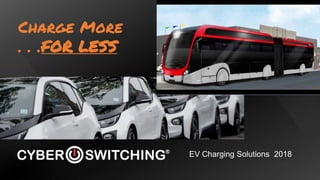

EV Charging Solutions 2018
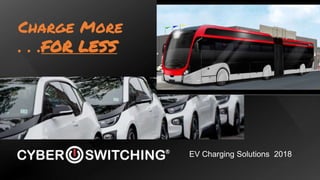
Charge More
. . .FOR LESS
Charge More
. . .FOR LESS
EV Charging Solutions 2018
● Formed 1994 / Privately Held
● Headquarters San Jose, California
● Satisfied clients include Cisco, Google, HP,
Flextronics, Adobe, US DoD, Broadcade,
Princeton University, Foxconn & more
Innovative Solutions for Building Infrastructure Power
Management, Electric Vehicle Charging, Power
Submetering & Intelligent Data Rack Power Control
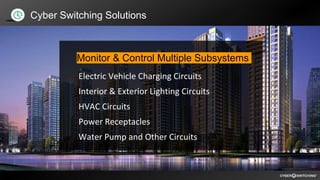
Electric Vehicle Charging Circuits
Interior & Exterior Lighting Circuits
HVAC Circuits
Power Receptacles
Water Pump and Other Circuits
Monitor & Control Multiple Subsystems
Cyber Switching Solutions
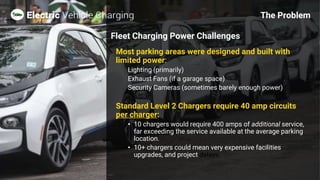
Most parking areas were designed and built with
limited power:
Lighting (primarily)
Exhaust Fans (if a garage space)
Security Cameras (sometimes barely enough power)
Standard Level 2 Chargers require 40 amp circuits
per charger:
• 10 chargers would require 400 amps of additional service,
far exceeding the service available at the average parking
location.
• 10+ chargers could mean very expensive facilities
upgrades, and project delays.
The Problem
Fleet Charging Power Challenges
Leverage: Charge up to 10 EVs on 1 Single Circuit
EV Charging Solution: Bundle Benefits
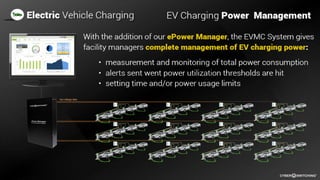
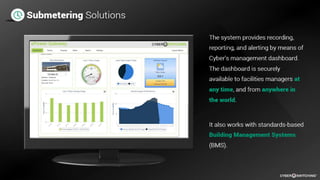
Real-Time: Manage EV Charging Infrastructure via Cloud
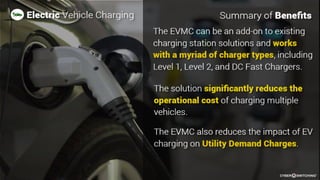
Compatible: Integrates with Leading Chargers (L1, L2, DC)
Lower Budget: Less Install Cost + Reduced Demand Charges
Submetering Modules + Hub + Wireless Ethernet Card
EV Charging Solution: Bundles Include
EVMC Series Motor Controller w/ Priority Charging
EV Charging & Energy Management Cloud Dashboard
Premounted in Secure NEMA 3R Outdoor Enclosure
Demand charges are an often overlooked, yet significant
portion of a company’s utility bill, and are based on the highest
utilization required during a given billing period.
Many utilities are moving their peak billing from afternoon (2-
6pm) to evening (6 to 10pm). This same time period will be
used to assess demand charges.
Fleet electric vehicles can have a pattern of arriving and
connecting for charge during the time period, creating a peak in
power demanded.
The EVMC can possibly reduce the impact of EV charging on
that demand assessment by as much as 75%.
Demand Charges and EVs
EV Charging Solutions 2018
Charge More
. . .FOR LESS
Greg Wible
562-883-0310
sales@socaldigital.us

Charge More...For Less with Cyber Switching EV Solutions

  • 1.
    EV Charging Solutions2018 Charge More . . .FOR LESS
  • 2.
    Charge More . ..FOR LESS EV Charging Solutions 2018
  • 3.
    ● Formed 1994/ Privately Held ● Headquarters San Jose, California ● Satisfied clients include Cisco, Google, HP, Flextronics, Adobe, US DoD, Broadcade, Princeton University, Foxconn & more Innovative Solutions for Building Infrastructure Power Management, Electric Vehicle Charging, Power Submetering & Intelligent Data Rack Power Control
  • 4.
    Electric Vehicle ChargingCircuits Interior & Exterior Lighting Circuits HVAC Circuits Power Receptacles Water Pump and Other Circuits Monitor & Control Multiple Subsystems Cyber Switching Solutions
  • 5.
    Most parking areaswere designed and built with limited power: Lighting (primarily) Exhaust Fans (if a garage space) Security Cameras (sometimes barely enough power) Standard Level 2 Chargers require 40 amp circuits per charger: • 10 chargers would require 400 amps of additional service, far exceeding the service available at the average parking location. • 10+ chargers could mean very expensive facilities upgrades, and project delays. The Problem Fleet Charging Power Challenges
  • 6.
    Leverage: Charge upto 10 EVs on 1 Single Circuit EV Charging Solution: Bundle Benefits Real-Time: Manage EV Charging Infrastructure via Cloud Compatible: Integrates with Leading Chargers (L1, L2, DC) Lower Budget: Less Install Cost + Reduced Demand Charges
  • 7.
    Submetering Modules +Hub + Wireless Ethernet Card EV Charging Solution: Bundles Include EVMC Series Motor Controller w/ Priority Charging EV Charging & Energy Management Cloud Dashboard Premounted in Secure NEMA 3R Outdoor Enclosure
  • 9.
    Demand charges arean often overlooked, yet significant portion of a company’s utility bill, and are based on the highest utilization required during a given billing period. Many utilities are moving their peak billing from afternoon (2- 6pm) to evening (6 to 10pm). This same time period will be used to assess demand charges. Fleet electric vehicles can have a pattern of arriving and connecting for charge during the time period, creating a peak in power demanded. The EVMC can possibly reduce the impact of EV charging on that demand assessment by as much as 75%. Demand Charges and EVs
  • 13.
    EV Charging Solutions2018 Charge More . . .FOR LESS
  • 14.