Importance of Classification
 Plants are numerous -necessary to classify for a systemic and scientific study.
 Vedas have classified the Dravya mainly on the basis of their nature, growth and development, properties,
uses etc.
 During period of Samhita and Nighantu, Acharyas classified Dravya under different heads like Karya-
karana, Chetana- Achetan etc., subsequently they were classified on the basis of their pharmacological
action and therapeutic uses.
 Charak had named the gropus as Mahakashaya
 In the classics of Ayurveda, pharmaco-therapeutic classification
of drugs is very scientific and elaborate.
 In the samhita several plants have been described and classified
under different heads and therapeutic utility of these plants have
also been described in detail.
 If one looks into the evolution of classification of the drugs, it
can be said that in order to identity and utilize the drugs, it
classified on the basis of origin, qualities, action in a particular
disease in all Ayurvedic classical texts.
 Charak had classified drugs on the basis of their
pharmacological actions.
 However, Charak had named the groups on the basis of their
actions.
Mahakashaya
 Charak in fourth chapter of Sutra sthan had described 50
Mahakashaya.
 Each Mahakashaya comprises 10 drugs. Acharya P.V. Sharma
inferred that 10 number is representative of 10 directions and
hence each Mahakashaya symbolizes that this classification is to
give directions to wise physician and more similar groups of drugs
can also be formed and used.
 Each group has 10 drugs, thus also known as Dashemani.
 The title of each Dashemani indicates the action on the body
and role of ten Dravya in that particular Vyadhi or Vyadhi
Lakshna
Classification of Dashemani- Kashaya
Varga
1. Kashaya Varga comprising Six Mahakashaya-
Jeevaniya, Bruhaniya, Lekhaniya, Bhedaniya, Sandhaniya, Dipaniya
Iya suffix denotes “Wholesomeness” - Hitakari
All these indicates some similar specific pharmacological actions on
Dhatus and Srotas.
2.Kashaya Varga comprising Four Mahakashaya- Balya,
Varnya, Kanthya, Hridya.
Ya suffix also denotes “Wholesomeness” Dividable two
broad divisions-
Balya- Varnya - Related to bodily notions
Kanthya- Hridya- Related to corporeal organs.
3.Kashaya Varga comprising Six Mahakashaya-
Triptighna, Arshoghna, Kushtaghna, Kandughna,
Krimighna, Vishaghna
Ghna suffix indicates remover of an acute condition. based
on their relation to trividha roga marga.
Abhyantara- Triptighna, Arshoghna
Bahya roga marga- Kandughna, Kushthghna
Madhyama – Krimighna, Vishaghna
4.Kashaya Varga comprising Four Mahakashaya-
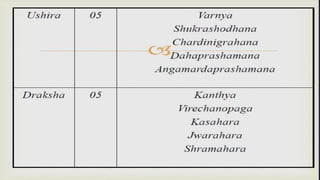
Stanyajanan, Stanyashodhana, Shukrajanan,
Shukrashodhana
Janana means- promotive, bringing in quantitative
change.
Shodhana means- Depurative causing qualitative
change.
5.Kashaya Varga comprising Seven Mahakashaya- Snehopaga,
Swedopaga, Vamanopaga, Virechanopaga, Asthapanopaga,
Anuvasanopaga, Shirovirechanopaga
Related to Panchakarma.
Upaga means Subsidiary – supportive enhance the action of
drugs used in Panchakarma.
First two are connected with Poorvakarma and promotes the
action of Snehana and Swedana Dravya.
Rest of the groups are connected with Pradhan Karma.
6.Kashaya varga comprising Three Mahakashaya-
Chhardinigrahan, Trishnanigrahana, Hiccanigrahan
Nigrahana means to control.
In disease like Chhardi, Hicca, Trishna where quick
response is very essential
Related with Udanvayu, when it vitiated it causes
paroxymal attacks of Chhardi, Hicca, Trusha.
7. Kashaya varga comprising Five Mahakashaya-
Purishasamgrahaniya, Purishavirajaniya,
Mutrasamgrahaniya, Mutravirajaniya, Mutravirechaniya
Related to mal of body.
Sangrahana means- to lessen
Virechaniya -purges or clarifies which expel the mala from
body and makes the body clean.
Virajaniya -to bring the normal color- which restore the
pigmentation to its natural condition.
8.Kashaya Varga comprising Five Mahakashaya-
Kasahara, Swasahara, Swayathuhar, Jwarahara, Shramahar
Group of general disease, in which the Sarvangaja and
Ekangja disease of the different Srotasa is included.
Hara being used to indicate Eradicator or total cure
9.Kashaya Varga comprising Five Mahakashaya-
Dahaprashamana, Shitaprashamana, Udardprashamana,
Angaprashamana, Shoolaprashamana
Prashamana has been used to indicate relief .
A closer observation indicates that all of them are only
symptoms as palliative measure these Mahakashaya are
incorporated.
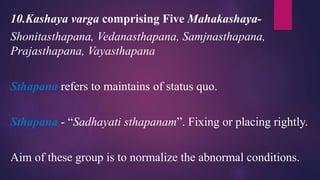
10.Kashaya varga comprising Five Mahakashaya-
Shonitasthapana, Vedanasthapana, Samjnasthapana,
Prajasthapana, Vayasthapana
Sthapana refers to maintains of status quo.
Sthapana - “Sadhayati sthapanam”. Fixing or placing rightly.
Aim of these group is to normalize the abnormal conditions.
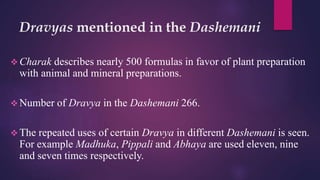
Dravyas mentioned in the Dashemani
 Charak describes nearly 500 formulas in favor of plant preparation
with animal and mineral preparations.
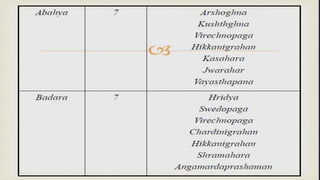
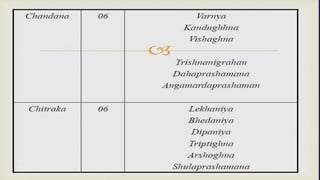
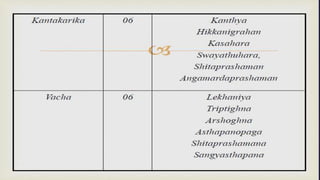
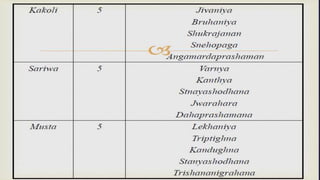
 Number of Dravya in the Dashemani 266.
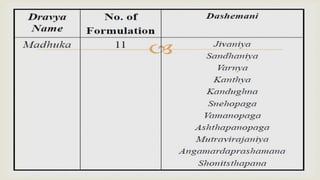
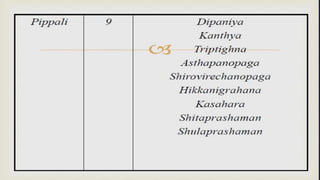
 The repeated uses of certain Dravya in different Dashemani is seen.
For example Madhuka, Pippali and Abhaya are used eleven, nine
and seven times respectively.
Salient features of Dashemani
 We can use this fifty Mahakashay as a single drug or we can make various combination in the form of
Churna, Kalka, Kashaya etc. so one can get various options for day to day practice and can use it efficiently
in simple manner.
 This classification of Dashemani is neither too exhaustive, nor too concise.
 It fulfills the need for the practice of dull ones and further advancement of knowledge of the scholars.

Charakokta MahaKashaya.pptx

  • 2.
    Importance of Classification Plants are numerous -necessary to classify for a systemic and scientific study.  Vedas have classified the Dravya mainly on the basis of their nature, growth and development, properties, uses etc.  During period of Samhita and Nighantu, Acharyas classified Dravya under different heads like Karya- karana, Chetana- Achetan etc., subsequently they were classified on the basis of their pharmacological action and therapeutic uses.  Charak had named the gropus as Mahakashaya
  • 3.
     In theclassics of Ayurveda, pharmaco-therapeutic classification of drugs is very scientific and elaborate.  In the samhita several plants have been described and classified under different heads and therapeutic utility of these plants have also been described in detail.
  • 4.
     If onelooks into the evolution of classification of the drugs, it can be said that in order to identity and utilize the drugs, it classified on the basis of origin, qualities, action in a particular disease in all Ayurvedic classical texts.  Charak had classified drugs on the basis of their pharmacological actions.  However, Charak had named the groups on the basis of their actions.
  • 5.
    Mahakashaya  Charak infourth chapter of Sutra sthan had described 50 Mahakashaya.  Each Mahakashaya comprises 10 drugs. Acharya P.V. Sharma inferred that 10 number is representative of 10 directions and hence each Mahakashaya symbolizes that this classification is to give directions to wise physician and more similar groups of drugs can also be formed and used.
  • 6.
     Each grouphas 10 drugs, thus also known as Dashemani.  The title of each Dashemani indicates the action on the body and role of ten Dravya in that particular Vyadhi or Vyadhi Lakshna
  • 7.
    Classification of Dashemani-Kashaya Varga 1. Kashaya Varga comprising Six Mahakashaya- Jeevaniya, Bruhaniya, Lekhaniya, Bhedaniya, Sandhaniya, Dipaniya Iya suffix denotes “Wholesomeness” - Hitakari All these indicates some similar specific pharmacological actions on Dhatus and Srotas.
  • 8.
    2.Kashaya Varga comprisingFour Mahakashaya- Balya, Varnya, Kanthya, Hridya. Ya suffix also denotes “Wholesomeness” Dividable two broad divisions- Balya- Varnya - Related to bodily notions Kanthya- Hridya- Related to corporeal organs.
  • 9.
    3.Kashaya Varga comprisingSix Mahakashaya- Triptighna, Arshoghna, Kushtaghna, Kandughna, Krimighna, Vishaghna Ghna suffix indicates remover of an acute condition. based on their relation to trividha roga marga. Abhyantara- Triptighna, Arshoghna Bahya roga marga- Kandughna, Kushthghna Madhyama – Krimighna, Vishaghna
  • 10.
    4.Kashaya Varga comprisingFour Mahakashaya- Stanyajanan, Stanyashodhana, Shukrajanan, Shukrashodhana Janana means- promotive, bringing in quantitative change. Shodhana means- Depurative causing qualitative change.
  • 11.
    5.Kashaya Varga comprisingSeven Mahakashaya- Snehopaga, Swedopaga, Vamanopaga, Virechanopaga, Asthapanopaga, Anuvasanopaga, Shirovirechanopaga Related to Panchakarma. Upaga means Subsidiary – supportive enhance the action of drugs used in Panchakarma. First two are connected with Poorvakarma and promotes the action of Snehana and Swedana Dravya. Rest of the groups are connected with Pradhan Karma.
  • 12.
    6.Kashaya varga comprisingThree Mahakashaya- Chhardinigrahan, Trishnanigrahana, Hiccanigrahan Nigrahana means to control. In disease like Chhardi, Hicca, Trishna where quick response is very essential Related with Udanvayu, when it vitiated it causes paroxymal attacks of Chhardi, Hicca, Trusha.
  • 13.
    7. Kashaya vargacomprising Five Mahakashaya- Purishasamgrahaniya, Purishavirajaniya, Mutrasamgrahaniya, Mutravirajaniya, Mutravirechaniya Related to mal of body. Sangrahana means- to lessen Virechaniya -purges or clarifies which expel the mala from body and makes the body clean. Virajaniya -to bring the normal color- which restore the pigmentation to its natural condition.
  • 14.
    8.Kashaya Varga comprisingFive Mahakashaya- Kasahara, Swasahara, Swayathuhar, Jwarahara, Shramahar Group of general disease, in which the Sarvangaja and Ekangja disease of the different Srotasa is included. Hara being used to indicate Eradicator or total cure
  • 15.
    9.Kashaya Varga comprisingFive Mahakashaya- Dahaprashamana, Shitaprashamana, Udardprashamana, Angaprashamana, Shoolaprashamana Prashamana has been used to indicate relief . A closer observation indicates that all of them are only symptoms as palliative measure these Mahakashaya are incorporated.
  • 16.
    10.Kashaya varga comprisingFive Mahakashaya- Shonitasthapana, Vedanasthapana, Samjnasthapana, Prajasthapana, Vayasthapana Sthapana refers to maintains of status quo. Sthapana - “Sadhayati sthapanam”. Fixing or placing rightly. Aim of these group is to normalize the abnormal conditions.
  • 17.
    Dravyas mentioned inthe Dashemani  Charak describes nearly 500 formulas in favor of plant preparation with animal and mineral preparations.  Number of Dravya in the Dashemani 266.  The repeated uses of certain Dravya in different Dashemani is seen. For example Madhuka, Pippali and Abhaya are used eleven, nine and seven times respectively.
  • 25.
    Salient features ofDashemani  We can use this fifty Mahakashay as a single drug or we can make various combination in the form of Churna, Kalka, Kashaya etc. so one can get various options for day to day practice and can use it efficiently in simple manner.  This classification of Dashemani is neither too exhaustive, nor too concise.  It fulfills the need for the practice of dull ones and further advancement of knowledge of the scholars.