CHARACTERIZATION
By: Alisha Kies, Amy Flageolle, Megan Fisher and Deborah Racicot
DEFINITION:
 The presentation of a fictional personage.
 There are two ways to do this; direct and indirect.
 Direct characterization occurs when a narrator directly tells us

what a character is like.
 Indirect characterization occurs when a character’s traits are
revealed implicitly through his or her
actions, speech, behavior, thoughts and actions.
DIRECT VS. INDIRECT
Examples of Direct Characters

Examples of Indirect Characters

 Twyla from Recitatif

 Roberta from Recitatif

 Penny and Primrose from

 Stella-Rondo, Mama, Papa

The Thing in the Forrest

Daddy, Uncle Rondo, and Shirley

 Sister from Why I live at the

T from Why I live at the P.O.

P.O.
Characters from Why I live at the P.O.
By Eudora Welty
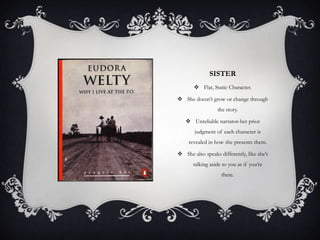
SISTER
 Flat, Static Character.
 She doesn’t grow or change through
the story.
 Unreliable narrator-her prior
judgment of each character is
revealed in how she presents them.
 She also speaks differently, like she’s
talking aside to you as if you’re
there.
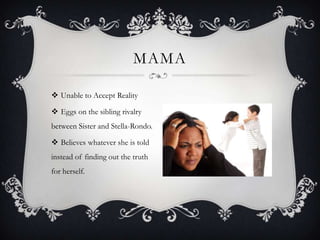
MAMA
 Unable to Accept Reality
 Eggs on the sibling rivalry
between Sister and Stella-Rondo.

 Believes whatever she is told
instead of finding out the truth
for herself.
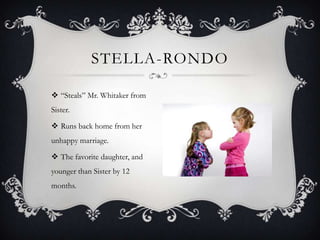
STELLA-RONDO
 “Steals” Mr. Whitaker from
Sister.
 Runs back home from her

unhappy marriage.
 The favorite daughter, and
younger than Sister by 12
months.
UNCLE RONDO
 Mentally unstable.
 Very mean-spirited, vengeful.
 Throws firecrackers into Sister’s
room early in the morning.
 Wears Stella-Rondo’s nightgown
around.
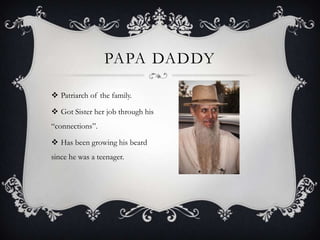
PAPA DADDY
 Patriarch of the family.
 Got Sister her job through his
“connections”.

 Has been growing his beard
since he was a teenager.
CHARACTERS FROM
RECITATIF
BY TONI MORRISON
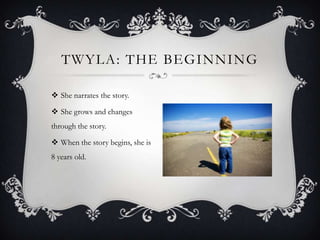
TWYLA: THE BEGINNING
 She narrates the story.
 She grows and changes
through the story.

 When the story begins, she is
8 years old.
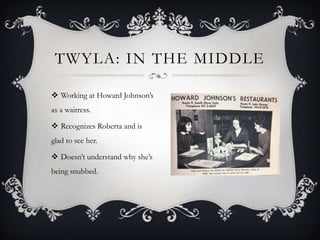
TWYLA: IN THE MIDDLE
 Working at Howard Johnson’s
as a waitress.
 Recognizes Roberta and is

glad to see her.
 Doesn’t understand why she’s
being snubbed.
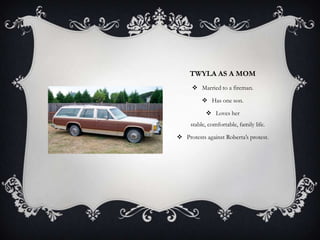
TWYLA AS A MOM
 Married to a fireman.
 Has one son.
 Loves her
stable, comfortable, family life.
 Protests against Roberta’s protest.
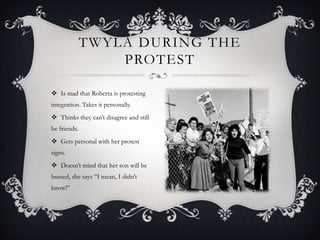
TWYLA DURING THE
PROTEST
 Is mad that Roberta is protesting
integration. Takes it personally.
 Thinks they can’t disagree and still
be friends.

 Gets personal with her protest
signs.
 Doesn’t mind that her son will be
bussed, she says “I mean, I didn’t
know!”
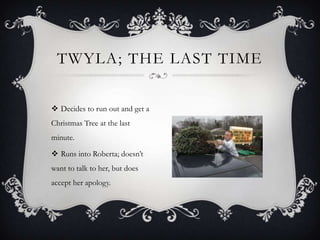
TWYLA; THE LAST TIME
 Decides to run out and get a
Christmas Tree at the last

minute.
 Runs into Roberta; doesn’t
want to talk to her, but does
accept her apology.
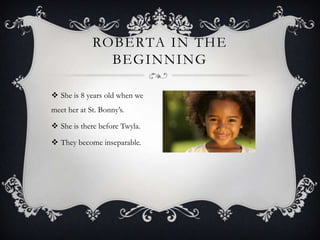
ROBERTA IN THE
BEGINNING
 She is 8 years old when we
meet her at St. Bonny’s.
 She is there before Twyla.

 They become inseparable.
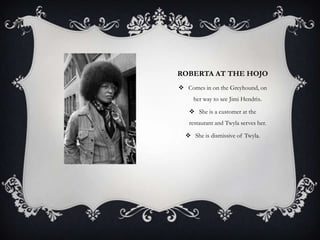
ROBERTA AT THE HOJO
 Comes in on the Greyhound, on
her way to see Jimi Hendrix.
 She is a customer at the
restaurant and Twyla serves her.
 She is dismissive of Twyla.
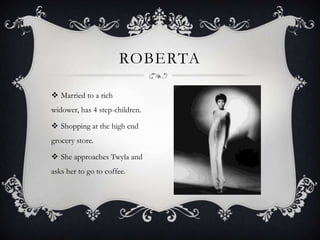
ROBERTA
 Married to a rich
widower, has 4 step-children.
 Shopping at the high end

grocery store.
 She approaches Twyla and
asks her to go to coffee.
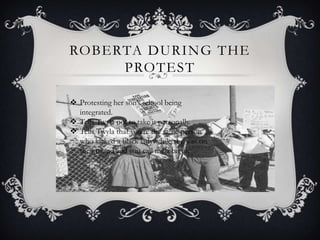
ROBERTA DURING THE
PROTEST
 Protesting her son’s school being
integrated.
 Tells Twyla not to take it personally.
 Tells Twyla that you’re the same person
who kicked a black lady while she was on
the ground and you call me a bigot.
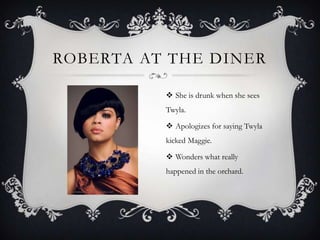
ROBERTA AT THE DINER
 She is drunk when she sees
Twyla.
 Apologizes for saying Twyla

kicked Maggie.
 Wonders what really
happened in the orchard.
SUMMATION
 Characters are who tell us the story. You can’t have a story
without characters, even if sometimes the characters aren’t
people.
 Characters give insight to the story through their voices.
 We learn a lot of what an author is trying to convey from the
characters.
 Characters stick with you after you finish the story.
 Not all narrators are characters within the story.
Works Cited

M O R R I S O N, T O N I . R E C I TA T I F. T H E N O RT O N
I N T R O D U C T I O N T O L I T E R A T U R E . 1 1 TH E D. N E W
Y O R K C I T Y : N O R T O N & C O M P A N Y, 2 0 1 3 . 2 0 0 - 2 1 4 .
P R I N T.
W E L T Y, E U D O R A . W H Y I L I V E A T T H E P . O . T H E
N O R T O N I N T R O D U C T I O N T O L I T E R A T U R E . 1 1 TH E D.
N E W Y O R K C I T Y : N O R T O N & C O M P A N Y, 2 0 1 3 . 6 5 9 6 6 8 . P R I N T.

Characterization

  • 1.
    CHARACTERIZATION By: Alisha Kies,Amy Flageolle, Megan Fisher and Deborah Racicot
  • 2.
    DEFINITION:  The presentationof a fictional personage.  There are two ways to do this; direct and indirect.  Direct characterization occurs when a narrator directly tells us what a character is like.  Indirect characterization occurs when a character’s traits are revealed implicitly through his or her actions, speech, behavior, thoughts and actions.
  • 3.
    DIRECT VS. INDIRECT Examplesof Direct Characters Examples of Indirect Characters  Twyla from Recitatif  Roberta from Recitatif  Penny and Primrose from  Stella-Rondo, Mama, Papa The Thing in the Forrest Daddy, Uncle Rondo, and Shirley  Sister from Why I live at the T from Why I live at the P.O. P.O.
  • 4.
    Characters from WhyI live at the P.O. By Eudora Welty
  • 5.
    SISTER  Flat, StaticCharacter.  She doesn’t grow or change through the story.  Unreliable narrator-her prior judgment of each character is revealed in how she presents them.  She also speaks differently, like she’s talking aside to you as if you’re there.
  • 6.
    MAMA  Unable toAccept Reality  Eggs on the sibling rivalry between Sister and Stella-Rondo.  Believes whatever she is told instead of finding out the truth for herself.
  • 7.
    STELLA-RONDO  “Steals” Mr.Whitaker from Sister.  Runs back home from her unhappy marriage.  The favorite daughter, and younger than Sister by 12 months.
  • 8.
    UNCLE RONDO  Mentallyunstable.  Very mean-spirited, vengeful.  Throws firecrackers into Sister’s room early in the morning.  Wears Stella-Rondo’s nightgown around.
  • 9.
    PAPA DADDY  Patriarchof the family.  Got Sister her job through his “connections”.  Has been growing his beard since he was a teenager.
  • 10.
  • 11.
    TWYLA: THE BEGINNING She narrates the story.  She grows and changes through the story.  When the story begins, she is 8 years old.
  • 12.
    TWYLA: IN THEMIDDLE  Working at Howard Johnson’s as a waitress.  Recognizes Roberta and is glad to see her.  Doesn’t understand why she’s being snubbed.
  • 13.
    TWYLA AS AMOM  Married to a fireman.  Has one son.  Loves her stable, comfortable, family life.  Protests against Roberta’s protest.
  • 14.
    TWYLA DURING THE PROTEST Is mad that Roberta is protesting integration. Takes it personally.  Thinks they can’t disagree and still be friends.  Gets personal with her protest signs.  Doesn’t mind that her son will be bussed, she says “I mean, I didn’t know!”
  • 15.
    TWYLA; THE LASTTIME  Decides to run out and get a Christmas Tree at the last minute.  Runs into Roberta; doesn’t want to talk to her, but does accept her apology.
  • 16.
    ROBERTA IN THE BEGINNING She is 8 years old when we meet her at St. Bonny’s.  She is there before Twyla.  They become inseparable.
  • 17.
    ROBERTA AT THEHOJO  Comes in on the Greyhound, on her way to see Jimi Hendrix.  She is a customer at the restaurant and Twyla serves her.  She is dismissive of Twyla.
  • 18.
    ROBERTA  Married toa rich widower, has 4 step-children.  Shopping at the high end grocery store.  She approaches Twyla and asks her to go to coffee.
  • 19.
    ROBERTA DURING THE PROTEST Protesting her son’s school being integrated.  Tells Twyla not to take it personally.  Tells Twyla that you’re the same person who kicked a black lady while she was on the ground and you call me a bigot.
  • 20.
    ROBERTA AT THEDINER  She is drunk when she sees Twyla.  Apologizes for saying Twyla kicked Maggie.  Wonders what really happened in the orchard.
  • 21.
    SUMMATION  Characters arewho tell us the story. You can’t have a story without characters, even if sometimes the characters aren’t people.  Characters give insight to the story through their voices.  We learn a lot of what an author is trying to convey from the characters.  Characters stick with you after you finish the story.  Not all narrators are characters within the story.
  • 22.
    Works Cited M OR R I S O N, T O N I . R E C I TA T I F. T H E N O RT O N I N T R O D U C T I O N T O L I T E R A T U R E . 1 1 TH E D. N E W Y O R K C I T Y : N O R T O N & C O M P A N Y, 2 0 1 3 . 2 0 0 - 2 1 4 . P R I N T. W E L T Y, E U D O R A . W H Y I L I V E A T T H E P . O . T H E N O R T O N I N T R O D U C T I O N T O L I T E R A T U R E . 1 1 TH E D. N E W Y O R K C I T Y : N O R T O N & C O M P A N Y, 2 0 1 3 . 6 5 9 6 6 8 . P R I N T.