An Invitation to Health Prepared by: Andrew Owusu Ph.D. Chapter 2:  Emotional and Spiritual Well-Being
Chapter 2 Objectives Identify  the characteristics of emotional and mental health. Name  the two pillars of authentic happiness. Explain  the health values of connecting with others. Discuss  some of the health benefits of prayer. Describe  four ways that sleep affects well-being. Assess  your spiritual health and  make  a decision to enrich it in at least two ways.
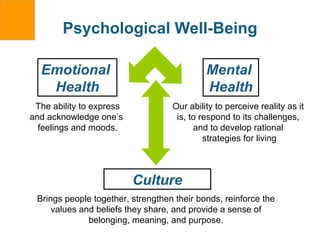
Psychological Well-Being Emotional  Health Mental  Health Our ability to perceive reality as it  is, to respond to its challenges,  and to develop rational  strategies for living The ability to express and acknowledge one’s  feelings and moods. Culture Brings people together, strengthen their bonds, reinforce the values and beliefs they share, and provide a sense of belonging, meaning, and purpose.
The Three Pillars of  Positive Psychology “ Treatment is not  just fixing what is  broken, it is  nurturing  what is best  within ourselves”.
Emotional Intelligence Definition A term used by some psychologists to evaluate the capacity of people to understand themselves and relate well to others. Emotional Quotient (EQ) The ability to monitor and use emotions to guide thinking and actions. High EQ  = increased productivity at work and happiness at home. High EQ  = decreased incidence of stress, depression and anxiety, and quicker recovery from serious illness.
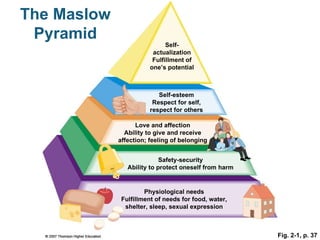
The Lessons of Positive Psychology Knowing Your Needs The Maslow Pyramid Self-actualization Clarifying Your Values Instrumental values Terminal values The Pursuit of Self-Esteem Confidence and satisfaction in oneself
Fig. 2-1, p. 37 Self-actualization Fulfillment of one’s potential Self-esteem Respect for self, respect for others Love and affection Ability to give and receive affection; feeling of belonging Safety-security Ability to protect oneself from harm Physiological needs Fulfillment of needs for food, water, shelter, sleep, sexual expression The Maslow Pyramid
Authentic Happiness Two Pillars to Authentic Happiness Engagement with family, work or a passionate pursuit and Finding meaning from some higher purpose
Factors  Affecting  Happiness   Humor Genetics Optimism Love and Faith Wealth, Health  and Age Life Events
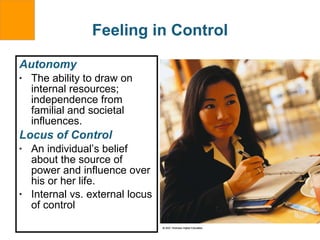
Feeling in Control Autonomy The ability to draw on internal resources; independence from familial and societal influences. Locus of Control An individual’s belief about the source of power and influence over his or her life. Internal vs. external locus of control
Feeling in Control Assertion Behaving in a confident manner to make your needs and desires clear to others in non-hostile ways. Use “I” Statements to explain your feelings Listen to and acknowledge others Be direct and specific Be assertive, not obnoxious
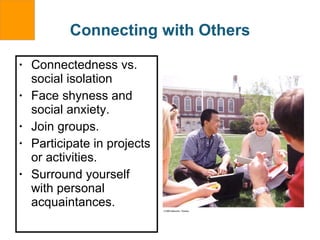
Connecting with Others Connectedness vs. social isolation Face shyness and social anxiety. Join groups. Participate in projects or activities. Surround yourself with personal acquaintances.
Spiritual Health The ability to identify one’s basic purpose in life and to achieve one’s full potential; the sense of connectedness to a greater power. It gives a strong sense of purpose, values, morals and ethics. Individuals who pray regularly, stay healthier and live longer than those who rarely or never do.
Spiritual Intelligence The capacity to sense, understand, and tap into the highest parts of ourselves, others, and the world around us. Focuses on the discovery of wisdom within.
Spirituality Gratitude Appreciation, not just for a special gift, but for everything that makes life a bit better. Forgiveness To let go of all anger and pain that demand time and waste energy. Altruism Acts of helping or giving to others without thought of self-benefit.
Prayer Prayer may foster a state of peace and calm that could lead to beneficial changes in the cardiovascular and immune systems. Membership in a faith community provides an identity as well as support
What Happens When We Sleep? Stage 1 A twilight zone between full wakefulness and sleep. The brain produces small, irregular, rapid electrical waves. Stage 2 Brain waves larger with occasional bursts of electrical activity. Eyes unresponsive and bodily functions slow. Stage 3 and 4 The most profound state of unconsciousness  The brain produces slower, larger waves. “ Delta” or slow-wave sleep. REM sleep Vivid dreaming Brain waves resemble those of waking more than quiet sleep. These stages are repeated four or five times a night.
Stages of Sleep Fig 2-2, p. 49
Sleep Disorders Insomnia Snoring and Sleep Apnea Movement Disorders Circadian Rhythm Sleep Disorders
 
How to Sleep Like a Baby Aim for ~7-1/2 hours of sleep per night Go to bed and wake up at the same time each day. Develop a sleep ritual. Don’t drink coffee late in the day. Don’t rely on alcohol to get to sleep. Limit daytime naps if you sleep poorly at night.

Chapter2(2)

  • 1.
    An Invitation toHealth Prepared by: Andrew Owusu Ph.D. Chapter 2: Emotional and Spiritual Well-Being
  • 2.
    Chapter 2 ObjectivesIdentify the characteristics of emotional and mental health. Name the two pillars of authentic happiness. Explain the health values of connecting with others. Discuss some of the health benefits of prayer. Describe four ways that sleep affects well-being. Assess your spiritual health and make a decision to enrich it in at least two ways.
  • 3.
    Psychological Well-Being Emotional Health Mental Health Our ability to perceive reality as it is, to respond to its challenges, and to develop rational strategies for living The ability to express and acknowledge one’s feelings and moods. Culture Brings people together, strengthen their bonds, reinforce the values and beliefs they share, and provide a sense of belonging, meaning, and purpose.
  • 4.
    The Three Pillarsof Positive Psychology “ Treatment is not just fixing what is broken, it is nurturing what is best within ourselves”.
  • 5.
    Emotional Intelligence DefinitionA term used by some psychologists to evaluate the capacity of people to understand themselves and relate well to others. Emotional Quotient (EQ) The ability to monitor and use emotions to guide thinking and actions. High EQ = increased productivity at work and happiness at home. High EQ = decreased incidence of stress, depression and anxiety, and quicker recovery from serious illness.
  • 6.
    The Lessons ofPositive Psychology Knowing Your Needs The Maslow Pyramid Self-actualization Clarifying Your Values Instrumental values Terminal values The Pursuit of Self-Esteem Confidence and satisfaction in oneself
  • 7.
    Fig. 2-1, p.37 Self-actualization Fulfillment of one’s potential Self-esteem Respect for self, respect for others Love and affection Ability to give and receive affection; feeling of belonging Safety-security Ability to protect oneself from harm Physiological needs Fulfillment of needs for food, water, shelter, sleep, sexual expression The Maslow Pyramid
  • 8.
    Authentic Happiness TwoPillars to Authentic Happiness Engagement with family, work or a passionate pursuit and Finding meaning from some higher purpose
  • 9.
    Factors Affecting Happiness Humor Genetics Optimism Love and Faith Wealth, Health and Age Life Events
  • 10.
    Feeling in ControlAutonomy The ability to draw on internal resources; independence from familial and societal influences. Locus of Control An individual’s belief about the source of power and influence over his or her life. Internal vs. external locus of control
  • 11.
    Feeling in ControlAssertion Behaving in a confident manner to make your needs and desires clear to others in non-hostile ways. Use “I” Statements to explain your feelings Listen to and acknowledge others Be direct and specific Be assertive, not obnoxious
  • 12.
    Connecting with OthersConnectedness vs. social isolation Face shyness and social anxiety. Join groups. Participate in projects or activities. Surround yourself with personal acquaintances.
  • 13.
    Spiritual Health Theability to identify one’s basic purpose in life and to achieve one’s full potential; the sense of connectedness to a greater power. It gives a strong sense of purpose, values, morals and ethics. Individuals who pray regularly, stay healthier and live longer than those who rarely or never do.
  • 14.
    Spiritual Intelligence Thecapacity to sense, understand, and tap into the highest parts of ourselves, others, and the world around us. Focuses on the discovery of wisdom within.
  • 15.
    Spirituality Gratitude Appreciation,not just for a special gift, but for everything that makes life a bit better. Forgiveness To let go of all anger and pain that demand time and waste energy. Altruism Acts of helping or giving to others without thought of self-benefit.
  • 16.
    Prayer Prayer mayfoster a state of peace and calm that could lead to beneficial changes in the cardiovascular and immune systems. Membership in a faith community provides an identity as well as support
  • 17.
    What Happens WhenWe Sleep? Stage 1 A twilight zone between full wakefulness and sleep. The brain produces small, irregular, rapid electrical waves. Stage 2 Brain waves larger with occasional bursts of electrical activity. Eyes unresponsive and bodily functions slow. Stage 3 and 4 The most profound state of unconsciousness The brain produces slower, larger waves. “ Delta” or slow-wave sleep. REM sleep Vivid dreaming Brain waves resemble those of waking more than quiet sleep. These stages are repeated four or five times a night.
  • 18.
    Stages of SleepFig 2-2, p. 49
  • 19.
    Sleep Disorders InsomniaSnoring and Sleep Apnea Movement Disorders Circadian Rhythm Sleep Disorders
  • 20.
  • 21.
    How to SleepLike a Baby Aim for ~7-1/2 hours of sleep per night Go to bed and wake up at the same time each day. Develop a sleep ritual. Don’t drink coffee late in the day. Don’t rely on alcohol to get to sleep. Limit daytime naps if you sleep poorly at night.

Editor's Notes

  • #19 Fig 3-5 Stages of Sleep
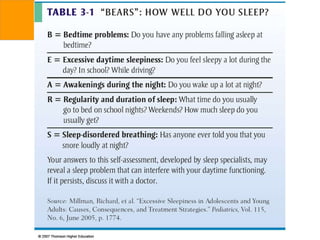
  • #21 Table 3-1 “BEARS” How Well Do You Sleep?