CREATIVITY AND
INNOVATION
 How innovative are you?
 Chapter 7
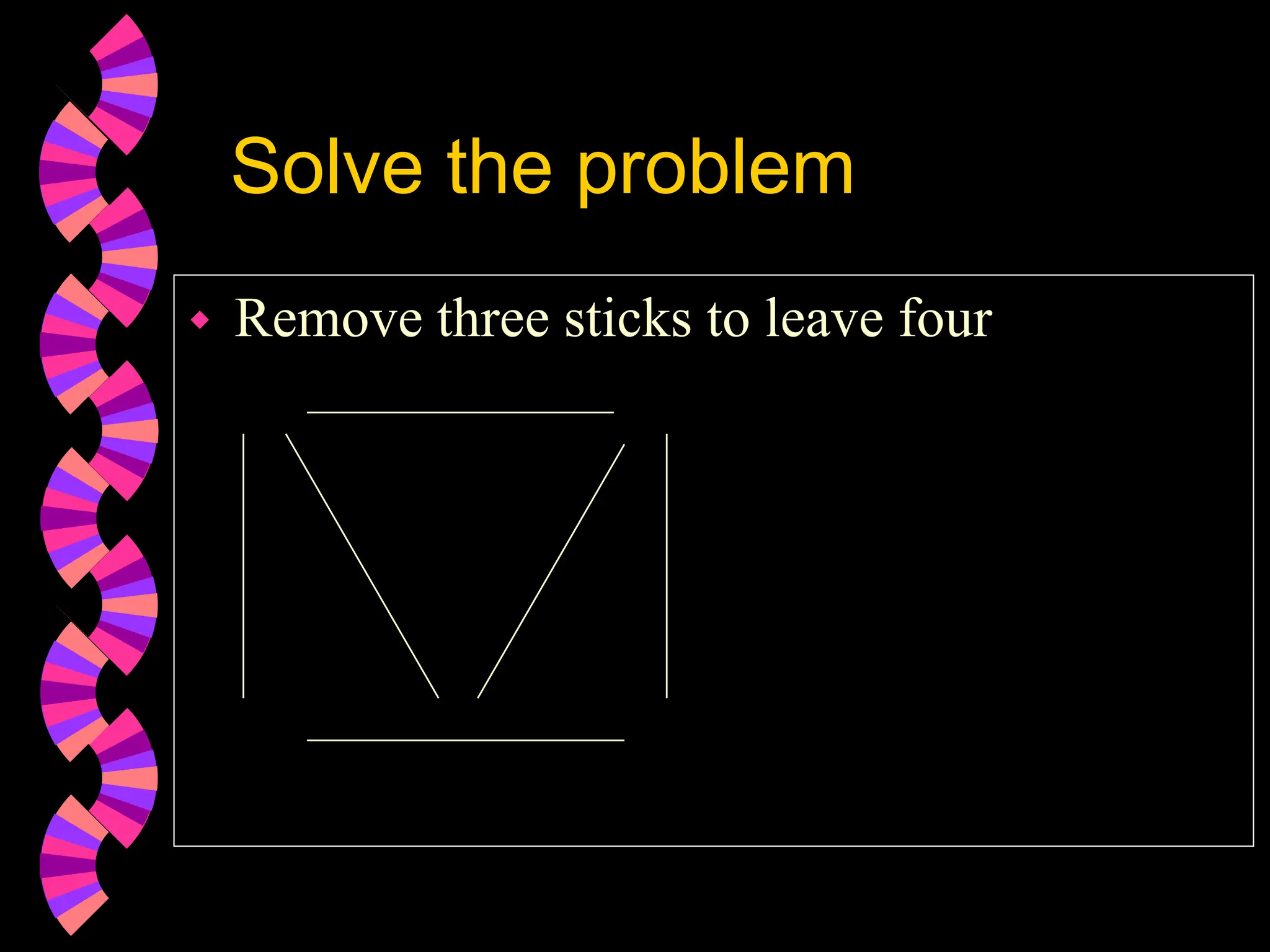
Solve the problem
 Remove three sticks to leave four
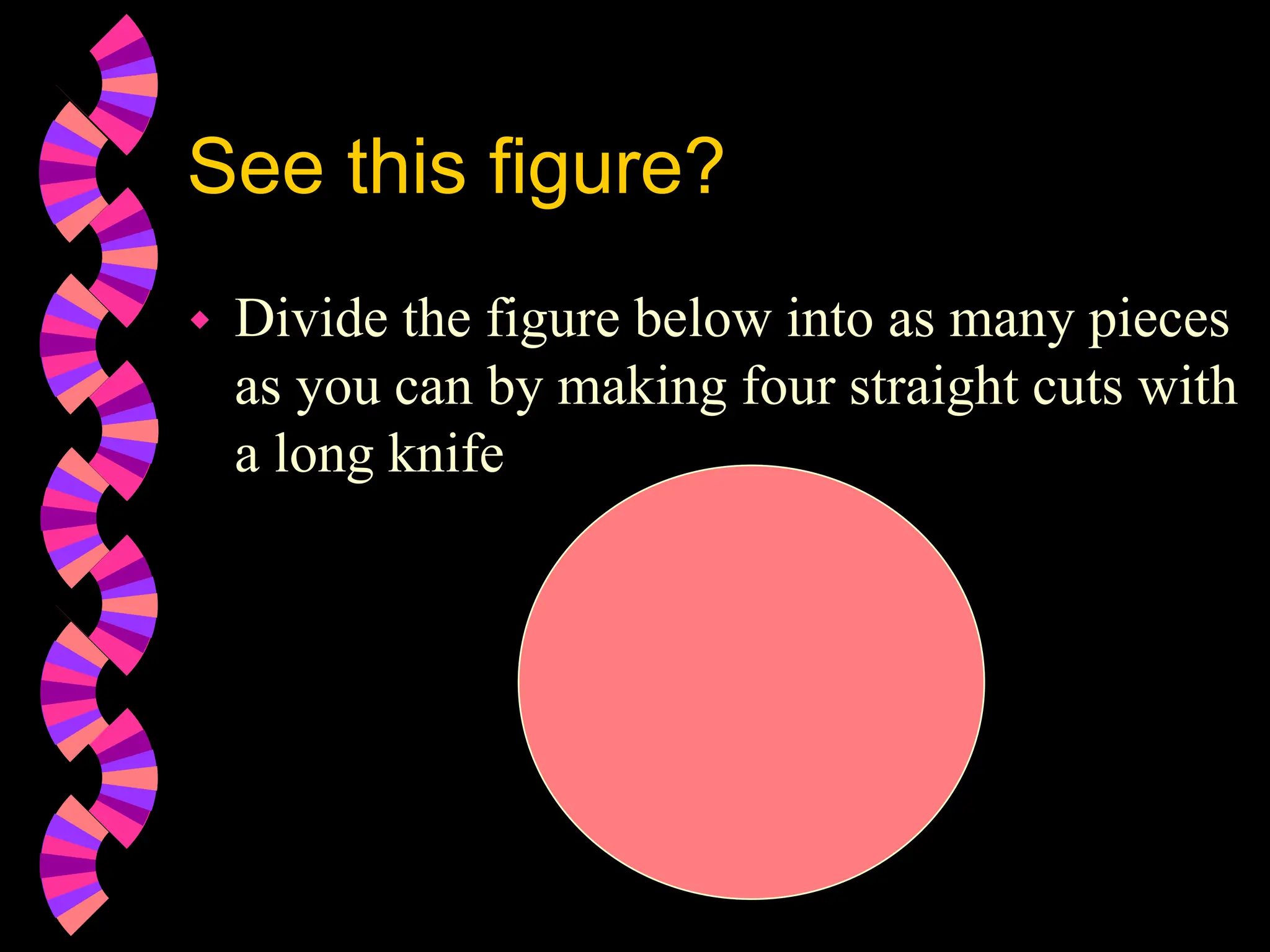
See this figure?
 Divide the figure below into as many pieces
as you can by making four straight cuts with
a long knife
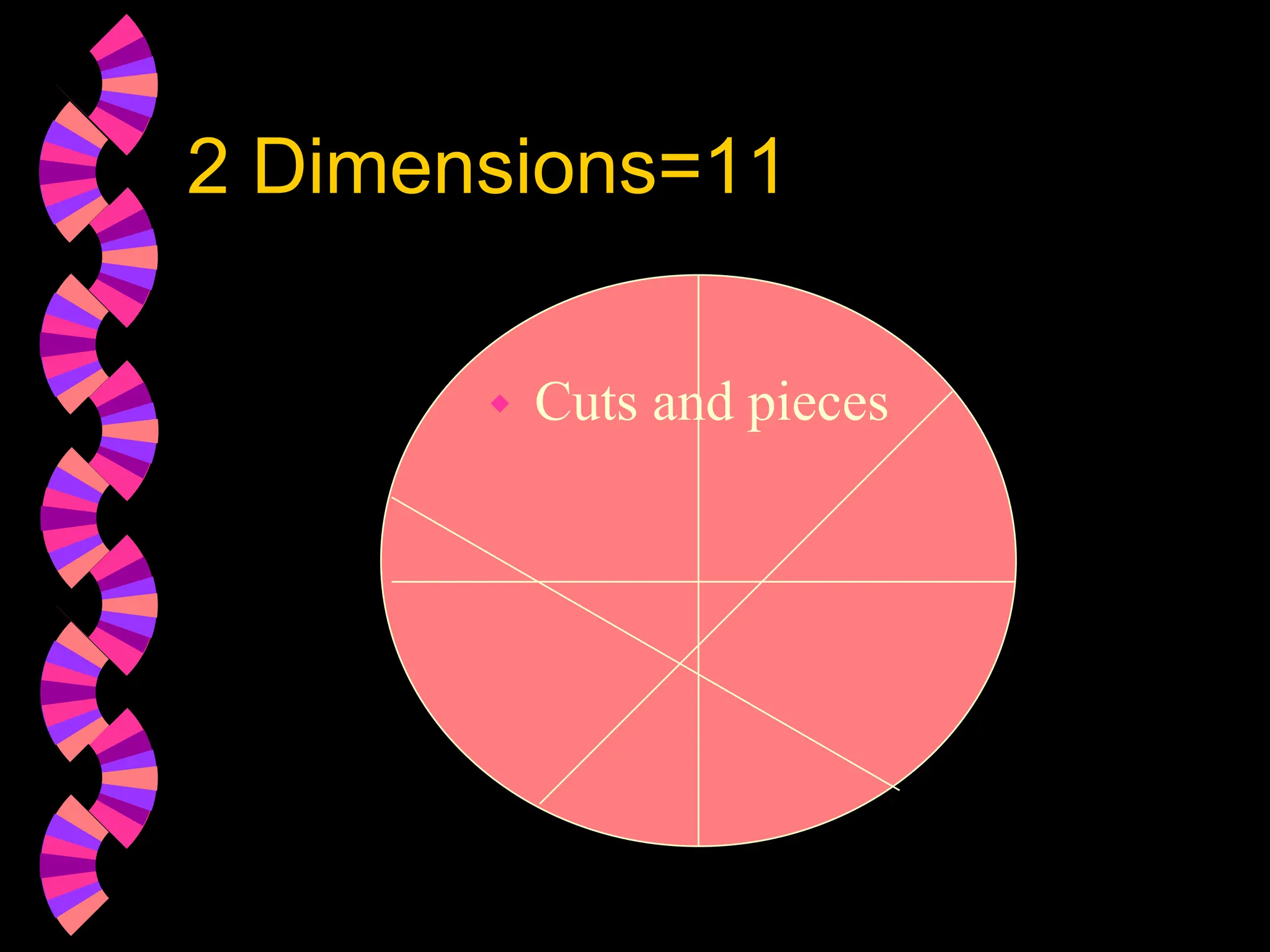
2 Dimensions=11
 Cuts and pieces
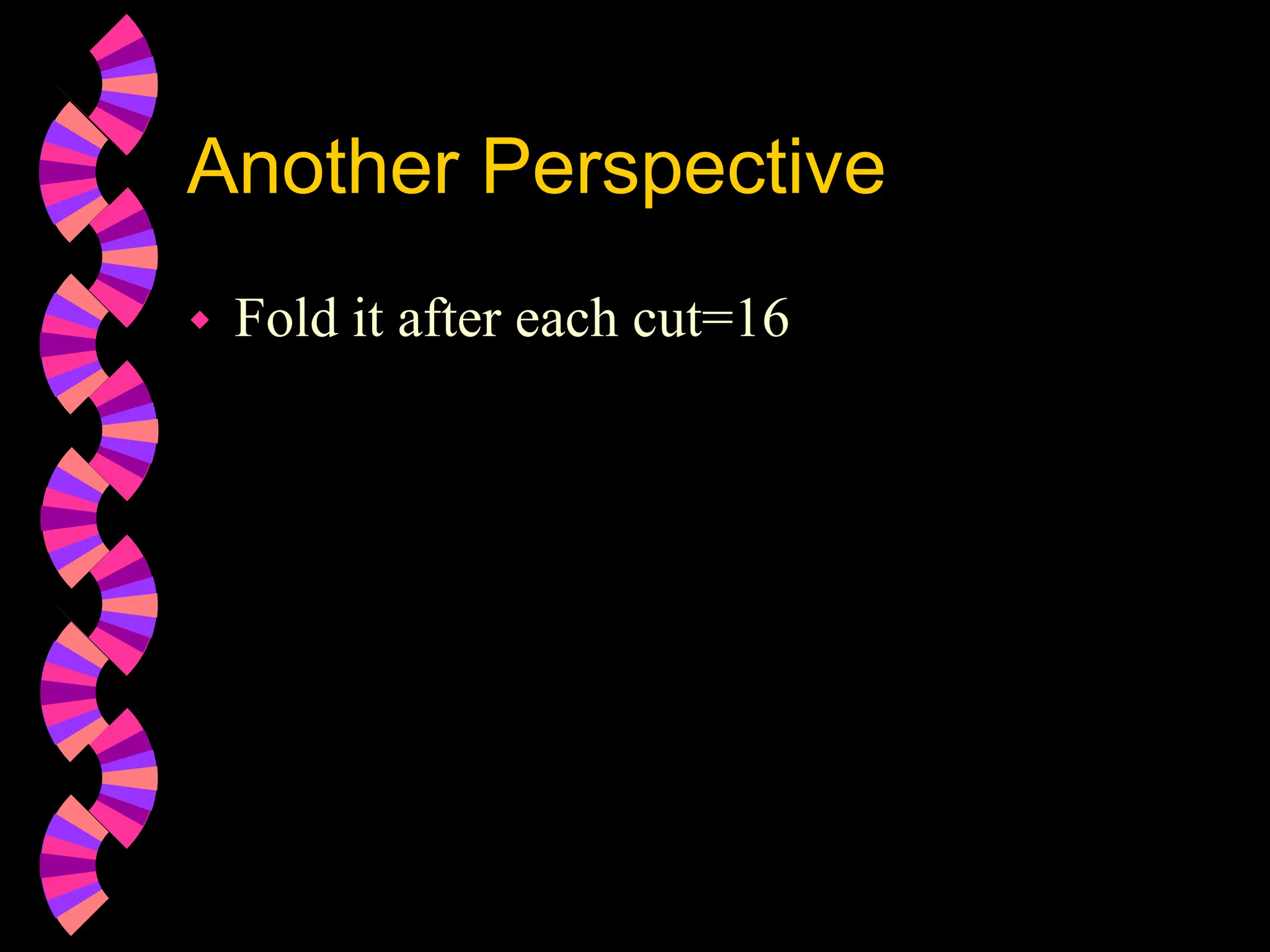
3 dimensions=14
 imagine it’s a cake
Another Perspective
 Fold it after each cut=16
New Challenge
 A company manufactures glassware. The last step
of the process is to wrap glasses individually in
used newspapers and then place them in a
specially designed box. The box is then sealed.
Management notices low productivity with this
last step, observing that workers occasionally stop
to read the newspapers? What can management
do to increase productivity?
Steps to Personal Creativity
 1. Accept that you can be creative
 2. Question traditional assumptions
 3. Expand your problem-solving styles
 4. Employ creativity techniques
 5. Practice thinking in new ways
 6. Learn when your creative thinking is best
 Adapted in part from Higgins, James M. 1997. Escape From The Maze. New York: New
Management Publishing.
Relevance to Globalization
 In a rapidly changing global world,
managers must use all their abilities to
anticipate opportunities and threats
Future Visions of the Auto
Industry
 Fuel injections will require much less gas
 Need for lean production
 There will be need for small autos to serve utilitarian mass
markets
 There will be more women drivers in Europe and Asia
 Emotions will be used to promote products
 Increased speed limits
 More roads will be needed
Future Visions of the Food
Industry
 This is a recession-proof industry with very slim profit
margins
 We see segmentation of markets and niche development
 Many consumers/nations leapfrog to the latest trends rather
than following a particular development process
 The natural environment is increasingly important
 Computer technology linking suppliers gets food to market
at a lower price
 In Western countries there is a trend toward less cooking in
the home
Envisioning Techniques
 Linear
• step-by-step; scenario planning, etc.
 Intuitive
• imagery; brainstorming; analogy
Stimulants to Work Creativity*
 1) FREEDOM in deciding work to do or how to do it
 2) CHALLENGE to work hard on important projects
 3) RESOURCES needed to do the work
 4) ENCOURAGEMENT from a supervisor who is a good work
model, sets appropriate goals, supports and has confidence in the work
group
 5) WORK GROUP SUPPORTS such as diverse skills, people who
communicate well, are open to new ideas, constructively challenge one
another’s work, trust and help each other, and feel committed to their
work
 6) ORGANIZATIONAL ENCOURAGEMENT in a culture that
supports creativity and communicates a shared vision of organization
Obstacles to Work Creativity
 1) ORGANIZATIONAL IMPEDIMENTS such as
internal political problems, harsh criticism of new
ideas, destructive internal competition, avoidance
of risk and overemphasis on the status quo
 2) WORKLOAD PRESSURES such as extreme
time pressure, unrealistic expectations, or
distractions
Weigh the Odds
 You have 50 coins of which one is slightly
heavier than all others. This weight
difference can be detected on a balance
scale
 What is the least number of weighings
required to find the heaviest coin?

chapter-7-creativity-and-innovation génie industriel.ppt

  • 1.
    CREATIVITY AND INNOVATION  Howinnovative are you?  Chapter 7
  • 2.
    Solve the problem Remove three sticks to leave four
  • 3.
    See this figure? Divide the figure below into as many pieces as you can by making four straight cuts with a long knife
  • 4.
  • 5.
  • 6.
    Another Perspective  Foldit after each cut=16
  • 7.
    New Challenge  Acompany manufactures glassware. The last step of the process is to wrap glasses individually in used newspapers and then place them in a specially designed box. The box is then sealed. Management notices low productivity with this last step, observing that workers occasionally stop to read the newspapers? What can management do to increase productivity?
  • 8.
    Steps to PersonalCreativity  1. Accept that you can be creative  2. Question traditional assumptions  3. Expand your problem-solving styles  4. Employ creativity techniques  5. Practice thinking in new ways  6. Learn when your creative thinking is best  Adapted in part from Higgins, James M. 1997. Escape From The Maze. New York: New Management Publishing.
  • 9.
    Relevance to Globalization In a rapidly changing global world, managers must use all their abilities to anticipate opportunities and threats
  • 10.
    Future Visions ofthe Auto Industry  Fuel injections will require much less gas  Need for lean production  There will be need for small autos to serve utilitarian mass markets  There will be more women drivers in Europe and Asia  Emotions will be used to promote products  Increased speed limits  More roads will be needed
  • 11.
    Future Visions ofthe Food Industry  This is a recession-proof industry with very slim profit margins  We see segmentation of markets and niche development  Many consumers/nations leapfrog to the latest trends rather than following a particular development process  The natural environment is increasingly important  Computer technology linking suppliers gets food to market at a lower price  In Western countries there is a trend toward less cooking in the home
  • 12.
    Envisioning Techniques  Linear •step-by-step; scenario planning, etc.  Intuitive • imagery; brainstorming; analogy
  • 13.
    Stimulants to WorkCreativity*  1) FREEDOM in deciding work to do or how to do it  2) CHALLENGE to work hard on important projects  3) RESOURCES needed to do the work  4) ENCOURAGEMENT from a supervisor who is a good work model, sets appropriate goals, supports and has confidence in the work group  5) WORK GROUP SUPPORTS such as diverse skills, people who communicate well, are open to new ideas, constructively challenge one another’s work, trust and help each other, and feel committed to their work  6) ORGANIZATIONAL ENCOURAGEMENT in a culture that supports creativity and communicates a shared vision of organization
  • 14.
    Obstacles to WorkCreativity  1) ORGANIZATIONAL IMPEDIMENTS such as internal political problems, harsh criticism of new ideas, destructive internal competition, avoidance of risk and overemphasis on the status quo  2) WORKLOAD PRESSURES such as extreme time pressure, unrealistic expectations, or distractions
  • 15.
    Weigh the Odds You have 50 coins of which one is slightly heavier than all others. This weight difference can be detected on a balance scale  What is the least number of weighings required to find the heaviest coin?