Chapter 7

  By Kaitlyn Cronkhite
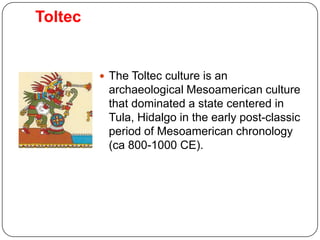
Toltec


          The Toltec culture is an
          archaeological Mesoamerican culture
          that dominated a state centered in
          Tula, Hidalgo in the early post-classic
          period of Mesoamerican chronology
          (ca 800-1000 CE).
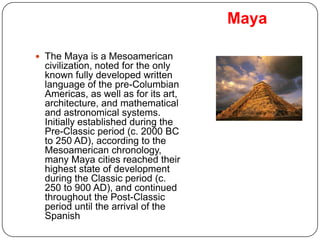
Maya

 The Maya is a Mesoamerican
 civilization, noted for the only
 known fully developed written
 language of the pre-Columbian
 Americas, as well as for its art,
 architecture, and mathematical
 and astronomical systems.
 Initially established during the
 Pre-Classic period (c. 2000 BC
 to 250 AD), according to the
 Mesoamerican chronology,
 many Maya cities reached their
 highest state of development
 during the Classic period (c.
 250 to 900 AD), and continued
 throughout the Post-Classic
 period until the arrival of the
 Spanish
Aztec

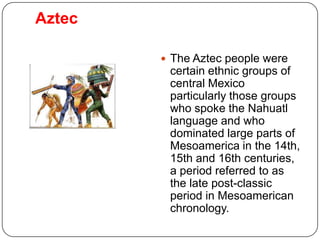
         The Aztec people were
         certain ethnic groups of
         central Mexico
         particularly those groups
         who spoke the Nahuatl
         language and who
         dominated large parts of
         Mesoamerica in the 14th,
         15th and 16th centuries,
         a period referred to as
         the late post-classic
         period in Mesoamerican
         chronology.
Incas

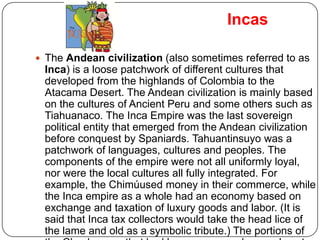
 The Andean civilization (also sometimes referred to as
 Inca) is a loose patchwork of different cultures that
 developed from the highlands of Colombia to the
 Atacama Desert. The Andean civilization is mainly based
 on the cultures of Ancient Peru and some others such as
 Tiahuanaco. The Inca Empire was the last sovereign
 political entity that emerged from the Andean civilization
 before conquest by Spaniards. Tahuantinsuyo was a
 patchwork of languages, cultures and peoples. The
 components of the empire were not all uniformly loyal,
 nor were the local cultures all fully integrated. For
 example, the Chimúused money in their commerce, while
 the Inca empire as a whole had an economy based on
 exchange and taxation of luxury goods and labor. (It is
 said that Inca tax collectors would take the head lice of
 the lame and old as a symbolic tribute.) The portions of
Iroquois
League
     The Iroquois also known as the
     Haudenosaunee or the "People of the
     Longhouse", are an association of several
     tribes of indigenous people of North America.
     After the Iroquoian-speaking peoples
     coalesced as distinct tribes, based mostly in
     present-day central and upstate New York, in
     the 16th century or earlier they came together
     in an association known today as the Iroquois
     League, or the "League of Peace and Power".
     The original Iroquois League was often known
     as the Five Nations, as it was composed of
     the Mohawk, Oneida, Onondaga Cayuga and
     Seneca nations After the Tuscarora nation
     joined the League in 1722, the Iroquois
     became known as the Six Nations. The
     League is embodied in the Grand Council, an
     assembly of fifty hereditary sachems.
Mound
                                  Builders

 The group of cultures collectively called Mound
  Builders were prehistoric inhabitants of North
  America who constructed various styles of
  earthen mounds for burial, residential and
  ceremonial purposes. These included the Pre-
  Columbian cultures of the Archaic period;
  Woodland period (Adena and Hopewell
  cultures); and Mississippian period; dating from
  roughly 3000 BCE to the 16th century CE, and
  living in regions of the Great Lakes, the Ohio
  River valley, and the Mississippi River valley
  and its tributaries. As a comparison, beginning
  with the construction of Watson Brake about
  3500 BCE in present-day Louisiana, indigenous
  peoples started building earthwork mounds in
Anasazi
 Ancient Pueblo People or Ancestral Pueblo peoples were
 an ancient Native American culture centered on the
 present-day Four Corners area of the United States,
 comprising southern Utah, northern Arizona, northwest
 New Mexico, and southern Colorado. They lived in
 "houses" called pueblos, designed so that they could lift up
 entry ladders during enemy attacks, which provided
 security for the Pueblo peoples. Archaeologists referred to
 the cultural group as the Anasazi, although the term is not
 preferred by contemporary Pueblo peoples The word
 Anasází is Navajo for "Ancient Ones" or "Ancient Enemy".
 Archaeologists still debate when this distinct culture
 emerged. The current consensus, based on terminology
 defined by the Pecos Classification suggests their
 emergence around the 12th century BCE, during the
 archaeologically designated Basketmaker II Era. Beginning
 with the earliest explorations and excavations, researchers
 postulated that the Ancient Puebloans are ancestors of the
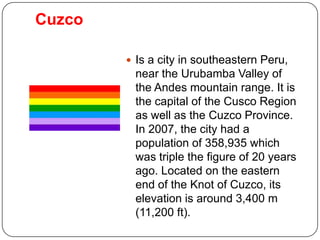
Cuzco

         Is a city in southeastern Peru,
         near the Urubamba Valley of
         the Andes mountain range. It is
         the capital of the Cusco Region
         as well as the Cuzco Province.
         In 2007, the city had a
         population of 358,935 which
         was triple the figure of 20 years
         ago. Located on the eastern
         end of the Knot of Cuzco, its
         elevation is around 3,400 m
         (11,200 ft).
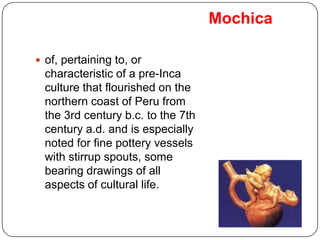
Mochica

 of, pertaining to, or
  characteristic of a pre-Inca
  culture that flourished on the
  northern coast of Peru from
  the 3rd century b.c. to the 7th
  century a.d. and is especially
  noted for fine pottery vessels
  with stirrup spouts, some
  bearing drawings of all
  aspects of cultural life.
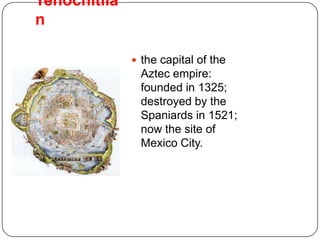
Tenochitila
n

               the capital of the
                Aztec empire:
                founded in 1325;
                destroyed by the
                Spaniards in 1521;
                now the site of
                Mexico City.

Chapter 7

  • 1.
    Chapter 7 By Kaitlyn Cronkhite
  • 2.
    Toltec  The Toltec culture is an archaeological Mesoamerican culture that dominated a state centered in Tula, Hidalgo in the early post-classic period of Mesoamerican chronology (ca 800-1000 CE).
  • 3.
    Maya  The Mayais a Mesoamerican civilization, noted for the only known fully developed written language of the pre-Columbian Americas, as well as for its art, architecture, and mathematical and astronomical systems. Initially established during the Pre-Classic period (c. 2000 BC to 250 AD), according to the Mesoamerican chronology, many Maya cities reached their highest state of development during the Classic period (c. 250 to 900 AD), and continued throughout the Post-Classic period until the arrival of the Spanish
  • 4.
    Aztec  The Aztec people were certain ethnic groups of central Mexico particularly those groups who spoke the Nahuatl language and who dominated large parts of Mesoamerica in the 14th, 15th and 16th centuries, a period referred to as the late post-classic period in Mesoamerican chronology.
  • 5.
    Incas  The Andeancivilization (also sometimes referred to as Inca) is a loose patchwork of different cultures that developed from the highlands of Colombia to the Atacama Desert. The Andean civilization is mainly based on the cultures of Ancient Peru and some others such as Tiahuanaco. The Inca Empire was the last sovereign political entity that emerged from the Andean civilization before conquest by Spaniards. Tahuantinsuyo was a patchwork of languages, cultures and peoples. The components of the empire were not all uniformly loyal, nor were the local cultures all fully integrated. For example, the Chimúused money in their commerce, while the Inca empire as a whole had an economy based on exchange and taxation of luxury goods and labor. (It is said that Inca tax collectors would take the head lice of the lame and old as a symbolic tribute.) The portions of
  • 6.
    Iroquois League  The Iroquois also known as the Haudenosaunee or the "People of the Longhouse", are an association of several tribes of indigenous people of North America. After the Iroquoian-speaking peoples coalesced as distinct tribes, based mostly in present-day central and upstate New York, in the 16th century or earlier they came together in an association known today as the Iroquois League, or the "League of Peace and Power". The original Iroquois League was often known as the Five Nations, as it was composed of the Mohawk, Oneida, Onondaga Cayuga and Seneca nations After the Tuscarora nation joined the League in 1722, the Iroquois became known as the Six Nations. The League is embodied in the Grand Council, an assembly of fifty hereditary sachems.
  • 7.
    Mound Builders  The group of cultures collectively called Mound Builders were prehistoric inhabitants of North America who constructed various styles of earthen mounds for burial, residential and ceremonial purposes. These included the Pre- Columbian cultures of the Archaic period; Woodland period (Adena and Hopewell cultures); and Mississippian period; dating from roughly 3000 BCE to the 16th century CE, and living in regions of the Great Lakes, the Ohio River valley, and the Mississippi River valley and its tributaries. As a comparison, beginning with the construction of Watson Brake about 3500 BCE in present-day Louisiana, indigenous peoples started building earthwork mounds in
  • 8.
    Anasazi  Ancient PuebloPeople or Ancestral Pueblo peoples were an ancient Native American culture centered on the present-day Four Corners area of the United States, comprising southern Utah, northern Arizona, northwest New Mexico, and southern Colorado. They lived in "houses" called pueblos, designed so that they could lift up entry ladders during enemy attacks, which provided security for the Pueblo peoples. Archaeologists referred to the cultural group as the Anasazi, although the term is not preferred by contemporary Pueblo peoples The word Anasází is Navajo for "Ancient Ones" or "Ancient Enemy". Archaeologists still debate when this distinct culture emerged. The current consensus, based on terminology defined by the Pecos Classification suggests their emergence around the 12th century BCE, during the archaeologically designated Basketmaker II Era. Beginning with the earliest explorations and excavations, researchers postulated that the Ancient Puebloans are ancestors of the
  • 9.
    Cuzco  Is a city in southeastern Peru, near the Urubamba Valley of the Andes mountain range. It is the capital of the Cusco Region as well as the Cuzco Province. In 2007, the city had a population of 358,935 which was triple the figure of 20 years ago. Located on the eastern end of the Knot of Cuzco, its elevation is around 3,400 m (11,200 ft).
  • 10.
    Mochica  of, pertainingto, or characteristic of a pre-Inca culture that flourished on the northern coast of Peru from the 3rd century b.c. to the 7th century a.d. and is especially noted for fine pottery vessels with stirrup spouts, some bearing drawings of all aspects of cultural life.
  • 11.
    Tenochitila n  the capital of the Aztec empire: founded in 1325; destroyed by the Spaniards in 1521; now the site of Mexico City.