
Presentation, Analysis
and Interpretation of
Data
I. Presentation of Data
- Ms. Rigen Maalam-
Data presentation involves the use of a
variety of different graphical techniques to
visually show the reader the relationship
between different data sets, to emphasize the
nature of a particular aspect of the data.
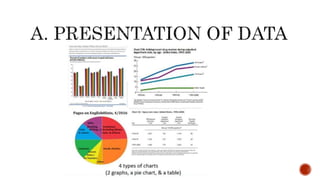
Data collected from a particular research
study can be presented through:
 Tables
 Charts
 Graphs
 Scatter Plot
Why are data presented in tables, charts,
graph or scatter plot?
• to organize data
• to show comparison of data
 A teacher administered a 50-item diagnostic test in Math 10 to 57 students of
section A. The raw scores are presented in the bar graph below.
0
5
10
15
20
25
30
35
1
Diagnostic Test Result for Math 10 in Section A
1 2 3 4 5 6 7 8 9 10 11 12 13 14 15 16 17 18 19 20 21 22 23 24 25 26 27 28 29 30
31 32 33 34 35 36 37 38 39 40 41 42 43 44 45 46 47 48 49 50 51 52 53 54 55 56 57 58 59 60
II. Analysis of Data
-Mrs. Jean Balogbog-
-Mrs. Angel Rose Saluta-
Analyzing data is a process for obtaining
raw data, and subsequently converting it into
information useful for decision-making by
users. It usually requires the use of data
analysis software like SPSS.
Data is collected and analyzed to answer
questions, test hypotheses, or disprove
theories.
A simple example of data analysis is
whenever we take any decision in our day-to-
day life is by thinking about what happened
last time or what will happen by choosing that
particular decision. This is nothing but
analyzing our past or future and making
decisions based on it.
Two Methods for data analysis:
I. Qualitative data analysis techniques
II. Quantitative data analysis techniques
These data analysis techniques can be used
independently or in combination with the other
to help business leaders and decision-makers
acquire insights from different data types.
I. Qualitative data describes information that
is typically non-numerical.
The qualitative data analysis approach
involves working with unique identifiers, such
as labels and properties, and categorical
variables, such as statistics, percentages, and
measurements.
I. Qualitative data analysis techniques includes:
a. content analysis (which measures content
changes over time and across media); and
b. discourse analysis (which explores
conversations in their social context).
Observing that a reaction is creating gas that is
bubbling out of solution or observing that a reaction
results in a color change.
Qualitative analysis is not as reliable as quantitative
analysis but is often far easier, faster and cheaper to
perform.
II. Quantitative data describes information
that is typically numerical.
Quantitative data analysis involves
working with numerical variables — including
statistics, percentages, calculations,
measurements, and other data — as the
nature of quantitative data is numerical.
II. Quantitative data analysis techniques
includes:
a. working with algorithms, mathematical
analysis tools, and software to manipulate
data and uncover insights that reveal the
business and other values
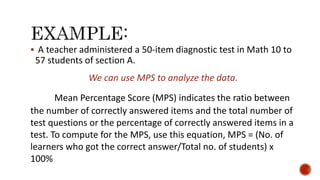
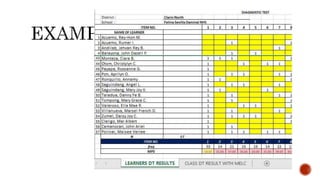
 A teacher administered a 50-item diagnostic test in Math 10 to
57 students of section A.
We can use MPS to analyze the data.
Mean Percentage Score (MPS) indicates the ratio between
the number of correctly answered items and the total number of
test questions or the percentage of correctly answered items in a
test. To compute for the MPS, use this equation, MPS = (No. of
learners who got the correct answer/Total no. of students) x
100%
What is the purpose of MPS in DepEd?
MPS is not for compilation only. It must be
used for decision making in lesson delivery
enhancements, learning resources utilization
and school improvement plan and adjustment.
The design used was descriptive research
II. Interpretation of Data
-Mrs. Meriam S. Ramillete-
Data interpretation is the process of using
diverse analytical methods to review data and
arrive at relevant conclusions.
The interpretation of data helps
researchers to categorize, manipulate, and
summarize the information in order to answer
critical questions.
Data analysis tends to be extremely
subjective. That is to say, the nature and goal of
interpretation will vary from business to
business, likely correlating to the type of data
being analyzed.
 A teacher administered a 50-item diagnostic test in Math 10
to 57 students of section A. The raw scores are presented in
the bar graph below.
0
5
10
15
20
25
30
35
1
Diagnostic Test Result for Math 10 in Section A
1 2 3 4 5 6 7 8 9 10 11 12 13 14 15 16 17 18 19 20 21 22 23 24 25 26 27 28 29 30
31 32 33 34 35 36 37 38 39 40 41 42 43 44 45 46 47 48 49 50 51 52 53 54 55 56 57 58 59 60
CHAPTER 4.pptx
CHAPTER 4.pptx
CHAPTER 4.pptx

CHAPTER 4.pptx

  • 2.
  • 3.
    I. Presentation ofData - Ms. Rigen Maalam-
  • 4.
    Data presentation involvesthe use of a variety of different graphical techniques to visually show the reader the relationship between different data sets, to emphasize the nature of a particular aspect of the data.
  • 5.
    Data collected froma particular research study can be presented through:  Tables  Charts  Graphs  Scatter Plot
  • 7.
    Why are datapresented in tables, charts, graph or scatter plot? • to organize data • to show comparison of data
  • 8.
     A teacheradministered a 50-item diagnostic test in Math 10 to 57 students of section A. The raw scores are presented in the bar graph below. 0 5 10 15 20 25 30 35 1 Diagnostic Test Result for Math 10 in Section A 1 2 3 4 5 6 7 8 9 10 11 12 13 14 15 16 17 18 19 20 21 22 23 24 25 26 27 28 29 30 31 32 33 34 35 36 37 38 39 40 41 42 43 44 45 46 47 48 49 50 51 52 53 54 55 56 57 58 59 60
  • 9.
    II. Analysis ofData -Mrs. Jean Balogbog- -Mrs. Angel Rose Saluta-
  • 10.
    Analyzing data isa process for obtaining raw data, and subsequently converting it into information useful for decision-making by users. It usually requires the use of data analysis software like SPSS. Data is collected and analyzed to answer questions, test hypotheses, or disprove theories.
  • 11.
    A simple exampleof data analysis is whenever we take any decision in our day-to- day life is by thinking about what happened last time or what will happen by choosing that particular decision. This is nothing but analyzing our past or future and making decisions based on it.
  • 12.
    Two Methods fordata analysis: I. Qualitative data analysis techniques II. Quantitative data analysis techniques These data analysis techniques can be used independently or in combination with the other to help business leaders and decision-makers acquire insights from different data types.
  • 13.
    I. Qualitative datadescribes information that is typically non-numerical. The qualitative data analysis approach involves working with unique identifiers, such as labels and properties, and categorical variables, such as statistics, percentages, and measurements.
  • 14.
    I. Qualitative dataanalysis techniques includes: a. content analysis (which measures content changes over time and across media); and b. discourse analysis (which explores conversations in their social context).
  • 15.
    Observing that areaction is creating gas that is bubbling out of solution or observing that a reaction results in a color change. Qualitative analysis is not as reliable as quantitative analysis but is often far easier, faster and cheaper to perform.
  • 16.
    II. Quantitative datadescribes information that is typically numerical. Quantitative data analysis involves working with numerical variables — including statistics, percentages, calculations, measurements, and other data — as the nature of quantitative data is numerical.
  • 17.
    II. Quantitative dataanalysis techniques includes: a. working with algorithms, mathematical analysis tools, and software to manipulate data and uncover insights that reveal the business and other values
  • 18.
     A teacheradministered a 50-item diagnostic test in Math 10 to 57 students of section A. We can use MPS to analyze the data. Mean Percentage Score (MPS) indicates the ratio between the number of correctly answered items and the total number of test questions or the percentage of correctly answered items in a test. To compute for the MPS, use this equation, MPS = (No. of learners who got the correct answer/Total no. of students) x 100%
  • 19.
    What is thepurpose of MPS in DepEd? MPS is not for compilation only. It must be used for decision making in lesson delivery enhancements, learning resources utilization and school improvement plan and adjustment. The design used was descriptive research
  • 20.
    II. Interpretation ofData -Mrs. Meriam S. Ramillete-
  • 21.
    Data interpretation isthe process of using diverse analytical methods to review data and arrive at relevant conclusions. The interpretation of data helps researchers to categorize, manipulate, and summarize the information in order to answer critical questions.
  • 22.
    Data analysis tendsto be extremely subjective. That is to say, the nature and goal of interpretation will vary from business to business, likely correlating to the type of data being analyzed.
  • 23.
     A teacheradministered a 50-item diagnostic test in Math 10 to 57 students of section A. The raw scores are presented in the bar graph below. 0 5 10 15 20 25 30 35 1 Diagnostic Test Result for Math 10 in Section A 1 2 3 4 5 6 7 8 9 10 11 12 13 14 15 16 17 18 19 20 21 22 23 24 25 26 27 28 29 30 31 32 33 34 35 36 37 38 39 40 41 42 43 44 45 46 47 48 49 50 51 52 53 54 55 56 57 58 59 60