Explorers Chapter 3 Newcomers Arrive
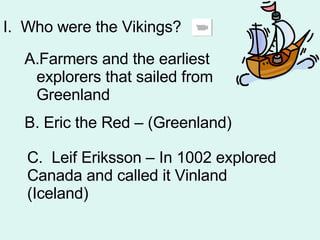
I.  Who were the Vikings? Farmers and the earliest explorers that sailed from Greenland Eric the Red – (Greenland) C.  Leif Eriksson – In 1002 explored Canada and called it Vinland (Iceland)
 
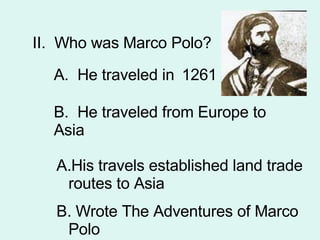
II.  Who was Marco Polo? A.  He traveled in B.  He traveled from Europe to Asia His travels established land trade routes to Asia Wrote The Adventures of Marco Polo 1261
III.  Why did Europeans want to find a water route to Asia? B.  Land travel became too dangerous to travel C. European Kings were willing to pay sailors to find a water route to Asia A.  Europeans wanted the spices, jewels, and porcelain that was found in Asia not Europe
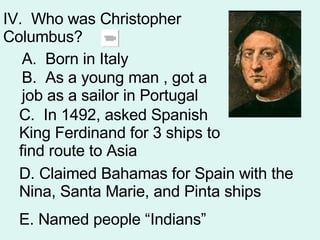
IV.  Who was Christopher Columbus? A.  Born in Italy B.  As a young man , got a job as a sailor in Portugal  C.  In 1492, asked Spanish  King Ferdinand for 3 ships to find route to Asia D. Claimed Bahamas for Spain with the Nina, Santa Marie, and Pinta ships E. Named people “Indians”
 
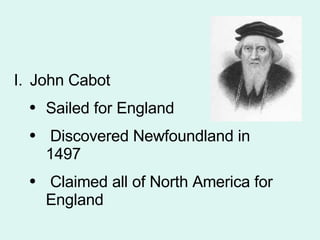
John Cabot Sailed for England Discovered Newfoundland in 1497 Claimed all of North America for England
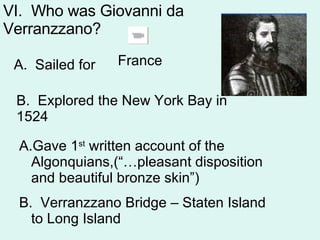
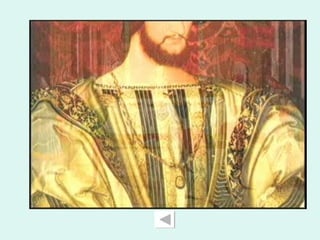
VI.  Who was Giovanni da Verranzzano? A.  Sailed for   France B.  Explored the New York Bay in 1524 Gave 1 st  written account of the Algonquians,(“…pleasant disposition and beautiful bronze skin”) Verranzzano Bridge – Staten Island to Long Island
 
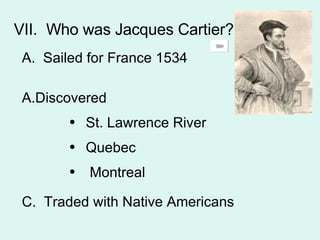
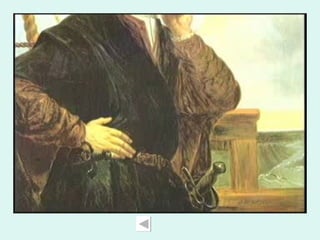
VII.  Who was Jacques Cartier? A.  Sailed for France 1534 Discovered  St. Lawrence River Quebec Montreal C.  Traded with Native Americans
 
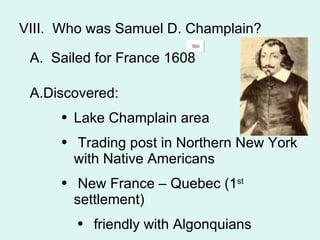
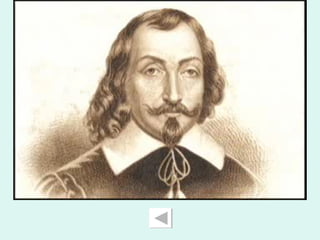
VIII.  Who was Samuel D. Champlain? A.  Sailed for France 1608 Discovered: Lake Champlain area Trading post in Northern New York with Native Americans New France – Quebec (1 st  settlement) friendly with Algonquians
 
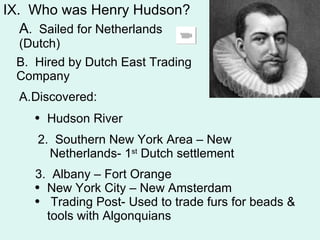
IX.  Who was Henry Hudson? A .  Sailed for Netherlands (Dutch) B.  Hired by Dutch East Trading Company Discovered: Hudson River 2.  Southern New York Area – New Netherlands- 1 st  Dutch settlement 3.  Albany – Fort Orange New York City – New Amsterdam Trading Post- Used to trade furs for beads & tools with Algonquians
 

Chapter 3 Explorers

  • 1.
    Explorers Chapter 3Newcomers Arrive
  • 2.
    I. Whowere the Vikings? Farmers and the earliest explorers that sailed from Greenland Eric the Red – (Greenland) C. Leif Eriksson – In 1002 explored Canada and called it Vinland (Iceland)
  • 3.
  • 4.
    II. Whowas Marco Polo? A. He traveled in B. He traveled from Europe to Asia His travels established land trade routes to Asia Wrote The Adventures of Marco Polo 1261
  • 5.
    III. Whydid Europeans want to find a water route to Asia? B. Land travel became too dangerous to travel C. European Kings were willing to pay sailors to find a water route to Asia A. Europeans wanted the spices, jewels, and porcelain that was found in Asia not Europe
  • 6.
    IV. Whowas Christopher Columbus? A. Born in Italy B. As a young man , got a job as a sailor in Portugal C. In 1492, asked Spanish King Ferdinand for 3 ships to find route to Asia D. Claimed Bahamas for Spain with the Nina, Santa Marie, and Pinta ships E. Named people “Indians”
  • 7.
  • 8.
    John Cabot Sailedfor England Discovered Newfoundland in 1497 Claimed all of North America for England
  • 9.
    VI. Whowas Giovanni da Verranzzano? A. Sailed for France B. Explored the New York Bay in 1524 Gave 1 st written account of the Algonquians,(“…pleasant disposition and beautiful bronze skin”) Verranzzano Bridge – Staten Island to Long Island
  • 10.
  • 11.
    VII. Whowas Jacques Cartier? A. Sailed for France 1534 Discovered St. Lawrence River Quebec Montreal C. Traded with Native Americans
  • 12.
  • 13.
    VIII. Whowas Samuel D. Champlain? A. Sailed for France 1608 Discovered: Lake Champlain area Trading post in Northern New York with Native Americans New France – Quebec (1 st settlement) friendly with Algonquians
  • 14.
  • 15.
    IX. Whowas Henry Hudson? A . Sailed for Netherlands (Dutch) B. Hired by Dutch East Trading Company Discovered: Hudson River 2. Southern New York Area – New Netherlands- 1 st Dutch settlement 3. Albany – Fort Orange New York City – New Amsterdam Trading Post- Used to trade furs for beads & tools with Algonquians
  • 16.