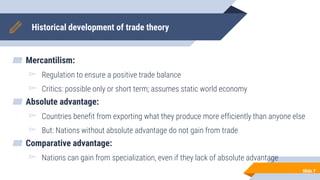
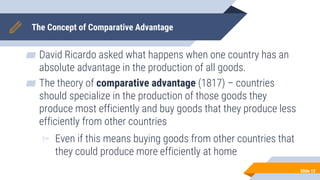
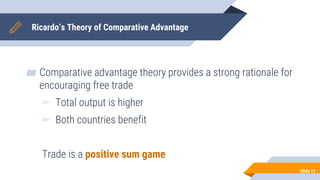
1. The chapter discusses the Ricardian model of comparative advantage and international trade. It introduces the concept of comparative advantage and shows how trade benefits countries through specialization according to their comparative advantages.
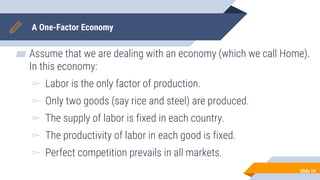
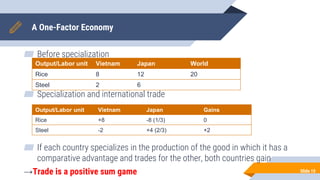
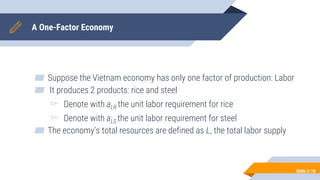
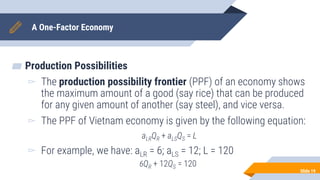
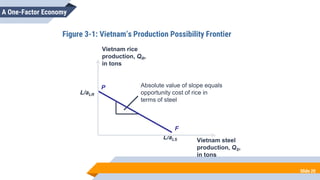
2. In a one-factor economy with two goods, the theory of comparative advantage demonstrates that both countries can gain from trade even if one has an absolute advantage in producing both goods. Specialization and trade allows total production to increase.
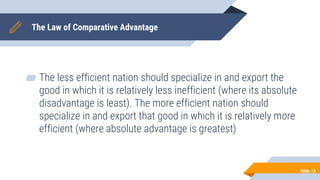
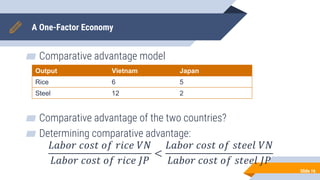
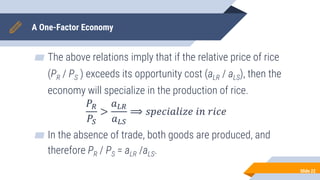
3. Extensions to many goods and factors do not change the conclusions. Comparative advantage is determined by relative opportunity costs of production, and free trade according to this principle maximizes global production.