Download as PDF, PPTX
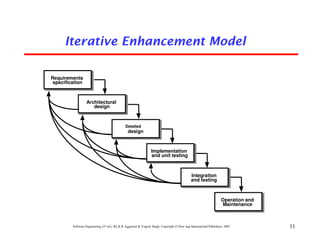
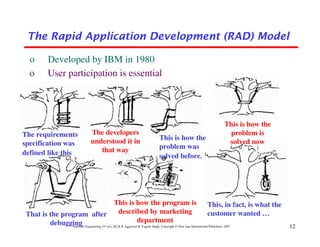
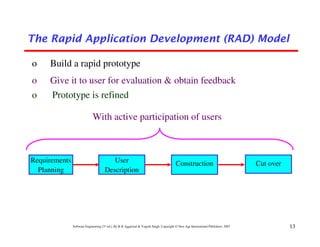
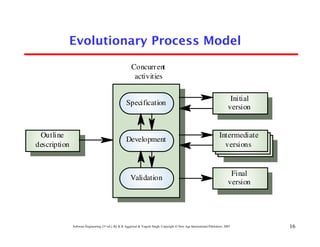
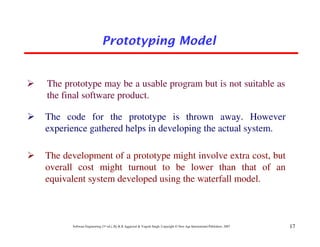
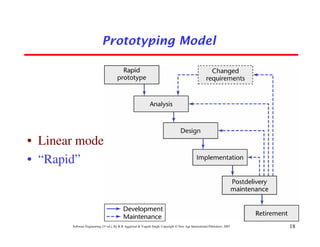
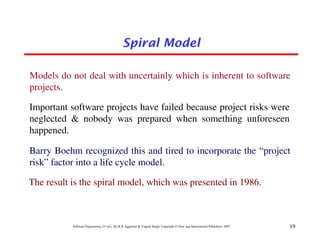
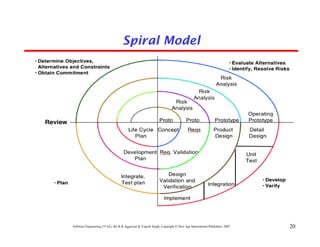
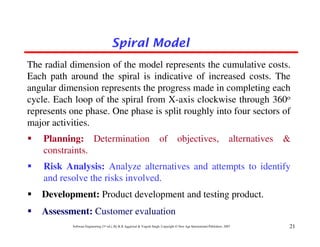
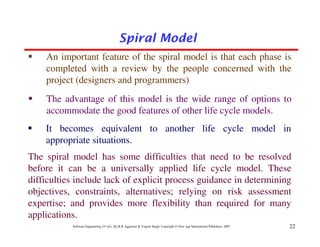
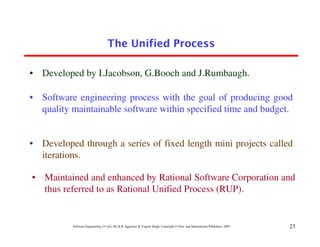
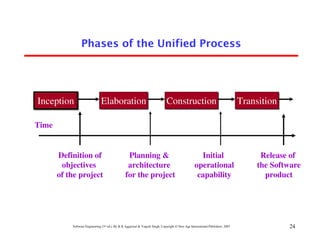
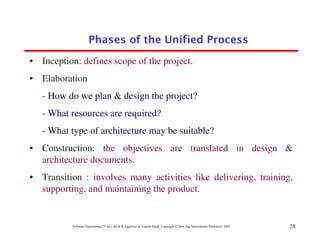
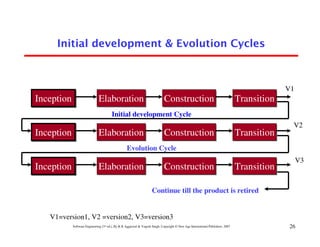
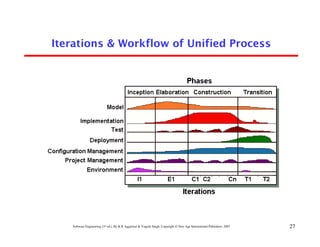
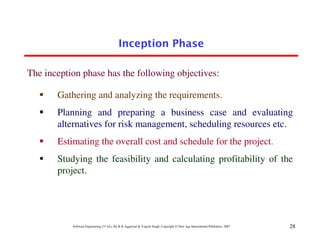
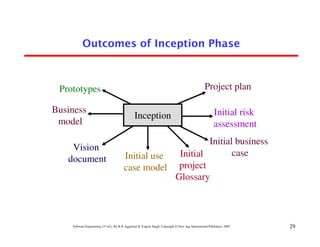
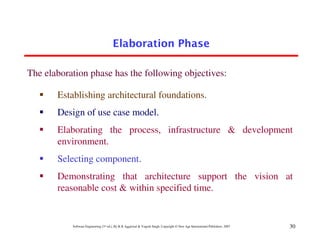
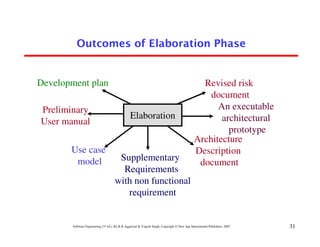
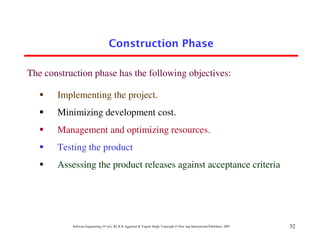
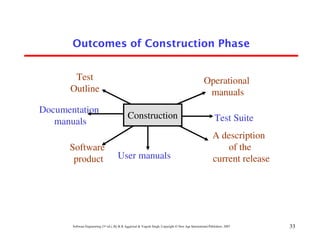
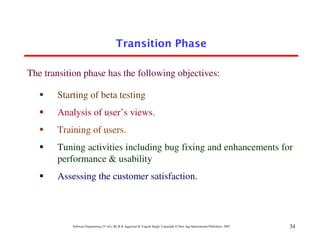
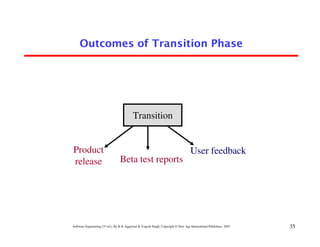
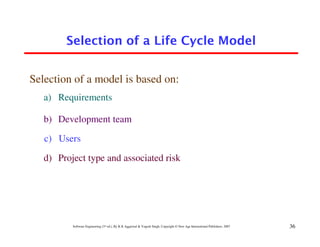
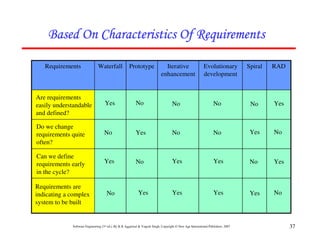
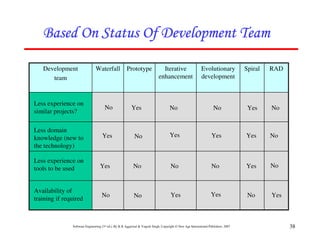
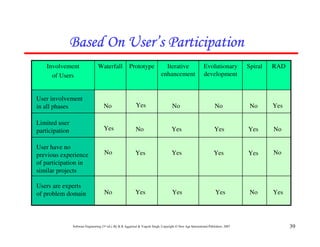
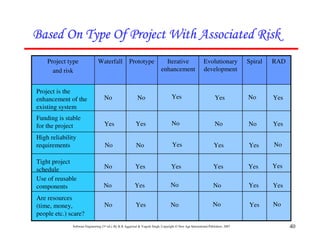
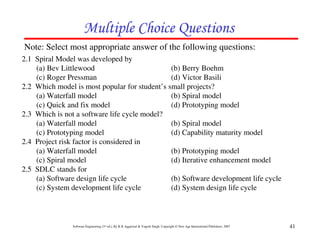
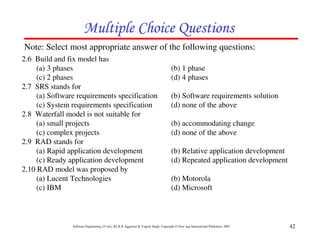
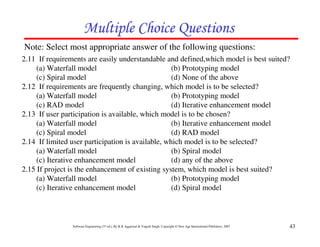
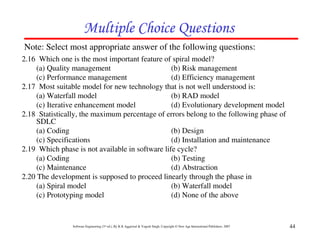
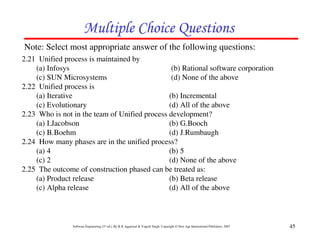
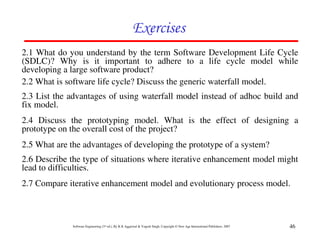
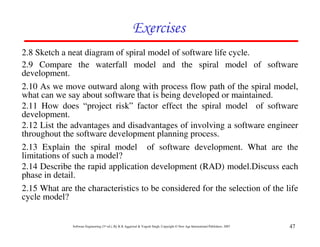
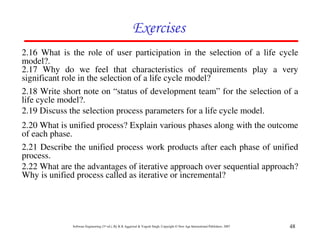

The document discusses various software life cycle models, such as the waterfall, incremental, iterative enhancement, rapid application development (RAD), evolutionary, prototyping, spiral, and unified process models, highlighting their characteristics, phases, advantages, and limitations. Each model is suited for different types of projects and requirements, emphasizing the importance of user involvement and adaptability to change. The text serves as a reference for understanding how to choose an appropriate software development model based on specific project needs and constraints.


![[slides] Software Engineering Third Edition - Aggarwal, Singh.pdf](https://cdn.slidesharecdn.com/ss_thumbnails/slidessoftwareengineeringthirdedition-aggarwalsingh-230615025923-02cadfc5-thumbnail.jpg?width=640&height=640&fit=bounds)


