CHAPTER 2
POLYMERIZATION
MECHANISM

By Nur Isfarina binti Ismail
DEFINITION
 POLYMER: are macromolecular (large molecule)

which are long chain made up of combination of
many repeating units.
 MONUMER: small molecules that will be

polymerization to become polymer.
 HOMOPOLYMER: a polymer that derived from

polymerization of a single monomer.
 COPOLYMER: a polymer derived from

polymerization of more than one monomer.
MECHANISM OF ADHESION
• CHEMICAL BONDING

- primary bond: ionic, covalent, metallic bond.
- secondary bond: hydrogen bond, Van der
Waals bond.
• PHYSICAL BONDING

Mechanical interlocking
2. Diffusion theory
3. Adsorption theory
4. Electrostatic
1.
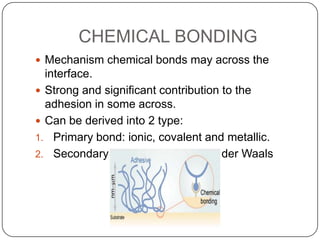
CHEMICAL BONDING
 Mechanism chemical bonds may across the

interface.
 Strong and significant contribution to the
adhesion in some across.
 Can be derived into 2 type:
1. Primary bond: ionic, covalent and metallic.
2. Secondary bond: hydrogen, Van der Waals
PHYSICAL BONDING
1.
•

•
•
•

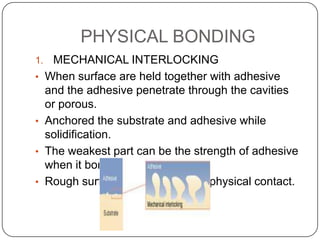
MECHANICAL INTERLOCKING
When surface are held together with adhesive
and the adhesive penetrate through the cavities
or porous.
Anchored the substrate and adhesive while
solidification.
The weakest part can be the strength of adhesive
when it bonded.
Rough surface increase area of physical contact.
2.

•
•

•
•

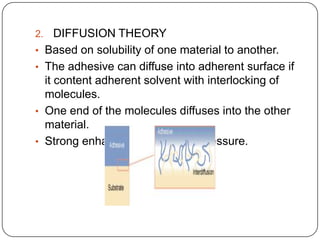
DIFFUSION THEORY
Based on solubility of one material to another.
The adhesive can diffuse into adherent surface if
it content adherent solvent with interlocking of
molecules.
One end of the molecules diffuses into the other
material.
Strong enhanced by heat and pressure.
3.
•
•
•

•

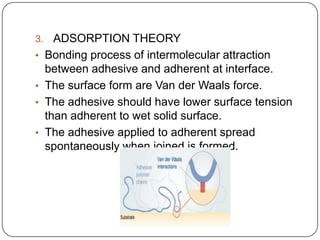
ADSORPTION THEORY
Bonding process of intermolecular attraction
between adhesive and adherent at interface.
The surface form are Van der Waals force.
The adhesive should have lower surface tension
than adherent to wet solid surface.
The adhesive applied to adherent spread
spontaneously when joined is formed.
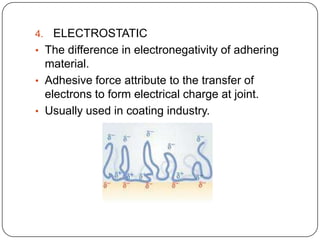
ELECTROSTATIC
• The difference in electronegativity of adhering
material.
• Adhesive force attribute to the transfer of
electrons to form electrical charge at joint.
• Usually used in coating industry.
4.
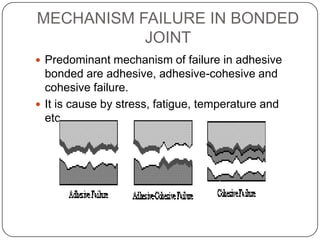
MECHANISM FAILURE IN BONDED
JOINT
 Predominant mechanism of failure in adhesive

bonded are adhesive, adhesive-cohesive and
cohesive failure.
 It is cause by stress, fatigue, temperature and
etc.
CRITERIA OF GOOD ADHESIVE
BOND
 Adhesive must be soluble in adherent.
 Adhesive spontaneously wet the surface.
 Adhesive with right viscosity to the right adherent.
 The surface has microscopic roughness.
 Surface treatment
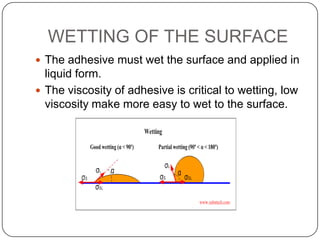
WETTING OF THE SURFACE
 The adhesive must wet the surface and applied in

liquid form.
 The viscosity of adhesive is critical to wetting, low
viscosity make more easy to wet to the surface.

Chapter 2

  • 1.
  • 2.
    DEFINITION  POLYMER: aremacromolecular (large molecule) which are long chain made up of combination of many repeating units.  MONUMER: small molecules that will be polymerization to become polymer.  HOMOPOLYMER: a polymer that derived from polymerization of a single monomer.  COPOLYMER: a polymer derived from polymerization of more than one monomer.
  • 3.
    MECHANISM OF ADHESION •CHEMICAL BONDING - primary bond: ionic, covalent, metallic bond. - secondary bond: hydrogen bond, Van der Waals bond. • PHYSICAL BONDING Mechanical interlocking 2. Diffusion theory 3. Adsorption theory 4. Electrostatic 1.
  • 4.
    CHEMICAL BONDING  Mechanismchemical bonds may across the interface.  Strong and significant contribution to the adhesion in some across.  Can be derived into 2 type: 1. Primary bond: ionic, covalent and metallic. 2. Secondary bond: hydrogen, Van der Waals
  • 5.
    PHYSICAL BONDING 1. • • • • MECHANICAL INTERLOCKING Whensurface are held together with adhesive and the adhesive penetrate through the cavities or porous. Anchored the substrate and adhesive while solidification. The weakest part can be the strength of adhesive when it bonded. Rough surface increase area of physical contact.
  • 6.
    2. • • • • DIFFUSION THEORY Based onsolubility of one material to another. The adhesive can diffuse into adherent surface if it content adherent solvent with interlocking of molecules. One end of the molecules diffuses into the other material. Strong enhanced by heat and pressure.
  • 7.
    3. • • • • ADSORPTION THEORY Bonding processof intermolecular attraction between adhesive and adherent at interface. The surface form are Van der Waals force. The adhesive should have lower surface tension than adherent to wet solid surface. The adhesive applied to adherent spread spontaneously when joined is formed.
  • 8.
    ELECTROSTATIC • The differencein electronegativity of adhering material. • Adhesive force attribute to the transfer of electrons to form electrical charge at joint. • Usually used in coating industry. 4.
  • 9.
    MECHANISM FAILURE INBONDED JOINT  Predominant mechanism of failure in adhesive bonded are adhesive, adhesive-cohesive and cohesive failure.  It is cause by stress, fatigue, temperature and etc.
  • 10.
    CRITERIA OF GOODADHESIVE BOND  Adhesive must be soluble in adherent.  Adhesive spontaneously wet the surface.  Adhesive with right viscosity to the right adherent.  The surface has microscopic roughness.  Surface treatment
  • 11.
    WETTING OF THESURFACE  The adhesive must wet the surface and applied in liquid form.  The viscosity of adhesive is critical to wetting, low viscosity make more easy to wet to the surface.