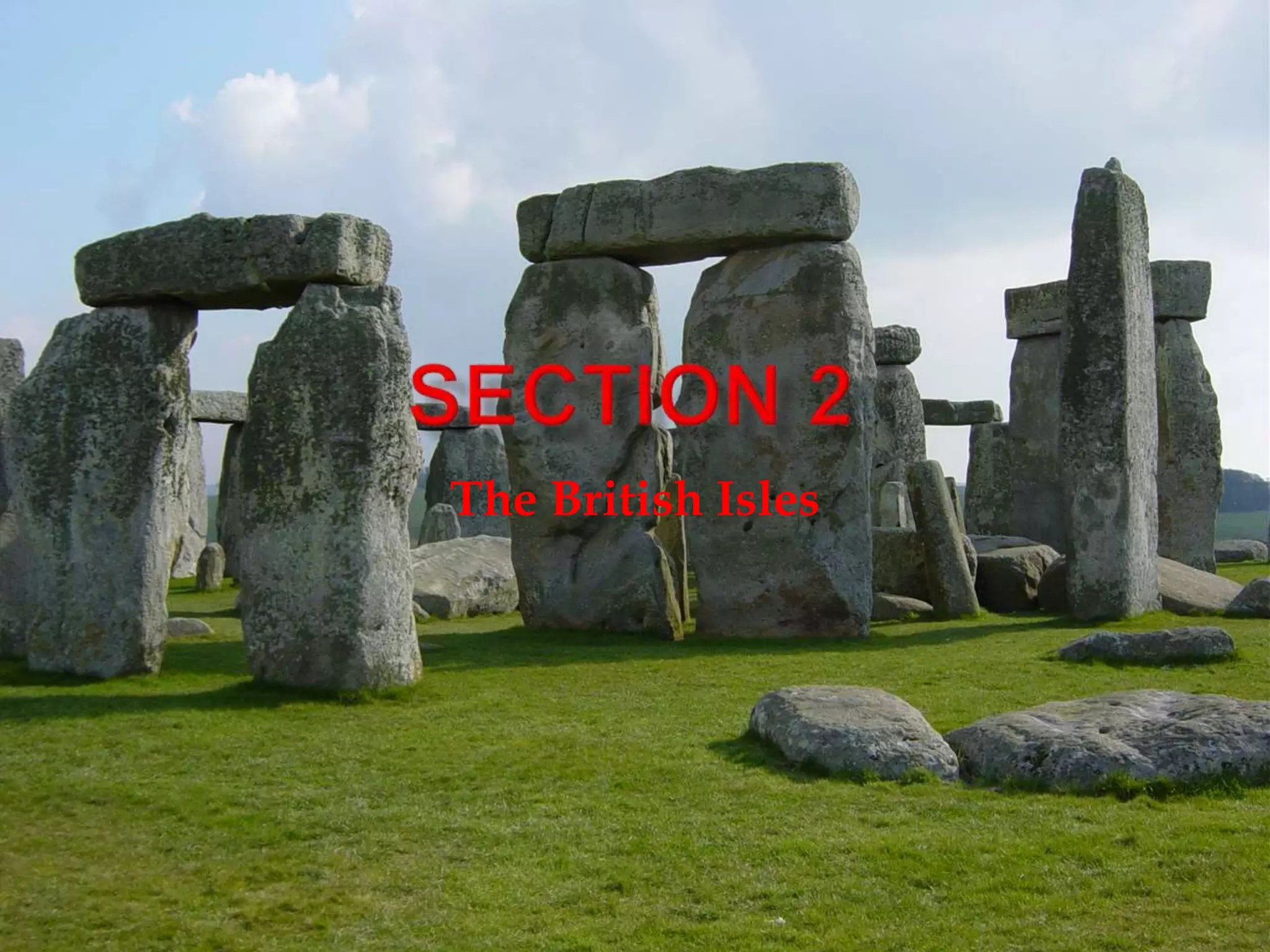
The British Isles
 Made up off 2 countries
 Republic of Ireland & United Kingdom (England,
Scotland, Wales, & Northern Ireland)
 Celts
 1st to reach British Isles in 450 B.C.
 Settled Wales, Scotland, & Ireland
 Angles, Saxons, and Vikings est. small kingdoms
 Came to British Isles from A.D. 400s to 1000s
 Came from Germany & Denmark
 Normans
 Came from northern France
 Conquered England & est. strong kingdom
 England grew in strength and power (became world power)
 Strong economy and navy help
build vast Empire for England
 Colonies est. in Americas,
India, & Australia
 Later in Africa and Asia
 1700s & 1800s
 U.K. became economic power
 Was cradle of Industrial
Revolution
 Supplies of coal & iron & labor
force promoted industries to grow
 Early Industries: powered by
coal
 Textiles
 Shipbuilding
 Iron & later steel production
 1840s food shortage in Ireland
 Lack of support from England
caused tensions
 World Wars & Economic competition
 Weakened U.K. in 1900s
 Ireland wanted independence
 All but Northern Ireland in 1949
 Colonies wanted independence
 Most of colonies after WWII
 British rule of much of world has influenced
government, people and popular culture
around the world
 Constitutional monarchy
 A type of democracy in which a king or queen serves as
head of state but a legislature makes the laws
 Monarchs power limited in Middle Ages
 Magna Carta: limited the powers of kings and required
everyone to obey the law
 Today:
 Prime Minister leads gov’t and has elected Parliament
 Republic of Ireland
 President is head of state
 Limited powers, but appoints Prime Minister
 Parliament and Prime Minister run gov’t
 Common culture traits
 Common heritage (Celts, Angles, and Saxons)
 Soccer and Rugby
 Unique Id
 Irish: Roman Catholic, speak Gaelic
 Scotland: wear kilts & play bagpipes
 Immigrants from former British colonies add to
rich culture
 Influences people all over globe
 English: language of business, education, and the
Internet
 Music & literature: U2, Beatles, and Shakespeare
 Challenges:
 Bringing peace to Northern Ireland
 Maintain powerful economy
 Problems dates back many years
 1500s Protestants from England and Scotland settled
Northern Ireland
 Soon outnumbered Irish Catholics
 Protestants chose to remain part of U.K.
 Catholics in Northern Ireland believe they have not been
treated fairly & want to unite with Republic of Ireland
 Two sides have waged bitter struggle for years
 Among Europe’s strongest
 London: capital of U.K. And center for world
trade and industry
 North Sea: energy reserves (oil and natural gas)
 Ireland: computer equipment & software
 Service Industries: banking, tourism, and
insurance
 Protestant majority & Roman Catholic minority
have bitterly fought each other
 Many deaths
 Catholics: believe they have not been treated fairly &
want to join Roman Catholic Republic of Ireland
 Protestants: fear becoming minority; want to remain
part of U.K.
 Peace talks continue today

Chapter 13 section 2

  • 1.
  • 2.
     Made upoff 2 countries  Republic of Ireland & United Kingdom (England, Scotland, Wales, & Northern Ireland)  Celts  1st to reach British Isles in 450 B.C.  Settled Wales, Scotland, & Ireland  Angles, Saxons, and Vikings est. small kingdoms  Came to British Isles from A.D. 400s to 1000s  Came from Germany & Denmark  Normans  Came from northern France  Conquered England & est. strong kingdom  England grew in strength and power (became world power)
  • 3.
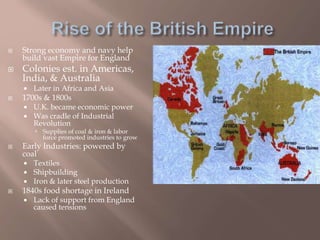
     Strong economyand navy help build vast Empire for England  Colonies est. in Americas, India, & Australia  Later in Africa and Asia  1700s & 1800s  U.K. became economic power  Was cradle of Industrial Revolution  Supplies of coal & iron & labor force promoted industries to grow  Early Industries: powered by coal  Textiles  Shipbuilding  Iron & later steel production  1840s food shortage in Ireland  Lack of support from England caused tensions
  • 4.
     World Wars& Economic competition  Weakened U.K. in 1900s  Ireland wanted independence  All but Northern Ireland in 1949  Colonies wanted independence  Most of colonies after WWII
  • 5.
     British ruleof much of world has influenced government, people and popular culture around the world
  • 6.
     Constitutional monarchy A type of democracy in which a king or queen serves as head of state but a legislature makes the laws  Monarchs power limited in Middle Ages  Magna Carta: limited the powers of kings and required everyone to obey the law  Today:  Prime Minister leads gov’t and has elected Parliament  Republic of Ireland  President is head of state  Limited powers, but appoints Prime Minister  Parliament and Prime Minister run gov’t
  • 7.
     Common culturetraits  Common heritage (Celts, Angles, and Saxons)  Soccer and Rugby  Unique Id  Irish: Roman Catholic, speak Gaelic  Scotland: wear kilts & play bagpipes  Immigrants from former British colonies add to rich culture
  • 8.
     Influences peopleall over globe  English: language of business, education, and the Internet  Music & literature: U2, Beatles, and Shakespeare
  • 9.
     Challenges:  Bringingpeace to Northern Ireland  Maintain powerful economy
  • 10.
     Problems datesback many years  1500s Protestants from England and Scotland settled Northern Ireland  Soon outnumbered Irish Catholics  Protestants chose to remain part of U.K.  Catholics in Northern Ireland believe they have not been treated fairly & want to unite with Republic of Ireland  Two sides have waged bitter struggle for years
  • 11.
     Among Europe’sstrongest  London: capital of U.K. And center for world trade and industry  North Sea: energy reserves (oil and natural gas)  Ireland: computer equipment & software  Service Industries: banking, tourism, and insurance
  • 12.
     Protestant majority& Roman Catholic minority have bitterly fought each other  Many deaths  Catholics: believe they have not been treated fairly & want to join Roman Catholic Republic of Ireland  Protestants: fear becoming minority; want to remain part of U.K.  Peace talks continue today