Chapter 11 Presentation: The
   Endocrine System and
      Hypercalcemia
         Michaelia Fosses
          Summer 2012
Endocrine System
• The collection of glands in the endocrine system secrete
  hormones into the bloodstream
• This is in contrast to the exocrine system, which secretes
  fluids into a duct
• Hormones are chemicals secreted by a gland to control the
  function of a target tissue
Endocrine System
• Hormones are secreted
  into the bloodstream
  and work on a target
  organ or tissue,
  increasing or
  decreasing its activity
  level
• The endocrine system
  maintains homeostasis
  in the body—a stable
  internal environment
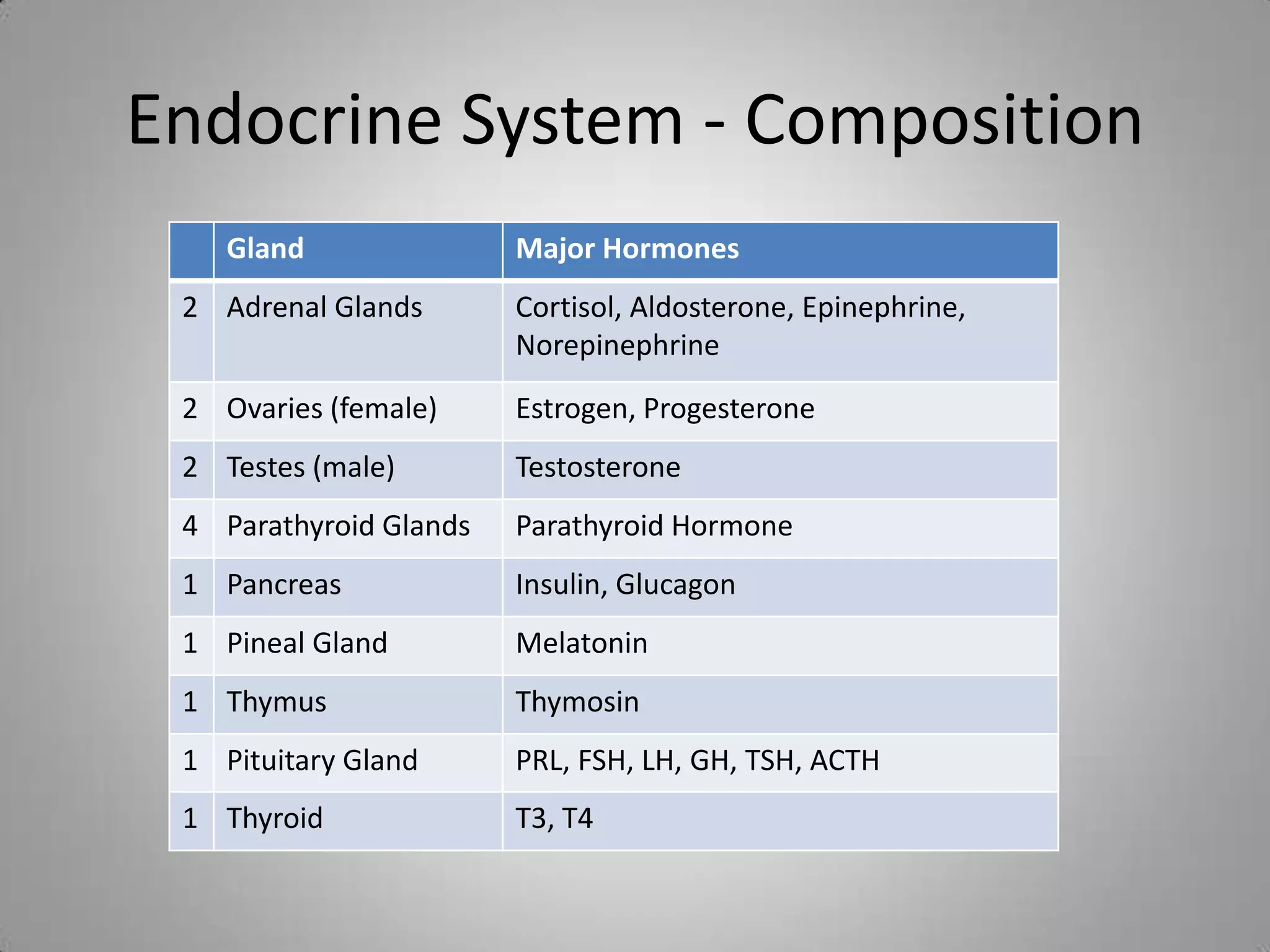
Endocrine System - Composition
    Gland               Major Hormones
 2 Adrenal Glands       Cortisol, Aldosterone, Epinephrine,
                        Norepinephrine
 2 Ovaries (female)     Estrogen, Progesterone
 2 Testes (male)        Testosterone
 4 Parathyroid Glands   Parathyroid Hormone
 1 Pancreas             Insulin, Glucagon
 1 Pineal Gland         Melatonin
 1 Thymus               Thymosin
 1 Pituitary Gland      PRL, FSH, LH, GH, TSH, ACTH
 1 Thyroid              T3, T4
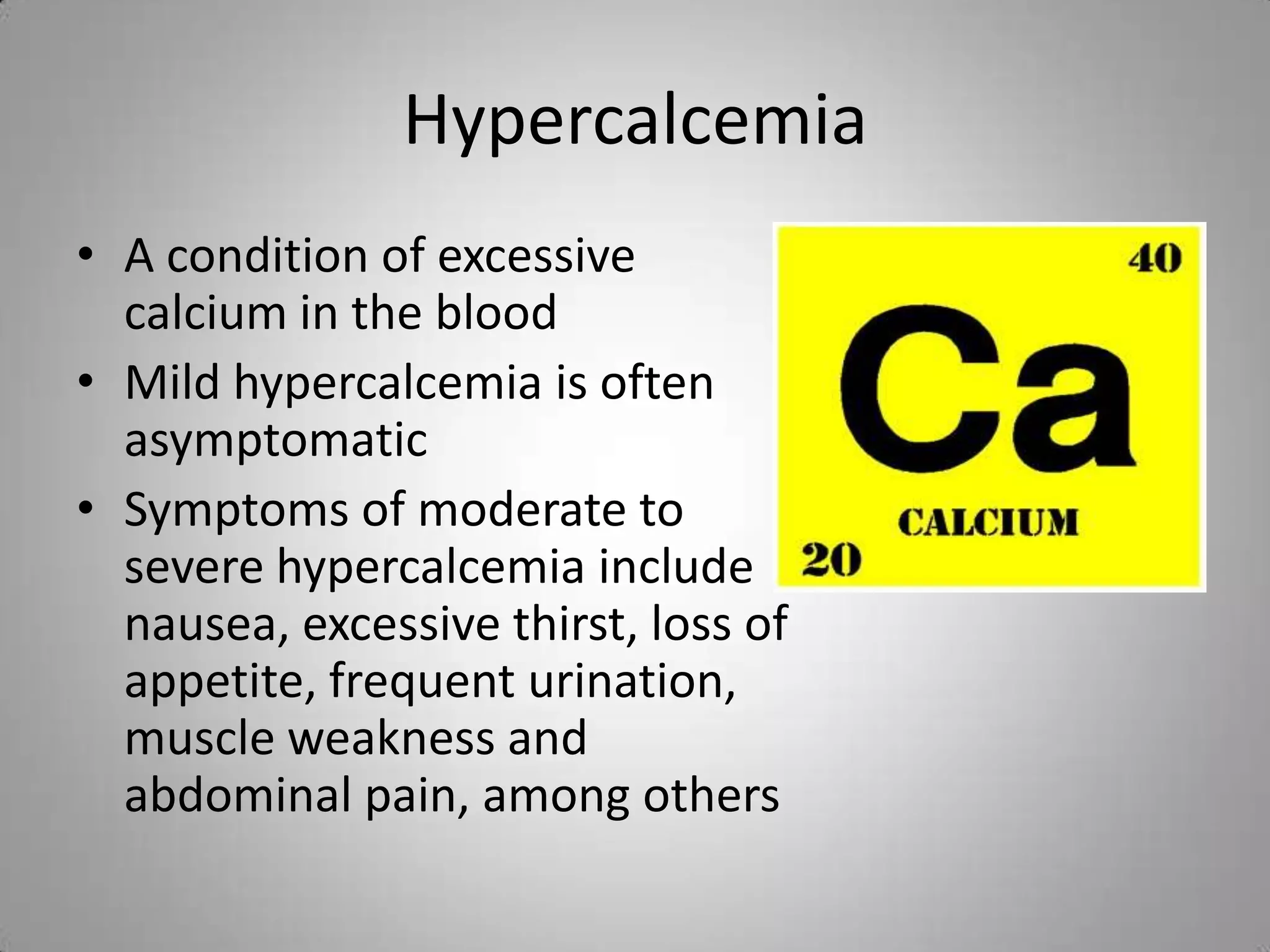
Hypercalcemia
• A condition of excessive
  calcium in the blood
• Mild hypercalcemia is often
  asymptomatic
• Symptoms of moderate to
  severe hypercalcemia include
  nausea, excessive thirst, loss of
  appetite, frequent urination,
  muscle weakness and
  abdominal pain, among others
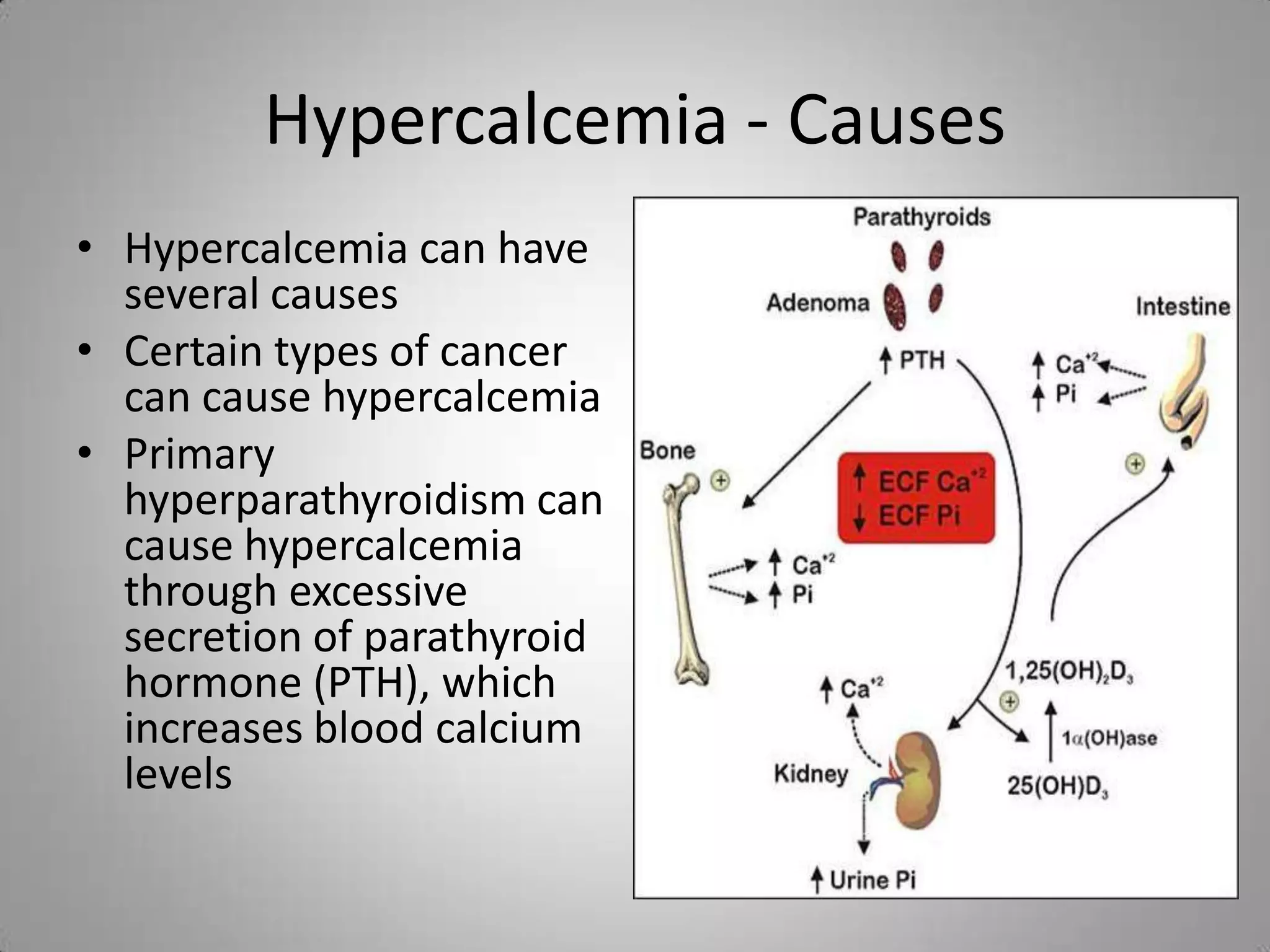
Hypercalcemia - Causes
• Hypercalcemia can have
  several causes
• Certain types of cancer
  can cause hypercalcemia
• Primary
  hyperparathyroidism can
  cause hypercalcemia
  through excessive
  secretion of parathyroid
  hormone (PTH), which
  increases blood calcium
  levels
Hypercalcemia – Diagnosis/Treatment
• Diagnosis of hypercalcemia is made by
  checking blood calcium levels
• Treatment of the hypercalcemia is done to
  return calcium to a safe level
• Treatment of the cause of the hypercalcemia
  depends on the cause
References
• www.mayoclinic.com
• Medical Terminology: A Living Language.
  Fregman, Bonnie F. and Suzanne S. Frucht.
  Pearson, Upper Saddle River, New Jersey.
  2009.

Chapter 11 presentation

  • 1.
    Chapter 11 Presentation:The Endocrine System and Hypercalcemia Michaelia Fosses Summer 2012
  • 2.
    Endocrine System • Thecollection of glands in the endocrine system secrete hormones into the bloodstream • This is in contrast to the exocrine system, which secretes fluids into a duct • Hormones are chemicals secreted by a gland to control the function of a target tissue
  • 3.
    Endocrine System • Hormonesare secreted into the bloodstream and work on a target organ or tissue, increasing or decreasing its activity level • The endocrine system maintains homeostasis in the body—a stable internal environment
  • 4.
    Endocrine System -Composition Gland Major Hormones 2 Adrenal Glands Cortisol, Aldosterone, Epinephrine, Norepinephrine 2 Ovaries (female) Estrogen, Progesterone 2 Testes (male) Testosterone 4 Parathyroid Glands Parathyroid Hormone 1 Pancreas Insulin, Glucagon 1 Pineal Gland Melatonin 1 Thymus Thymosin 1 Pituitary Gland PRL, FSH, LH, GH, TSH, ACTH 1 Thyroid T3, T4
  • 5.
    Hypercalcemia • A conditionof excessive calcium in the blood • Mild hypercalcemia is often asymptomatic • Symptoms of moderate to severe hypercalcemia include nausea, excessive thirst, loss of appetite, frequent urination, muscle weakness and abdominal pain, among others
  • 6.
    Hypercalcemia - Causes •Hypercalcemia can have several causes • Certain types of cancer can cause hypercalcemia • Primary hyperparathyroidism can cause hypercalcemia through excessive secretion of parathyroid hormone (PTH), which increases blood calcium levels
  • 7.
    Hypercalcemia – Diagnosis/Treatment •Diagnosis of hypercalcemia is made by checking blood calcium levels • Treatment of the hypercalcemia is done to return calcium to a safe level • Treatment of the cause of the hypercalcemia depends on the cause
  • 8.
    References • www.mayoclinic.com • MedicalTerminology: A Living Language. Fregman, Bonnie F. and Suzanne S. Frucht. Pearson, Upper Saddle River, New Jersey. 2009.