 INFORMATION SYSTEMS IN BUSINESS

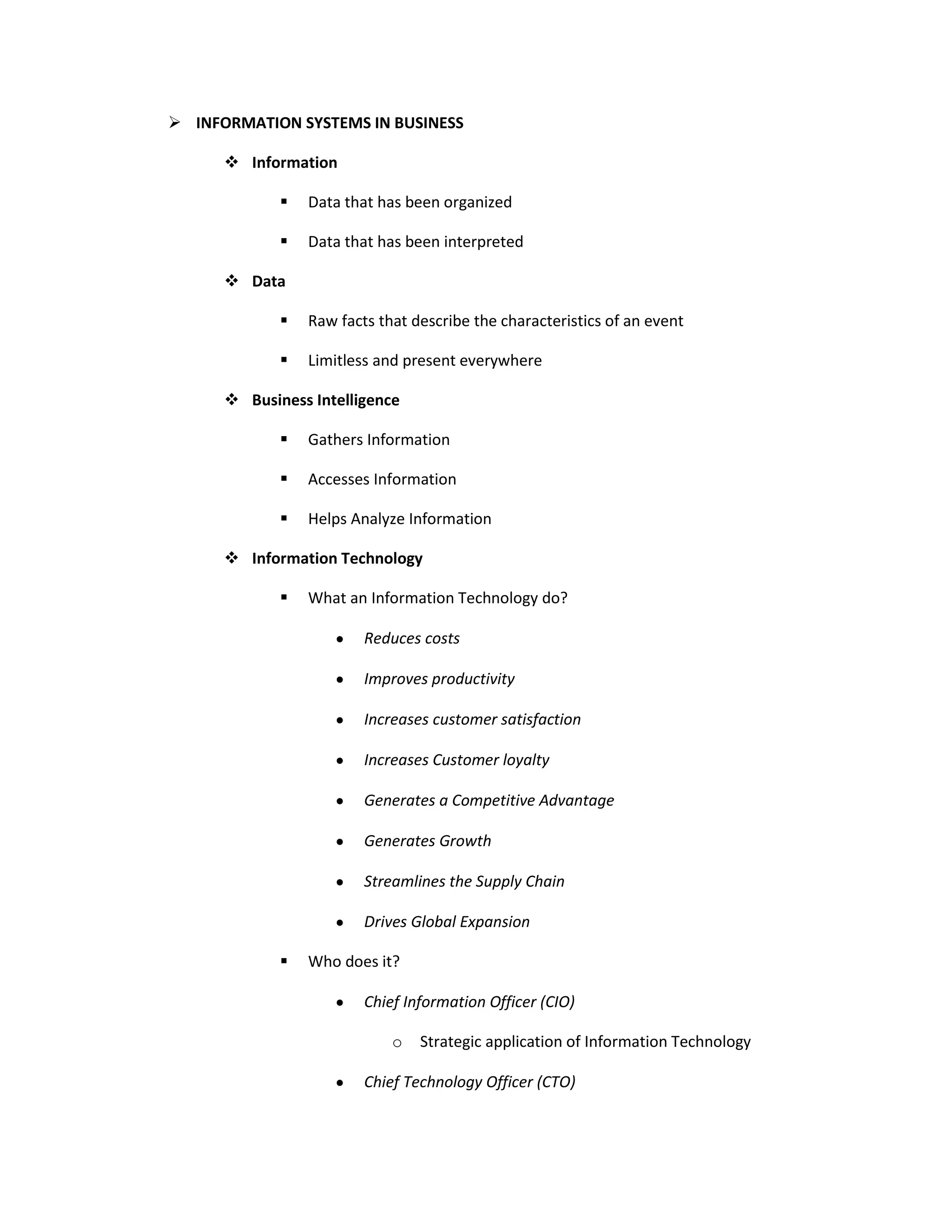
       Information

                Data that has been organized

                Data that has been interpreted

       Data

                Raw facts that describe the characteristics of an event

                Limitless and present everywhere

       Business Intelligence

                Gathers Information

                Accesses Information

                Helps Analyze Information

       Information Technology

                What an Information Technology do?

                         Reduces costs

                         Improves productivity

                         Increases customer satisfaction

                         Increases Customer loyalty

                         Generates a Competitive Advantage

                         Generates Growth

                         Streamlines the Supply Chain

                         Drives Global Expansion

                Who does it?

                         Chief Information Officer (CIO)

                             o   Strategic application of Information Technology

                         Chief Technology Officer (CTO)
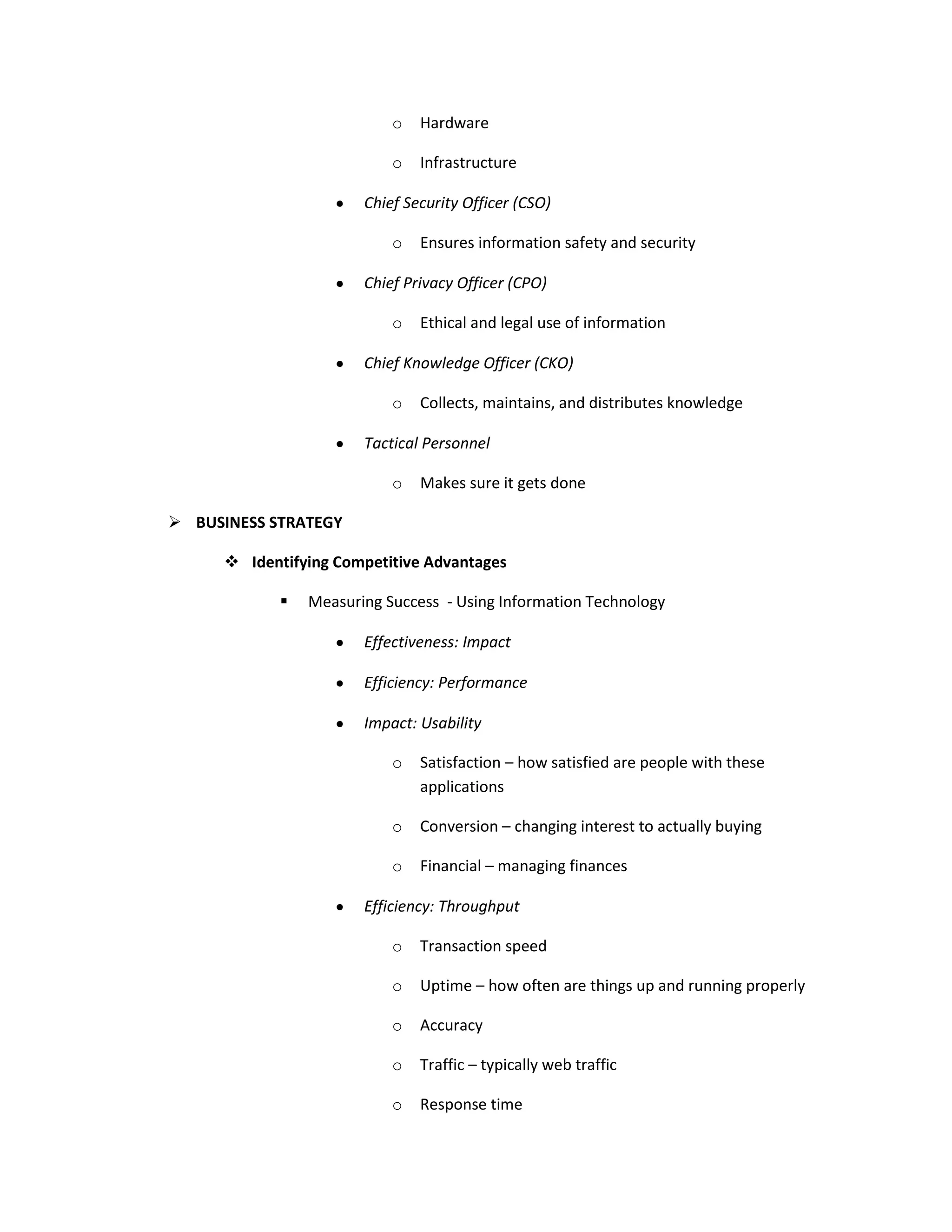
o   Hardware

                            o   Infrastructure

                        Chief Security Officer (CSO)

                            o   Ensures information safety and security

                        Chief Privacy Officer (CPO)

                            o   Ethical and legal use of information

                        Chief Knowledge Officer (CKO)

                            o   Collects, maintains, and distributes knowledge

                        Tactical Personnel

                            o   Makes sure it gets done

 BUSINESS STRATEGY

       Identifying Competitive Advantages

                Measuring Success - Using Information Technology

                        Effectiveness: Impact

                        Efficiency: Performance

                        Impact: Usability

                            o   Satisfaction – how satisfied are people with these
                                applications

                            o   Conversion – changing interest to actually buying

                            o   Financial – managing finances

                        Efficiency: Throughput

                            o   Transaction speed

                            o   Uptime – how often are things up and running properly

                            o   Accuracy

                            o   Traffic – typically web traffic

                            o   Response time
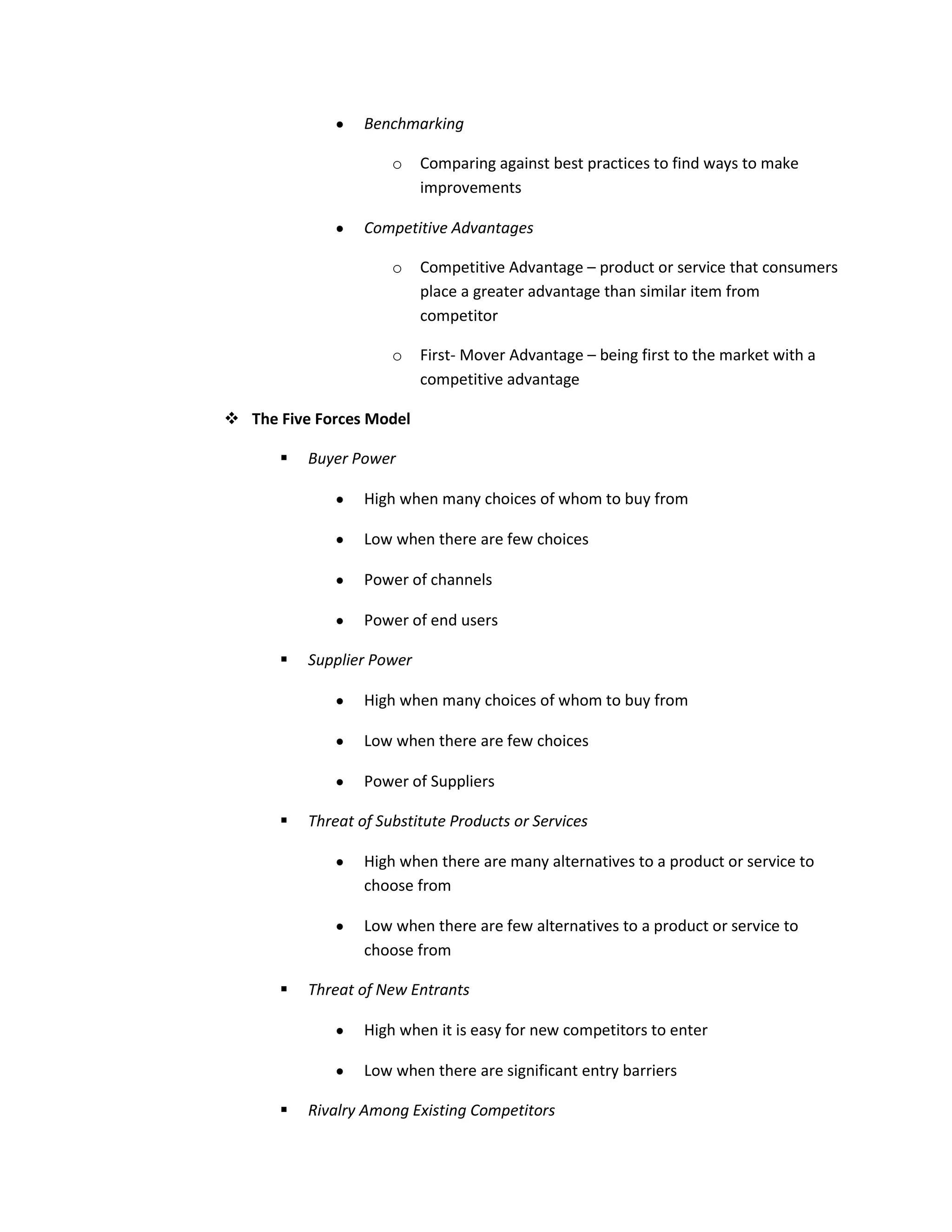
Benchmarking

                      o    Comparing against best practices to find ways to make
                           improvements

                  Competitive Advantages

                      o    Competitive Advantage – product or service that consumers
                           place a greater advantage than similar item from
                           competitor

                      o    First- Mover Advantage – being first to the market with a
                           competitive advantage

 The Five Forces Model

         Buyer Power

                  High when many choices of whom to buy from

                  Low when there are few choices

                  Power of channels

                  Power of end users

         Supplier Power

                  High when many choices of whom to buy from

                  Low when there are few choices

                  Power of Suppliers

         Threat of Substitute Products or Services

                  High when there are many alternatives to a product or service to
                  choose from

                  Low when there are few alternatives to a product or service to
                  choose from

         Threat of New Entrants

                  High when it is easy for new competitors to enter

                  Low when there are significant entry barriers

         Rivalry Among Existing Competitors
High when competition is fierce

Low when competition is complacent

Chapter 1

  • 1.
     INFORMATION SYSTEMSIN BUSINESS  Information  Data that has been organized  Data that has been interpreted  Data  Raw facts that describe the characteristics of an event  Limitless and present everywhere  Business Intelligence  Gathers Information  Accesses Information  Helps Analyze Information  Information Technology  What an Information Technology do? Reduces costs Improves productivity Increases customer satisfaction Increases Customer loyalty Generates a Competitive Advantage Generates Growth Streamlines the Supply Chain Drives Global Expansion  Who does it? Chief Information Officer (CIO) o Strategic application of Information Technology Chief Technology Officer (CTO)
  • 2.
    o Hardware o Infrastructure Chief Security Officer (CSO) o Ensures information safety and security Chief Privacy Officer (CPO) o Ethical and legal use of information Chief Knowledge Officer (CKO) o Collects, maintains, and distributes knowledge Tactical Personnel o Makes sure it gets done  BUSINESS STRATEGY  Identifying Competitive Advantages  Measuring Success - Using Information Technology Effectiveness: Impact Efficiency: Performance Impact: Usability o Satisfaction – how satisfied are people with these applications o Conversion – changing interest to actually buying o Financial – managing finances Efficiency: Throughput o Transaction speed o Uptime – how often are things up and running properly o Accuracy o Traffic – typically web traffic o Response time
  • 3.
    Benchmarking o Comparing against best practices to find ways to make improvements Competitive Advantages o Competitive Advantage – product or service that consumers place a greater advantage than similar item from competitor o First- Mover Advantage – being first to the market with a competitive advantage  The Five Forces Model  Buyer Power High when many choices of whom to buy from Low when there are few choices Power of channels Power of end users  Supplier Power High when many choices of whom to buy from Low when there are few choices Power of Suppliers  Threat of Substitute Products or Services High when there are many alternatives to a product or service to choose from Low when there are few alternatives to a product or service to choose from  Threat of New Entrants High when it is easy for new competitors to enter Low when there are significant entry barriers  Rivalry Among Existing Competitors
  • 4.
    High when competitionis fierce Low when competition is complacent