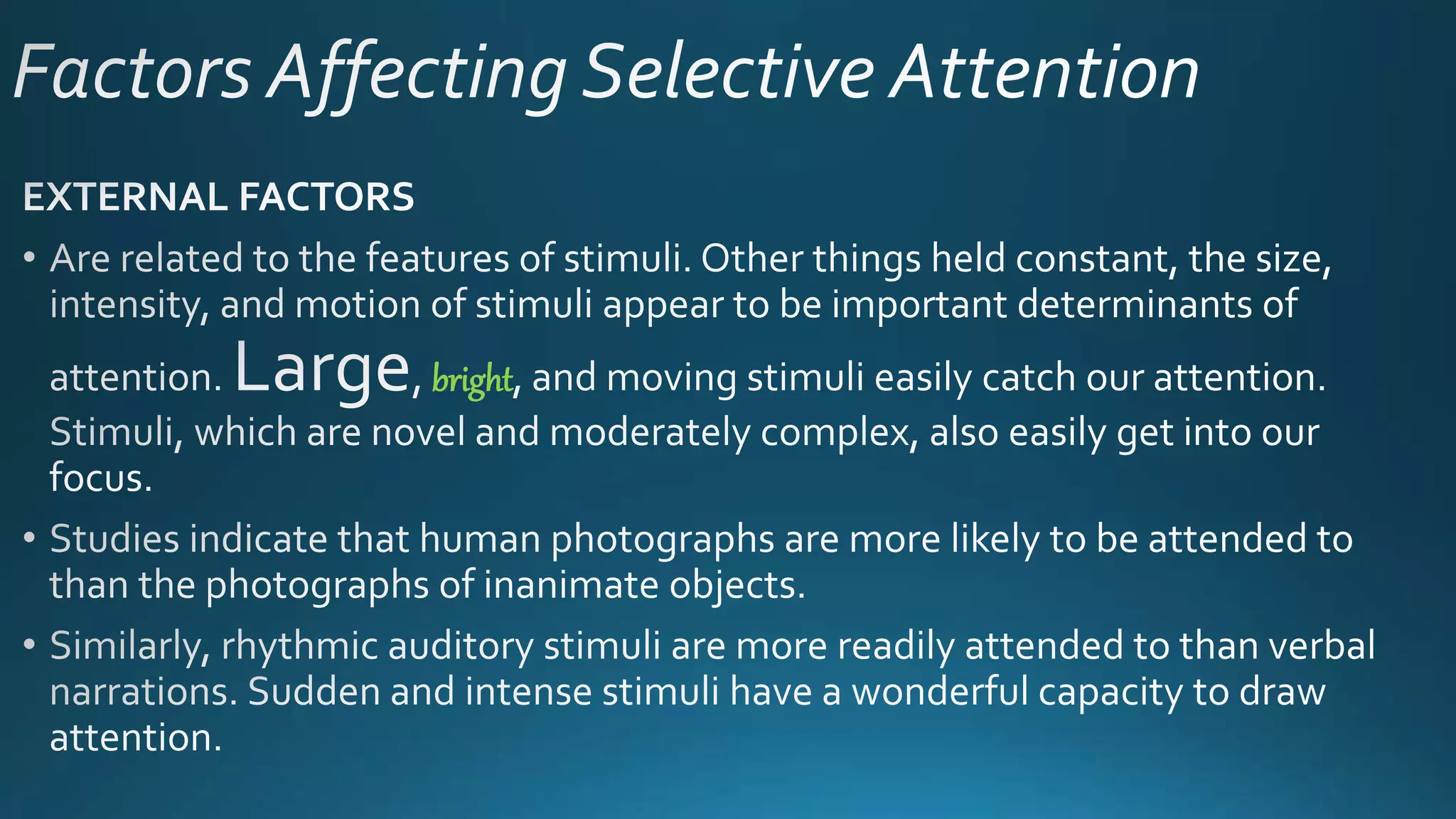

bright
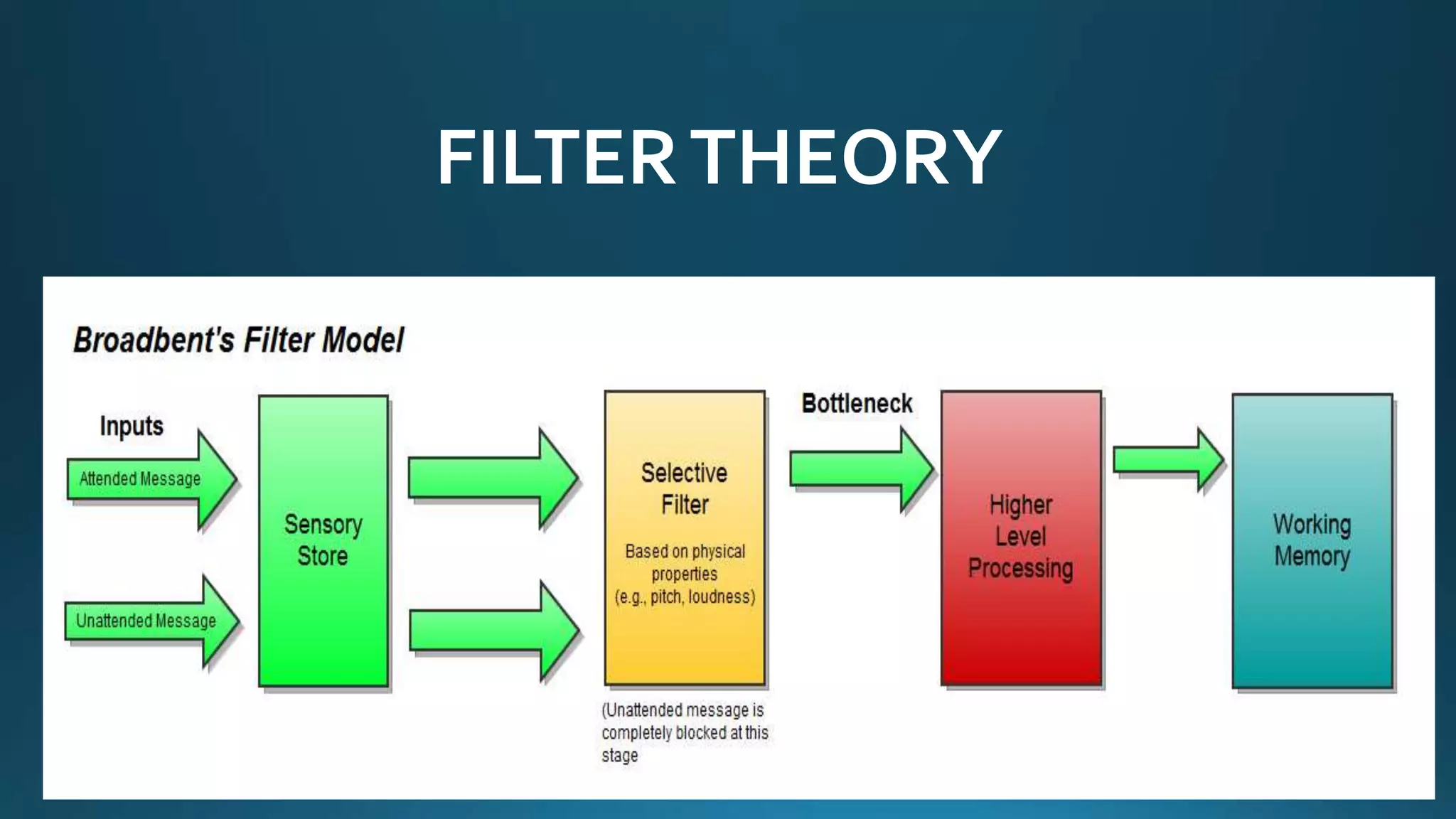
FILTERTHEORY
• Was developed by Broadbent (1956).
• According to this theory, many stimuli simultaneously enter our receptors
creating a kind of “bottleneck” situation.
• Moving through the short-term memory system, they enter the selective
filter, which allows only one stimulus to pass through for higher levels of
processing.
• Other stimuli are screened out at that moment of time.Thus, we become
aware of only that stimulus, which gets access through the selective filter.
FILTERTHEORY
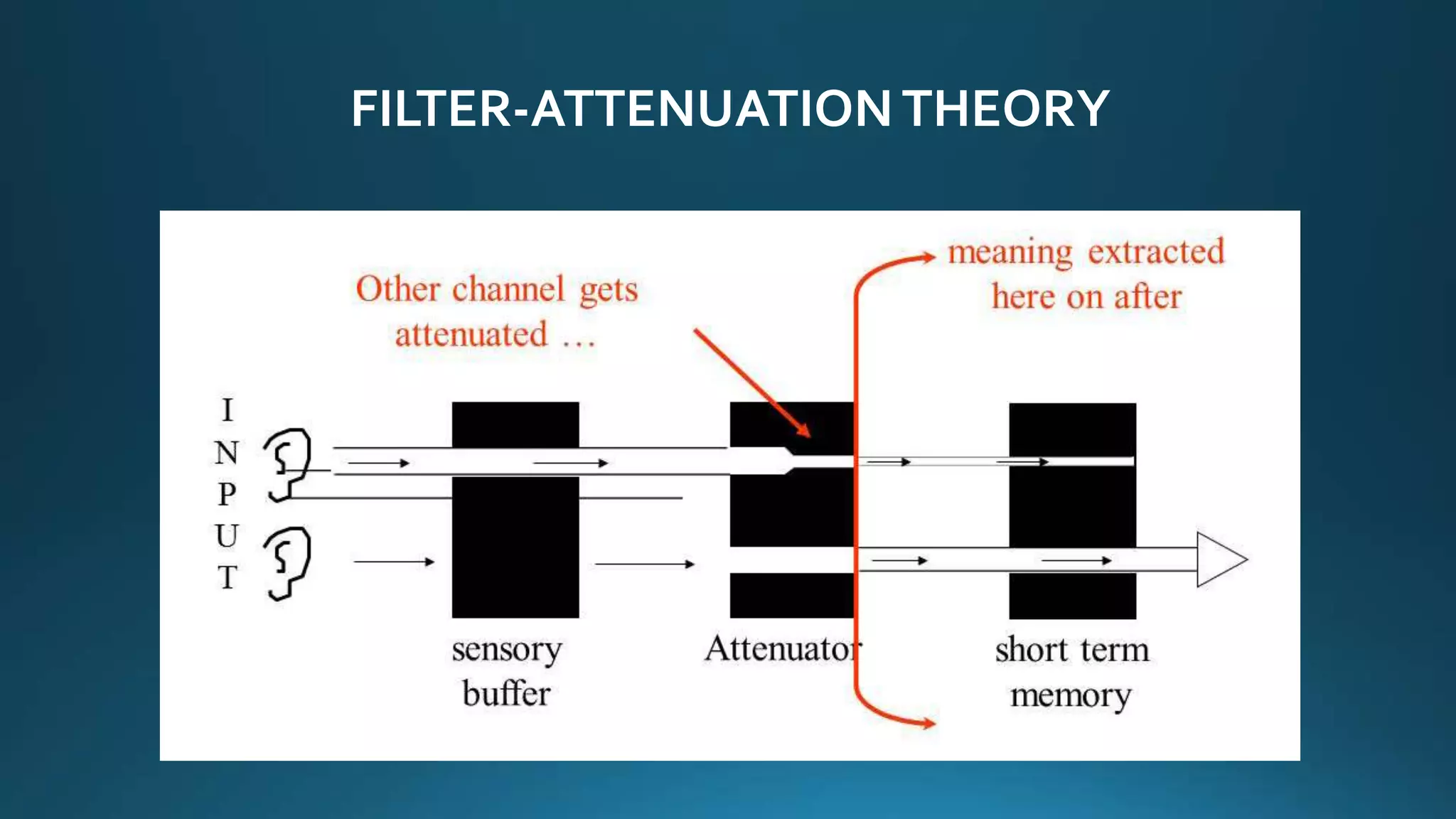
FILTER-ATTENUATIONTHEORY
chap 5 Sensory, attentional and perceptual processes.ppt

chap 5 Sensory, attentional and perceptual processes.ppt

  • 12.
  • 14.
    FILTERTHEORY • Was developedby Broadbent (1956). • According to this theory, many stimuli simultaneously enter our receptors creating a kind of “bottleneck” situation. • Moving through the short-term memory system, they enter the selective filter, which allows only one stimulus to pass through for higher levels of processing. • Other stimuli are screened out at that moment of time.Thus, we become aware of only that stimulus, which gets access through the selective filter.
  • 15.
  • 17.