Chapter 17
A New South: Economic Progress and Social
          Tradition (1877–1900)
   What characterized continuity and change between
    the Old South and the New South?
   What were the origins and nature of southern
    populism?
   What were women’s role in the South?
   How and why did segregation and disfranchisement
    change race relations in the South?
◦ Birmingham, Alabama epitomized the one aspect of the
  New South as iron and steel mills emerged in the city.
◦ The southern textile industry also grew, especially in the
  Piedmont.
◦ The tobacco and soft drink industries also became
  important economic aspects of the South.
◦ Southern railroad construction boomed in the 1880s,
  tying the section together and stimulating the rise of
  interior cities.
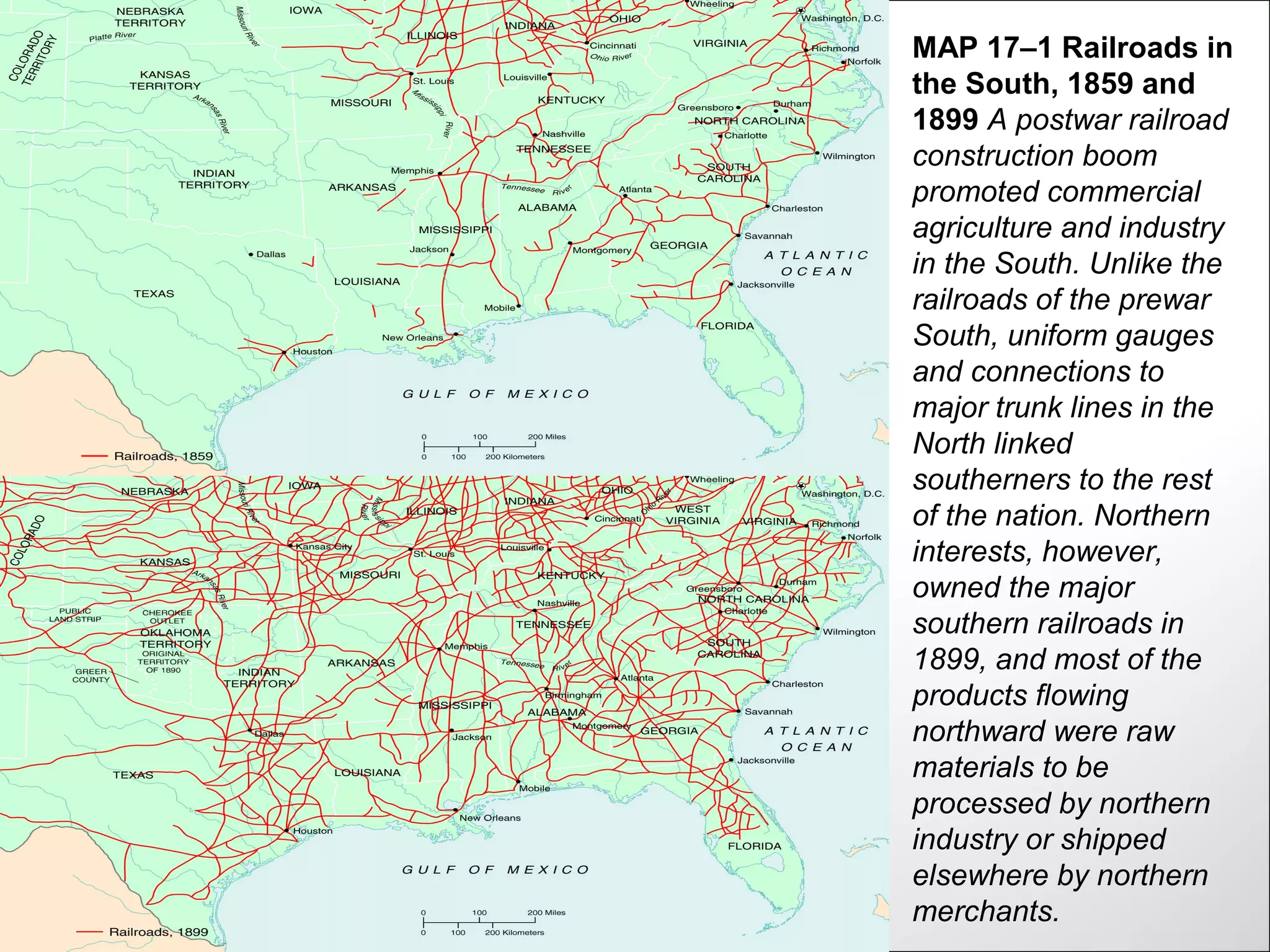
MAP 17–1 Railroads in
the South, 1859 and
1899 A postwar railroad
construction boom
promoted commercial
agriculture and industry
in the South. Unlike the
railroads of the prewar
South, uniform gauges
and connections to
major trunk lines in the
North linked
southerners to the rest
of the nation. Northern
interests, however,
owned the major
southern railroads in
1899, and most of the
products flowing
northward were raw
materials to be
processed by northern
industry or shipped
elsewhere by northern
merchants.
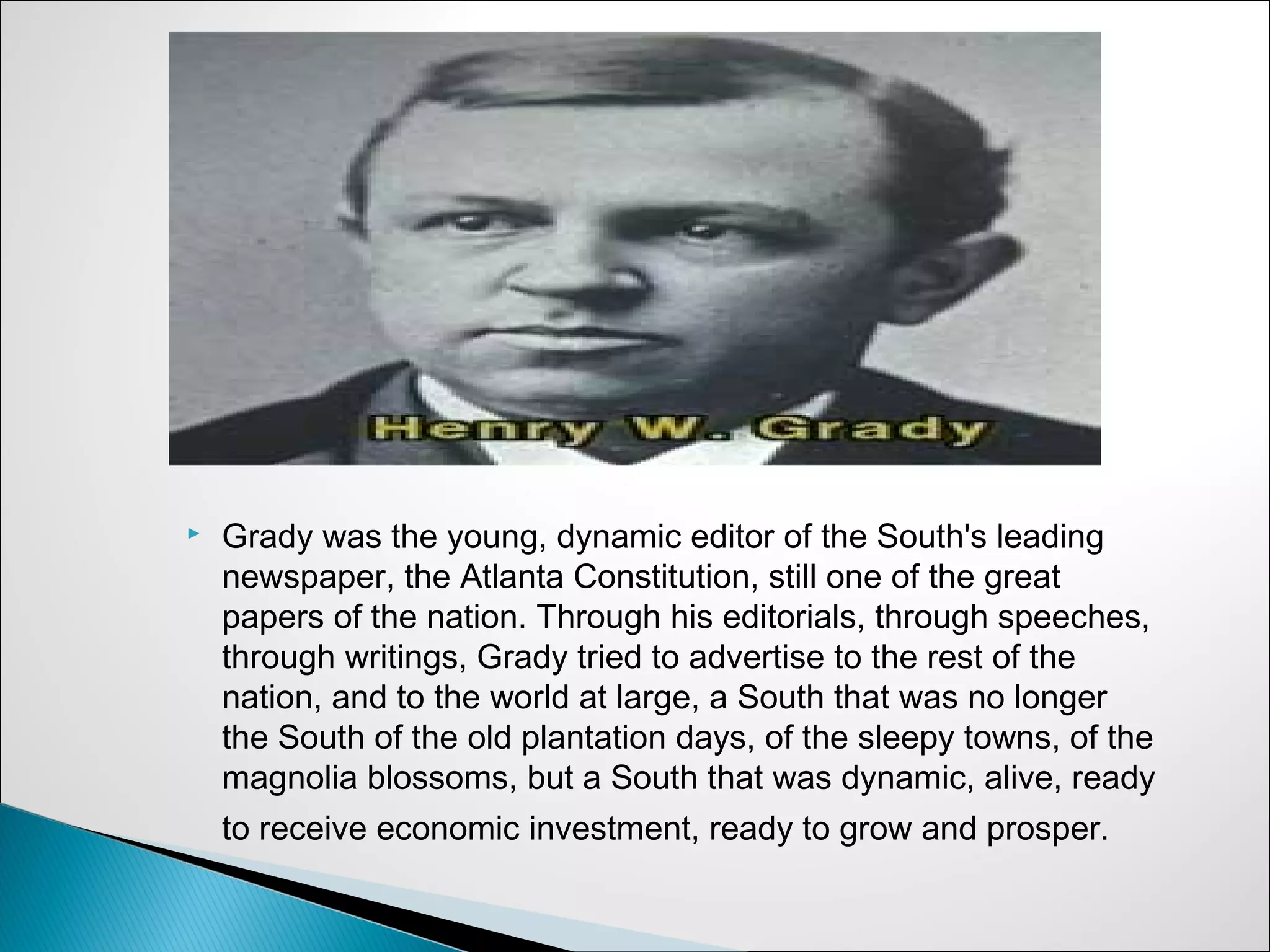
   Grady was the young, dynamic editor of the South's leading
    newspaper, the Atlanta Constitution, still one of the great
    papers of the nation. Through his editorials, through speeches,
    through writings, Grady tried to advertise to the rest of the
    nation, and to the world at large, a South that was no longer
    the South of the old plantation days, of the sleepy towns, of the
    magnolia blossoms, but a South that was dynamic, alive, ready
    to receive economic investment, ready to grow and prosper.
– Southern urban and industrial growth was rapid but
  barely kept pace with the northern boom.
– A weak agricultural economy and high rural birthrate kept
  wages in the South low and undermined the southern
  economy. Consumer demand was low limiting the
  market for southern manufacturing goods. Low wages
  also had other negative effects, including keeping
  immigrants away.
– The South remained a section apart. The Civil War had
  wiped out its capital resources, making it a colony of the
  North. Investment seemed riskier making the South
  dependent on numerous small investors.
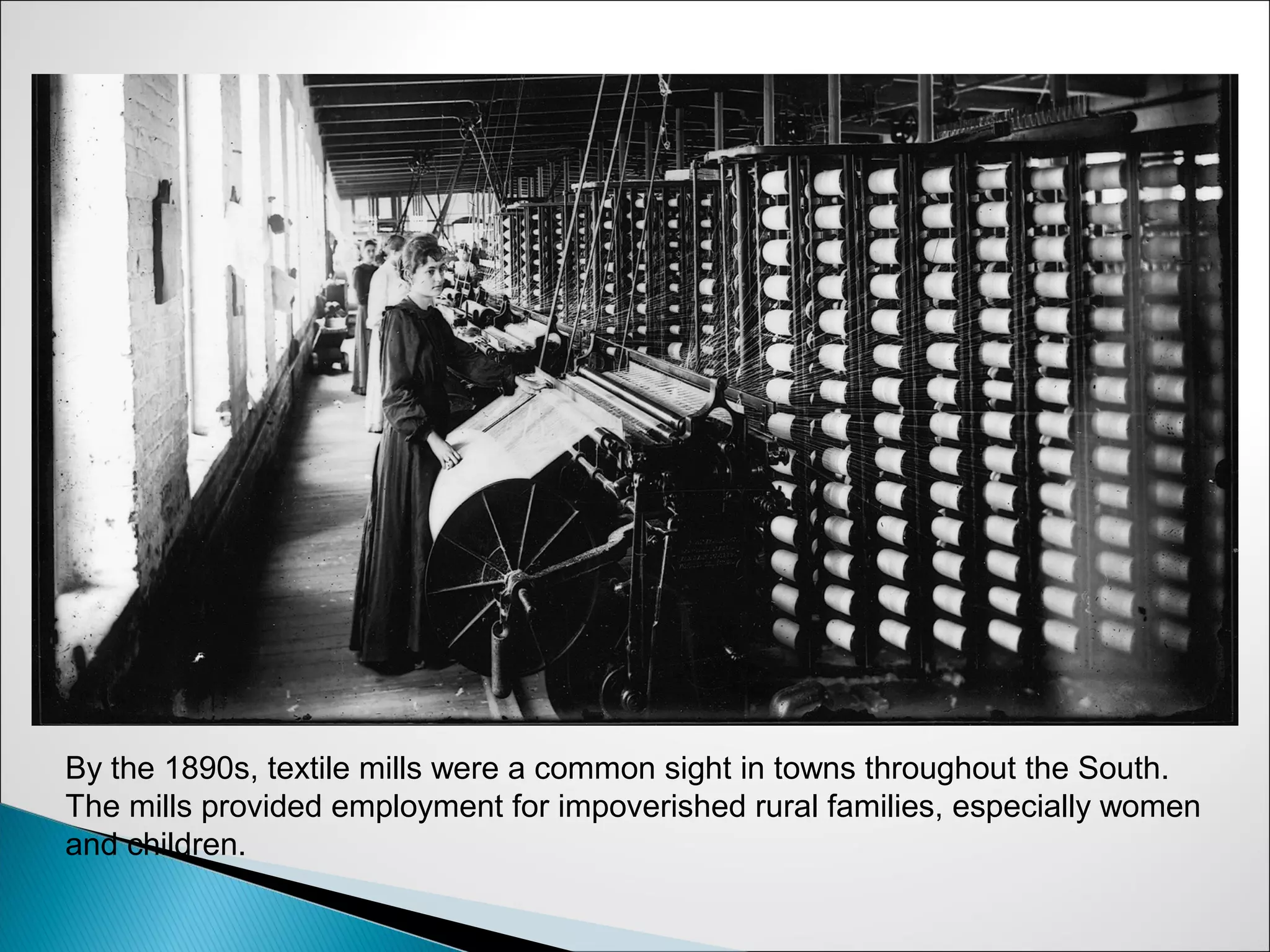
By the 1890s, textile mills were a common sight in towns throughout the South.
The mills provided employment for impoverished rural families, especially women
and children.
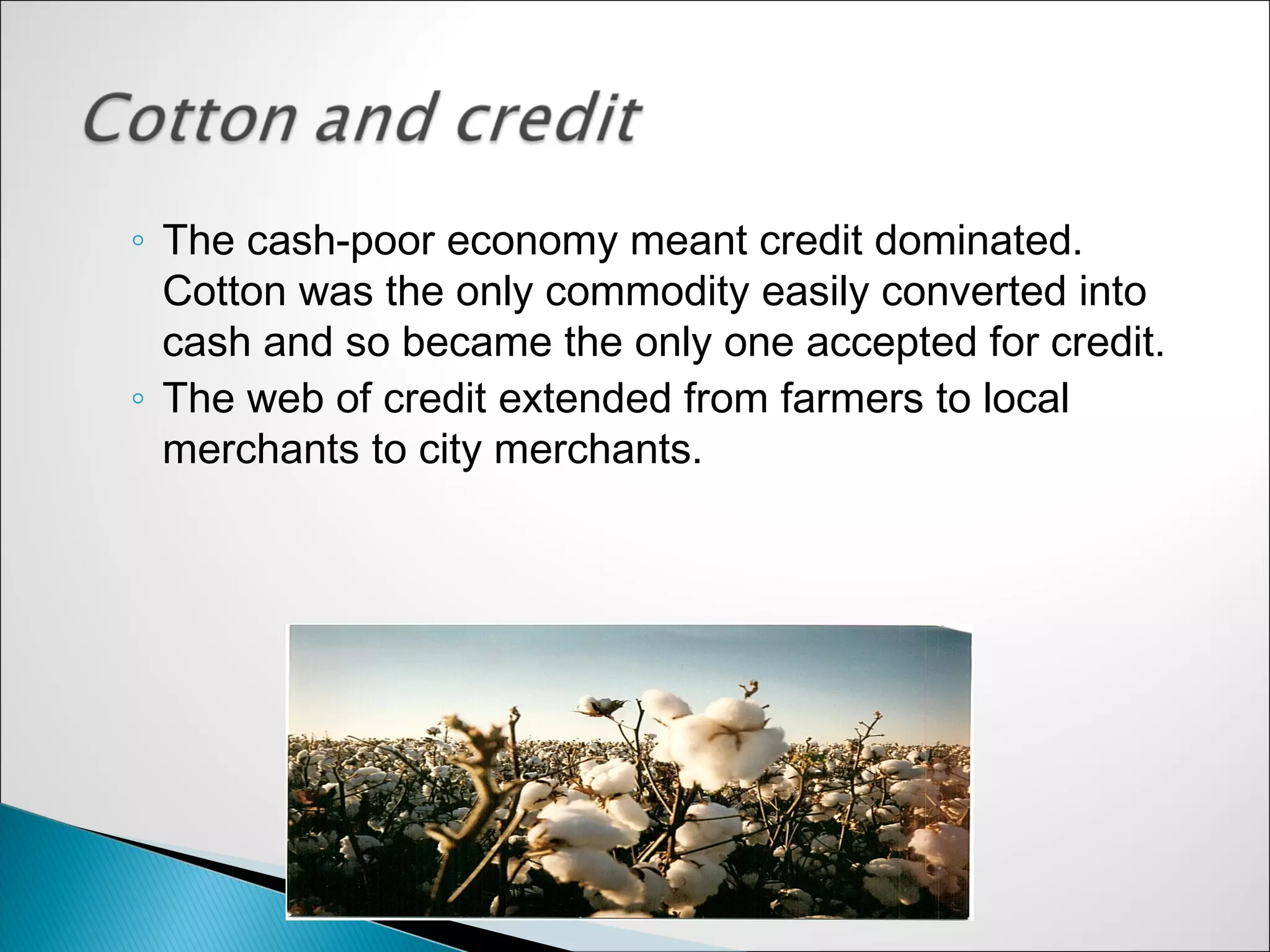
◦ The cash-poor economy meant credit dominated.
  Cotton was the only commodity easily converted into
  cash and so became the only one accepted for credit.
◦ The web of credit extended from farmers to local
  merchants to city merchants.
◦ Declining conditions led farmers to fight for
  improvements. They supported lower interest rates,
  easier credit, regulation of railroad freight rates, and
  lower commodity prices.
◦ By 1875, nearly 250,000 southern farmers had joined
  the Patrons of Husbandry, often called the Grange.
  The leaders were large farmers.
◦ The most powerful farm reform organization was the
  Southern Farmers’ Alliance that originated in Texas. It
  became a surrogate government and church for many
  small farmers. It developed into the People’s Party.
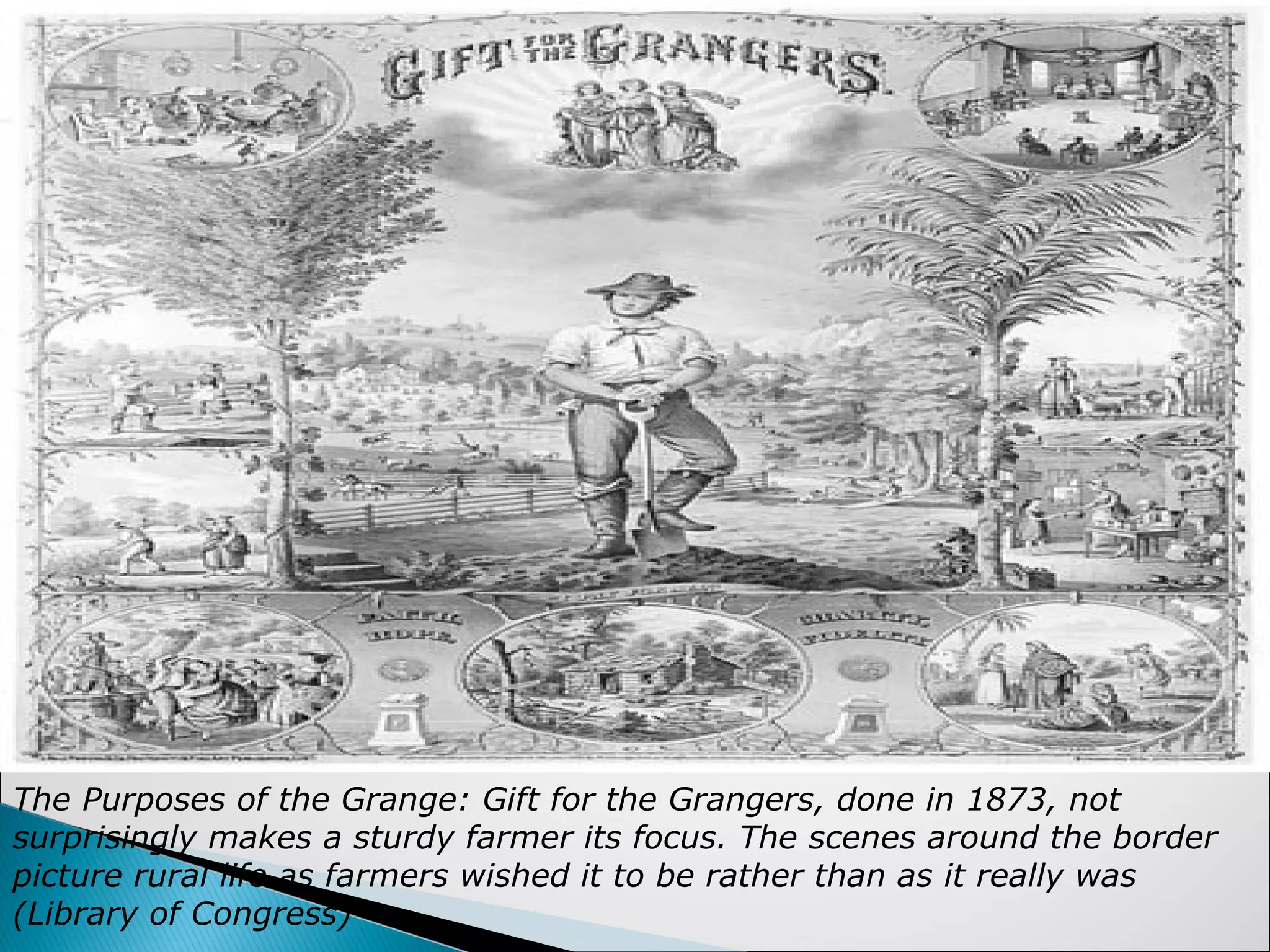
The Purposes of the Grange: Gift for the Grangers, done in 1873, not
surprisingly makes a sturdy farmer its focus. The scenes around the border
picture rural life as farmers wished it to be rather than as it really was
(Library of Congress)
◦ Facing growing financial pressures in the 1880s and
  early 1890s combined with the failure of major political
  parties to address their concerns, northern and
  southern farmers joined the Alliance and supported the
  People’s Party.
◦ The People’s Party supported the direct election of U.
  S. senators, an income tax, government ownership of
  railroads, woman suffrage, and other credit easing
  proposals.
◦ Southern populists were ambivalent about African
  Americans but populists in Texas and Georgia openly
  appealed for black votes.
◦ In the 1892 election, Populists made inroads in some
  southern state legislators.
   Church work and preserving memories
    ◦ Church work provided an avenue for southern women to
      enter the public arena. They founded home missions to
      promote industrial education among the poor and help
      working-class women become self-sufficient. They also
      established settlement houses.
    ◦ Religion led southern white women to join the Women’s
      Christian Temperance Union.
    - Alcohol prohibition, smoking, Coca-Cola
    ◦ The reform movement among middle-class southern white
      women was conservative in nature.
    -Supported segregation and defended white supremacy
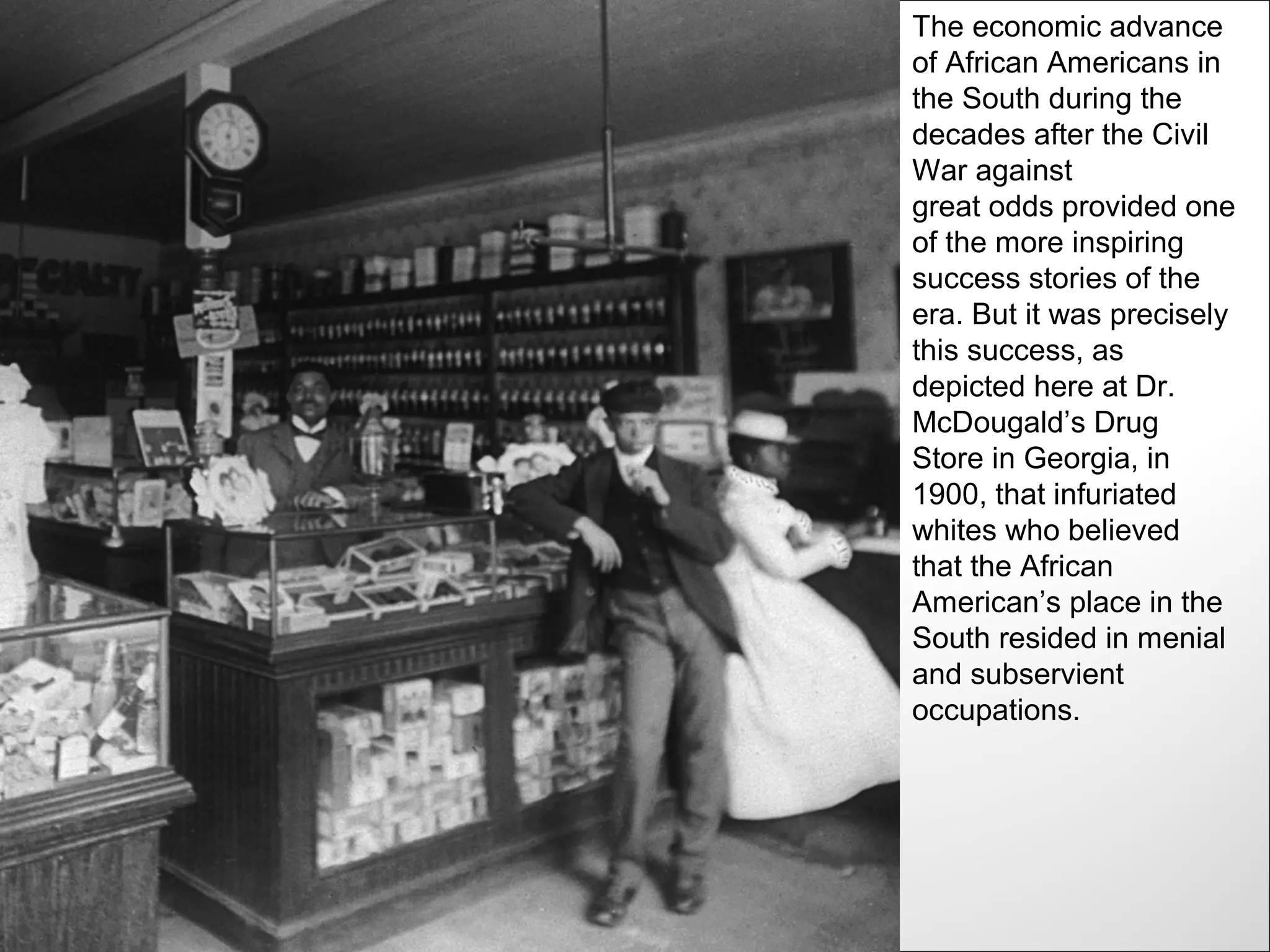
The economic advance
of African Americans in
the South during the
decades after the Civil
War against
great odds provided one
of the more inspiring
success stories of the
era. But it was precisely
this success, as
depicted here at Dr.
McDougald’s Drug
Store in Georgia, in
1900, that infuriated
whites who believed
that the African
American’s place in the
South resided in menial
and subservient
occupations.
   The white backlash
    ◦ As young African Americans demanded full
      participation in American society, white Southerners of
      the same generation resented the changed status of
      African Americans.
    ◦ The South’s deteriorating rural economy and the
      volatile politics of the late 1880s and early 1890s
      heightened tensions between the races. Racial rhetoric
      and violence escalated.
    ◦ Whites who were raised on the myth of the “Lost
      Cause” saw blacks as replacing the “Yankees” as the
      enemy.
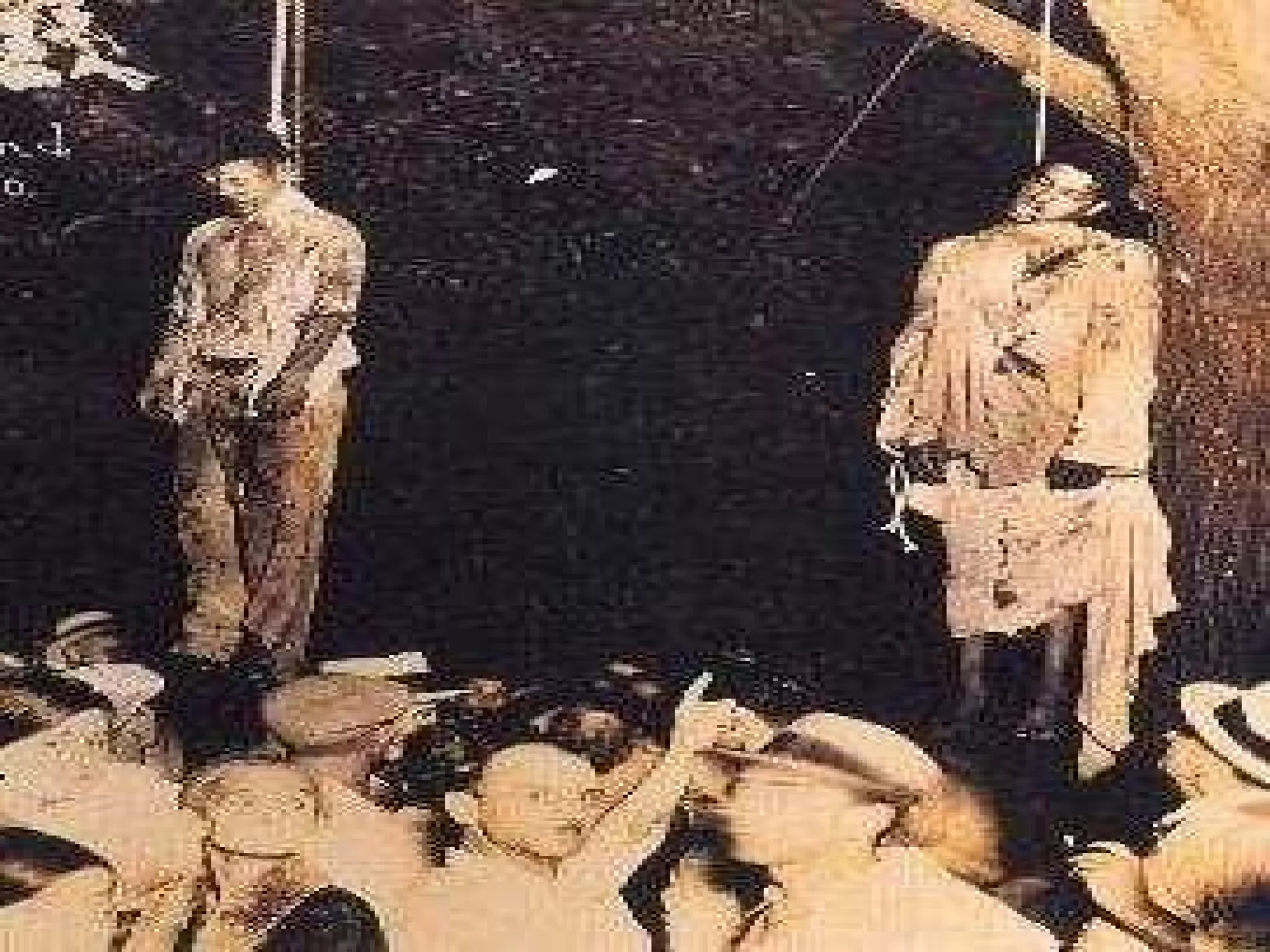
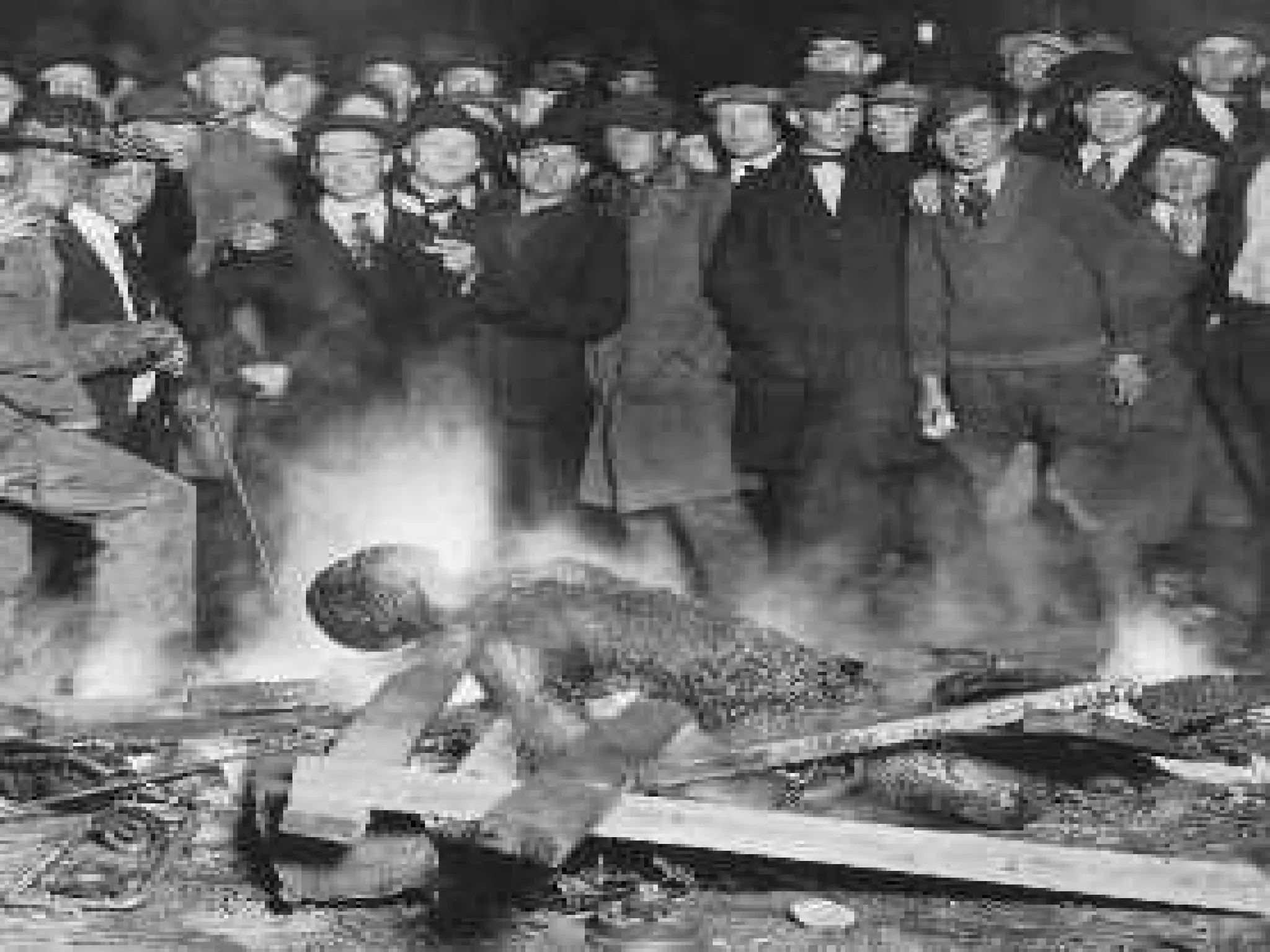
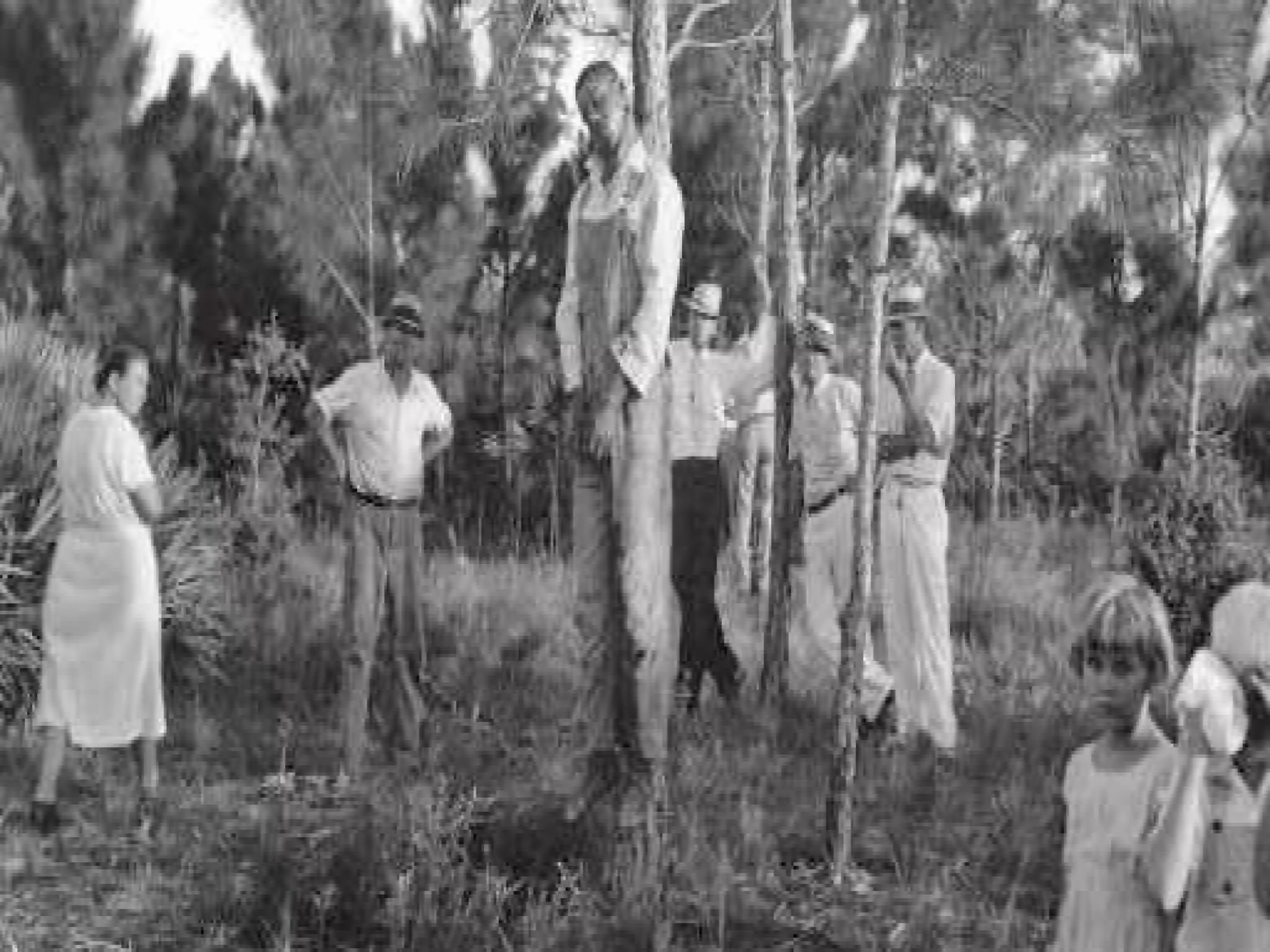
Lynch law
   Between 1882 and 1903 white mobs lynched more than
    2,000 black Southerners
   Lynching did not end until the 1940’s
   Most lynching were for imagined slights to white women,
    but included many other alleged crimes where blacks
    stepped above their “place”
   Lynch mobs usually tortured and killed their victims in a
    circus-like atmosphere
• Memphis journalist Ida B. Wells launched an anti-lynching
  crusade.
                       lynch video 1
                     Willie Lynch Video
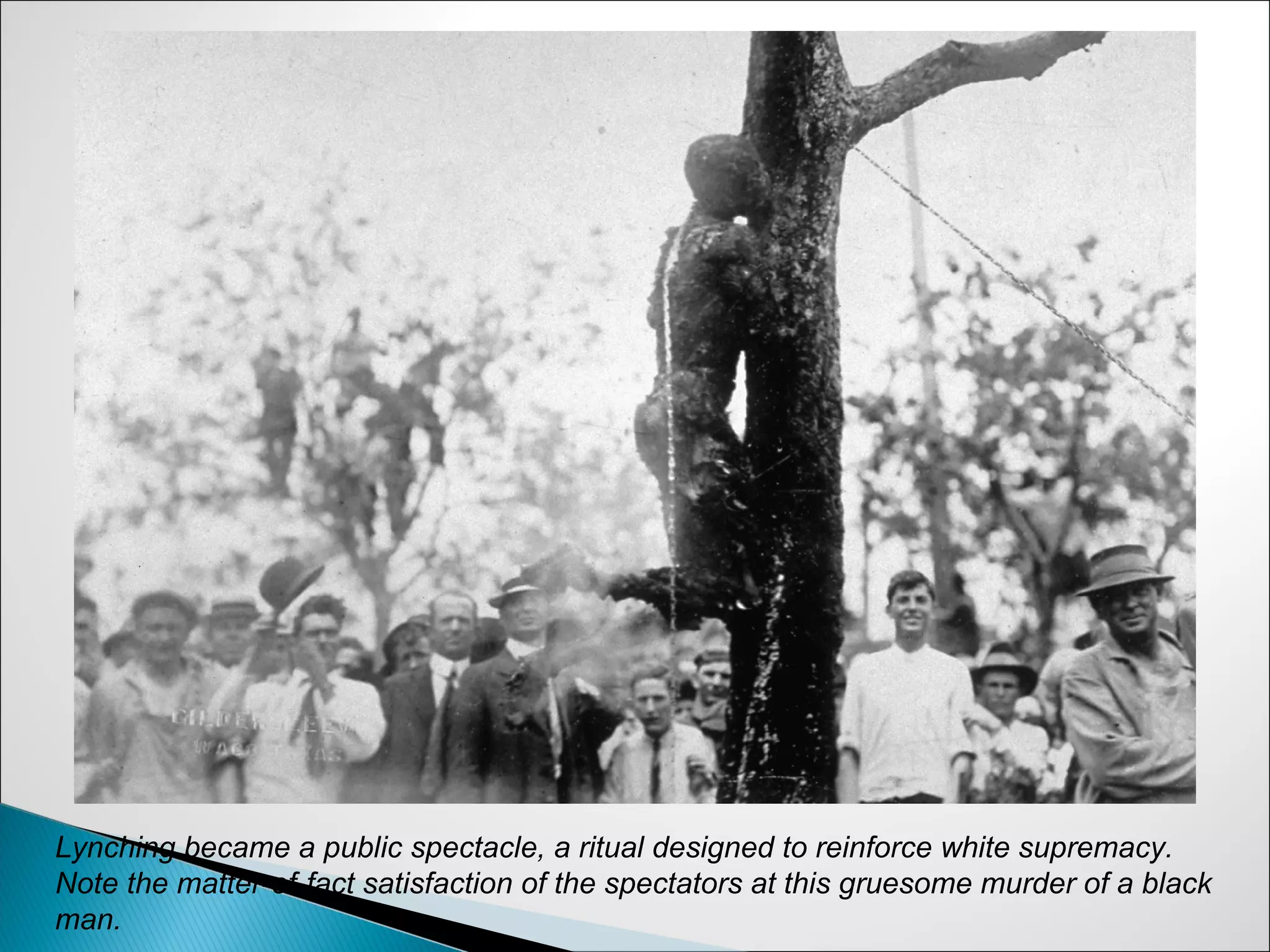
Lynching became a public spectacle, a ritual designed to reinforce white supremacy.
Note the matter-of-fact satisfaction of the spectators at this gruesome murder of a black
man.
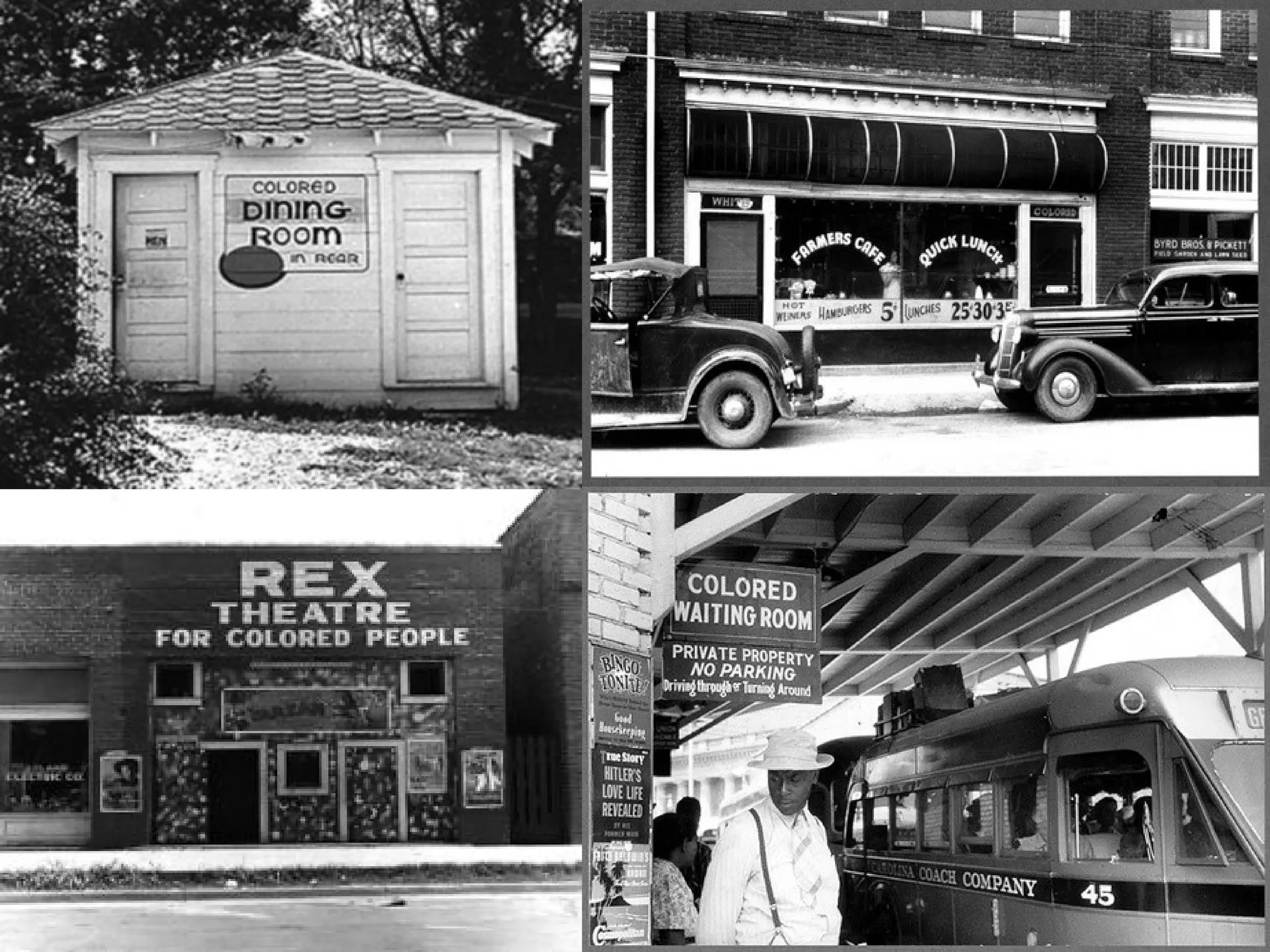
•   Segregation by law
    – Southern white lawmakers tried to bolster white
      solidarity and guarantee African American
      subservience in the 1890s by legalized segregation
      and disfranchisement of black voters.
    – In the 1870s, racial segregation in public places was
      spreading in southern cities and ending in northern
      urban areas.
    – New segregation legislation focused on railroads
      and providing “separate but equal” facilities.
    – In 1896, the U. S. Supreme Court ruled that
      separate but equal was constitutional in the
      (Plessy v. Ferguson)
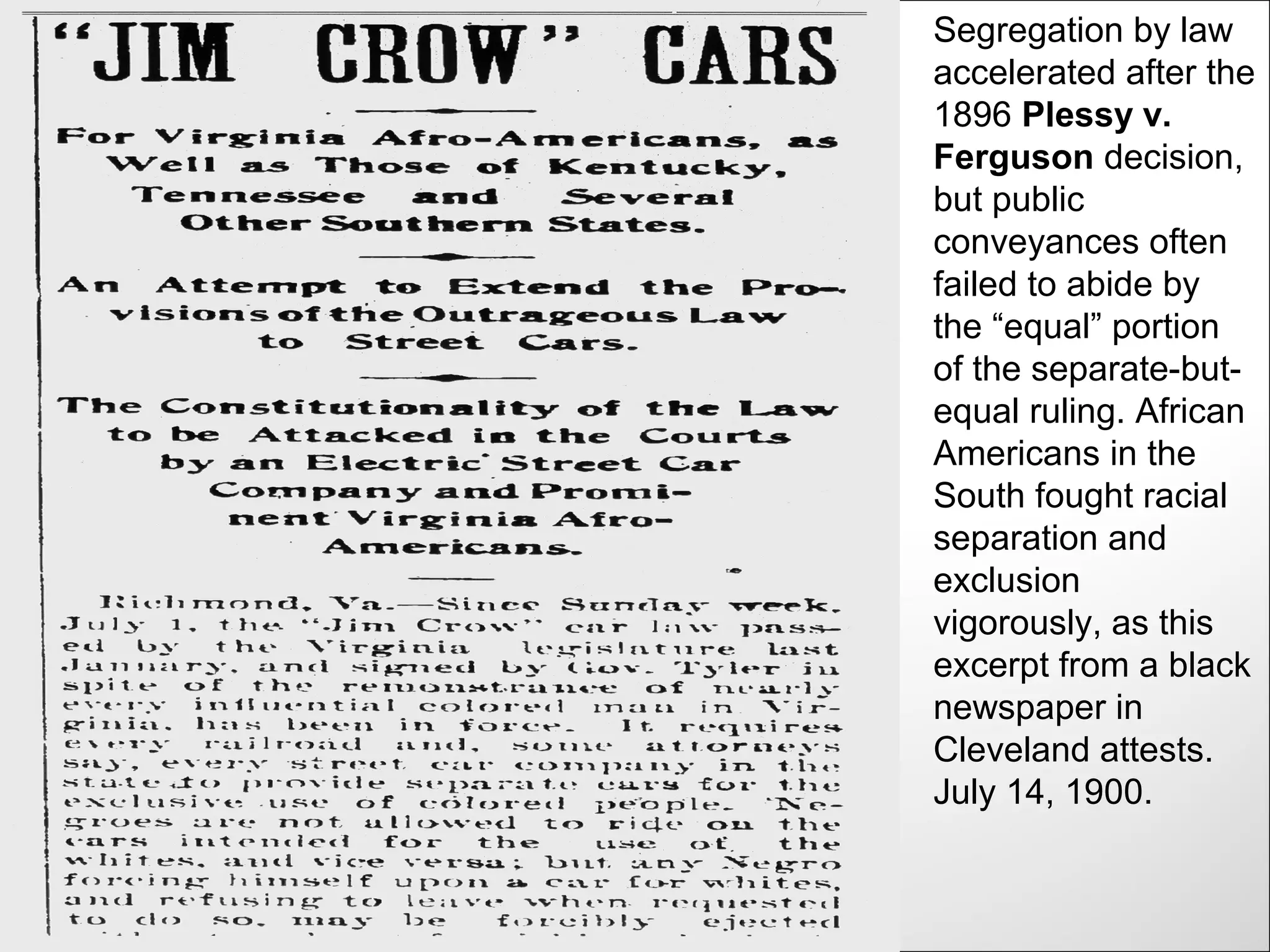
    – Jim Crow laws extended racial segregation.
Segregation by law
accelerated after the
1896 Plessy v.
Ferguson decision,
but public
conveyances often
failed to abide by
the “equal” portion
of the separate-but-
equal ruling. African
Americans in the
South fought racial
separation and
exclusion
vigorously, as this
excerpt from a black
newspaper in
Cleveland attests.
July 14, 1900.
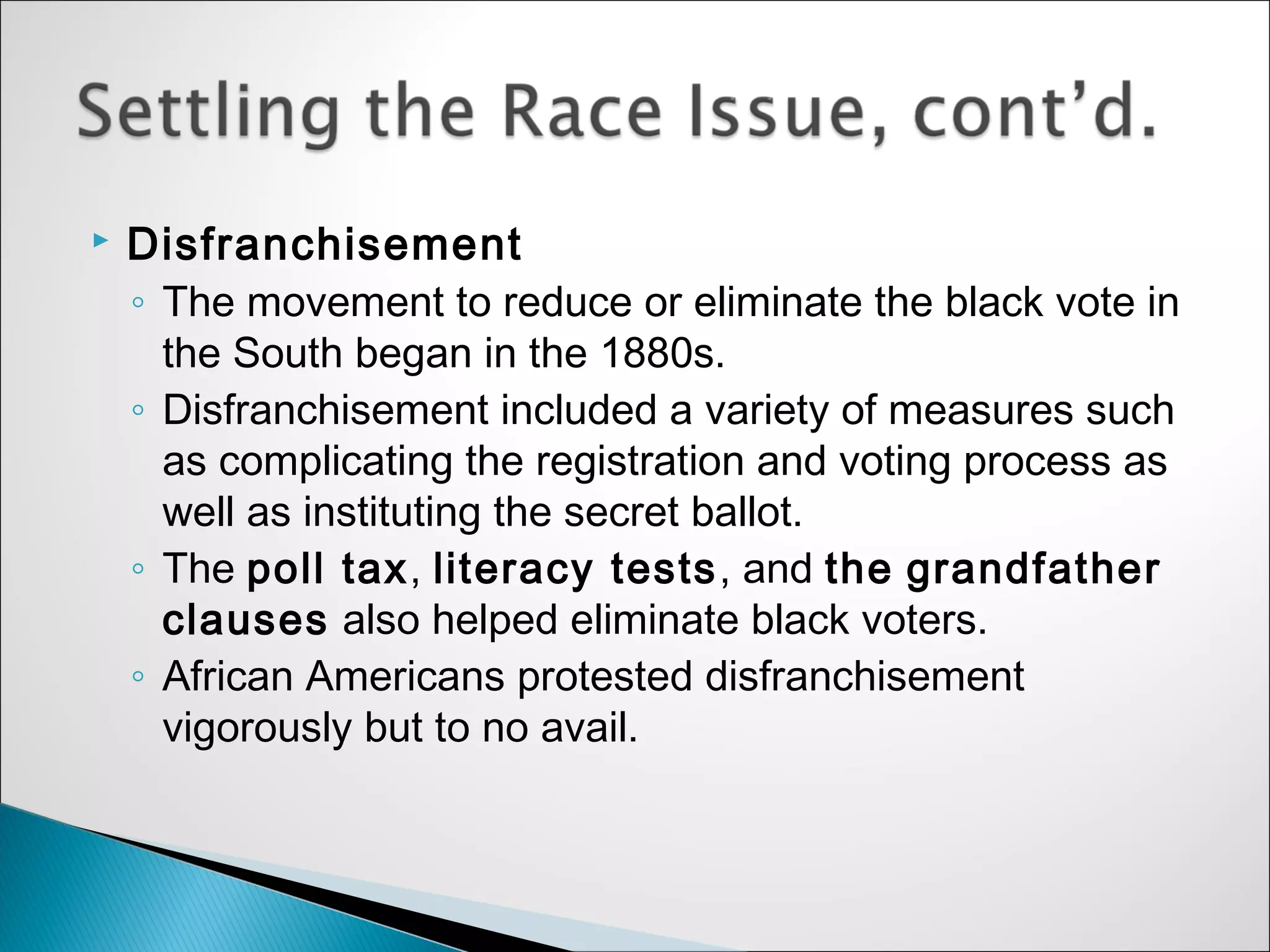
   Disfranchisement
    ◦ The movement to reduce or eliminate the black vote in
      the South began in the 1880s.
    ◦ Disfranchisement included a variety of measures such
      as complicating the registration and voting process as
      well as instituting the secret ballot.
    ◦ The poll tax, literacy tests, and the grandfather
      clauses also helped eliminate black voters.
    ◦ African Americans protested disfranchisement
      vigorously but to no avail.
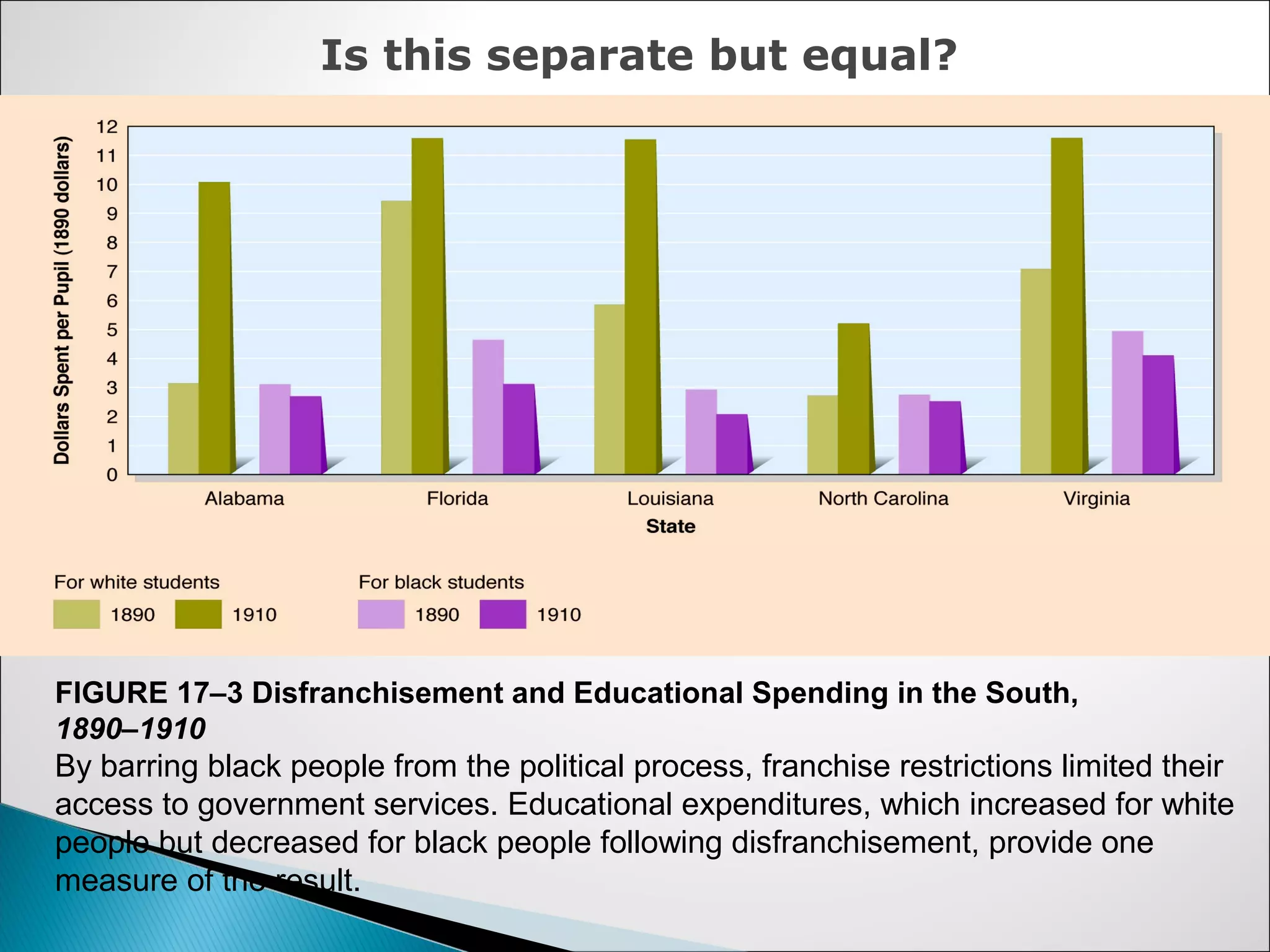
Is this separate but equal?


FIGURE 17–3 Disfranchisement and Educational Spending in the South,
1890–1910
By barring black people from the political process, franchise restrictions limited their
access to government services. Educational expenditures, which increased for white
people but decreased for black people following disfranchisement, provide one
measure of the result.
   A national consensus on race
    ◦ In the 1890s, apparently a majority of Americans
      agreed that African Americans were inferior and
      should be treated as second-class citizens.
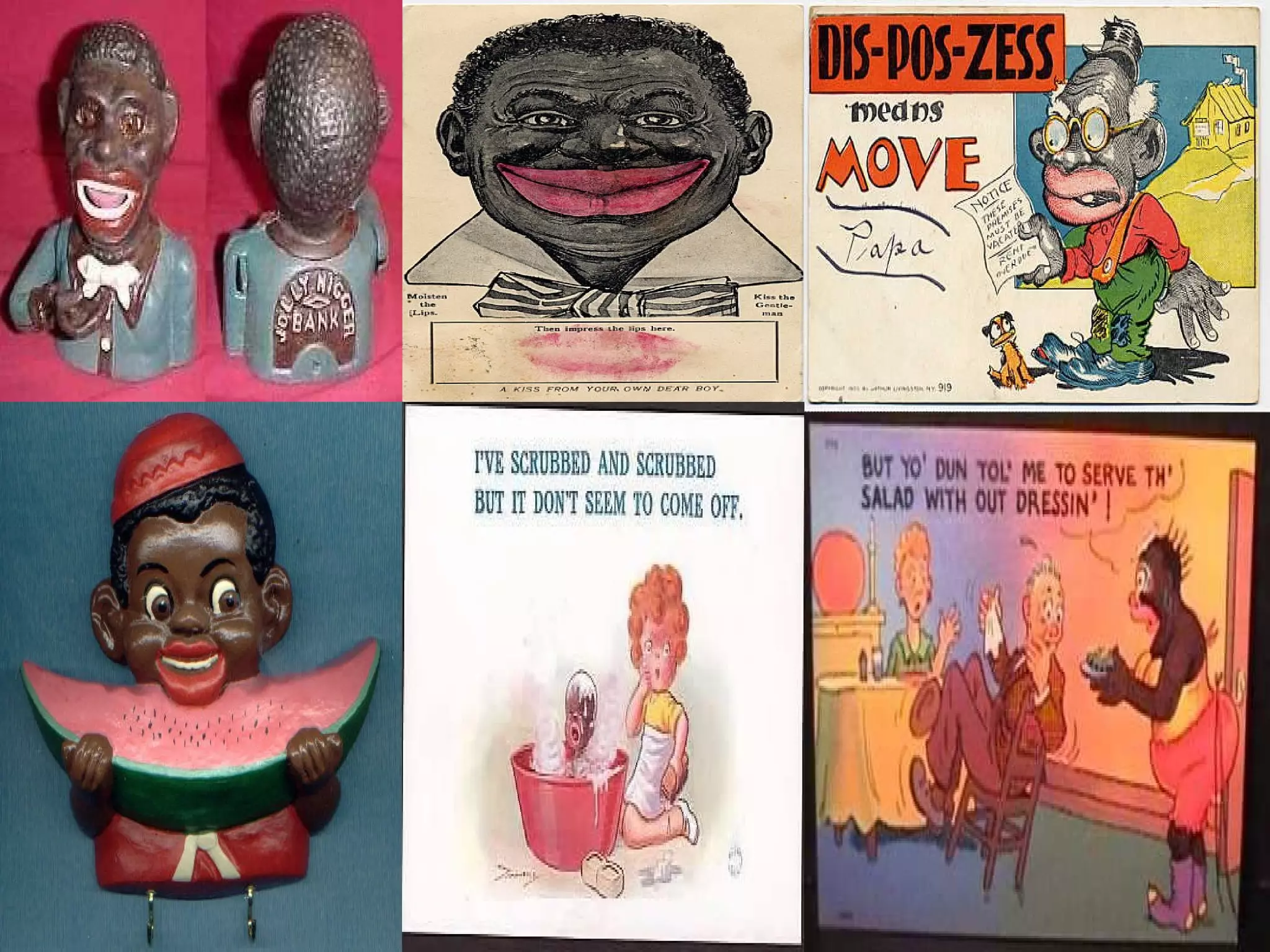
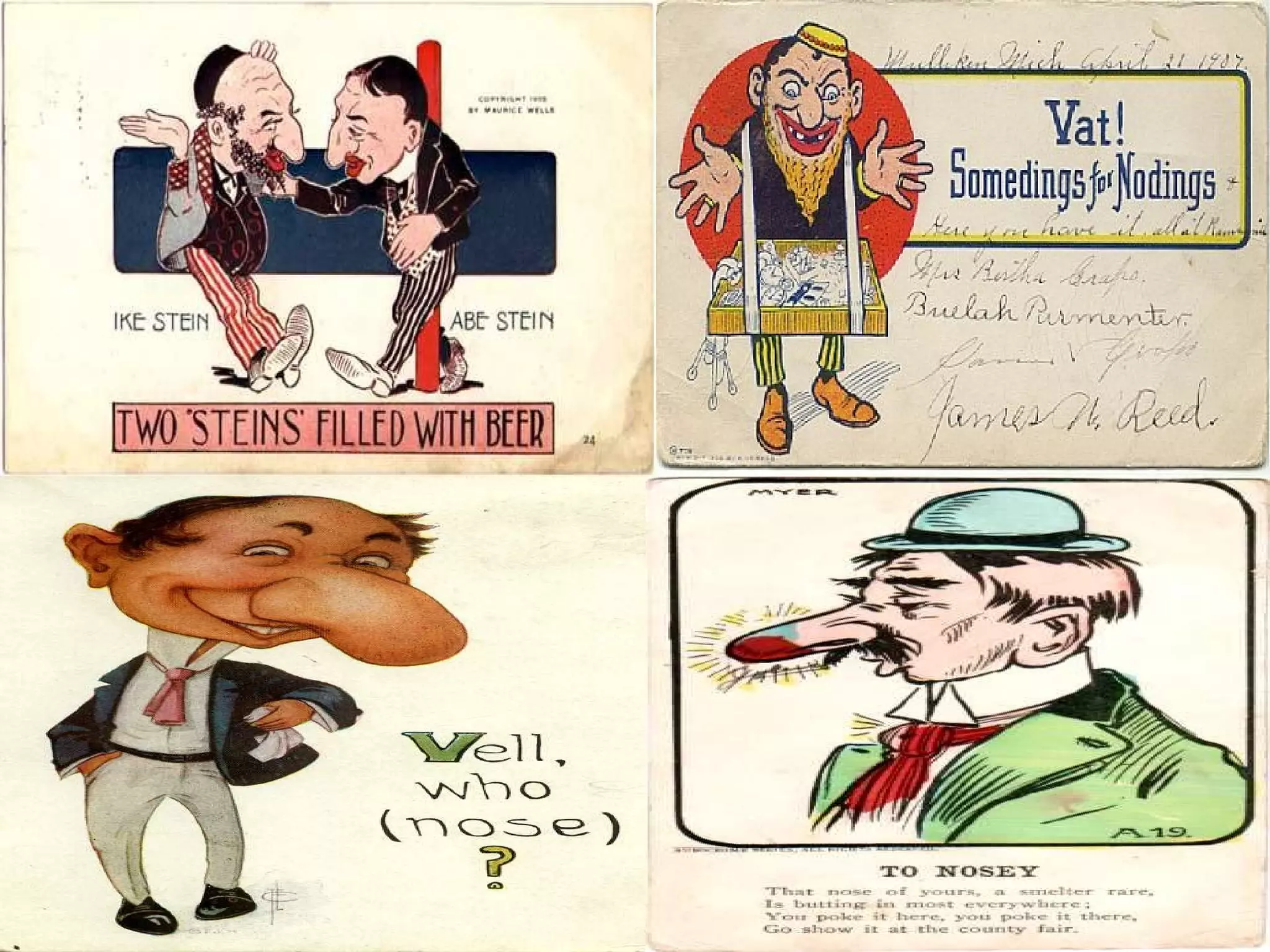
    ◦ Popular culture stereotypes combined with intellectual
      and political opinions in the North supported southern
      policy.
    ◦ So-called “scientific racism” backed up this claim on
      biological grounds
    ◦ In 1903 the New York Times stated “practically the
      whole country supports the southern solution to the
      race issue”
   Response of the black community
    ◦ By the 1880s, a new, black middle class had emerged in
      the South. Centered in the city, business and professional
      African Americans served a primarily black clientele.
    ◦ Black women played an increasingly active and prominent
      role in African American communities. Black women’s clubs
      developed to address the new era in race relations.
    ◦ Booker T. Washington advocated learning industrial skills
      to help African Americans gain self-respect and economic
      independence. He supported the Atlanta Compromise.
    ◦ W.E.B DuBois challenged Washington and supported self-
      help, education, and black pride, helping found the NAACP.
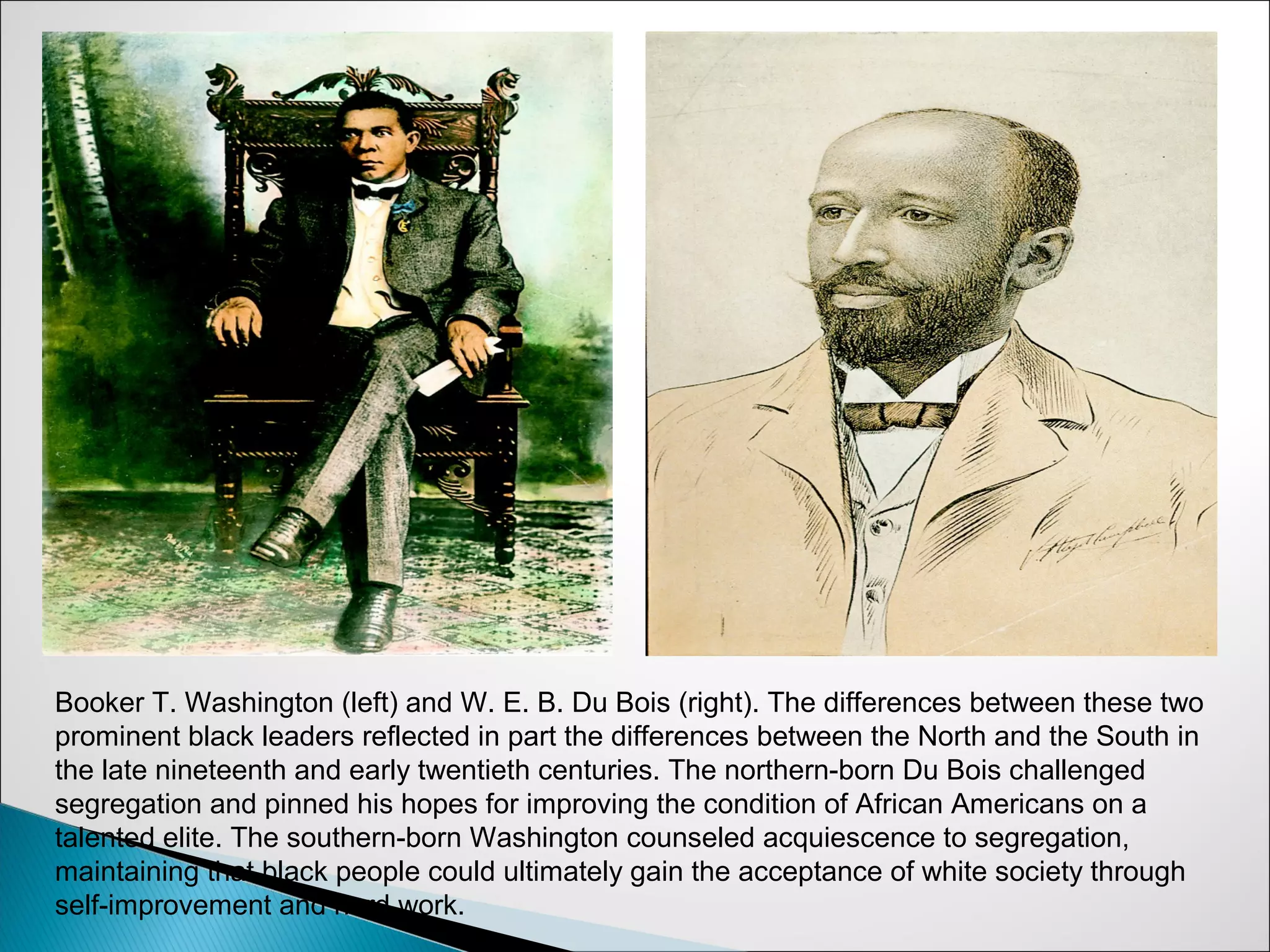
Booker T. Washington (left) and W. E. B. Du Bois (right). The differences between these two
prominent black leaders reflected in part the differences between the North and the South in
the late nineteenth and early twentieth centuries. The northern-born Du Bois challenged
segregation and pinned his hopes for improving the condition of African Americans on a
talented elite. The southern-born Washington counseled acquiescence to segregation,
maintaining that black people could ultimately gain the acceptance of white society through
self-improvement and hard work.
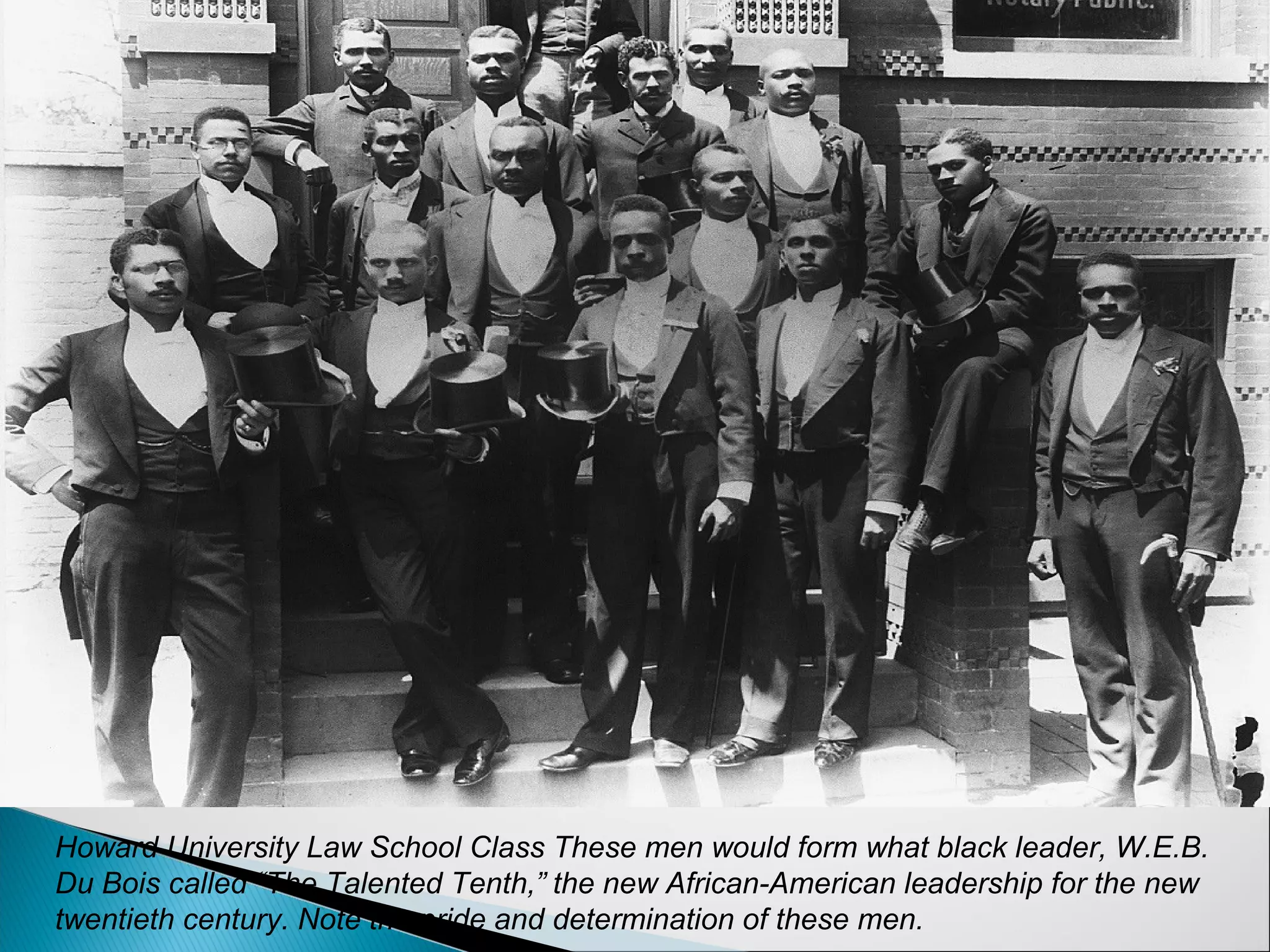
Howard University Law School Class These men would form what black leader, W.E.B.
Du Bois called “The Talented Tenth,” the new African-American leadership for the new
twentieth century. Note the pride and determination of these men.
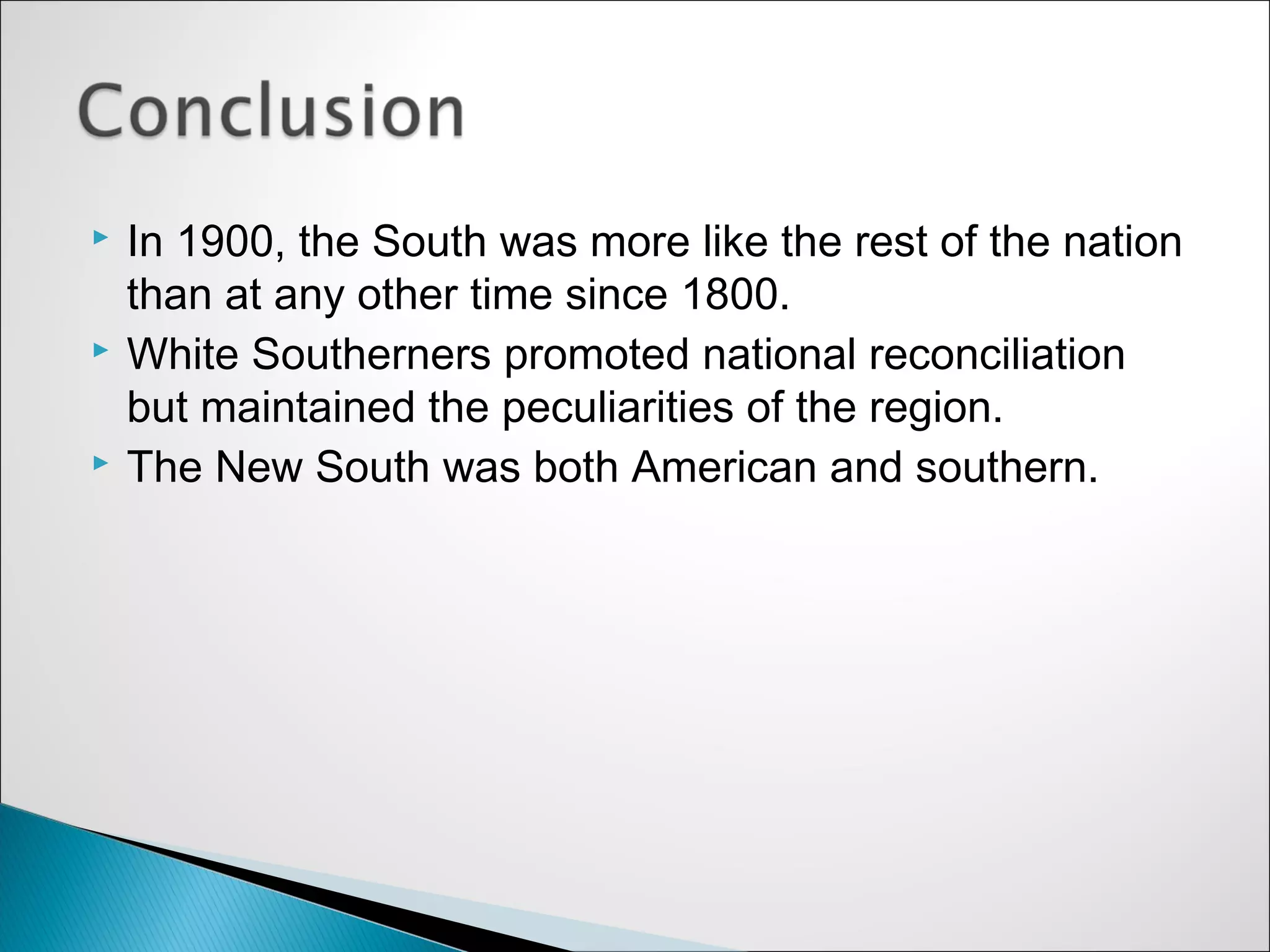
   In 1900, the South was more like the rest of the nation
    than at any other time since 1800.
   White Southerners promoted national reconciliation
    but maintained the peculiarities of the region.
   The New South was both American and southern.
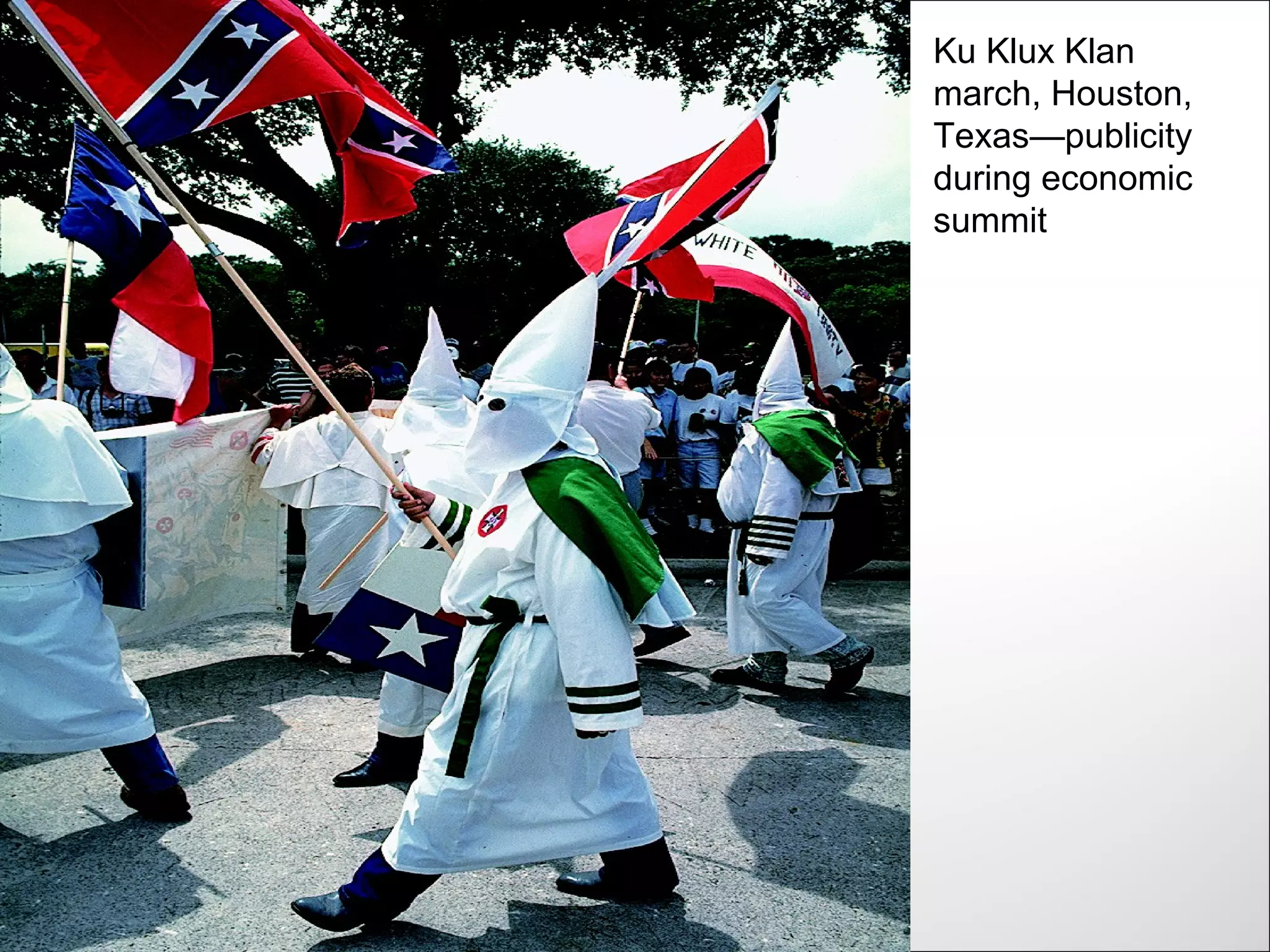
Ku Klux Klan
march, Houston,
Texas—publicity
during economic
summit
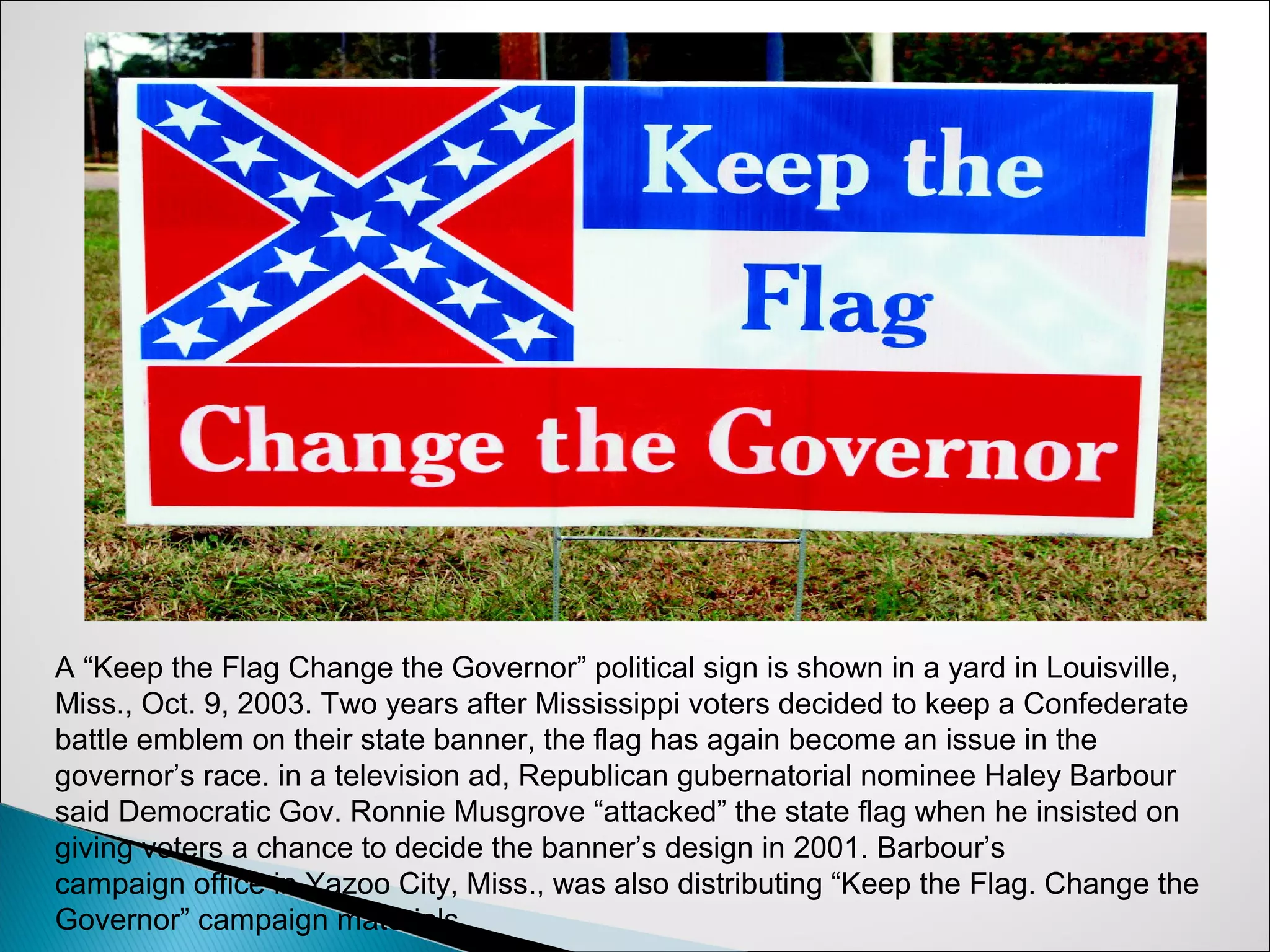
A “Keep the Flag Change the Governor” political sign is shown in a yard in Louisville,
Miss., Oct. 9, 2003. Two years after Mississippi voters decided to keep a Confederate
battle emblem on their state banner, the flag has again become an issue in the
governor’s race. in a television ad, Republican gubernatorial nominee Haley Barbour
said Democratic Gov. Ronnie Musgrove “attacked” the state flag when he insisted on
giving voters a chance to decide the banner’s design in 2001. Barbour’s
campaign office in Yazoo City, Miss., was also distributing “Keep the Flag. Change the
Governor” campaign materials.
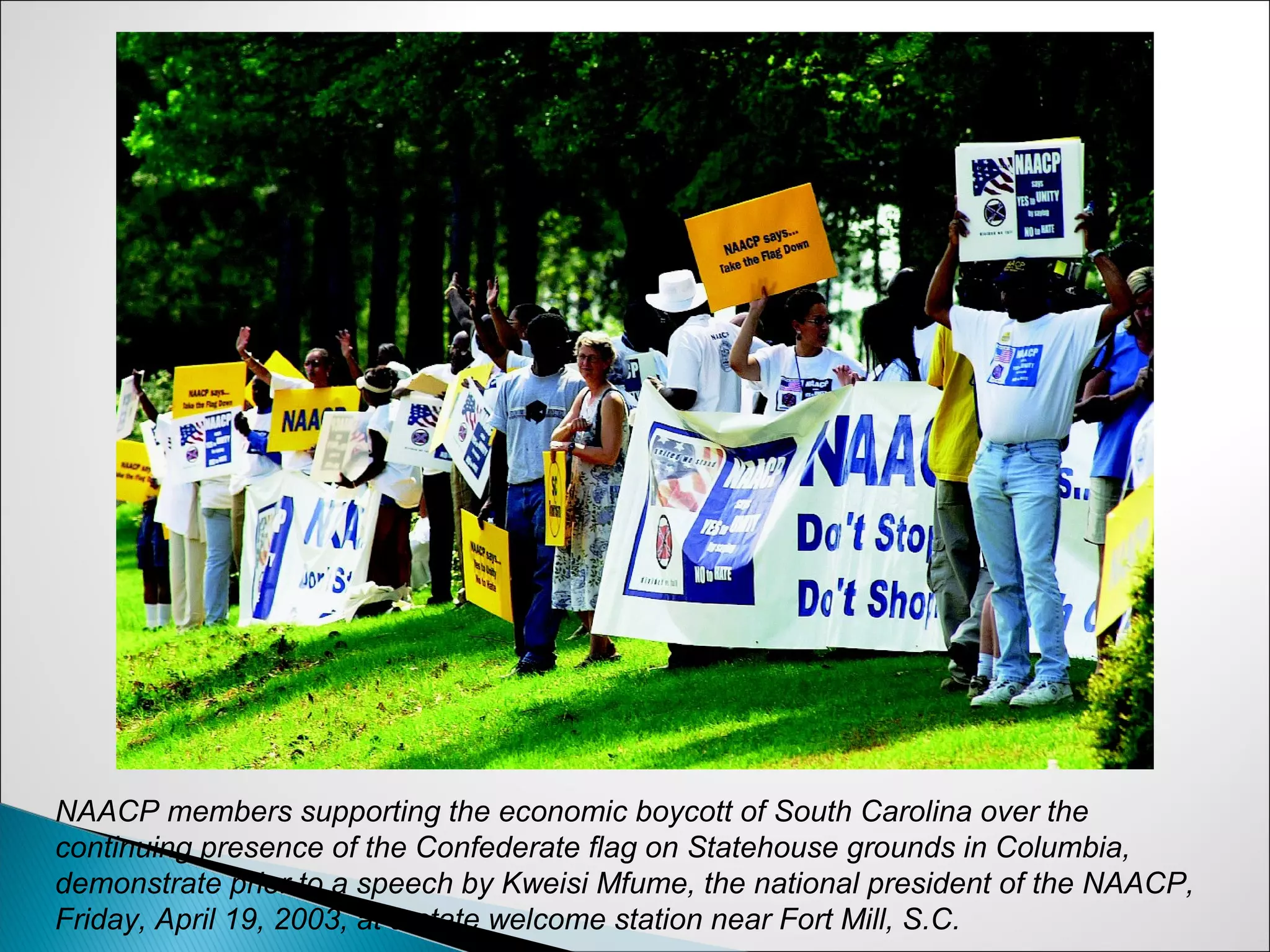
NAACP members supporting the economic boycott of South Carolina over the
continuing presence of the Confederate flag on Statehouse grounds in Columbia,
demonstrate prior to a speech by Kweisi Mfume, the national president of the NAACP,
Friday, April 19, 2003, at a state welcome station near Fort Mill, S.C.

Ch 17 lecture powerpoints

  • 1.
    Chapter 17 A NewSouth: Economic Progress and Social Tradition (1877–1900)
  • 2.
    What characterized continuity and change between the Old South and the New South?  What were the origins and nature of southern populism?  What were women’s role in the South?  How and why did segregation and disfranchisement change race relations in the South?
  • 3.
    ◦ Birmingham, Alabamaepitomized the one aspect of the New South as iron and steel mills emerged in the city. ◦ The southern textile industry also grew, especially in the Piedmont. ◦ The tobacco and soft drink industries also became important economic aspects of the South. ◦ Southern railroad construction boomed in the 1880s, tying the section together and stimulating the rise of interior cities.
  • 4.
    MAP 17–1 Railroadsin the South, 1859 and 1899 A postwar railroad construction boom promoted commercial agriculture and industry in the South. Unlike the railroads of the prewar South, uniform gauges and connections to major trunk lines in the North linked southerners to the rest of the nation. Northern interests, however, owned the major southern railroads in 1899, and most of the products flowing northward were raw materials to be processed by northern industry or shipped elsewhere by northern merchants.
  • 5.
    Grady was the young, dynamic editor of the South's leading newspaper, the Atlanta Constitution, still one of the great papers of the nation. Through his editorials, through speeches, through writings, Grady tried to advertise to the rest of the nation, and to the world at large, a South that was no longer the South of the old plantation days, of the sleepy towns, of the magnolia blossoms, but a South that was dynamic, alive, ready to receive economic investment, ready to grow and prosper.
  • 6.
    – Southern urbanand industrial growth was rapid but barely kept pace with the northern boom. – A weak agricultural economy and high rural birthrate kept wages in the South low and undermined the southern economy. Consumer demand was low limiting the market for southern manufacturing goods. Low wages also had other negative effects, including keeping immigrants away. – The South remained a section apart. The Civil War had wiped out its capital resources, making it a colony of the North. Investment seemed riskier making the South dependent on numerous small investors.
  • 7.
    By the 1890s,textile mills were a common sight in towns throughout the South. The mills provided employment for impoverished rural families, especially women and children.
  • 8.
    ◦ The cash-pooreconomy meant credit dominated. Cotton was the only commodity easily converted into cash and so became the only one accepted for credit. ◦ The web of credit extended from farmers to local merchants to city merchants.
  • 9.
    ◦ Declining conditionsled farmers to fight for improvements. They supported lower interest rates, easier credit, regulation of railroad freight rates, and lower commodity prices. ◦ By 1875, nearly 250,000 southern farmers had joined the Patrons of Husbandry, often called the Grange. The leaders were large farmers. ◦ The most powerful farm reform organization was the Southern Farmers’ Alliance that originated in Texas. It became a surrogate government and church for many small farmers. It developed into the People’s Party.
  • 10.
    The Purposes ofthe Grange: Gift for the Grangers, done in 1873, not surprisingly makes a sturdy farmer its focus. The scenes around the border picture rural life as farmers wished it to be rather than as it really was (Library of Congress)
  • 11.
    ◦ Facing growingfinancial pressures in the 1880s and early 1890s combined with the failure of major political parties to address their concerns, northern and southern farmers joined the Alliance and supported the People’s Party. ◦ The People’s Party supported the direct election of U. S. senators, an income tax, government ownership of railroads, woman suffrage, and other credit easing proposals. ◦ Southern populists were ambivalent about African Americans but populists in Texas and Georgia openly appealed for black votes. ◦ In the 1892 election, Populists made inroads in some southern state legislators.
  • 12.
    Church work and preserving memories ◦ Church work provided an avenue for southern women to enter the public arena. They founded home missions to promote industrial education among the poor and help working-class women become self-sufficient. They also established settlement houses. ◦ Religion led southern white women to join the Women’s Christian Temperance Union. - Alcohol prohibition, smoking, Coca-Cola ◦ The reform movement among middle-class southern white women was conservative in nature. -Supported segregation and defended white supremacy
  • 13.
    The economic advance ofAfrican Americans in the South during the decades after the Civil War against great odds provided one of the more inspiring success stories of the era. But it was precisely this success, as depicted here at Dr. McDougald’s Drug Store in Georgia, in 1900, that infuriated whites who believed that the African American’s place in the South resided in menial and subservient occupations.
  • 14.
    The white backlash ◦ As young African Americans demanded full participation in American society, white Southerners of the same generation resented the changed status of African Americans. ◦ The South’s deteriorating rural economy and the volatile politics of the late 1880s and early 1890s heightened tensions between the races. Racial rhetoric and violence escalated. ◦ Whites who were raised on the myth of the “Lost Cause” saw blacks as replacing the “Yankees” as the enemy.
  • 15.
    Lynch law  Between 1882 and 1903 white mobs lynched more than 2,000 black Southerners  Lynching did not end until the 1940’s  Most lynching were for imagined slights to white women, but included many other alleged crimes where blacks stepped above their “place”  Lynch mobs usually tortured and killed their victims in a circus-like atmosphere • Memphis journalist Ida B. Wells launched an anti-lynching crusade. lynch video 1 Willie Lynch Video
  • 16.
    Lynching became apublic spectacle, a ritual designed to reinforce white supremacy. Note the matter-of-fact satisfaction of the spectators at this gruesome murder of a black man.
  • 20.
    Segregation by law – Southern white lawmakers tried to bolster white solidarity and guarantee African American subservience in the 1890s by legalized segregation and disfranchisement of black voters. – In the 1870s, racial segregation in public places was spreading in southern cities and ending in northern urban areas. – New segregation legislation focused on railroads and providing “separate but equal” facilities. – In 1896, the U. S. Supreme Court ruled that separate but equal was constitutional in the (Plessy v. Ferguson) – Jim Crow laws extended racial segregation.
  • 21.
    Segregation by law acceleratedafter the 1896 Plessy v. Ferguson decision, but public conveyances often failed to abide by the “equal” portion of the separate-but- equal ruling. African Americans in the South fought racial separation and exclusion vigorously, as this excerpt from a black newspaper in Cleveland attests. July 14, 1900.
  • 23.
    Disfranchisement ◦ The movement to reduce or eliminate the black vote in the South began in the 1880s. ◦ Disfranchisement included a variety of measures such as complicating the registration and voting process as well as instituting the secret ballot. ◦ The poll tax, literacy tests, and the grandfather clauses also helped eliminate black voters. ◦ African Americans protested disfranchisement vigorously but to no avail.
  • 24.
    Is this separatebut equal? FIGURE 17–3 Disfranchisement and Educational Spending in the South, 1890–1910 By barring black people from the political process, franchise restrictions limited their access to government services. Educational expenditures, which increased for white people but decreased for black people following disfranchisement, provide one measure of the result.
  • 25.
    A national consensus on race ◦ In the 1890s, apparently a majority of Americans agreed that African Americans were inferior and should be treated as second-class citizens. ◦ Popular culture stereotypes combined with intellectual and political opinions in the North supported southern policy. ◦ So-called “scientific racism” backed up this claim on biological grounds ◦ In 1903 the New York Times stated “practically the whole country supports the southern solution to the race issue”
  • 28.
    Response of the black community ◦ By the 1880s, a new, black middle class had emerged in the South. Centered in the city, business and professional African Americans served a primarily black clientele. ◦ Black women played an increasingly active and prominent role in African American communities. Black women’s clubs developed to address the new era in race relations. ◦ Booker T. Washington advocated learning industrial skills to help African Americans gain self-respect and economic independence. He supported the Atlanta Compromise. ◦ W.E.B DuBois challenged Washington and supported self- help, education, and black pride, helping found the NAACP.
  • 29.
    Booker T. Washington(left) and W. E. B. Du Bois (right). The differences between these two prominent black leaders reflected in part the differences between the North and the South in the late nineteenth and early twentieth centuries. The northern-born Du Bois challenged segregation and pinned his hopes for improving the condition of African Americans on a talented elite. The southern-born Washington counseled acquiescence to segregation, maintaining that black people could ultimately gain the acceptance of white society through self-improvement and hard work.
  • 30.
    Howard University LawSchool Class These men would form what black leader, W.E.B. Du Bois called “The Talented Tenth,” the new African-American leadership for the new twentieth century. Note the pride and determination of these men.
  • 31.
    In 1900, the South was more like the rest of the nation than at any other time since 1800.  White Southerners promoted national reconciliation but maintained the peculiarities of the region.  The New South was both American and southern.
  • 32.
    Ku Klux Klan march,Houston, Texas—publicity during economic summit
  • 33.
    A “Keep theFlag Change the Governor” political sign is shown in a yard in Louisville, Miss., Oct. 9, 2003. Two years after Mississippi voters decided to keep a Confederate battle emblem on their state banner, the flag has again become an issue in the governor’s race. in a television ad, Republican gubernatorial nominee Haley Barbour said Democratic Gov. Ronnie Musgrove “attacked” the state flag when he insisted on giving voters a chance to decide the banner’s design in 2001. Barbour’s campaign office in Yazoo City, Miss., was also distributing “Keep the Flag. Change the Governor” campaign materials.
  • 34.
    NAACP members supportingthe economic boycott of South Carolina over the continuing presence of the Confederate flag on Statehouse grounds in Columbia, demonstrate prior to a speech by Kweisi Mfume, the national president of the NAACP, Friday, April 19, 2003, at a state welcome station near Fort Mill, S.C.