Chapter 13
Inmate Rights
ď‚— Inmates filed more and more lawsuits


ď‚— Prisoner Litigation Reform Act: 1995


-limit recreational litigation
Inmate Rights
ď‚— Retained:
-full rights like citizen


ď‚— Lost:
-wholly w/o rights
-except those expressly outlined
Inmate Rights
ď‚— US Constitution: Bill of rights-rights protected

Writ of Habeas Corpus:
-judicial mandate
-inmate brought before court
-determine legality of confinement

Ex post facto laws: unconstitutional
-retroactively change laws
Inmate Rights
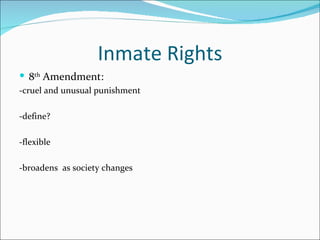
ď‚— 8th Amendment:
-cruel and unusual punishment

-define?

-flexible

-broadens as society changes
Inmate Rights
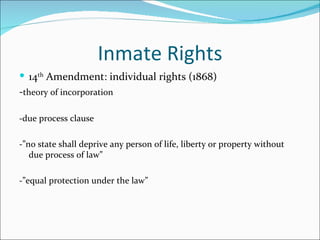
ď‚— 14th Amendment: individual rights (1868)
-theory of incorporation

-due process clause

-”no state shall deprive any person of life, liberty or property without
   due process of law”

-”equal protection under the law”
Inmate Rights
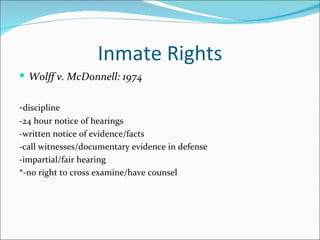
ď‚— Wolff v. McDonnell: 1974


-discipline
-24 hour notice of hearings
-written notice of evidence/facts
-call witnesses/documentary evidence in defense
-impartial/fair hearing
*-no right to cross examine/have counsel
Inmate Rights
ď‚— Equal Protection Clause:
-used by inmates

-government not required to treat everyone alike

-forbids unjustified/malicious discrimination/classification

-gender/race based decisions

-religion freedom
Inmate Rights
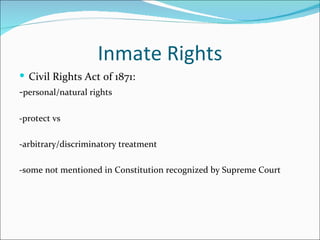
ď‚— Civil Rights Act of 1871:
-personal/natural rights

-protect vs

-arbitrary/discriminatory treatment

-some not mentioned in Constitution recognized by Supreme Court
Inmate Rights
 Hands off Doctrine: 1960’s
-rights-policy/statute

-no outside scrutiny

-1871 Virginia law-inmates “slaves of the state”

-leave to experts
-separation of powers
-society apathetic
Inmate Rights
 Intervention Doctrine: Mid 1960’s
-Federal Courts looking at claims
-rights-religion/privacy/communication/safety/due process

-Cooper v. Pate (1964)
Muslim inmate
Denied access to Qur’an/readings
Prison officials has to explain actions
Christian inmates allowed access to bible
Court: half for inmates/prison

End of hands off doctrine!!
Inmate Rights
ď‚— Nominal Doctrine:
-middle ground between hands off and full intervention of 1980’s


-Bell v. Wolfish
-Rehnquist: refers to “time not so long ago…hands off approach”
-limit to:
Violation of US Constitution or statute
Inmate Rights
ď‚— Access to courts: basic right


5. how approach


7. Knowledge to make access effective
Inmate Rights
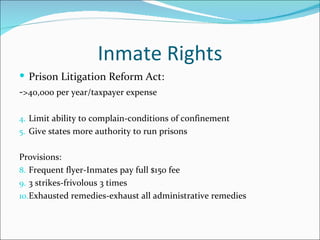
ď‚— Prison Litigation Reform Act:
->40,000 per year/taxpayer expense

4. Limit ability to complain-conditions of confinement
5. Give states more authority to run prisons


Provisions:
8. Frequent flyer-Inmates pay full $150 fee
9. 3 strikes-frivolous 3 times
10.Exhausted remedies-exhaust all administrative remedies
Inmate Rights
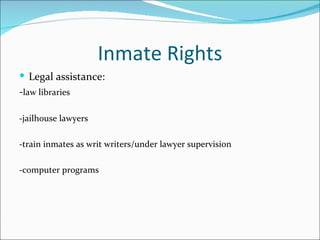
ď‚— Legal assistance:
-law libraries

-jailhouse lawyers

-train inmates as writ writers/under lawyer supervision

-computer programs
Inmate Rights
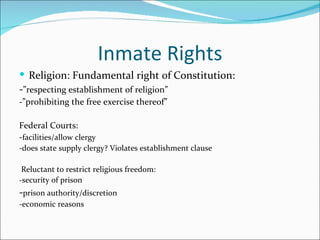
ď‚— Religion: Fundamental right of Constitution:
-”respecting establishment of religion”
-”prohibiting the free exercise thereof”

Federal Courts:
-facilities/allow clergy
-does state supply clergy? Violates establishment clause

 Reluctant to restrict religious freedom:
-security of prison
-prison authority/discretion
-economic reasons

Ch 13

  • 1.
  • 2.
    Inmate Rights ď‚— Inmatesfiled more and more lawsuits ď‚— Prisoner Litigation Reform Act: 1995 -limit recreational litigation
  • 3.
    Inmate Rights ď‚— Retained: -fullrights like citizen ď‚— Lost: -wholly w/o rights -except those expressly outlined
  • 4.
    Inmate Rights ď‚— USConstitution: Bill of rights-rights protected Writ of Habeas Corpus: -judicial mandate -inmate brought before court -determine legality of confinement Ex post facto laws: unconstitutional -retroactively change laws
  • 5.
    Inmate Rights ď‚— 8thAmendment: -cruel and unusual punishment -define? -flexible -broadens as society changes
  • 6.
    Inmate Rights  14thAmendment: individual rights (1868) -theory of incorporation -due process clause -”no state shall deprive any person of life, liberty or property without due process of law” -”equal protection under the law”
  • 7.
    Inmate Rights ď‚— Wolffv. McDonnell: 1974 -discipline -24 hour notice of hearings -written notice of evidence/facts -call witnesses/documentary evidence in defense -impartial/fair hearing *-no right to cross examine/have counsel
  • 8.
    Inmate Rights ď‚— EqualProtection Clause: -used by inmates -government not required to treat everyone alike -forbids unjustified/malicious discrimination/classification -gender/race based decisions -religion freedom
  • 9.
    Inmate Rights ď‚— CivilRights Act of 1871: -personal/natural rights -protect vs -arbitrary/discriminatory treatment -some not mentioned in Constitution recognized by Supreme Court
  • 10.
    Inmate Rights  Handsoff Doctrine: 1960’s -rights-policy/statute -no outside scrutiny -1871 Virginia law-inmates “slaves of the state” -leave to experts -separation of powers -society apathetic
  • 11.
    Inmate Rights  InterventionDoctrine: Mid 1960’s -Federal Courts looking at claims -rights-religion/privacy/communication/safety/due process -Cooper v. Pate (1964) Muslim inmate Denied access to Qur’an/readings Prison officials has to explain actions Christian inmates allowed access to bible Court: half for inmates/prison End of hands off doctrine!!
  • 12.
    Inmate Rights  NominalDoctrine: -middle ground between hands off and full intervention of 1980’s -Bell v. Wolfish -Rehnquist: refers to “time not so long ago…hands off approach” -limit to: Violation of US Constitution or statute
  • 13.
    Inmate Rights ď‚— Accessto courts: basic right 5. how approach 7. Knowledge to make access effective
  • 14.
    Inmate Rights ď‚— PrisonLitigation Reform Act: ->40,000 per year/taxpayer expense 4. Limit ability to complain-conditions of confinement 5. Give states more authority to run prisons Provisions: 8. Frequent flyer-Inmates pay full $150 fee 9. 3 strikes-frivolous 3 times 10.Exhausted remedies-exhaust all administrative remedies
  • 15.
    Inmate Rights ď‚— Legalassistance: -law libraries -jailhouse lawyers -train inmates as writ writers/under lawyer supervision -computer programs
  • 16.
    Inmate Rights  Religion:Fundamental right of Constitution: -”respecting establishment of religion” -”prohibiting the free exercise thereof” Federal Courts: -facilities/allow clergy -does state supply clergy? Violates establishment clause Reluctant to restrict religious freedom: -security of prison -prison authority/discretion -economic reasons