CRIMINAL
INVESTIGATIONS
 AND THE LAW
    Chapter 5
Evidence
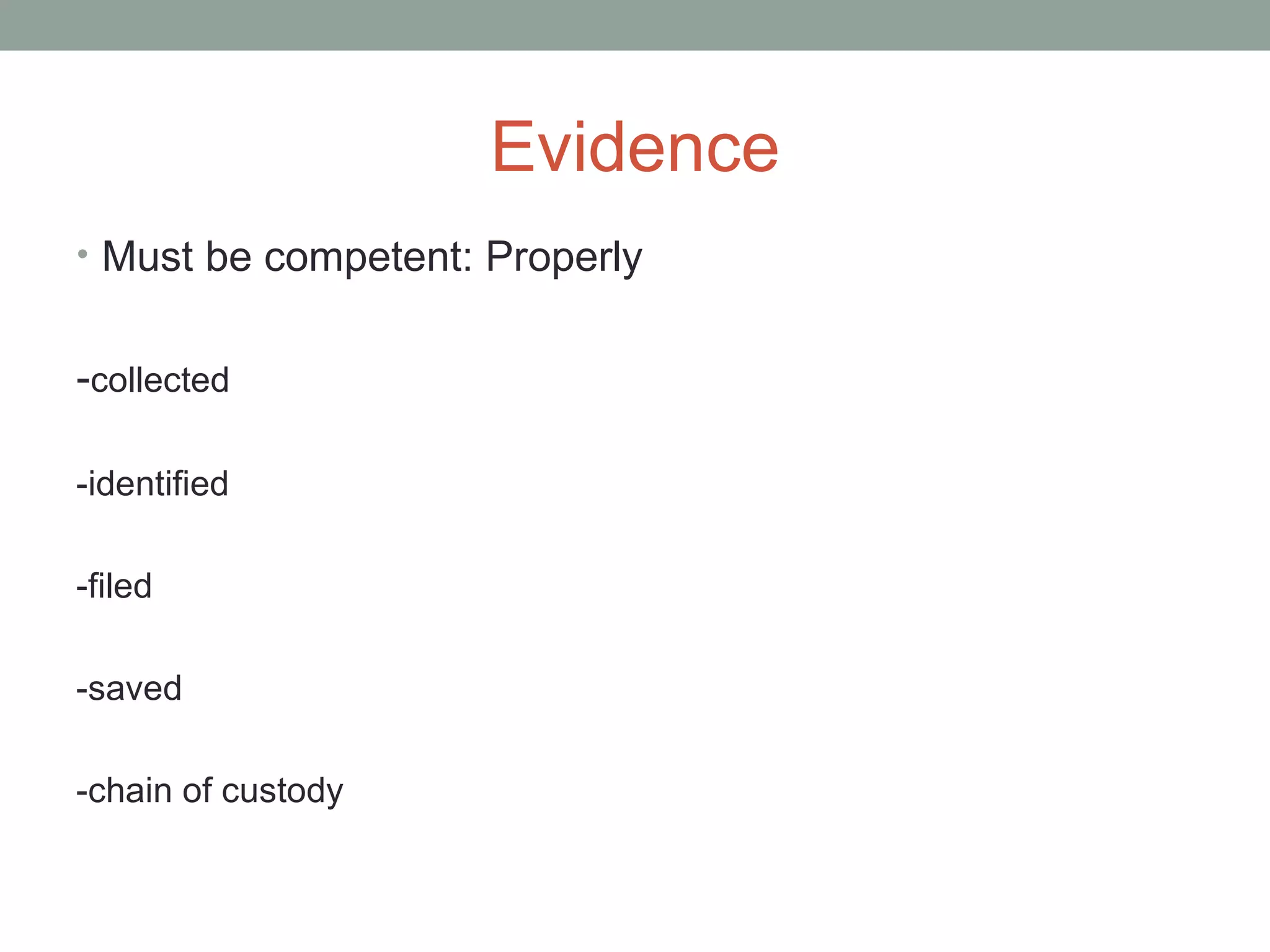
• Must be competent: Properly


-collected

-identified

-filed

-saved

-chain of custody
Evidence
• Types:
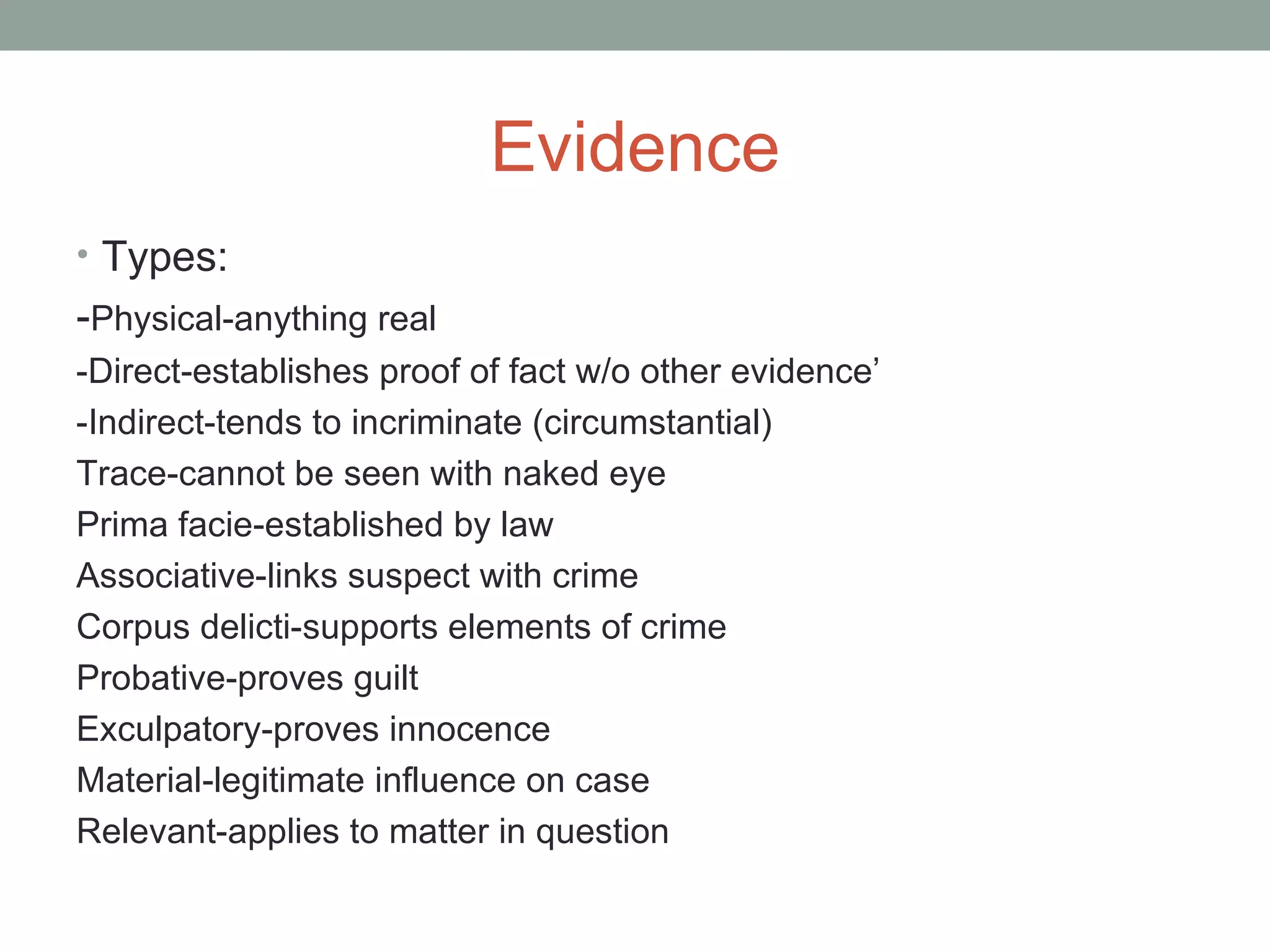
-Physical-anything real
-Direct-establishes proof of fact w/o other evidence’
-Indirect-tends to incriminate (circumstantial)
Trace-cannot be seen with naked eye
Prima facie-established by law
Associative-links suspect with crime
Corpus delicti-supports elements of crime
Probative-proves guilt
Exculpatory-proves innocence
Material-legitimate influence on case
Relevant-applies to matter in question
Evidence
• Presenting in court:


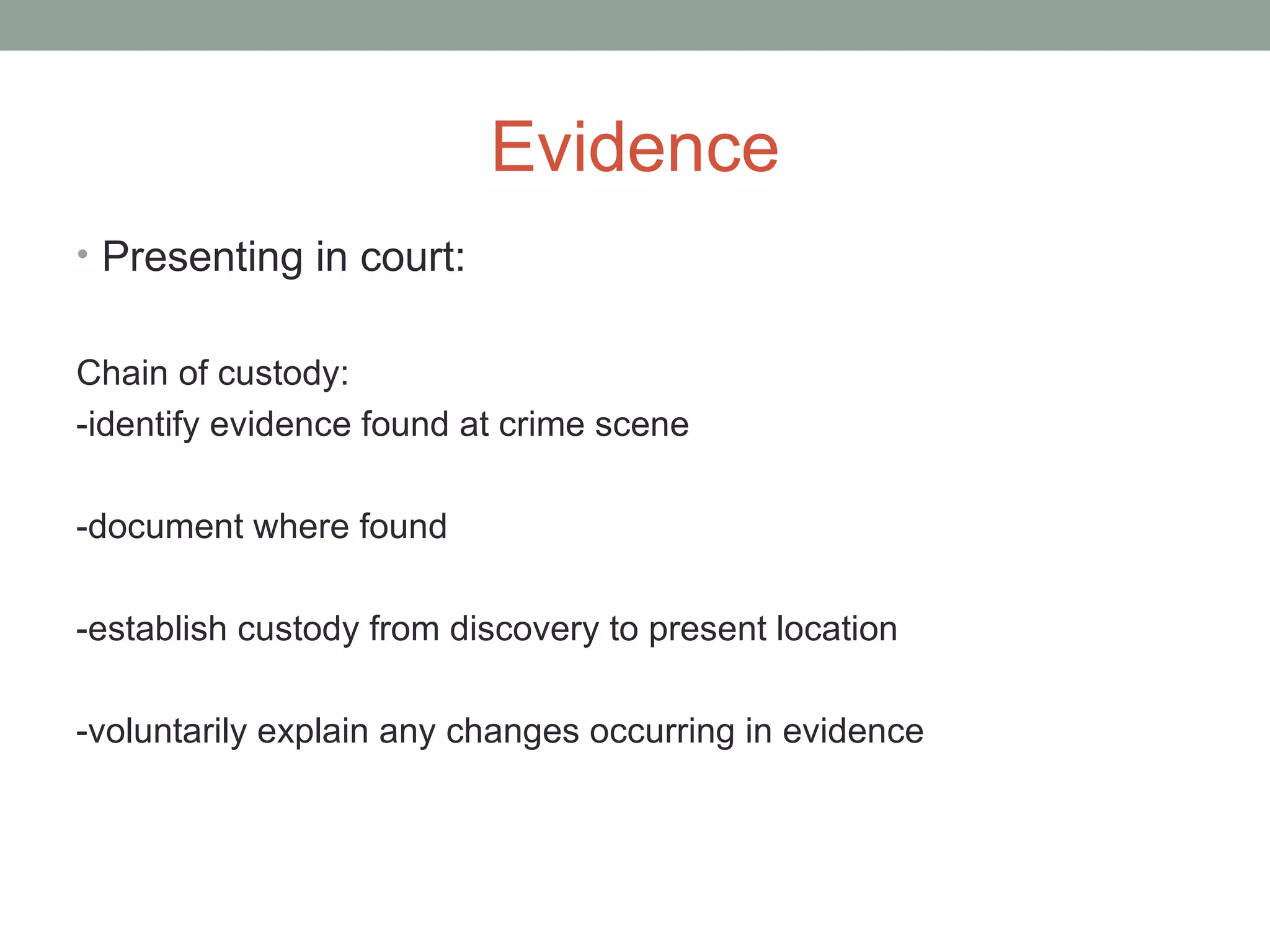
Chain of custody:
-identify evidence found at crime scene

-document where found

-establish custody from discovery to present location

-voluntarily explain any changes occurring in evidence
Evidence
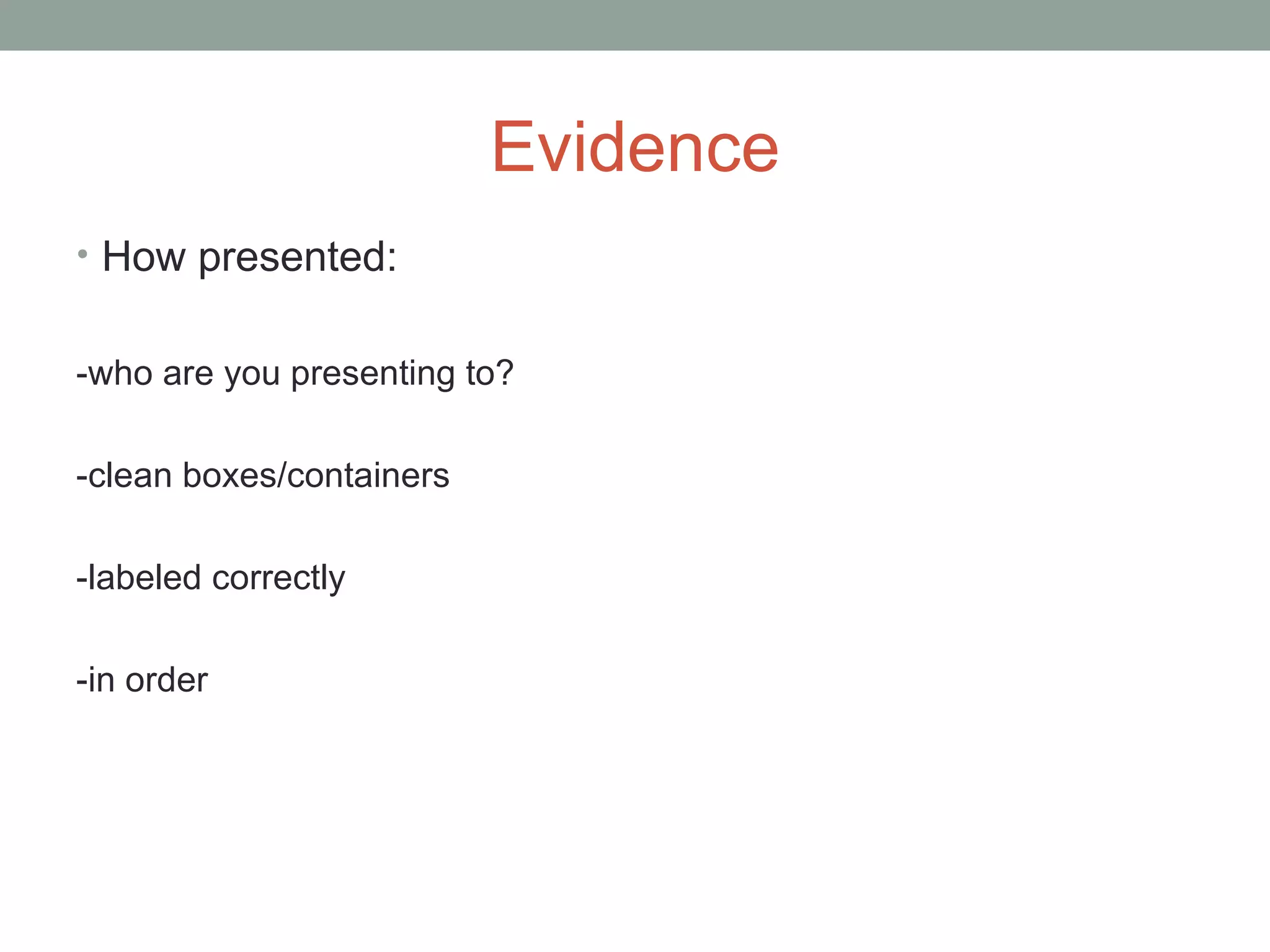
• How presented:


-who are you presenting to?

-clean boxes/containers

-labeled correctly

-in order
Evidence
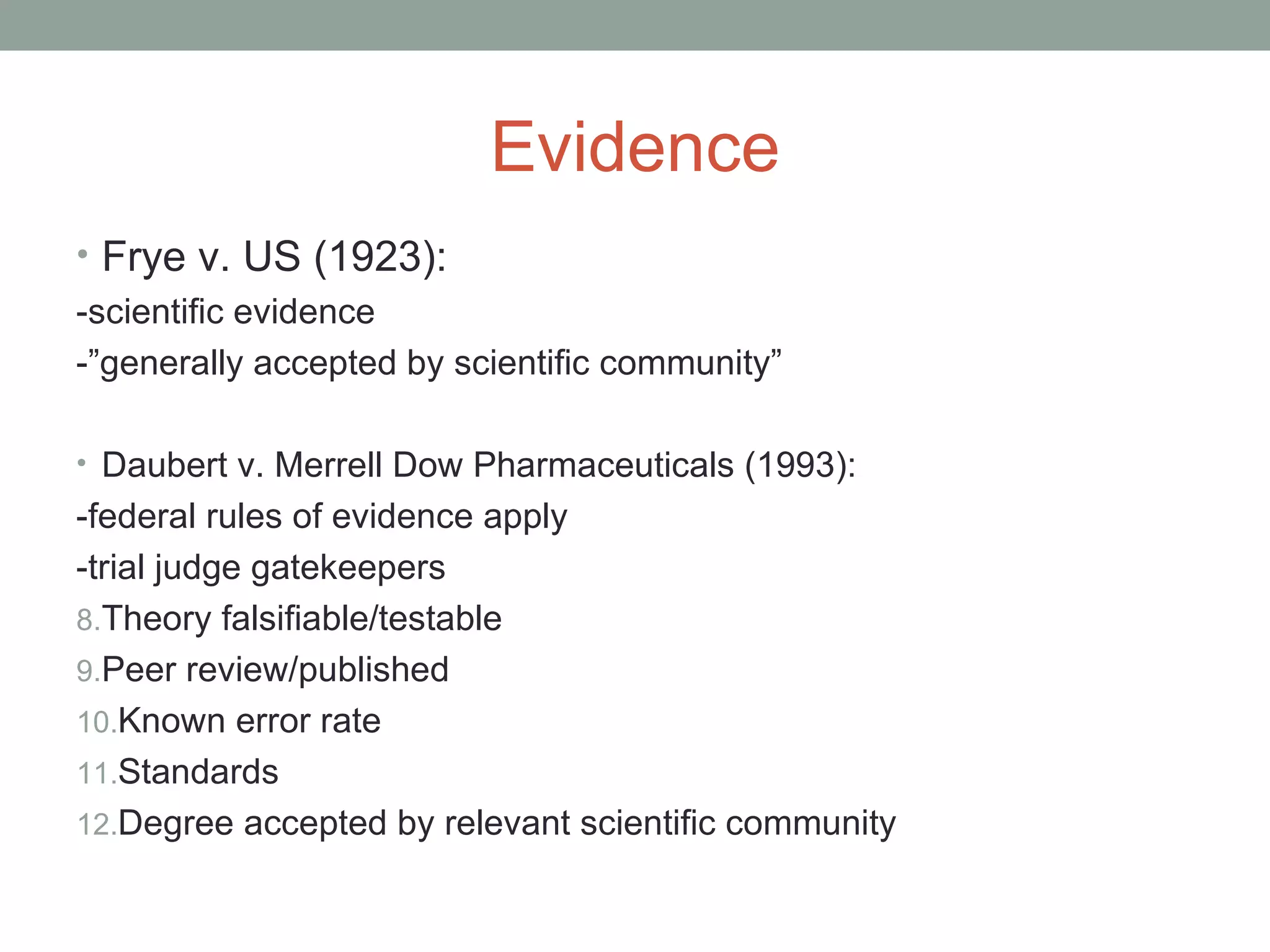
• Frye v. US (1923):
-scientific evidence
-”generally accepted by scientific community”

• Daubert v. Merrell Dow Pharmaceuticals (1993):
-federal rules of evidence apply
-trial judge gatekeepers
8.Theory falsifiable/testable
9.Peer review/published
10.Known error rate
11.Standards
12.Degree accepted by relevant scientific community

Chapter 5

  • 1.
  • 2.
    Evidence • Must becompetent: Properly -collected -identified -filed -saved -chain of custody
  • 3.
    Evidence • Types: -Physical-anything real -Direct-establishesproof of fact w/o other evidence’ -Indirect-tends to incriminate (circumstantial) Trace-cannot be seen with naked eye Prima facie-established by law Associative-links suspect with crime Corpus delicti-supports elements of crime Probative-proves guilt Exculpatory-proves innocence Material-legitimate influence on case Relevant-applies to matter in question
  • 4.
    Evidence • Presenting incourt: Chain of custody: -identify evidence found at crime scene -document where found -establish custody from discovery to present location -voluntarily explain any changes occurring in evidence
  • 5.
    Evidence • How presented: -whoare you presenting to? -clean boxes/containers -labeled correctly -in order
  • 6.
    Evidence • Frye v.US (1923): -scientific evidence -”generally accepted by scientific community” • Daubert v. Merrell Dow Pharmaceuticals (1993): -federal rules of evidence apply -trial judge gatekeepers 8.Theory falsifiable/testable 9.Peer review/published 10.Known error rate 11.Standards 12.Degree accepted by relevant scientific community