Cervical Cancer Awareness:
HPV 101
Presentation Created By : Sharon Bond PhD, CNM, FACNM, Medical University of South Carolina
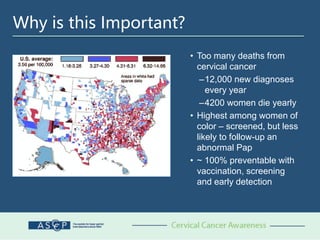
Why is this Important?
• Too many deaths from
cervical cancer
–12,000 new diagnoses
every year
–4200 women die yearly
• Highest among women of
color – screened, but less
likely to follow-up an
abnormal Pap
• ~ 100% preventable with
vaccination, screening
and early detection
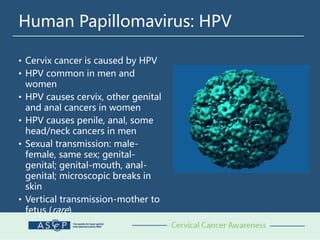
Human Papillomavirus: HPV
• Cervix cancer is caused by HPV
• HPV common in men and
women
• HPV causes cervix, other genital
and anal cancers in women
• HPV causes penile, anal, some
head/neck cancers in men
• Sexual transmission: male-
female, same sex; genital-
genital; genital-mouth, anal-
genital; microscopic breaks in
skin
• Vertical transmission-mother to
fetus (rare)
Anyone Can Get HPV!
• HPV is less likely to be
cleared in women over
30.
• Incidence of cervical
rises in women 30 and
older
• Cervical cancer takes
10-20 years to
develop. Women who
are no longer sexually
active should still have
periodic Pap tests.
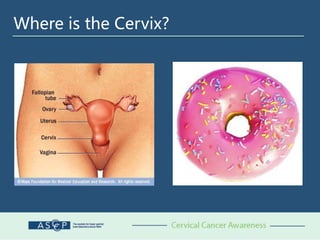
Where is the Cervix?
Risk factors for Cervical Cancer
• Infection with HPV
• Not getting regular Pap tests –
begin testing at age 21
• Illnesses that weaken your
immune system (HIV)
• Smoking
• Diet
• Multiple sexual partners
throughout one’s lifetime
• Chlamydia (STIs)
• Poverty
• Family history
• DES
HPV Infection
• CDC: 6 million new infections/year in
US; 75% in young people 15-24
• Most HPV goes away
• Not all HPVs cause cancer
• Most HPV causes no harm to most
men and women
• Some HPV infections linger and
become cancer in men and women –
we don’t know why
How Can People Check for HPV?
• Women can be screened by
a Pap test, HPV test, or
pelvic exam (visual)
• There are no FDA-approved
ways to test men, diagnosis
made by visual inspection
HPV-related Diseases
• HPV infections cause
external genital warts,
abnormal Pap tests, vocal
cord obstruction in young
children and cancer in
adults
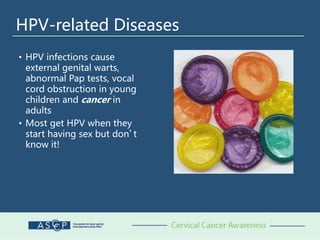
• Most get HPV when they
start having sex but don’t
know it!
Costs of HPV-related Diseases
• HPV is expensive!
• 500,000 cases genital
warts each year
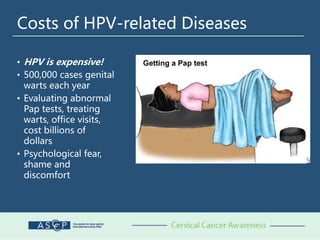
• Evaluating abnormal
Pap tests, treating
warts, office visits,
cost billions of
dollars
• Psychological fear,
shame and
discomfort
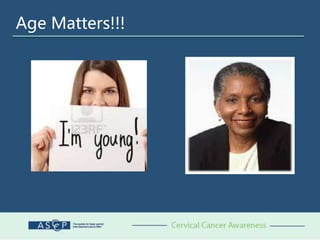
Age Matters!!!
How to Prevent Cervical Cancer
(Stop HPV Infection!)
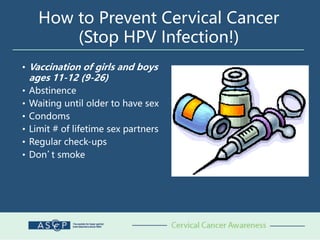
• Vaccination of girls and boys
ages 11-12 (9-26)
• Abstinence
• Waiting until older to have sex
• Condoms
• Limit # of lifetime sex partners
• Regular check-ups
• Don’t smoke
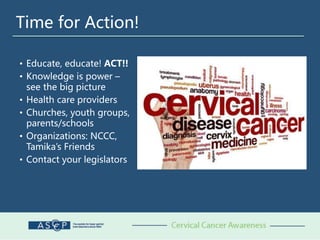
Time for Action!
• Educate, educate! ACT!!
• Knowledge is power –
see the big picture
• Health care providers
• Churches, youth groups,
parents/schools
• Organizations: NCCC,
Tamika’s Friends
• Contact your legislators
Thank You!
References & Resources
• http://www.cdc.gov/hpv/index.html
• http://www.cervicalcancerfreecoalition.org/partners/partner-states/south-
carolina-3/
• http://www.nccc-
online.org/index.php?option=com_content&view=article&id=122
• http://tamikaandfriends.org/

Cervical Cancer Awareness.pptx

  • 1.
    Cervical Cancer Awareness: HPV101 Presentation Created By : Sharon Bond PhD, CNM, FACNM, Medical University of South Carolina
  • 2.
    Why is thisImportant? • Too many deaths from cervical cancer –12,000 new diagnoses every year –4200 women die yearly • Highest among women of color – screened, but less likely to follow-up an abnormal Pap • ~ 100% preventable with vaccination, screening and early detection
  • 3.
    Human Papillomavirus: HPV •Cervix cancer is caused by HPV • HPV common in men and women • HPV causes cervix, other genital and anal cancers in women • HPV causes penile, anal, some head/neck cancers in men • Sexual transmission: male- female, same sex; genital- genital; genital-mouth, anal- genital; microscopic breaks in skin • Vertical transmission-mother to fetus (rare)
  • 4.
    Anyone Can GetHPV! • HPV is less likely to be cleared in women over 30. • Incidence of cervical rises in women 30 and older • Cervical cancer takes 10-20 years to develop. Women who are no longer sexually active should still have periodic Pap tests.
  • 5.
    Where is theCervix?
  • 6.
    Risk factors forCervical Cancer • Infection with HPV • Not getting regular Pap tests – begin testing at age 21 • Illnesses that weaken your immune system (HIV) • Smoking • Diet • Multiple sexual partners throughout one’s lifetime • Chlamydia (STIs) • Poverty • Family history • DES
  • 7.
    HPV Infection • CDC:6 million new infections/year in US; 75% in young people 15-24 • Most HPV goes away • Not all HPVs cause cancer • Most HPV causes no harm to most men and women • Some HPV infections linger and become cancer in men and women – we don’t know why
  • 8.
    How Can PeopleCheck for HPV? • Women can be screened by a Pap test, HPV test, or pelvic exam (visual) • There are no FDA-approved ways to test men, diagnosis made by visual inspection
  • 9.
    HPV-related Diseases • HPVinfections cause external genital warts, abnormal Pap tests, vocal cord obstruction in young children and cancer in adults • Most get HPV when they start having sex but don’t know it!
  • 10.
    Costs of HPV-relatedDiseases • HPV is expensive! • 500,000 cases genital warts each year • Evaluating abnormal Pap tests, treating warts, office visits, cost billions of dollars • Psychological fear, shame and discomfort
  • 11.
  • 12.
    How to PreventCervical Cancer (Stop HPV Infection!) • Vaccination of girls and boys ages 11-12 (9-26) • Abstinence • Waiting until older to have sex • Condoms • Limit # of lifetime sex partners • Regular check-ups • Don’t smoke
  • 13.
    Time for Action! •Educate, educate! ACT!! • Knowledge is power – see the big picture • Health care providers • Churches, youth groups, parents/schools • Organizations: NCCC, Tamika’s Friends • Contact your legislators
  • 14.
    Thank You! References &Resources • http://www.cdc.gov/hpv/index.html • http://www.cervicalcancerfreecoalition.org/partners/partner-states/south- carolina-3/ • http://www.nccc- online.org/index.php?option=com_content&view=article&id=122 • http://tamikaandfriends.org/