The EU’s 2030 climate and energy framework: 
What’s in it for industrial sectors? 
CEPI European Paper Week 2014 
Tomas Wyns, tomas.wyns@vub.ac.be
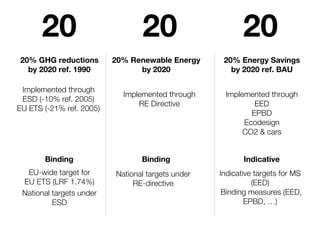
2020
20 
20 
20 
20% GHG reductions 
by 2020 ref. 1990 
Implemented through 
ESD (-10% ref. 2005) 
EU ETS (-21% ref. 2005) 
20% Renewable Energy 
by 2020 
Implemented through 
RE Directive 
20% Energy Savings 
by 2020 ref. BAU 
Implemented through 
EED 
EPBD 
Ecodesign 
CO2 & cars 
Binding 
Binding 
Indicative 
EU-wide target for 
EU ETS (LRF 1.74%) 
National targets under 
ESD 
National targets under 
RE-directive 
Indicative targets for MS 
(EED) 
Binding measures (EED, 
EPBD, …)
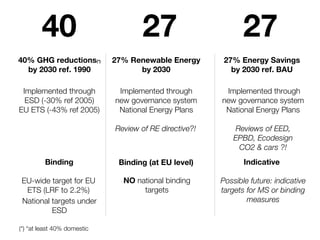
2030
40 
27 
27 
40% GHG reductions(*) 
by 2030 ref. 1990 
Implemented through 
ESD (-30% ref 2005) 
EU ETS (-43% ref 2005) 
27% Renewable Energy 
by 2030 
Implemented through 
new governance system 
National Energy Plans 
Review of RE directive?! 
27% Energy Savings 
by 2030 ref. BAU 
Implemented through 
new governance system 
National Energy Plans 
Reviews of EED, 
EPBD, Ecodesign 
CO2 & cars ?! 
Binding 
Binding (at EU level) 
Indicative 
NO national binding 
targets 
EU-wide target for EU 
ETS (LRF to 2.2%) 
National targets under 
ESD 
Possible future: indicative 
targets for MS or binding 
measures 
(*) “at least 40% domestic
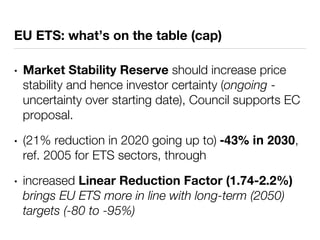
EU ETS: what’s on the table (cap) 
• Market Stability Reserve should increase price 
stability and hence investor certainty (ongoing - 
uncertainty over starting date), Council supports EC 
proposal. 
• (21% reduction in 2020 going up to) -43% in 2030, 
ref. 2005 for ETS sectors, through 
• increased Linear Reduction Factor (1.74-2.2%) 
brings EU ETS more in line with long-term (2050) 
targets (-80 to -95%)
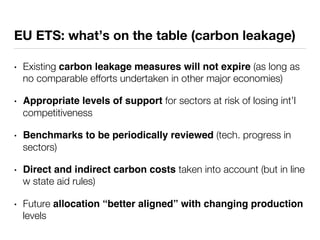
EU ETS: what’s on the table (carbon leakage) 
• Existing carbon leakage measures will not expire (as long as 
no comparable efforts undertaken in other major economies) 
• Appropriate levels of support for sectors at risk of losing int’l 
competitiveness 
• Benchmarks to be periodically reviewed (tech. progress in 
sectors) 
• Direct and indirect carbon costs taken into account (but in line 
w state aid rules) 
• Future allocation “better aligned” with changing production 
levels
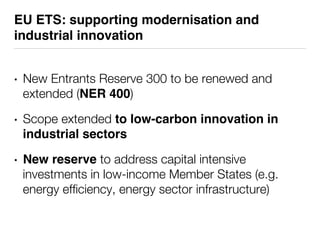
EU ETS: supporting modernisation and 
industrial innovation 
• New Entrants Reserve 300 to be renewed and 
extended (NER 400) 
• Scope extended to low-carbon innovation in 
industrial sectors 
• New reserve to address capital intensive 
investments in low-income Member States (e.g. 
energy efficiency, energy sector infrastructure)
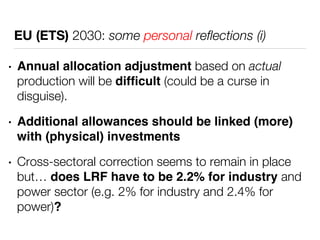
EU (ETS) 2030: some personal reflections (i) 
• Annual allocation adjustment based on actual 
production will be difficult (could be a curse in 
disguise). 
• Additional allowances should be linked (more) 
with (physical) investments 
• Cross-sectoral correction seems to remain in place 
but… does LRF have to be 2.2% for industry and 
power sector (e.g. 2% for industry and 2.4% for 
power)?
EU (ETS) 2030: some personal reflections (ii) 
• Ensure EU wide level playing field for carbon 
leakage protection (not the case now) 
• Industrial demand side management not 
mentioned in Council conclusions 
• NER for industrial low-carbon innovation: Finally! 
(see next slides)
Industrial policy and innovation 
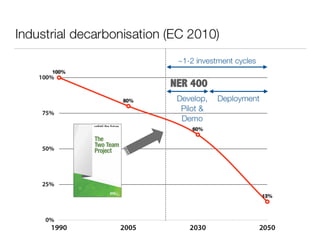
NER 400
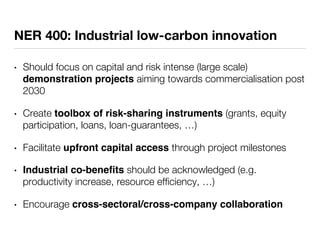
NER 400: Industrial low-carbon innovation 
• Should focus on capital and risk intense (large scale) 
demonstration projects aiming towards commercialisation post 
2030 
• Create toolbox of risk-sharing instruments (grants, equity 
participation, loans, loan-guarantees, …) 
• Facilitate upfront capital access through project milestones 
• Industrial co-benefits should be acknowledged (e.g. 
productivity increase, resource efficiency, …) 
• Encourage cross-sectoral/cross-company collaboration
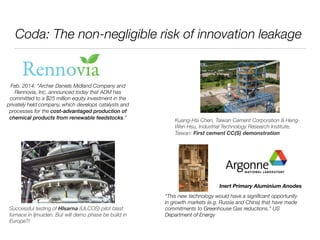
Coda: The non-negligible risk of innovation leakage 
Kuang-Hsi Chen, Taiwan Cement Corporation & Heng- 
Wen Hsu, Industrial Technology Research Institute, 
Taiwan: First cement CC(S) demonstration 
Thank you! 
Feb. 2014: “Archer Daniels Midland Company and 
Rennovia, Inc. announced today that ADM has 
committed to a $25 million equity investment in the 
privately held company, which develops catalysts and 
processes for the cost-advantaged production of 
chemical products from renewable feedstocks.” 
For more information please contact: 
Tomas.Wyns@vub.ac.be 
Successful testing of HIsarna (ULCOS) pilot blast 
furnace in Ijmuiden. But will demo phase be build in 
Europe?! 
Inert Primary Aluminium Anodes 
“This new technology would have a significant opportunity 
in growth markets (e.g. Russia and China) that have made 
commitments to Greenhouse Gas reductions.” US 
Department of Energy

Cepi 26 november

  • 1.
    The EU’s 2030climate and energy framework: What’s in it for industrial sectors? CEPI European Paper Week 2014 Tomas Wyns, tomas.wyns@vub.ac.be
  • 2.
  • 3.
    20 20 20 20% GHG reductions by 2020 ref. 1990 Implemented through ESD (-10% ref. 2005) EU ETS (-21% ref. 2005) 20% Renewable Energy by 2020 Implemented through RE Directive 20% Energy Savings by 2020 ref. BAU Implemented through EED EPBD Ecodesign CO2 & cars Binding Binding Indicative EU-wide target for EU ETS (LRF 1.74%) National targets under ESD National targets under RE-directive Indicative targets for MS (EED) Binding measures (EED, EPBD, …)
  • 4.
  • 5.
    40 27 27 40% GHG reductions(*) by 2030 ref. 1990 Implemented through ESD (-30% ref 2005) EU ETS (-43% ref 2005) 27% Renewable Energy by 2030 Implemented through new governance system National Energy Plans Review of RE directive?! 27% Energy Savings by 2030 ref. BAU Implemented through new governance system National Energy Plans Reviews of EED, EPBD, Ecodesign CO2 & cars ?! Binding Binding (at EU level) Indicative NO national binding targets EU-wide target for EU ETS (LRF to 2.2%) National targets under ESD Possible future: indicative targets for MS or binding measures (*) “at least 40% domestic
  • 6.
    EU ETS: what’son the table (cap) • Market Stability Reserve should increase price stability and hence investor certainty (ongoing - uncertainty over starting date), Council supports EC proposal. • (21% reduction in 2020 going up to) -43% in 2030, ref. 2005 for ETS sectors, through • increased Linear Reduction Factor (1.74-2.2%) brings EU ETS more in line with long-term (2050) targets (-80 to -95%)
  • 7.
    EU ETS: what’son the table (carbon leakage) • Existing carbon leakage measures will not expire (as long as no comparable efforts undertaken in other major economies) • Appropriate levels of support for sectors at risk of losing int’l competitiveness • Benchmarks to be periodically reviewed (tech. progress in sectors) • Direct and indirect carbon costs taken into account (but in line w state aid rules) • Future allocation “better aligned” with changing production levels
  • 8.
    EU ETS: supportingmodernisation and industrial innovation • New Entrants Reserve 300 to be renewed and extended (NER 400) • Scope extended to low-carbon innovation in industrial sectors • New reserve to address capital intensive investments in low-income Member States (e.g. energy efficiency, energy sector infrastructure)
  • 9.
    EU (ETS) 2030:some personal reflections (i) • Annual allocation adjustment based on actual production will be difficult (could be a curse in disguise). • Additional allowances should be linked (more) with (physical) investments • Cross-sectoral correction seems to remain in place but… does LRF have to be 2.2% for industry and power sector (e.g. 2% for industry and 2.4% for power)?
  • 10.
    EU (ETS) 2030:some personal reflections (ii) • Ensure EU wide level playing field for carbon leakage protection (not the case now) • Industrial demand side management not mentioned in Council conclusions • NER for industrial low-carbon innovation: Finally! (see next slides)
  • 11.
    Industrial policy andinnovation NER 400
  • 12.
    NER 400: Industriallow-carbon innovation • Should focus on capital and risk intense (large scale) demonstration projects aiming towards commercialisation post 2030 • Create toolbox of risk-sharing instruments (grants, equity participation, loans, loan-guarantees, …) • Facilitate upfront capital access through project milestones • Industrial co-benefits should be acknowledged (e.g. productivity increase, resource efficiency, …) • Encourage cross-sectoral/cross-company collaboration
  • 13.
    Coda: The non-negligiblerisk of innovation leakage Kuang-Hsi Chen, Taiwan Cement Corporation & Heng- Wen Hsu, Industrial Technology Research Institute, Taiwan: First cement CC(S) demonstration Thank you! Feb. 2014: “Archer Daniels Midland Company and Rennovia, Inc. announced today that ADM has committed to a $25 million equity investment in the privately held company, which develops catalysts and processes for the cost-advantaged production of chemical products from renewable feedstocks.” For more information please contact: Tomas.Wyns@vub.ac.be Successful testing of HIsarna (ULCOS) pilot blast furnace in Ijmuiden. But will demo phase be build in Europe?! Inert Primary Aluminium Anodes “This new technology would have a significant opportunity in growth markets (e.g. Russia and China) that have made commitments to Greenhouse Gas reductions.” US Department of Energy