1
Energy technologies and climate change
Gonzalo Sáenz de Miera
Director of Energy Prospective
Climate Change: Implications for technological
developments and industrial competitiveness
Madrid
4th November 2015
22
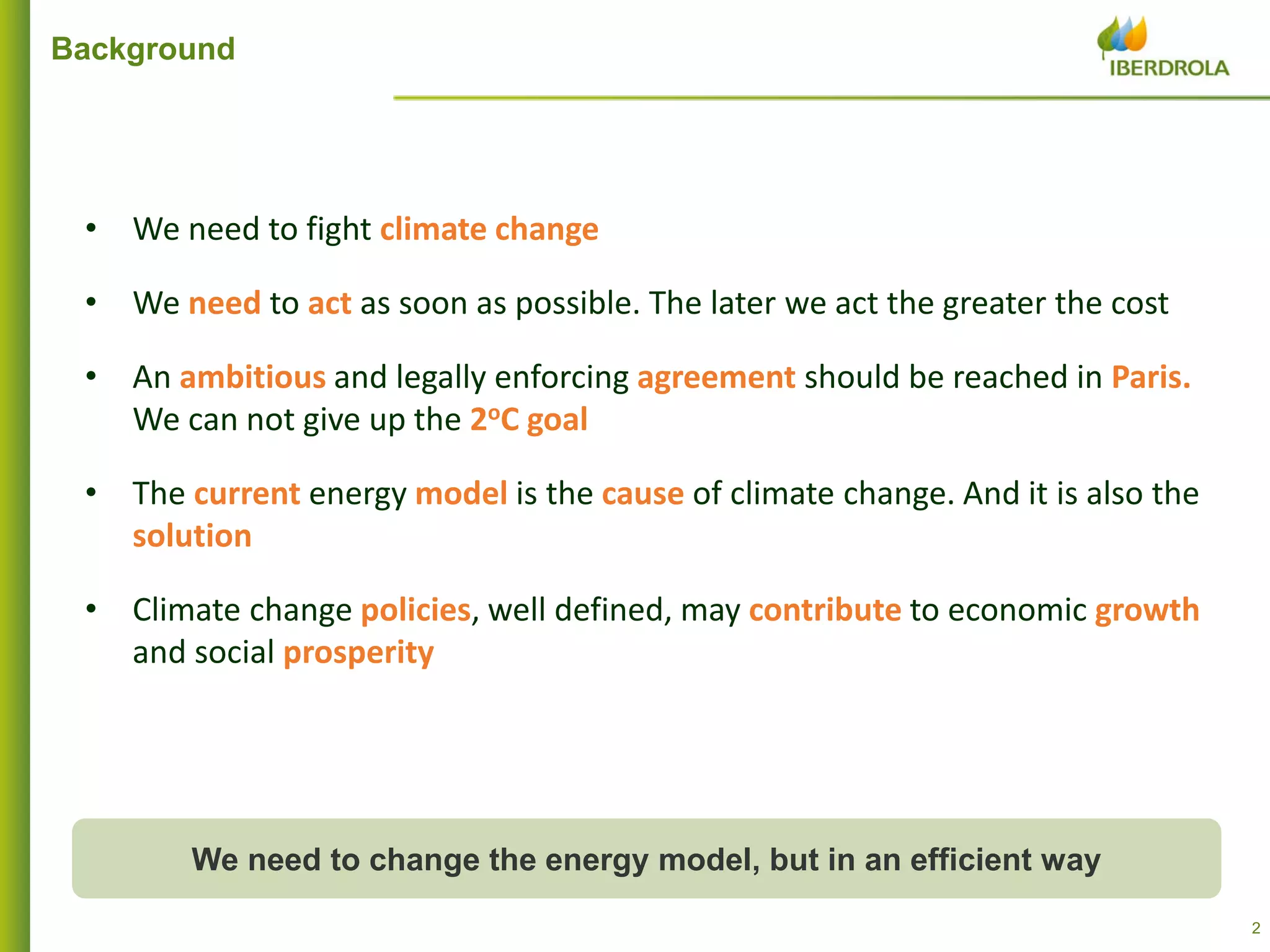
Background
• We need to fight climate change
• We need to act as soon as possible. The later we act the greater the cost
• An ambitious and legally enforcing agreement should be reached in Paris.
We can not give up the 2oC goal
• The current energy model is the cause of climate change. And it is also the
solution
• Climate change policies, well defined, may contribute to economic growth
and social prosperity
We need to change the energy model, but in an efficient way
33
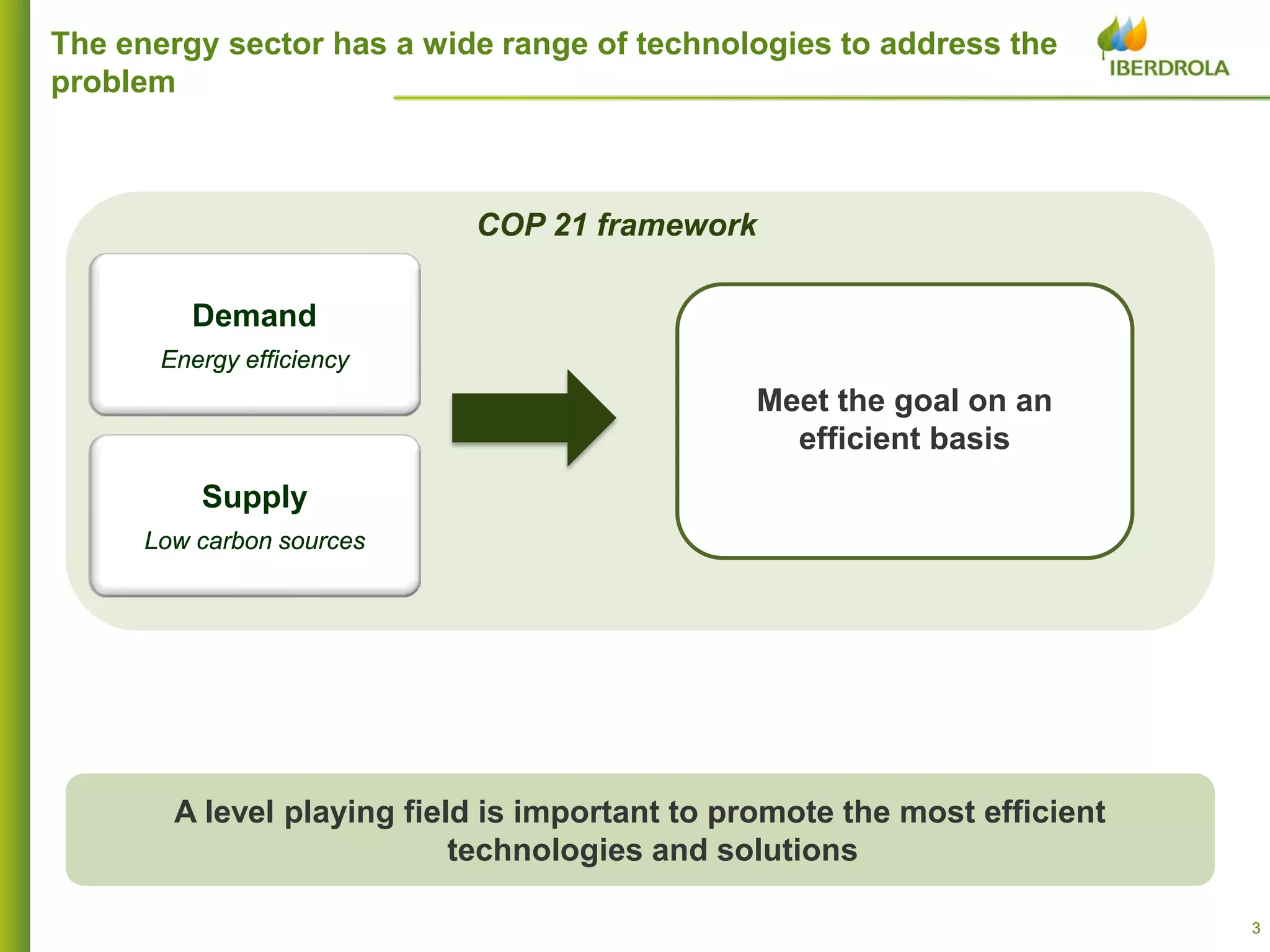
The energy sector has a wide range of technologies to address the
problem
Demand
Energy efficiency
A level playing field is important to promote the most efficient
technologies and solutions
Supply
Low carbon sources
Meet the goal on an
efficient basis
COP 21 framework
44
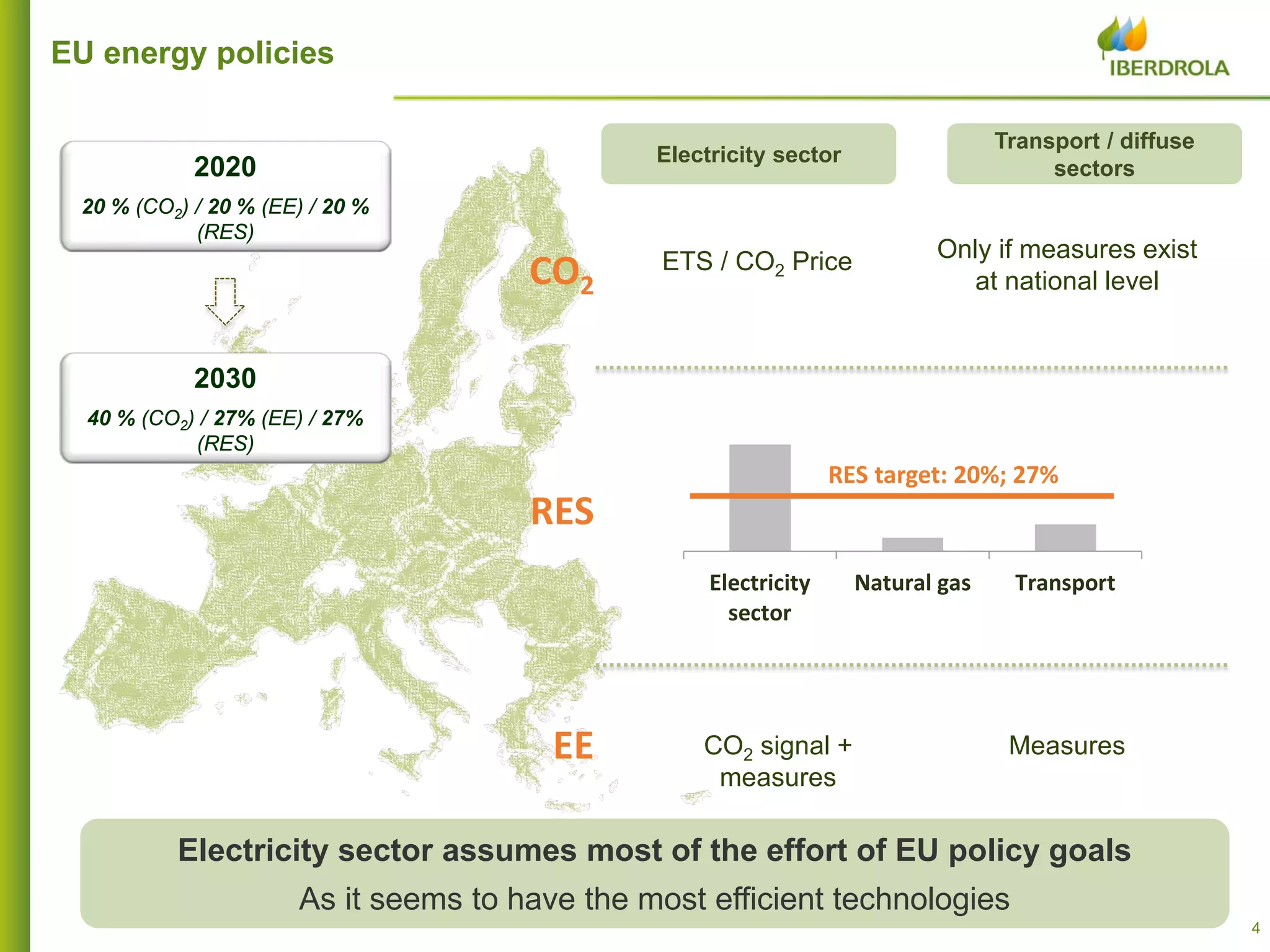
EU energy policies
Electricity sector assumes most of the effort of EU policy goals
As it seems to have the most efficient technologies
2030
40 % (CO2) / 27% (EE) / 27%
(RES)
2020
20 % (CO2) / 20 % (EE) / 20 %
(RES)
Transport / diffuse
sectors
Electricity sector
CO2
RES
EE
RES target: 20%; 27%
Only if measures exist
at national level
ETS / CO2 Price
CO2 signal +
measures
Measures
Electricity
sector
Natural gas Transport
55
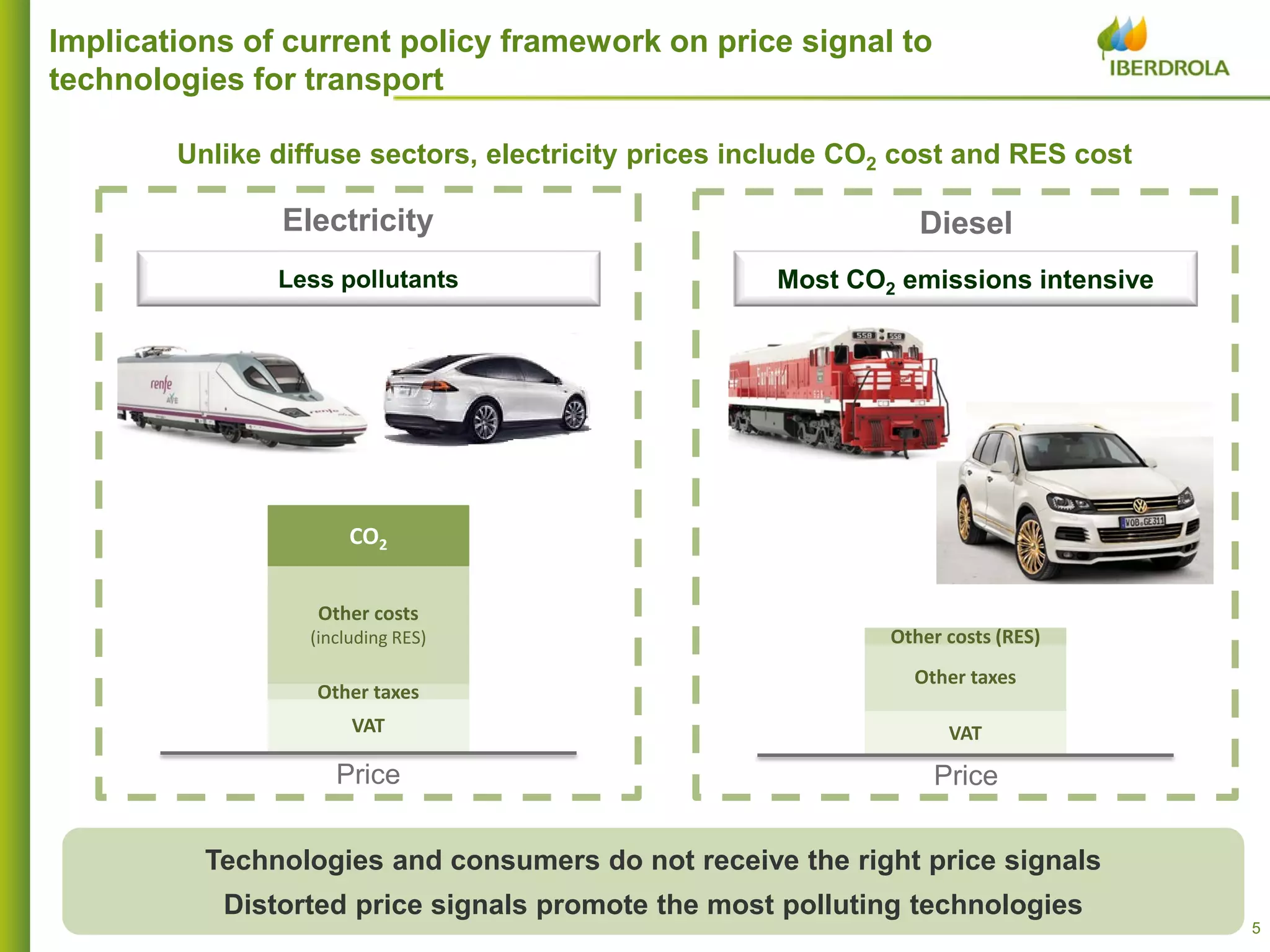
Implications of current policy framework on price signal to
technologies for transport
Technologies and consumers do not receive the right price signals
Distorted price signals promote the most polluting technologies
Less pollutants Most CO2 emissions intensive
DieselElectricity
VAT VAT
Other taxes
Other taxes
Other costs (RES)
Other costs
(including RES)
CO2
Unlike diffuse sectors, electricity prices include CO2 cost and RES cost
Price Price
66
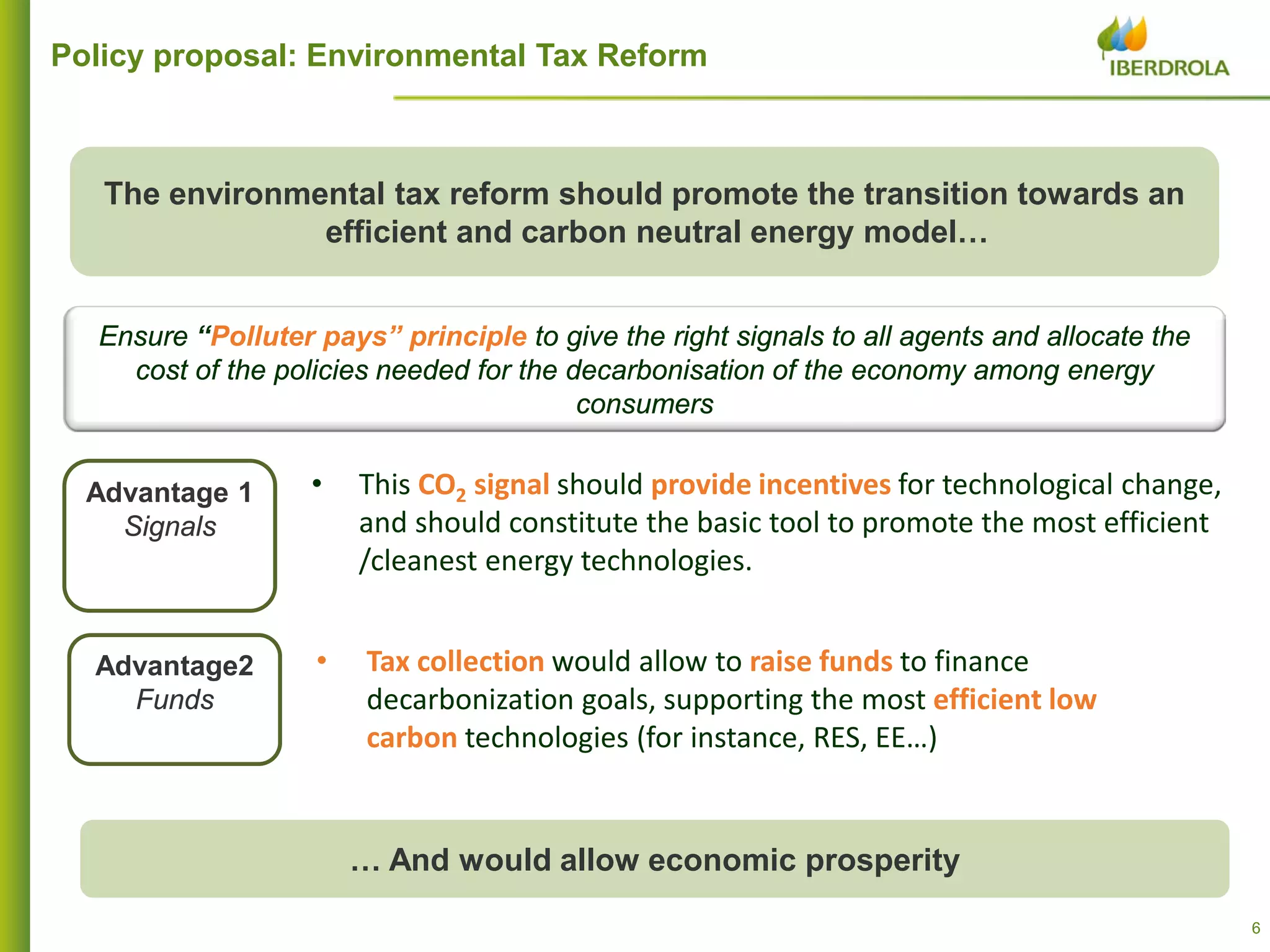
Policy proposal: Environmental Tax Reform
Ensure “Polluter pays” principle to give the right signals to all agents and allocate the
cost of the policies needed for the decarbonisation of the economy among energy
consumers
… And would allow economic prosperity
Advantage 1
Signals
Advantage2
Funds
• This CO2 signal should provide incentives for technological change,
and should constitute the basic tool to promote the most efficient
/cleanest energy technologies.
• Tax collection would allow to raise funds to finance
decarbonization goals, supporting the most efficient low
carbon technologies (for instance, RES, EE…)
The environmental tax reform should promote the transition towards an
efficient and carbon neutral energy model…

Energy technologies and climate change

  • 1.
    1 Energy technologies andclimate change Gonzalo Sáenz de Miera Director of Energy Prospective Climate Change: Implications for technological developments and industrial competitiveness Madrid 4th November 2015
  • 2.
    22 Background • We needto fight climate change • We need to act as soon as possible. The later we act the greater the cost • An ambitious and legally enforcing agreement should be reached in Paris. We can not give up the 2oC goal • The current energy model is the cause of climate change. And it is also the solution • Climate change policies, well defined, may contribute to economic growth and social prosperity We need to change the energy model, but in an efficient way
  • 3.
    33 The energy sectorhas a wide range of technologies to address the problem Demand Energy efficiency A level playing field is important to promote the most efficient technologies and solutions Supply Low carbon sources Meet the goal on an efficient basis COP 21 framework
  • 4.
    44 EU energy policies Electricitysector assumes most of the effort of EU policy goals As it seems to have the most efficient technologies 2030 40 % (CO2) / 27% (EE) / 27% (RES) 2020 20 % (CO2) / 20 % (EE) / 20 % (RES) Transport / diffuse sectors Electricity sector CO2 RES EE RES target: 20%; 27% Only if measures exist at national level ETS / CO2 Price CO2 signal + measures Measures Electricity sector Natural gas Transport
  • 5.
    55 Implications of currentpolicy framework on price signal to technologies for transport Technologies and consumers do not receive the right price signals Distorted price signals promote the most polluting technologies Less pollutants Most CO2 emissions intensive DieselElectricity VAT VAT Other taxes Other taxes Other costs (RES) Other costs (including RES) CO2 Unlike diffuse sectors, electricity prices include CO2 cost and RES cost Price Price
  • 6.
    66 Policy proposal: EnvironmentalTax Reform Ensure “Polluter pays” principle to give the right signals to all agents and allocate the cost of the policies needed for the decarbonisation of the economy among energy consumers … And would allow economic prosperity Advantage 1 Signals Advantage2 Funds • This CO2 signal should provide incentives for technological change, and should constitute the basic tool to promote the most efficient /cleanest energy technologies. • Tax collection would allow to raise funds to finance decarbonization goals, supporting the most efficient low carbon technologies (for instance, RES, EE…) The environmental tax reform should promote the transition towards an efficient and carbon neutral energy model…